

Here’s a sobering reality check about funding and finances. According to the 2023 EY Gen Z Segmentation Study, only 31% of Gen Z employees feel financially secure. With entry-level jobs demanding years of experience and the rising cost of nearly everything, it’s no surprise this generation feels the strain.
However, these challenges aren’t new. Your parents faced them, your grandparents navigated them, and chances are, you’ll find your way through them too.
Entry-Level Jobs Still Require Experience

Do you remember when “entry-level” actually meant no prior experience was needed? Those days are long behind us. According to Forbes, 35% of entry-level job listings now demand three or more years of experience, reshaping the very definition of “entry-level.”
While the job market has always been competitive, the surge in application volumes has led employers to use experience requirements as a way to sift through candidates more efficiently, highlighting just how much the landscape has shifted.
You Won’t Love Every Job, And That’s Normal

Gallup’s State of the Global Workplace 2024 report reveals a striking insight: only 23% of global employees are engaged at work, while 62% remain disengaged. This highlights an important distinction—job satisfaction does not necessarily equate to job passion.
For most of us, work serves practical purposes: paying bills, supporting our families, and building skills for future opportunities. The modern expectation that every job must align with one’s “passion” is a notion that previous generations would likely find perplexing.
Climbing the Ladder

Traditional career ladders are disappearing faster than a stale cookie. Instead of automatic promotions after a set number of years, companies now focus on advancing employees based on skills and demonstrated value.
This shift benefits workers who can quickly prove their worth, but also means promotions are no longer guaranteed every few years. Interestingly, only 4% of Gen Z employees aspire to C-suite roles, prioritizing flexibility and purpose over corner offices and executive perks.
Economic Anxiety and Paycheck to Paycheck Surviving

Money stress isn’t a Gen Z thing; it’s a human constant. Today, 57% of the American population lives paycheck to paycheck, according to a 2025 MarketWatch report, and 65% of Gen Z workers say they’re living on the edge. This is really tough, but financial stress has always been a problem for every generation in its early working years.
Your parents most likely remember needing to scrimp on dinner until the kitchen cupboards were bare and rent money seemed like a distant dream, like a trip to the West Village. The only difference is that this time around, social media lets everybody else’s financial success become visible, making an unrealistic comparison inevitable.
Mental Health Struggles Are Widespread

Some 46% of Gen Z suffer from mental health challenges, 55% are in therapy, and 42% have already experienced workplace burnout. These numbers can sound alarming until you remember that earlier generations grappled with many of the same issues but didn’t openly discuss them.
Credit Gen Z for normalizing conversations about mental health and seeking professional help. Stigma that left older generations to suffer in silence is finally crumbling.
Not Everyone Will Like You

DIY culture may push you to construct a sense of confidence over your likes and dislikes, but there’s so much opposition from everywhere else that it occasionally feels impossible. Social media amplifies everything, so that mild disagreements now feel personal. According to Gen Z Social Media Usage Statistics, 78% of Gen Z report feeling addicted to their phones or social media.
Good people stand out. Good brands make you feel good. The brutal truth is, not everyone is going to like you, and that has been the case ever since human beings started living in groups. The difference, however, is that now you can see evidence of people’s disdain playing out in real-time in the form of comments, likes, and shares.
Delayed Homeownership Is the Norm

The soaring cost of housing and stagnant wages have made homeownership unaffordable for many younger Americans. Owning your own home by the time you’re 25 may be a dream of the past, but patience and planning will get you where you want to be. The housing market is currently challenging, but it’s not irreparably broken.
Unclear Career Paths Are the Default

This is what happens when no one knows where they’re heading. According to Forbes, around 27% of Gen Z cites a lack of clear career direction as their biggest job-related frustration.
It’s an understandable concern; career guidance has long been inadequate, inconsistent, and often misleading.
It’s Always a Juggle, Balancing Work and Life

Work-life balance is a challenge that each generation faces; however, Gen Z has been uniquely affected by the pressures of remote work, constant connectivity, and the blurring of boundaries between personal time and professional hours. The struggles are real, but they are not new; they are simply more visible and discussed.
Cost of Living Concerns

The one stressor for Gen Z is cost-of-living anxiety, and 73% of workers say they can’t afford anything beyond the basics, according to the 2025 Deloitte Global Gen Z and Millennial Survey. However, each generation has experienced its own periods of economic difficulty and inflation.
The crucial difference is that Gen Z began working at a time when the economy was tumultuous and changing rapidly. They have navigated the economic disruption of a pandemic, inflation, and a squirrely job market all at the same time. These are real and significant challenges, but they’re also temporary.
Job Market Is Always Competitive

Save this article
The competition for sought-after jobs has never been more intense, with 4.3 million Gen Z individuals currently out of education, employment, or training. While the job market feels particularly unforgiving right now, competition during times of recession or transition is nothing new.
What sets this era apart is the heightened visibility and the global scale of the challenge. You’re no longer just competing with candidates from your town or region; you’re up against a world of talented individuals.
Not All Work Is Meaningful

Decades of research suggest Gen Zers put more value on meaningful work than on higher pay. According to a 2024 Deloitte Global survey, 89% of Gen Z respondents say a sense of purpose is essential to job satisfaction, and 44% will leave if their employers’ values don’t align with their own. That sounds great, but it’s encouraging a fairy tale to come true.
In truth, most jobs come with their share of drudgery, bureaucracy, and activities that don’t feel particularly fulfilling. Earlier generations understood that the primary purpose of work was to earn a living and support their families, rather than to fulfill their personal dreams.
It’s Not Just Social Media Anxiety

Gen Z spends an average of 6.5 hours a day on their phones, more than any other generation. This constant tethering generates new forms of anxiety and comparison that never existed until now.
However, money worries, job instability, and an uncertain future remain greater sources of stress than social media drama. Addiction to the phone is a symptom of a broader anxiety, not the root cause.
Struggling with Independence Is Universal

As one study by the National Society of Leadership and Success shows, 51 % of Gen Zers feel their education didn’t prepare them for work. Such feelings of unreadiness are natural and shared by all.
This is not to say that growing up has ever been an easy process; every generation throughout history has faced hurdles while transitioning to independent life on their own.
Starting with Limited Wealth is Common

Gen Z has saved more in banks than they did before the pandemic, but rising prices are eroding many of the benefits. Most people begin contributing to their careers when they have little in the way of wealth and accumulate a degree of financial security over time. The idea of overnight financial success is not only unrealistic but also historically infrequent.
The trick is to begin amassing wealth as early as you possibly can, even in small amounts. The power of compound interest and the impact of time can turn modest savings into significant wealth over many decades.
Feeling Overwhelmed by Current Events

Around 60% of Gen Z say they feel overwhelmed by global news, according to a report by the World Economic Forum. The onslaught of bad news, political infighting, and international disasters can be oppressive and discouraging.
But every generation has faced such existential challenges and global threats that seemed insurmountable at the time.
Perceived Lack of Upward Mobility

Generation Z workers are skeptical they’ll ever surpass their parents in wealth or homeownership, resulting in despair about their futures. That perception, of course, is grounded in the current economic situation, and yet it is also cyclical; it is connected to a broader economic cycle.
Every generation has intervals when upward mobility seems constrained or unattainable. Because the truth is that, well, mobility patterns change and opportunities come up in the most unlikely of places.
Key Takeaways

Life has always been hard, and we tend to remember the past fondly, even if at the time, it felt like the end of the world. Gen Z’s frustrations are both valid and understandable, but they are not unjust; it’s all part of the following.
The key is to focus on what you can control: developing skills, building relationships, wisely managing your finances, and maintaining a clear perspective in challenging times. The older generations got through similar challenges, and so will Gen Z.
Disclaimer: This list is solely the author’s opinion based on research and publicly available information. It is not intended to be professional advice.
16 Grocery Staples to Stock Up On Before Prices Spike Again

16 Grocery Staples to Stock Up On Before Prices Spike Again
I was in the grocery store the other day, and it hit me—I’m buying the exact same things I always do, but my bill just keeps getting higher. Like, I swear I just blinked, and suddenly eggs are a luxury item. What’s going on?
Inflation, supply-chain delays, and erratic weather conditions have modestly (or, let’s face it, dramatically) pushed the prices of staples ever higher. The USDA reports that food prices climbed an additional 2.9% year over year in May 2025—and that’s after the inflation storm of 2022–2023.
So, if you’ve got room in a pantry, freezer, or even a couple of extra shelves, now might be a good moment to stock up on these staple groceries—before the prices rise later.
6 Gas Station Chains With Food So Good It’s Worth Driving Out Of Your Way For
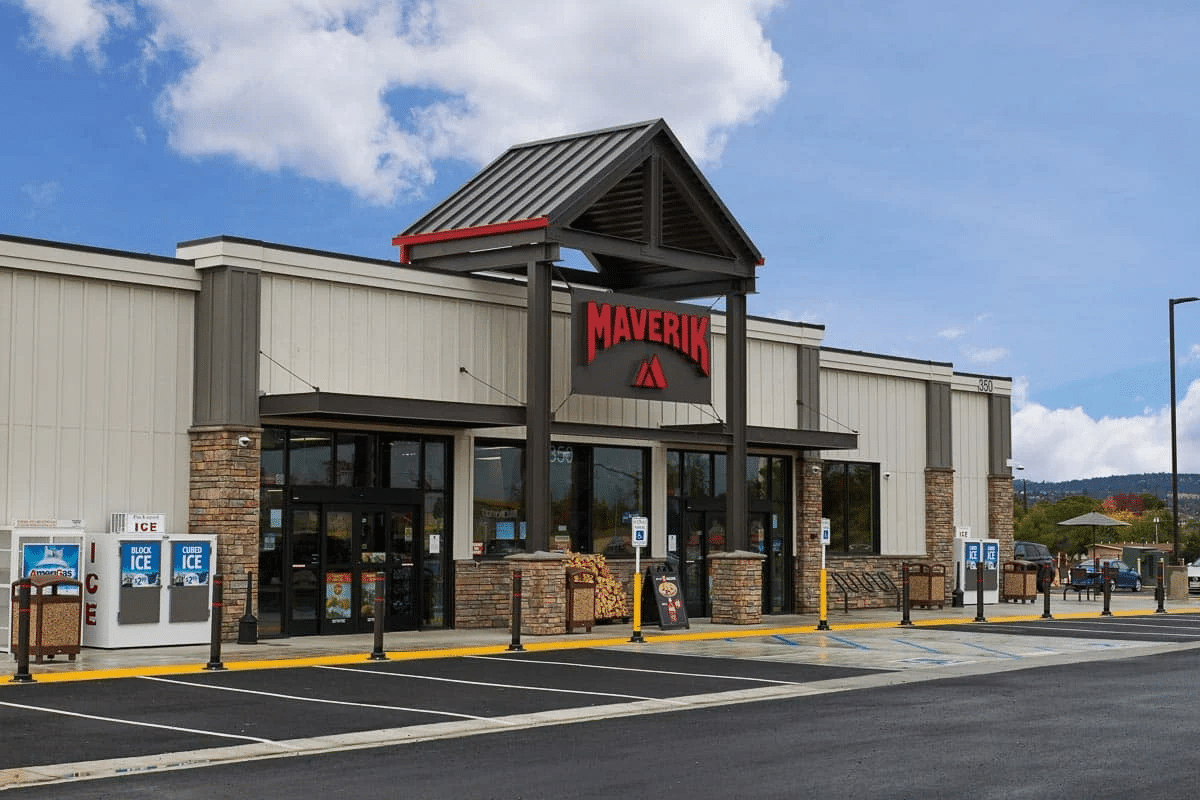
6 Gas Station Chains With Food So Good It’s Worth Driving Out Of Your Way For
We scoured the Internet to see what people had to say about gas station food. If you think the only things available are wrinkled hot dogs of indeterminate age and day-glow slushies, we’ve got great, tasty news for you. Whether it ends up being part of a regular routine or your only resource on a long car trip, we have the food info you need.
Let’s look at 6 gas stations that folks can’t get enough of and see what they have for you to eat.