

Every couple knows the slide. The early months are full of firsts, and then, a few years in, the weekends start to look the same: the same takeout order, the same shows, the same split of who does what around the house. It is normal, and relationship researchers have spent decades studying what helps couples push back against it.
Their findings are surprisingly practical. Much of the research centers on what psychologist Arthur Aron and his colleagues call self-expansion, the idea that sharing new and challenging experiences with a partner helps keep a relationship feeling fresh. Here are 7 things couples who stay close tend to do together, and what the studies say about each one.

1. They try something new together
In a well-known study published in the Journal of Personality and Social Psychology in 2000, Aron and his co-authors found that couples who took part in more novel and exciting activities together felt less bored and rated their relationships as higher in quality than couples who stuck to routine ones. The Greater Good Science Center at UC Berkeley turned that research into a simple practice that any couple can try at home.
The key is novelty, not expense. Date night used to mean a trip to the video store, one of the little rituals from the ’80s and ’90s that disappeared without much notice, and it is easy to fall back on the modern equivalent of scrolling for something to stream. A dance class, a new board game or a walk through an unexplored neighborhood all count. Couples who want a quick check-in can also look at the relationship decisions people most often regret.
2. They cook something neither of them has made before
Cooking a new recipe together is one of the activities the Greater Good Science Center specifically suggests. It works because it is new, it takes teamwork, and there is something to share at the end. The idea is to pick a cuisine neither partner knows well, split up the jobs and expect a few mistakes along the way. Laughing through a kitchen mishap is part of the point, and it is the kind of shared memory couples rarely list among their common regrets in adulthood.
3. They share the everyday chores
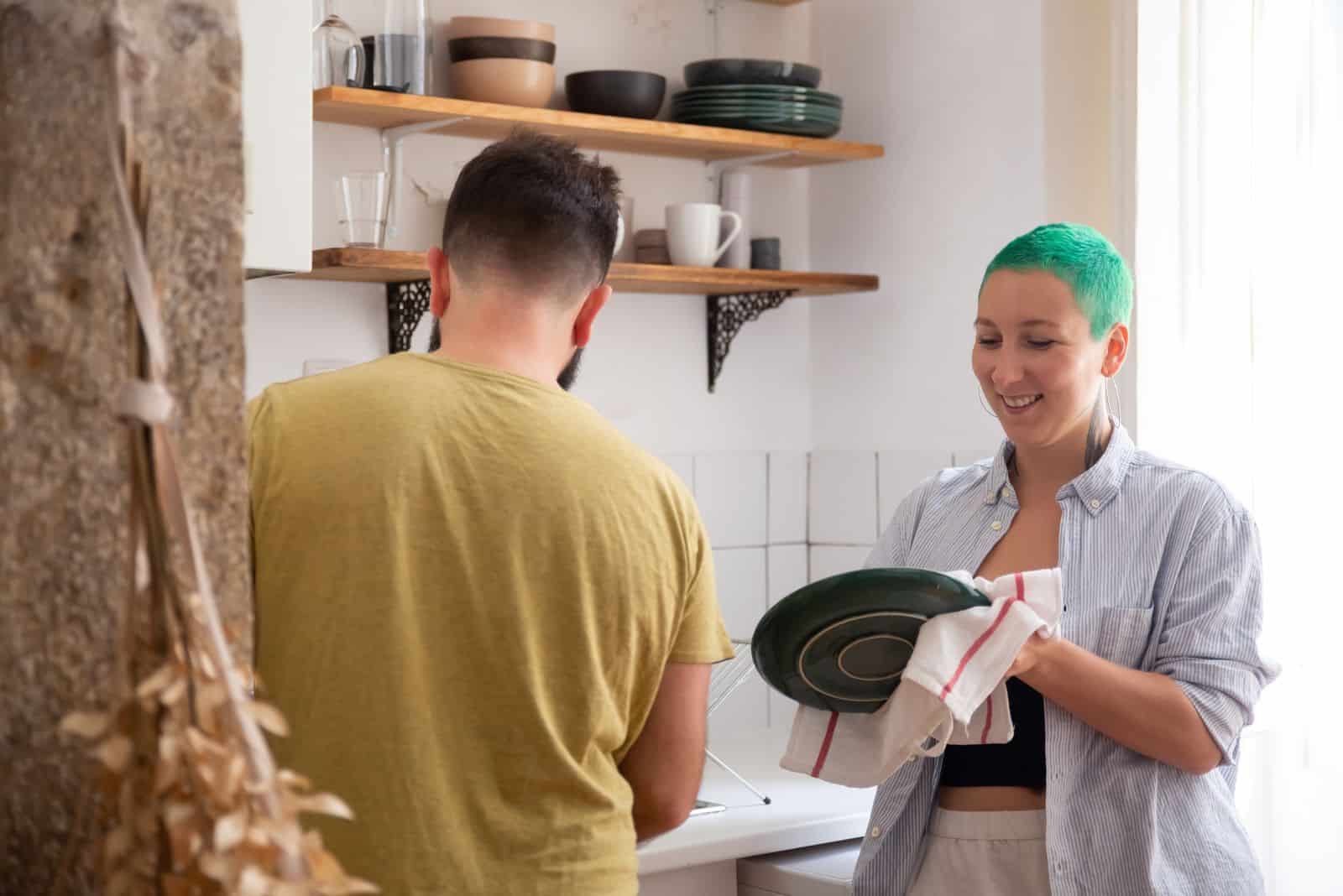
Romance gets the attention, but the dishes matter too. In a 2016 report, the Pew Research Center found that 56% of married U.S. adults said sharing household chores is very important to a successful marriage. Younger adults were even more likely to say so: 67% of married adults ages 18 to 29 agreed, compared with 56% of those 65 and older.
That view has deep roots. A 2007 Pew survey found that sharing chores ranked third out of nine things Americans associate with a successful marriage, ahead of adequate income and good housing. Some couples get creative about it, as these married people did when they shared their most unhinged relationship hacks. Others simply go back to an old-school system, one of several Boomer habits that are making a comeback: one person washes, the other dries.
4. They set aside time on purpose
Good intentions tend to lose out to busy calendars. The Greater Good Science Center’s version of the practice suggests about 90 minutes a week for four weeks, with at least one new activity each week. That works out to roughly one evening, or one Saturday morning, set aside and protected like any other appointment.
5. They make a list and a plan
The same practice recommends that partners sit down together and list about 10 activities they would both enjoy, then write a plan with set times and places. Some couples even sign it. It may sound formal, but writing it down turns a vague “someday” into something that actually happens, and it gives both people an equal say in what the couple tries.
6. They lean on each other when things feel unfamiliar
Why does trying new things help? Researchers Kassandra Cortes, Emily Britton and colleagues tested one explanation. As they described for the Society for Personality and Social Psychology, new activities give partners chances to rely on and support each other, and their two studies found that doing new things together made couples feel more secure in the relationship.
In other words, the activity itself is only part of it. The real benefit comes from showing up for each other when neither partner knows exactly what to do.
7. They keep it playful
Not every shared activity needs a plan. The Greater Good Science Center’s list includes playful and spontaneous ideas such as ice skating, surprising a partner with an outing or a movie they have wanted to see, a picnic, a packed lunch with a note inside, or even pretending to be on a first date again.
Small surprises like these remind both people that the relationship is still a place for fun, not just schedules and logistics.
Where to start this week
There is no need to do all 7 at once. A simple start is one new thing to try together this week and one chore to split more evenly, both put on the calendar, with a check-in after a month to see what felt different. The research suggests that small, steady changes like these add up, and they are a lot more fun than another night of the same old routine.
This article was written with the help of AI tools and checked against the sources linked above.




