

For most dogs, the holidays do not start with turkey or tinsel. They start with the doorbell. One ring, a burst of cold air and a wave of new voices, coats, bags and smells can turn even a mellow family pet into a very different animal for the first few minutes of a gathering.
Trainers and veterinarians say those reactions are rarely random. Whether a dog sprints to the door, disappears under a bed or plants its nose on every new arrival, the behavior usually reflects excitement, curiosity or stress about a sudden change at home. Here are 8 things dogs commonly do when holiday guests arrive, along with what experts say is behind each one.
Plenty of these habits overlap with the 12 things humans do that dogs hate so much, since crowded rooms and loud greetings top the list for many pets. Hosts who share their home with a shedder may also be weighing Shark vs. Bissell vacuums to get the house guest-ready, and anyone still choosing a four-legged companion can browse the 10 best dog breeds that make excellent best friends.
1. They Race to the Door and Bark
The front entrance is the most exciting spot in the house during a party. In an Adopt a Pet column on how to stop dogs from getting overly excited when holiday guests arrive, certified applied animal behaviorist Karen B. London notes that new people appearing at the door and crossing the threshold can be especially stimulating for dogs.
Barking is often the first sign. London’s suggestions include giving the dog something else to focus on, such as a game of tug or a long-lasting chew, as visitors walk in. Some dogs stay calmer if they are in another room during arrivals and never see the commotion at all.
2. They Jump on Guests
Jumping is one of the most common complaints from holiday hosts, and it tends to show up in energetic, social dogs. Dr. Lori Teller of the Texas A&M College of Veterinary Medicine & Biomedical Sciences told the school’s Pet Talk column on introducing pets to guests that visitors should turn and move away when a dog jumps rather than rewarding it with attention.
Teaching a sit as a replacement behavior can work, she said, but only if everyone reinforces it consistently. For dogs with a known jumping habit, a leash or a separate room during the first rush of arrivals keeps both the guests and the dog out of trouble.
3. They Sniff Every New Arrival
A dog that greets each visitor nose first is collecting information, not being rude. The American Kennel Club explains in a piece on why dogs love sniffing people that scent glands carry clues about a person’s age, sex and mood. Dogs have up to 300 million scent sensors, compared with roughly 6 million in humans, so a new guest is a lot of fresh data.
The AKC suggests guests offer a closed hand for the dog to sniff first, which often satisfies the dog’s curiosity before it gets too personal. Scent hounds such as Beagles and Bloodhounds are especially likely to linger.
4. They Bring Guests a “Gift”
Some dogs greet visitors with a toy, a shoe or a sock pulled from the laundry. Behaviorist Lauren Hewitt told Adopt a Pet, in an explainer on why dogs bring gifts to anyone who comes over, that the habit can be partly genetic, especially in retrievers and spaniels, and partly learned from years of praise and games of fetch.
Hewitt said the behavior is generally harmless and can even help, since a dog with something in its mouth is less likely to jump or bark. The main things to watch for are guarding the item or chewing up things that should not be swallowed.
5. They Get the Zoomies
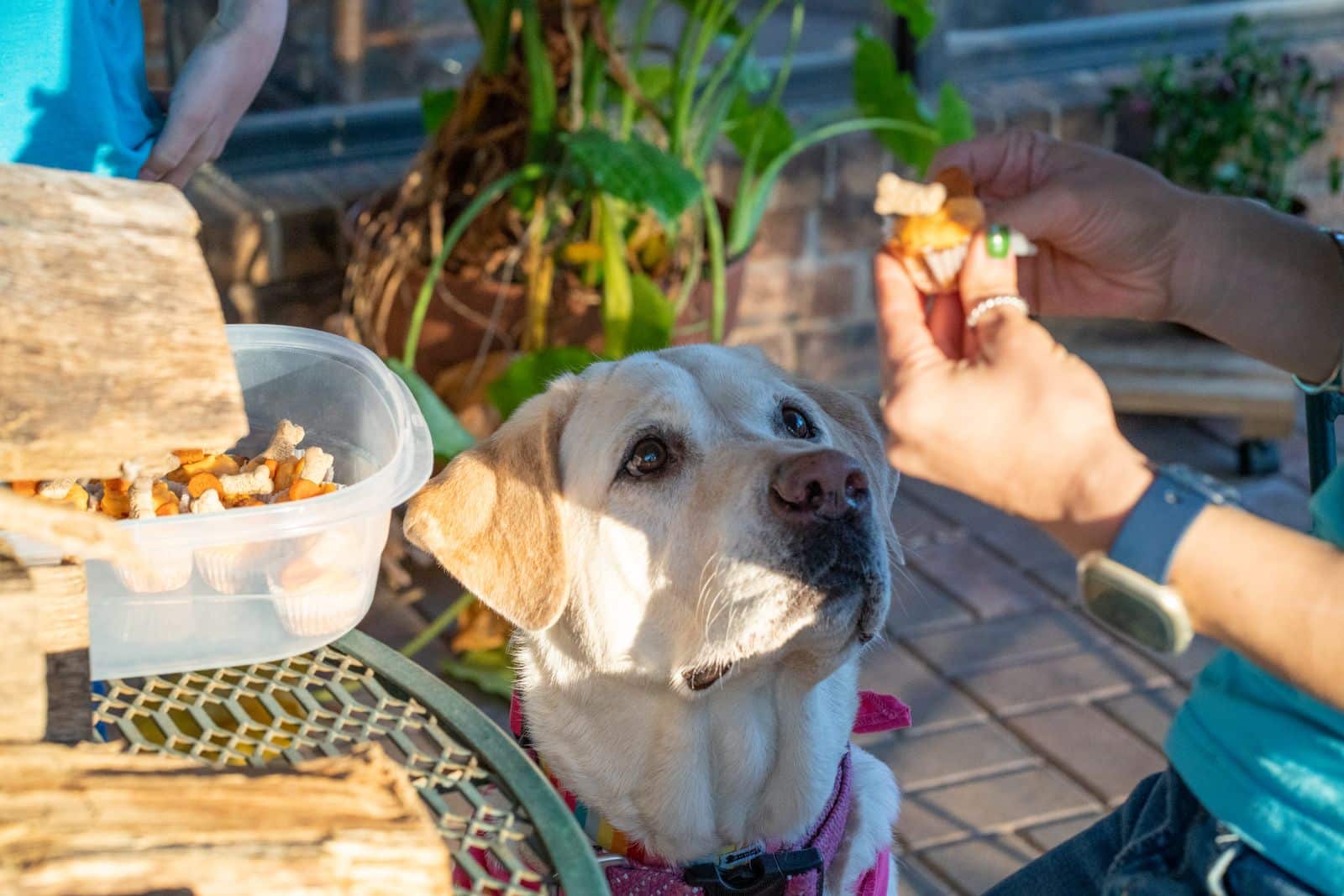
A sudden lap around the living room, complete with spins and play bows, is a classic party reaction. PetMD’s guide to why dogs get the zoomies describes these bursts, known as frenetic random activity periods, as a way for dogs to release built-up energy, excitement or stress.
Zoomies usually signal a happy dog, but in a crowded room they can send drinks and small relatives flying. PetMD recommends moving breakable items out of the way, laying down rugs on slick floors and keeping children and older adults clear of the path.
6. They Hide or Hang Back
Not every dog wants to join the party. Teller said some dogs greet guests right away, while others prefer to wait until the energy in the room settles down. Hiding in another room, under a bed or in a crate is a common sign that a dog is uneasy with the change in its surroundings.
The AKC’s advice on helping a dog deal with visitors during the holidays is simple: never force a nervous dog to interact. Trainer Sassafras Patterdale recommends setting up a quiet, out-of-the-way space and telling guests that ignoring the dog is perfectly fine.
7. They Go Looking for Food
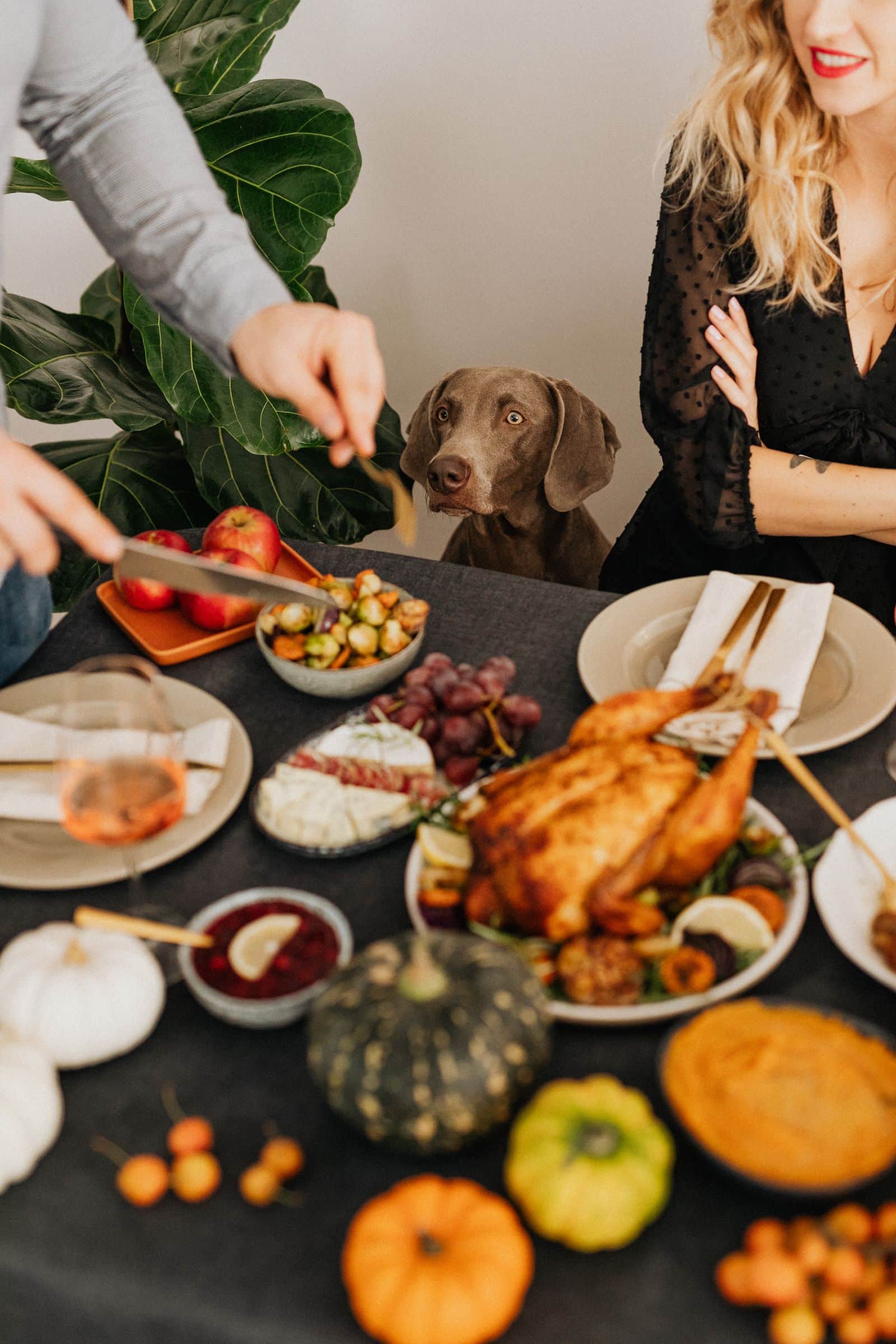
Holiday gatherings put an unusual amount of food at nose level, from appetizers on the coffee table to plates left on the counter. Patterdale points out that a busy kitchen is a prime spot for counter surfing, and she advises hosts to clear tempting dishes from reachable surfaces and avoid leaving the dog alone in the kitchen.
A stuffed food toy or long-lasting chew can give the dog its own project while people eat, which tends to cut down on hovering, begging and the occasional stolen dinner roll.
8. They Show Subtle Signs of Stress
Some reactions are easy to miss in a busy room. According to Teller, a tucked tail, lowered ears, dilated pupils and a hunched posture can all signal that a dog is overwhelmed. Growling or scratching are stronger warnings that it needs space.
The AKC recommends giving dogs regular breaks during long gatherings, such as a quiet walk or time alone in a gated room, and keeping interactions with visitors short and positive. A few minutes away from the crowd can reset even a social dog.
Keeping the Peace at the Door
Most of these 8 behaviors are normal reactions to a house that suddenly feels very different. A little planning, such as a quiet room, a favorite chew and a few ground rules for guests, can help dogs enjoy the season too. Because doors open and close constantly during parties, owners may also want to review a missing pet guide on how to find a lost dog or cat and prevent future escapes, and those budgeting for a new pet can look over annual pet ownership costs for dogs and cats.
With the right setup, the doorbell can become just another cue for a treat rather than the start of a household frenzy.
This article was written with the help of AI tools and checked against the sources linked above.




