

Nearly three decades after Tupac Shakur was gunned down on a Las Vegas street, the only man ever charged in connection with the killing is finally facing a jury, bringing one of hip-hop’s most debated mysteries back into the spotlight.
Duane “Keffe D” Davis, now 63, is accused by prosecutors of helping orchestrate the September 1996 drive-by shooting that killed Shakur. Davis has pleaded not guilty to murder with a deadly weapon and has denied being responsible for the rapper’s death.
The trial began in Las Vegas nearly 30 years after Shakur was shot, with prosecutors attempting to prove that Davis was not the shooter but played a role in organizing the attack. The case is expected to focus heavily on Davis’ own words, his connections to the people involved that night, and the events that led to the shooting.
For years, Tupac’s murder remained one of America’s most famous cold cases. His death did not just end the life of a 25-year-old rapper at the height of his career; it became a defining moment in hip-hop history, tied to the violence and rivalry surrounding the East Coast–West Coast era.
The Night Everything Changed in Las Vegas
The shooting did not happen in isolation. Hours before Tupac was killed, a confrontation inside the MGM Grand created the chain of events investigators believe led to the attack.
On September 7, 1996, Tupac attended the Mike Tyson vs. Bruce Seldon boxing match at the MGM Grand in Las Vegas with Death Row Records founder Marion “Suge” Knight and members of their entourage.
After the fight, Tupac, Knight, and others were captured on surveillance video attacking Orlando “Baby Lane” Anderson, a member of the South Side Compton Crips, inside the casino. Anderson was the nephew of Duane Davis and had been involved in a previous dispute with Tupac’s associates.
Later that night, Tupac and Knight left the MGM Grand in a black BMW. They were traveling toward Club 662, where Tupac was expected to perform, when a white Cadillac pulled alongside their vehicle near the Las Vegas Strip.
Gunfire erupted from the Cadillac. Tupac was struck multiple times, while a bullet grazed Knight. Tupac was taken to University Medical Center of Southern Nevada, where he died six days later on September 13, 1996.
Who Is Duane “Keffe D” Davis?
The man now at the center of the case was not a random name pulled from a decades-old file. Davis was already known to investigators as a key figure connected to the group of men believed to have been involved in the shooting.
Davis was a former leader in the South Side Compton Crips, a gang faction that had longstanding tensions with Tupac’s circle. Prosecutors allege Davis was involved in arranging the attack and obtaining the firearm used in the killing. They do not need to prove he pulled the trigger, only that he participated in the murder.
The suspected shooter has long been believed to be Orlando Anderson, Davis’ nephew, although Anderson was never charged. Anderson denied involvement before he died in 1998 during an unrelated gang shooting. Other men believed to have been in the Cadillac, including DeAndre “Dre” Smith and Terry Brown, have also died.
That left Davis as the last surviving person prosecutors say was inside the vehicle during the attack.
The Evidence That Finally Led to an Arrest
The biggest question surrounding the case was why police waited nearly three decades to make an arrest. The answer came from Davis himself.
For years, investigators struggled to move the case forward because there was little evidence that could be used in court. That changed after Davis began publicly discussing his alleged involvement in interviews and his 2019 memoir.
The book, Compton Street Legend, opens in Las Vegas on the night of September 7, 1996, with a play-by-play account of his plan to confront Tupac and Death Row Records CEO Marion “Suge” Knight in retaliation for an earlier fight.
Davis wrote that he got a gun, hopped in a Cadillac with three others, and drove around looking for the pair. They spotted Tupac in a car and then pulled up next to it: “No words exchanged, the time for talking had passed, the sh*t was about to go down!” he wrote.
Authorities say Davis made statements that connected him to the night of the shooting, including describing his presence inside the Cadillac when Tupac was killed. Prosecutors argue those statements became a key part of their case.
Save this article
In July 2023, Las Vegas police searched a home in Henderson, Nevada, connected to Davis’ wife. Two months later, Davis was arrested and charged with murder.
The prosecution’s case is expected to rely heavily on Davis’ past statements, including interviews, his memoir and other comments investigators say helped reveal details about the shooting.
The Trial and What Prosecutors Must Prove
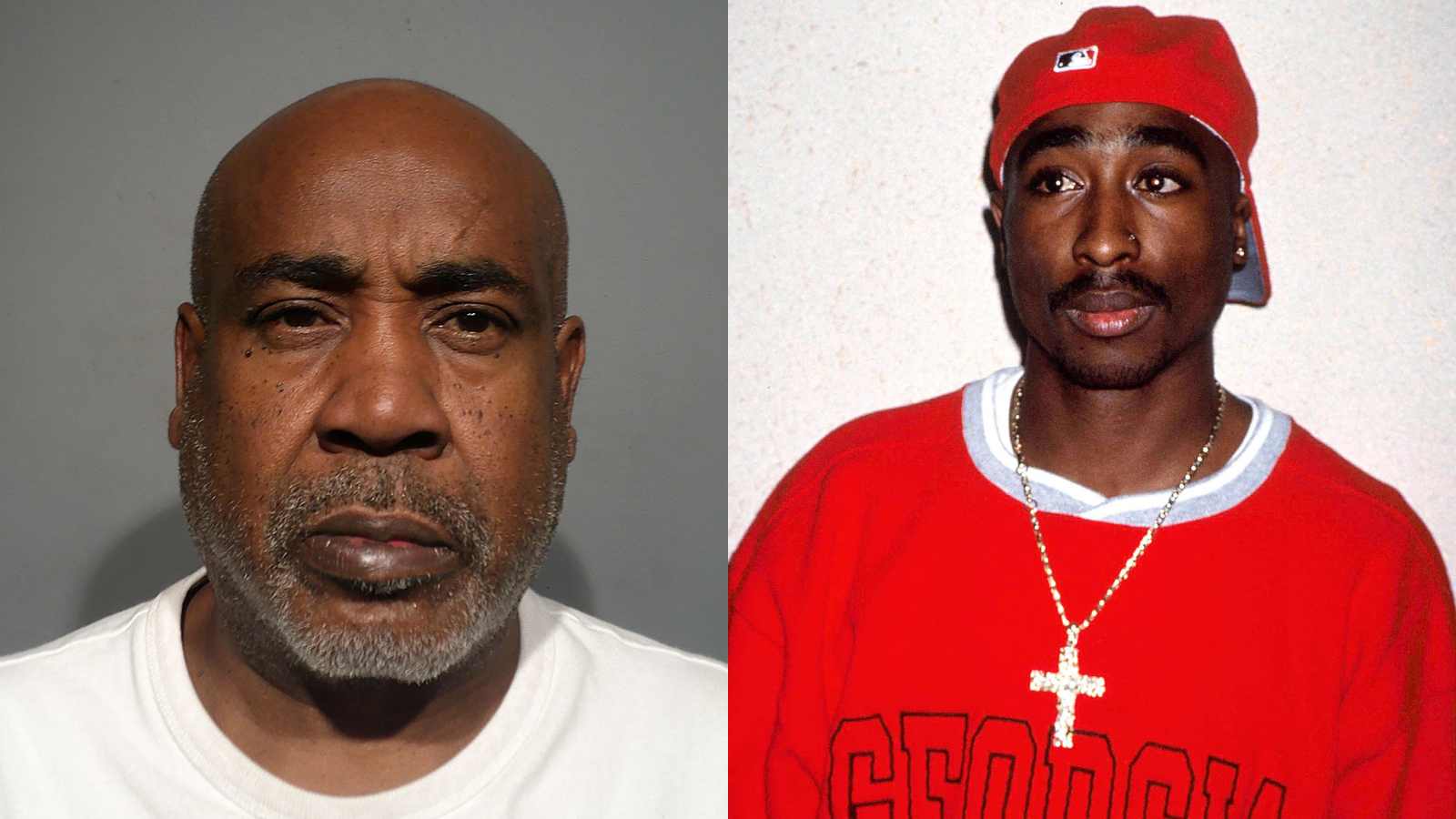
The trial is not simply about who fired the gun. It is about whether prosecutors can prove Davis helped plan and carry out a murder that remained unsolved for decades.
Davis faces one count of murder with a deadly weapon with a gang enhancement. Prosecutors must convince jurors that he played a criminal role in Tupac’s killing.
The defense has argued that Davis’ statements were exaggerated, made for attention, or cannot be trusted as proof of guilt. Davis has maintained that he did not kill Tupac. He said his prior statements were false and just an attempt to sell books, and he has pleaded not guilty.
The trial is expected to last about a month, with testimony expected from investigators, people connected to the case, and witnesses who can provide context about the events leading up to the shooting.
One possible witness is Suge Knight, who was driving Tupac when the shooting happened, although it remains uncertain how much he will participate.
The Names That Shaped Hip-Hop’s Biggest Mystery
Tupac’s murder became bigger than one crime scene because it happened during one of the most intense periods in rap history.
The killing occurred during the height of the East Coast–West Coast rivalry, a conflict involving artists, record labels, and people connected to rival factions. Tupac was closely associated with Death Row Records, while Bad Boy Records and artists including The Notorious B.I.G. became linked to the opposing side of the feud.
Sean “Diddy” Combs has frequently been mentioned in public discussions about the era because of his connection to Bad Boy Records, but prosecutors have not charged or accused him in this case. The trial centers on Davis and the alleged events surrounding the Las Vegas shooting.
A Case Hip-Hop Never Forgot
Tupac Shakur’s death remained unresolved for so long that the case became part of his legacy, but the trial now moves the story from speculation into a courtroom where evidence will decide what happened.
Tupac left behind a career that transformed music, with millions of records sold and an influence that continues decades after his death. His murder became one of the most discussed cases in popular culture because so many questions remained unanswered.
Now, the trial of Duane Davis represents the first major courtroom test of the evidence investigators have collected after years of silence.
Whether it delivers a final answer or creates new questions will depend on what prosecutors can prove and what the defense can challenge.
After nearly 30 years of theories, rumors, and unanswered questions, what do you think of this trial? Can it finally provide the truth about Tupac Shakur’s murder, or has too much time passed for the full story ever to be known?
Read More:
- D4vd’s Ex-Friend Aysia Collins Breaks Silence, Brands Him a Psychopath Who Betrayed Everyone
- One Driver Arrested, One Still at Large After Two NYC Hit-and-Runs Left Men Dead on the Same Morning
- Judge Boasberg’s Chalk Protest Ruling Has Americans Asking Whether Equal Justice Is Becoming Optional
- Can an AI be blamed for murder? The law is about to decide.





