

A prolonged blackout in an Indiana city is shining a bright light on America’s aging power grid and revealing major national vulnerabilities.
Thousands of residents in Gary, Indiana, were left without power for more than two weeks after severe storms hit the area.
While local repair crews worked around the clock to rebuild entire power lines, federal energy experts are raising a much bigger alarm. They warn that our national electricity network is so fragile that a coordinated attack could leave the country without power for up to 18 months.
What Happened in Indiana Isn’t Just Local News
Extreme weather in Northwest Indiana recently showed how quickly local electric networks can crumble under pressure.
On August 11, fierce storms packed with 99 to 130 mph winds tore across Indiana. The severe weather initially knocked out power for 300,000 customers, leaving more than 75,000 people without power for more than a week.
Fixing the local damage wasn’t just a basic repair job. Utility crews had to completely rebuild the infrastructure from scratch, replacing 300 utility poles and 44 heavy transmission structures.
It’s a sobering preview of what happens when outdated infrastructure meets extreme weather. If you live outside a major metropolitan hub, getting emergency help and replacement hardware during a crisis can take much longer than you think.
The Scary Reality of an 18-Month National Blackout
View this post on Instagram
A 2013 internal power-flow analysis conducted by the Federal Energy Regulatory Commission (FERC) concluded that disabling just nine key substations could paralyze the entire American grid for 18 months.
Back in 2013, snipers shot up 17 electrical transformers at the Metcalf substation near San Jose, California. That localized attack took 27 days to repair, even while the surrounding grid stayed fully operational.
Jon Wellinghoff, former chairman of the Federal Energy Regulatory Commission (FERC), revealed that the Metcalf incident triggered critical internal analyses. FERC discovered that knocking out just nine critical substations across our three regional interconnections could trigger nationwide failure lasting up to 18 months.
Without electricity, everyday essentials like clean tap water, cell phone towers, banking systems, and fuel pumps would shut down within days. Wellinghoff warned that attackers could execute such a strike in 20 minutes because substation locations are visible on public maps.
Why Replacing Grid Parts Takes Years, Not Days
America relies heavily on foreign supply chains and ancient equipment that takes years to manufacture and deliver.
60% of neighborhood distribution lines across the country have surpassed their 50-year design lifespan. To make matters worse, large power transformers averaged nearly 40 years of age back in 2014.
If a large transformer breaks today, you can’t just buy a quick replacement. Wait times for large transformers jumped from 12 weeks before 2020 to an average of 128 weeks today; roughly two and a half years!
Domestic manufacturers produce only 20% of the transformers America needs, leaving us reliant on foreign suppliers. Critical components like transformer bushings can take up to 130 weeks to arrive, and no U.S. suppliers can provide extra-high-voltage systems.
Save this article
AI Data Centers Are Sucking Up Massive Power
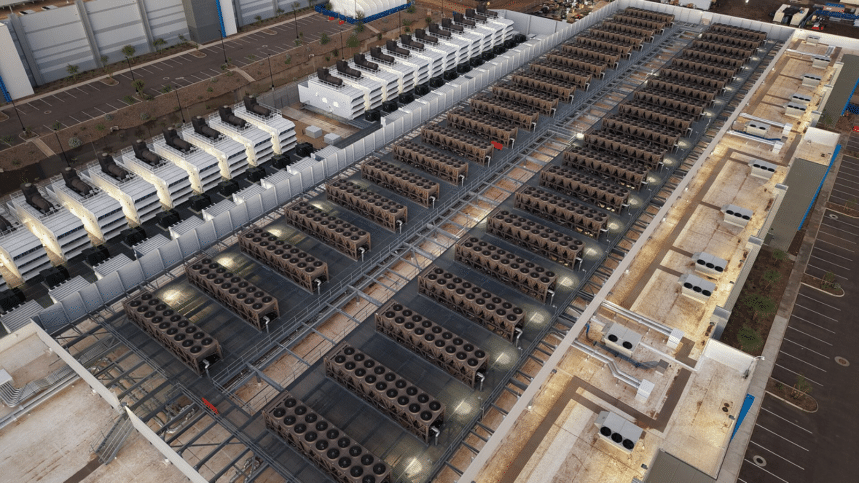
Rapid growth in AI data centers and factory electrification is placing unprecedented strain on an already overworked electric grid.
Transformer manufacturers expect equipment demand in 2027 to more than double 2020 levels. Electric vehicles, domestic manufacturing, and massive tech facilities are driving electricity consumption to record highs.
A single large AI data center uses as much electricity as 20,000 homes. To protect grid stability, PJM Interconnection, the country’s largest grid operator, is moving to cut power to large data centers during shortages unless they supply their own backup energy.
With 70% of American transmission lines older than 25 years, the grid is operating on razor-thin backup margins during extreme heatwaves and winter storms.
Security Mandates and Modernization Push
Utilities are scrambling to upgrade physical security and modernize transmission hardware before major disruptions hit.
Federal regulators established the NERC CIP-014 standard to mandate physical protection at high-voltage substations. This rule requires independent risk reviews, perimeter fencing, smart camera surveillance, and close coordination with local law enforcement.
Rebuilding our power infrastructure will take serious time and cash. Tim Holt, grid technologies director at Siemens Energy, estimates the U.S. will spend as much on grid modernization in the next 15 years as it spent over the previous 150 years. Experts agree that investing in local resiliency is our best defense against sudden long-term outages.
What You Need to Know
Our power grid is old, replacement supply chains are slow, and surging electricity demand is pushing the system to its limit.
The week-long blackout in Indiana proved that repairing severe storm damage requires rebuilding entire distribution systems. Transformer lead times now stretch up to two and a half years, leaving little room for error if major facilities get damaged.
Protecting our energy future will require strong physical security, expanded domestic factory production, and massive grid modernization investments.
How has your family or community handled extended power outages in the past, and what solutions do you think energy companies should prioritize to keep our lights on during severe weather?
More Articles:
- Mamdani’s Netanyahu Arrest Push Risks Dragging New York Into a Federal Showdown Beyond City Hall’s Power
- Mayor Mamdani Gives NYC Parents a Free Night Off With City-Provided Childcare
- 10 Innovative Survival Methods: How People Endured Harsh Winters Before Electricity
- 9 signs it’s time to move out of the big city — and where you could go





