

A Finnish study challenges one of the most familiar warnings in modern parenting: that more screen time automatically means worse outcomes for children.
Researchers who followed children from childhood into adolescence found that greater cumulative self-reported screen time was associated with better cognitive processing during the teenage years. The finding does not mean phones, tablets or video games have suddenly become a prescription for better brains, but it does complicate the idea that every minute spent looking at a screen is harmful.
The research came from the Physical Activity and Nutrition in Children, or PANIC, study, a long-running Finnish project examining children’s lifestyles as they grow. The new research was published in Pediatric Exercise Science in 2026, with Petri Jalanko of the University of Jyväskylä among the researchers.
Children Were Followed From Childhood Into Their Teens
This was not a quick survey asking teenagers how many hours they spent on their phones last week.
The analysis included 260 adolescents,136 boys and 124 girls, with an average age of 15.8 at the eight-year follow-up. The original PANIC project was considerably larger: 736 children aged 6 to 9 from 16 primary schools in Kuopio, Finland, were invited to participate between 2007 and 2009, with 512 taking part in the baseline examinations.
Researchers collected information about physical activity, sedentary behavior, and screen use at different stages before examining the teenagers’ cognitive abilities. That long follow-up gave the researchers something a one-time survey cannot provide: a look at how habits accumulated from childhood into adolescence.
They Were Testing More Than “Being Smart”
The researchers were not simply asking whether children with more screen time had higher IQ scores.
At the eight-year assessment, participants completed the Cogstate test battery, which examined learning, attention and working memory. Working memory is used when someone needs to hold information temporarily while doing something with it, such as remembering instructions while solving a problem or keeping several pieces of information in mind.
The researchers measured physical activity and sedentary behavior using an Actiheart device that combined heart-rate and movement measurements, while collecting screen time and different types of activities through questionnaires. The researchers could therefore compare years of reported screen use with specific cognitive results rather than relying entirely on vague impressions about children’s behavior.
More Screen Time Was Associated With Better Results
This is where the study produced the result that caught everyone’s attention.
Greater cumulative self-reported screen time was associated with faster reaction times and better accuracy on working-memory tasks, along with better overall cognitive performance. The association was not proof that screens caused the improvement, but it was strong enough to challenge the familiar assumption that increased screen exposure necessarily means poorer cognitive outcomes.
Petri Jalanko said the findings suggest screen time should not automatically be viewed as harmful. Instead, he argued that teachers and parents should encourage children to use devices for activities involving active thinking, problem-solving, creativity and learning.
Not Every Screen Activity Is the Same
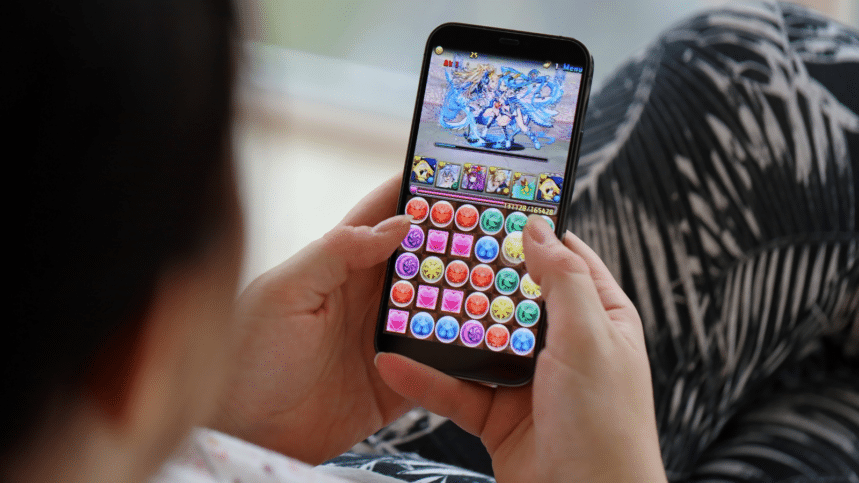
A teenager solving a difficult puzzle on a tablet is doing something very different from a teenager endlessly scrolling through videos.
Save this article
The study cannot prove that a particular app, game, or type of digital content caused the better cognitive results. Researchers measured screen time broadly, so they cannot point to one specific activity and say, “This is what improved working memory.”
But the finding raises an important possibility: some screen activities may demand concentration, memory, creativity and problem-solving. A child sitting quietly with a device could be watching something passively, or learning a language, researching a school project, creating digital art, or working through a complicated game.
From across the room, those activities may look identical, but mentally they can be completely different.
The Study Does Not Say Screens Make Kids Smarter
That distinction matters because the viral version of this story can easily go further than the science.
The researchers found an association, not proof of cause and effect. Because the researchers assessed the children’s cognition at the eight-year follow-up, the study cannot establish that spending more time on screens directly changed their cognitive abilities.
There could be other explanations. Children with stronger cognitive abilities might be more likely to choose challenging digital activities. At the same time, education, family circumstances, access to technology and personal interests could also influence both screen habits and cognitive performance.
Screen time was also partly measured through questionnaires, meaning the researchers relied on participants’ reports rather than recording every minute of device use.
What Parents Might Take From It
The most useful takeaway may be a change in the question parents ask.
Instead of focusing exclusively on how many hours a child spends with a device, parents could also ask what the child is actually doing during those hours. The study does not erase the importance of sleep, physical activity, school, friendships or time away from technology. Still, it suggests that screen use itself may be too broad a category to judge without considering its purpose.
After eight years of following children, the researchers did not arrive at a simple “screens are good” or “screens are bad” verdict. They found something more complicated: greater screen time was associated with better cognitive processing, while the exact reasons for that relationship remain unclear.
Should parents worry less about the number of screen-time hours and pay more attention to how children are actually using their screens?
Read More:
- 7 Skills American Kids Are Silently Losing
- Meta’s $942 Million Problem: The Court Fight Over Kids, Algorithms and Social Media
- 10 Alarming Things Older Generations Worry About That Younger Americans Barely Think About
- Some retirees are deciding their children may inherit less than expected, and for a deeper reason





