

Hollywood has always had fights over money, power, and control. But when a debate over a massive media deal becomes a battle over political speech and accusations of prejudice, the conversation quickly moves far beyond the boardroom.
That is where the clash between Mark Ruffalo and Paramount Skydance now sits.
The actor’s criticism of the company’s proposed $111 billion acquisition of Warner Bros. Discovery raised questions about Oracle, technology contracts involving Israel, and the role powerful executives play in shaping entertainment’s future.
Paramount responded by accusing Ruffalo of invoking antisemitic tropes, while Ruffalo called the accusation “appalling and fundamentally dishonest.” A disagreement that began with a Hollywood merger has become a public argument over where criticism ends and something more harmful begins.
Ruffalo’s objections initially focused on the deal’s structure and impact.
But after he connected those concerns to Oracle and Israel-related technology issues, the conversation shifted into a much more sensitive debate about language, identity, and interpretation.
A Deal About Media Power Became a Fight About Oracle
The original argument centered on who should control one of Hollywood’s biggest entertainment companies.
Ruffalo opposed Paramount Skydance’s proposed acquisition of Warner Bros., citing concerns about the influence that comes with controlling major entertainment platforms.
His criticism later turned to Oracle and its ties to Paramount leadership. Larry Ellison, Oracle’s cofounder, is the father of Paramount Skydance CEO David Ellison and has provided financial backing connected to the proposed transaction.
The controversy intensified after Ruffalo shared a video featuring Safra Catz, Oracle’s executive vice chair and a Paramount board member. In the video, Catz discussed technology Oracle made available after the October 7, 2023 Hamas attacks.
Ruffalo argued that Oracle’s involvement raised questions about how those technologies could be used and what it would mean if that connection existed alongside a major media company.
He also described Israel’s actions using terms including “genocide” and “apartheid,” connecting those words to Oracle’s role and the broader situation involving Israel. Those comments became the focus of Paramount’s response.
Paramount Saw a Problem. Ruffalo Saw a Misrepresentation.
The two sides are not arguing about whether Ruffalo criticized the deal. They are arguing about what that criticism meant.
Paramount Skydance said it was “troubled when antisemitic tropes are invoked in purported service of a business dispute.”
The company specifically objected to applying terms such as “genocide” and “apartheid” to a corporate transaction, saying those comparisons diminished the seriousness of real suffering.
Paramount also stated that it does not tolerate prejudice against any group.
Ruffalo rejected the accusation completely.
“The accusation that I am antisemitic is appalling and fundamentally dishonest,” he said.
He argued that criticizing the Israeli prime minister, military technology contracts, or executives connected to those issues is not the same as criticizing Jewish people. Ruffalo said his position came from his political convictions and emphasized his respect for Jewish people.
The disagreement now rests on two competing interpretations. Paramount argues the language crossed a line, while Ruffalo argues the criticism targeted governments, companies, and corporate decisions.
The accusation that I am antisemitic is appalling and fundamentally dishonest. Criticizing the actions of the Israeli prime minister, a military technology contract, or the executives who supply it is not the same as criticizing Jewish people. This critical and necessary dialogue…
— Mark Ruffalo (@MarkRuffalo) August 22, 2026
Save this article
The Backlash Spread Beyond the Two Sides
The controversy quickly became a wider debate involving advocacy groups and competing views about political speech.
The Simon Wiesenthal Center and Creative Community for Peace criticized Ruffalo’s comments and supported Paramount’s position.
Creative Community for Peace went further by calling for a Hollywood boycott until Ruffalo apologizes and retracts his remarks. Other organizations, including the Anti-Defamation League, also criticized the comments.
Critics of Ruffalo argued that bringing together Israel, Oracle, Jewish executives, and questions about corporate influence can echo harmful stereotypes about Jewish power and control.
“Words matter, and so does the willingness to draw a line when legitimate debate gives way to antisemitic tropes.
We commend @ParamountPics for speaking clearly and refusing to allow prejudice to masquerade as political or corporate criticism. At a time when antisemitism is too… https://t.co/Cyw8tZqnrQ
— Simon Wiesenthal Center (@simonwiesenthal) August 23, 2026
Those defending Ruffalo argued that criticism of Israeli policies, corporate relationships, or technology contracts should not automatically be treated as criticism of Jewish identity.
No court has found that Ruffalo committed wrongdoing. The disagreement remains centered on how to interpret his words.
Related: Paramount-Warner Bros. Merger Faces Legal Challenge: What Happens Next for Hollywood’s Biggest Deal?
The Merger is Still Moving Through a Complicated Process
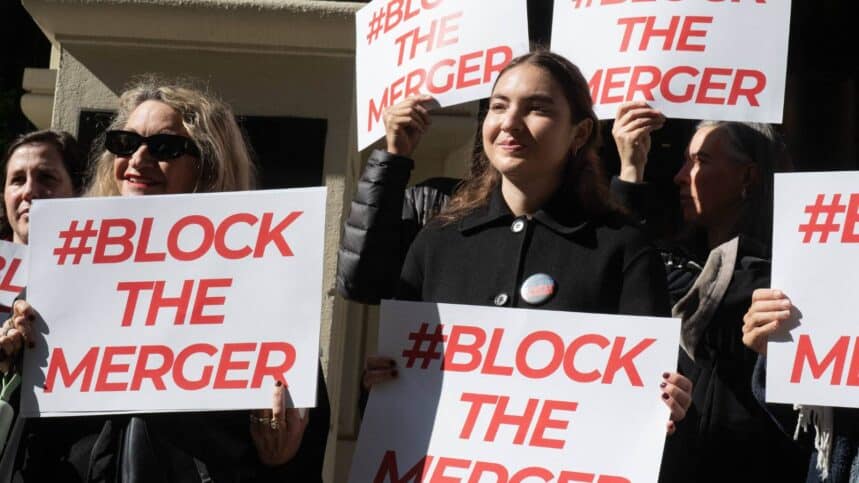
While the public fight grew louder, the business deal itself continued through the regulatory process.
Paramount Skydance’s proposed acquisition of Warner Bros. Discovery has moved through several reviews. The U.S. Department of Justice closed its investigation without challenging the transaction, and approvals have been reported across many international jurisdictions.
The deal is not complete. A legal challenge from a group of U.S. state attorneys general remains a barrier to closing.
Before the Oracle and Israel-related comments became the focus, Ruffalo’s opposition to the merger centered on concerns about consolidation, jobs, and the influence of large media companies.
The latest controversy added a new layer to an already heated debate. A discussion about ownership became a discussion about speech, responsibility, and the limits of public criticism.
Hollywood’s Power Struggles Are No Longer Staying Behind Closed Doors
The Ruffalo and Paramount clash shows how quickly industry disagreements can become public cultural battles.
Entertainment disputes have always existed, but the way they unfold has changed. An actor can challenge a corporate decision publicly, a company can respond immediately, and advocacy groups can join the conversation before the argument has even settled.
That is what makes this moment stand out. The fight isn’t just about a merger or one person’s comments. It reflects a larger tension inside Hollywood between the people who create culture and the companies that increasingly control how that culture is produced and distributed.
The industry has always debated power. What has changed is that those debates are now happening where everyone can see them.
When accountability itself becomes the controversy, who gets to decide where Hollywood’s line really sits?
More Articles You Might Like:
- Larry Ellison Quietly Gave $45 Million to a Pro-Trump Group—Then Oracle Landed a Starring Role in a $500 Billion AI Buildout
- Disney Is Cutting Medical Coverage for Employees’ Spouses. Here’s What That Actually Means
- The New Hollywood Hustle: Why Celebrities Are Building Businesses Instead of Waiting for Movie Roles





