

Federal safety officials issued a Class I recall for nearly 30,000 pounds of raw Argentine beef distributed in Texas and Florida after shipments bypassed mandatory import reinspections.
The United States Department of Agriculture (USDA) Food Safety and Inspection Service (FSIS) announced the recall of 29,628 pounds of raw boneless beef imported from Argentina. Florida-based importer Corte Argentino USA LLC distributed the uninspected product to retailers and food service operators across Texas and Florida.
No illness has been reported in connection with the shipment. However, federal regulators designated the event a Class I recall, the highest health-risk category, because uninspected meat entered commercial channels without verified safety compliance.
Regulatory Enforcement Triggers High-Risk Recall
Routine import log audits by federal inspectors revealed that raw beef cuts entered retail and food service channels without final federal clearance.
Imported meat entering the United States undergoes a three-step regulatory process involving U.S. Customs and Border Protection, the Animal and Plant Health Inspection Service, and FSIS. The final FSIS reinspection verifies packaging, labeling, documentation, general physical condition, and potential biological contamination.
Federal inspectors discovered the missing inspection step during routine import log reviews. As a result, federal procedures automatically assigned a Class I health risk designation. A USDA spokesperson emphasized that such procedural breakdowns remain uncommon despite high national import volumes. “Failures to present for import reinspection are rare given the volume of imported meat and poultry FSIS evaluates each year,” the spokesperson stated.
Specific Products and Traceability Identifiers
The recalled shipment involves five specific boneless beef cuts packaged under a single Argentine brand with distinct establishment and shipping codes.
The recall covers boneless beef produced between May 15 and May 20, 2026, bearing use-by or freeze-by dates between September 15 and September 20, 2026. All affected boxes display the brand name Frigorífico Gorina SAIC, Argentinian establishment number EST. N° OF. 2025, and shipping mark 26644-AA.
The recalled volume is roughly 30,000 pounds, about half the payload capacity of a standard refrigerated shipping container. Regulators advise consumers and commercial food service establishments holding these products to throw them away or return them immediately.
Logistics Breakdown versus Biological Contamination
Although designated under the highest-risk health category, the recall stems from an administrative supply-chain failure rather than confirmed biological pathogens.
Save this article
Corte Argentino USA LLC confirmed that the beef received full sanitary approval from Argentine agricultural authorities prior to export. “It is important to emphasize that the recall was not initiated due to the detection of contamination, bacteria, or quality issues in the beef,” the company noted in an official statement.
The breakdown occurred at a third-party U.S. cold storage facility tasked with presenting the shipment to FSIS inspectors before commercial release. Because the shipment bypassed that step, federal protocol mandates an automatic Class I recall to prevent unverified products from being consumed.
This incident marks the first recall for Corte Argentino USA LLC since its founding in 2020. Similar enforcement occurred in July 2026, when over 12,000 pounds of uncured smoked bacon (Royale Natural Applewood Smoked and TOP VALU Uncured Hardwood Smoked Bacon produced by Maple Leaf Foods Inc.) were recalled for bypassing import inspection protocols.
Import Quotas and Domestic Cattle Market Trends
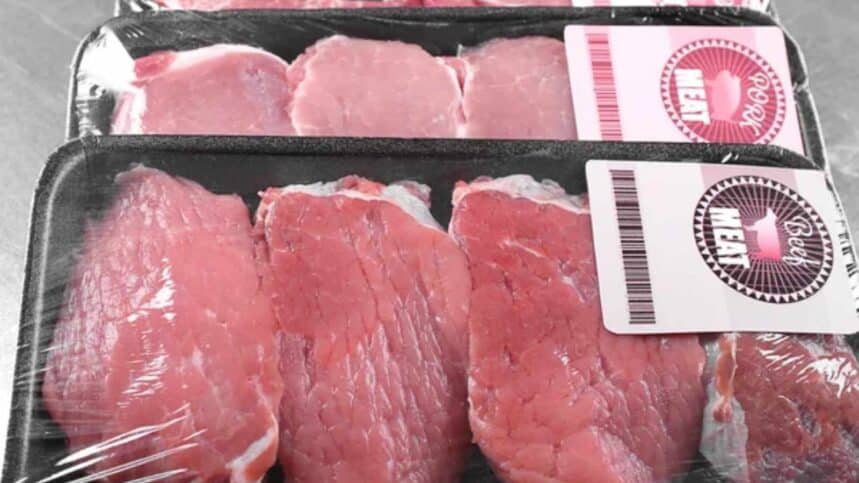
The import inspection failure coincides with expanding foreign beef quotas meant to offset the smallest U.S. domestic cattle herd in over six decades.
Federal trade policies expanded Argentina’s tariff-free beef import quota from 20,000 to 100,000 metric tons to help stabilize elevated domestic retail meat prices. Domestic producer groups, including the National Cattlemen’s Beef Association, strongly opposed the expanded market access.
Outgoing Texas Agriculture Commissioner Sid Miller sharply criticized the oversight lapse. “My message to Texans is simple: Buy American. Buy Texas. Know where your beef comes from,” Miller stated.
Agricultural economists emphasize that foreign imports will not significantly alter retail price trends. Kansas State University economist Glynn Tonsor pointed out that Argentina lacks sufficient export capacity to counterbalance broader U.S. supply deficits. “We’re always going to have uncertainty in the world. But the more uncertain something is, the less likely most are to put money on the line,” Tonsor observed.
Related: The 7 Shocking Truths Behind Beef
Strategic Lessons for Supply Chain Integrity
Strict regulatory oversight and proactive logistics verification remain critical as international food trade expands amid tight domestic supply.
The recall illustrates how procedural breakdowns at cold storage or logistics hubs can disrupt commercial operations and damage brand trust. As import quotas increase, importers and logistics vendors must implement secondary verification steps before releasing shipments into commerce.
For food service managers, retailers, and consumers, maintaining strict inventory traceability ensures rapid mitigation when regulatory recalls occur. FSIS continues to conduct recall effectiveness checks across Texas and Florida distribution channels to verify product removal.
How can food logistics providers best reinforce import inspection compliance as global supply chains become increasingly complex?





