
New federal data from the U.S. Department of Agriculture reveals the surprising nutritional value of watermelon rinds. The official nutrition profile aims to highlight simple ways to eat the discarded portion and reduce food waste.
The National Watermelon Promotion Board funded the official analysis and spearheaded the effort to add the data to the USDA’s database. Officials note that a standard watermelon is roughly 70% flesh and 30% rind. With 62% percent of consumers automatically throwing away the outer layer, average households discard about five pounds of edible rind.
While dietitians emphasize that the rind cannot completely replace the nutrient-dense flesh, it offers a simple way to boost daily fiber and vitamin intake.
Nutritional Value
A one-third-cup serving of raw, seedless watermelon rind contains ten calories, one gram of dietary fiber, and notable minerals.
Fox News reports that according to the official USDA database entry, the serving also provides 140 milligrams of potassium and four milligrams of vitamin C.
Lisa Young, a registered dietitian and nutrition professor at New York University, noted that while the rind isn’t a nutritional powerhouse, it adds valuable fiber. She reminded consumers that the pink flesh remains superior for antioxidants like lycopene, but the rind serves as an innovative culinary ingredient.
Because rinds are naturally tougher and much less sweet than the juicy interior, proper preparation is essential for a good taste. Experts strongly advise washing the entire watermelon thoroughly under cool, running water before slicing to ensure safe food handling at home.
Culinary Uses
As interest in sustainable cooking grows, online food creators have popularized diverse ways to incorporate watermelon rinds into global recipes.
One of the easiest preparation methods is tossing chopped pieces directly into a morning smoothie. Experts also recommend shredding the rind to create a refreshing slaw using vinegar, sugar, salt, and oil, which utilizes even the green outer skin.
Additional preparation methods include pickling the pieces in glass jars, tossing them into savory stir-fries, roasting them in the oven, or baking them into treats.
Related: The Top 10 Most Delicious Fruits You Have to Try Now
Save this article
For recipes that require removing the tough outer green layer, a standard vegetable peeler works efficiently. The outer skin behaves similarly to a cucumber and peels off smoothly, leaving behind the crisp white interior.
Preparation Tips
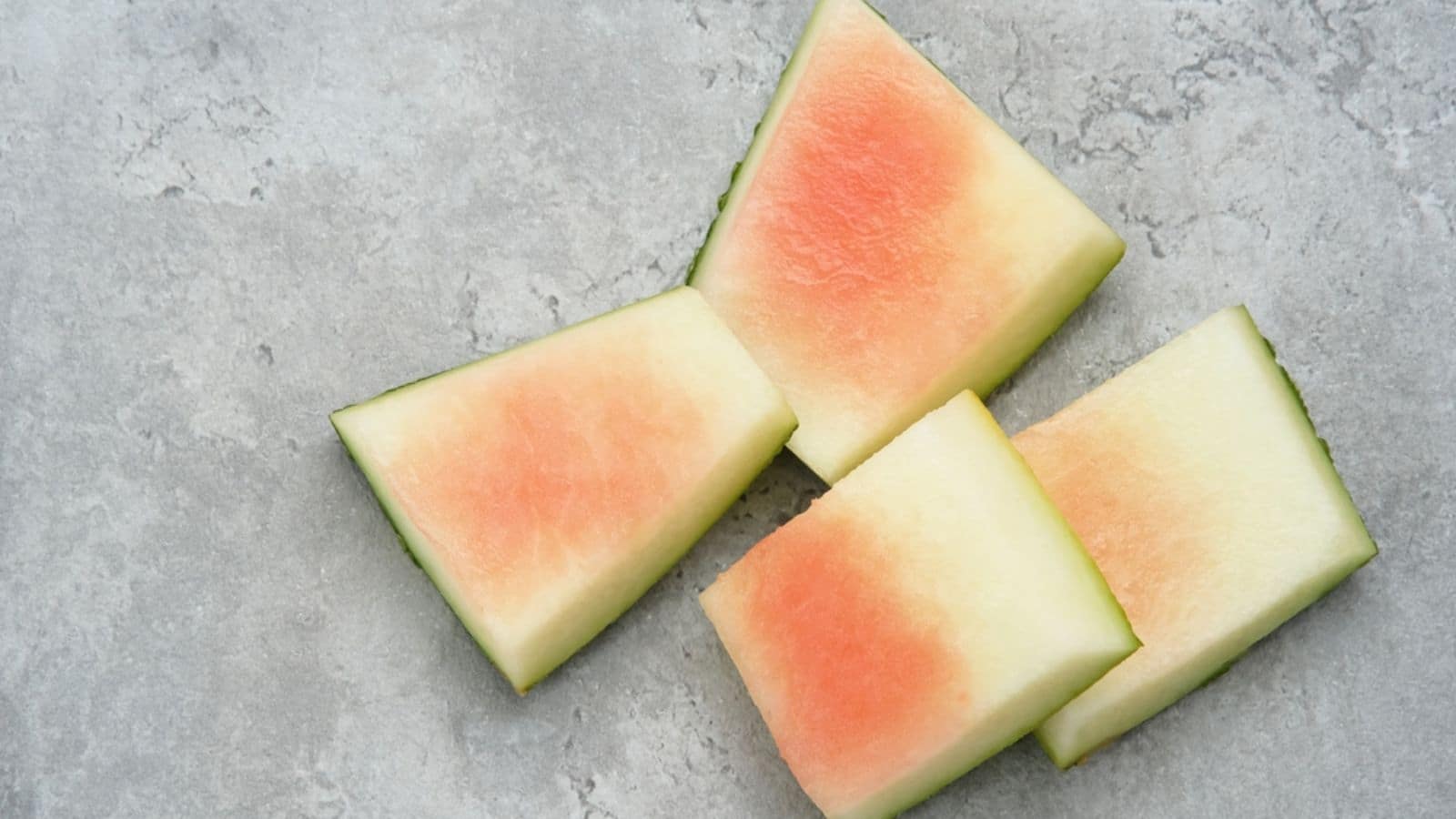
Proper handling techniques ensure that utilizing the outer layer of the melon remains safe and appetizing for everyday home cooks.
When a recipe calls for removing the fibrous green outer skin, a standard vegetable peeler works exceptionally well. The outer texture behaves similarly to its close botanical cousin, the cucumber, allowing it to peel right off with minimal effort. Home cooks can then easily dice, stick, or cube the remaining crisp white interior for various cooking styles.
Food safety advocates remind consumers that proper handling always begins with a simple rinse under cool running water before any knife touches the rind. There is no need for abrasive scrubbing or chemical solutions.
Proper Storage Guidelines
Proper refrigeration is necessary to maintain freshness and prevent spoilage after cutting into a fresh watermelon.
The National Watermelon Promotion Board recommends storing freshly cut watermelon pieces inside a sealed glass or plastic container.
When properly refrigerated, the cut fruit and rinds will typically keep safely for three to five days. Homemade watermelon rind pickles stored in a sealed glass jar can last up to two weeks in the refrigerator.
This standardization gives dietitians reliable data to confidently incorporate the entire fruit into modern meal planning and waste reduction strategies.
Question for you. Have you ever tried cooking or pickling watermelon rinds, or would you be willing to give it a try?





