

Harry Styles is not coming to your city. Your city is coming to him.
The singer’s Together, Together residency is bringing him to Madison Square Garden for 30 shows in New York, running from Aug. 26 through Oct. 31, 2026. It is his only U.S. stop on the tour, turning one city into the destination for fans who want to see him live.
But for many fans, getting inside the arena is only the beginning.
A ticket can now mean a hotel booking, a flight, restaurant bills, merchandise, and an entire weekend built around a single performance.
Harry Styles’ residency is a glimpse into a new era of live music, where the biggest concerts are no longer just shows. They are expensive fan events built around scarcity, travel, and the desire to be part of a moment.
The Ticket Is Only the First Expense
For a fan who lives near Madison Square Garden, seeing Styles may simply mean buying a ticket and getting to the venue.
For someone traveling from another state, the price of fandom looks very different.
Resale prices for Styles’ residency have varied significantly by date and demand, with some tickets appearing in the hundreds of dollars and premium seats reaching much higher.
Then there is the cost of being in New York.
Hotel rooms in the city can add hundreds of dollars per night, with recent averages landing around the mid-$200s to mid-$300s depending on timing and availability.
A fan traveling for one show could end up paying for:
- A concert ticket
- Transportation
- A hotel stay
- Food
- Merchandise
- Other event-related spending
The result is a very different kind of concert economy. Fans are not just buying access to an artist. They are planning an entire trip around them.
The Artist Stays Put. The Fans Move
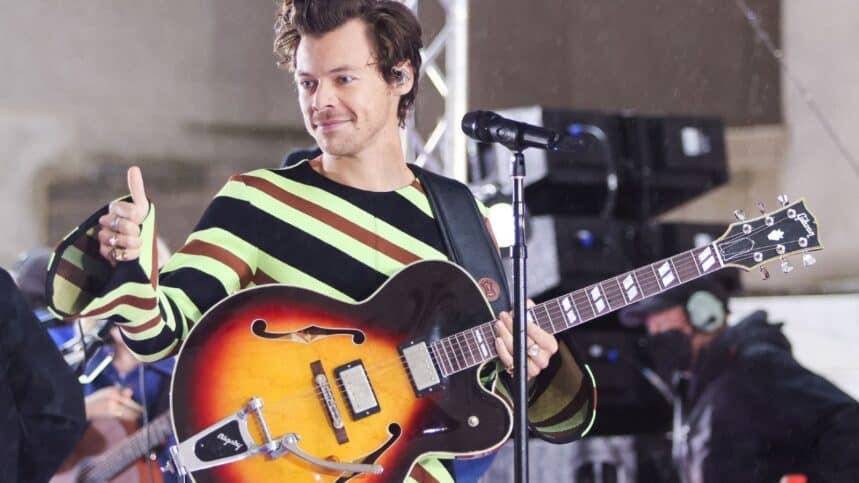
Residencies are becoming more attractive for superstar artists because they solve one of the biggest challenges of modern touring: moving the show itself.
Large-scale concerts require enormous productions, with crews, equipment, staging, and technology traveling from city to city.
Vox’s Robert Levine explained why staying in one location makes financial sense:
“The most expensive part is getting it all around. So imagine if you could minimize that expense and make the same amount of money.”
But the savings do not disappear. They shift.
Instead of the artist traveling across the country, fans often do.
Levine pointed to that trade-off:
“The fans, however, especially the ones coming in from out of town, have to pick up that tab now.”
That may be the biggest change in the concert business. The performer’s journey becomes simpler, while the fan’s journey becomes bigger.
Related: Harry Styles Chokes on Water and Collapses Onstage at Wembley During Scorching U.K. Heatwave
The Show Now Extends Beyond the Stage
The modern superstar concert is no longer limited to what happens after the lights go down.
Save this article
For Styles’ residency, Madison Square Garden has created additional experiences around the event, including themed photo installations, custom food and drinks, exclusive merchandise, and an official Together, Together pop-up in New York.
Those extras are part of a larger trend: fans increasingly want more than a performance.
They want something they can photograph, share, collect, and remember.
Taylor Swift’s Eras Tour showed how powerful that model can become. The U.S. Travel Association estimated that attendees spent an average of $1,300 locally during the 2023 U.S. leg on travel, hotels, food, merchandise, and related expenses.
Concerts are becoming economic events for the cities hosting them.
The Music Industry Has Learned How Much Superfans Will Spend
The biggest artists have something beyond a large audience: fans who are willing to organize their lives around seeing them.
Oxford Economics found that out-of-town concert attendees spend well beyond the price of admission, estimating that every $100 spent on a concert ticket was associated with another $334.92 in local spending on categories including lodging, food, transportation, and retail.
That helps explain why cities compete to host major entertainment events.
Hotels benefit.
Restaurants benefit.
Retailers benefit.
And artists have created new ways for fans to deepen their connection with the music.
The question is whether that makes concerts more meaningful or simply more expensive.
The Future of Concerts May Belong to Fewer, Bigger Moments
Live music is not losing its appeal.
Live Nation reported record attendance across its promoted shows in 2025, with 159 million fans attending events worldwide.
Fans still want the shared experience of hearing their favorite artists in person. But the biggest moments are changing.
A major concert is increasingly becoming something closer to a destination trip, where the cost goes far beyond the ticket price.
Harry Styles’ 30-night New York residency may not replace traditional tours. But it shows where the industry is moving: fewer locations, bigger productions, and fans willing to spend more to be part of something rare.
The question is no longer just whether fans can get a ticket. Can they afford everything that comes after buying the ticket?





