
A Walmart mango recall is drawing attention after Panorama Produce pulled certain Martina brand mangoes because of a possible Salmonella risk connected to the same farm source as the recalled fruit.
The recall covers 302 boxes of mangoes distributed to select Walmart stores in Connecticut, New York, New Jersey, and Pennsylvania between August 10 and August 21, 2026.
No illnesses have been reported in connection with the recalled mangoes, but the case offers a closer look at how food safety alerts can begin before customers notice a problem.
The recall was triggered by FDA sampling that found Salmonella in mangoes from the same farm source, but the sampled mangoes were not distributed into U.S. commerce.
The Recall Started With Testing, Not Customer Complaints
Food recalls often become public after shoppers report illnesses or companies receive complaints. This one followed a different path.
According to the FDA recall notice, the agency detected Salmonella in mangoes grown on the same farm connected to the recalled product. The sampled mangoes were not distributed in the United States, but the shared source led Panorama Produce to issue a voluntary recall.
The FDA has not stated that the recalled Walmart mangoes themselves tested positive for Salmonella. The concern stemmed from the connection between the products and their agricultural source.
That distinction matters because a recall can involve a potential risk without a confirmed finding in every recalled item.
Panorama Produce recalled Martina brand size 9 mangoes sold through select Walmart stores. The company issued the recall in coordination with the FDA after learning about the agency’s findings.
How a Mango Becomes a Recall Story
A mango may look like a simple grocery purchase, but tracing fresh produce through the supply chain requires more than just knowing where it was bought.
The recalled mangoes were linked to a farm source in Mexico before reaching Walmart stores in the United States. FDA sampling helped identify the connection between the farm and the recalled product.
Unlike many packaged foods with large printed labels, fresh produce often depends on smaller identifiers to determine whether an item is included in a recall. Stickers, product codes, and supplier information can become the details that separate recalled fruit from other produce sitting nearby.
For fresh produce, a small sticker can carry the information needed to trace a product from a store shelf back to its source.
In this case, the affected mangoes carried a light blue sticker with “Agrofepac, Produce of Mexico,” along with PLU number 4584 and UPC number 07503061948050.
Save this article
Related: 9 Fruits That Secretly Aren’t as Healthy as Everyone Claims
What Walmart Shoppers Should Check
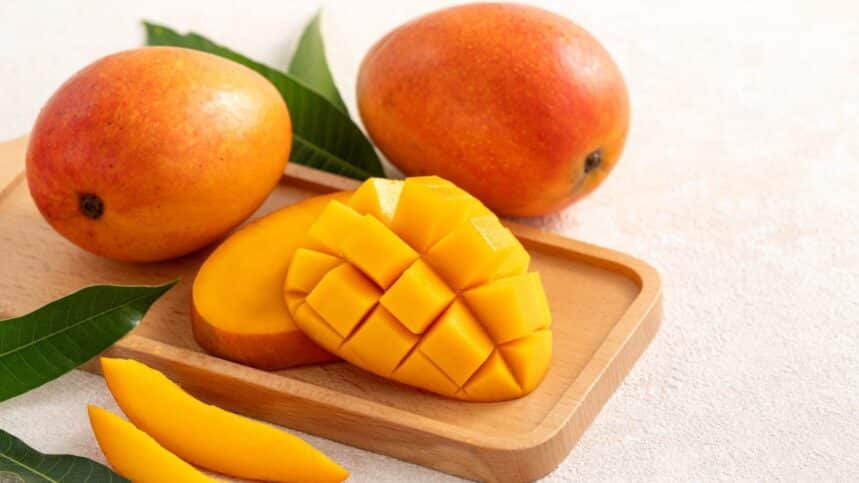
The recall applies to specific Martina brand mangoes, not all mangoes sold at Walmart.
Consumers who purchased mangoes should check whether their fruit matches the recall details. The affected products were sold in size 9 boxes and included the listed product identifiers.
The FDA advises consumers not to eat recalled mangoes. They should dispose of them or return them to the place of purchase.
The agency also provided information about Salmonella, which can cause symptoms including diarrhea, fever, abdominal pain, nausea, and vomiting. In some cases, infections can become more serious, including bloodstream infections.
The most important step for shoppers is to match the product details, not assume every mango is affected.
What This Recall Tells Us About Food Safety
The mango recall does not involve a reported outbreak or a confirmed finding that every recalled mango carried Salmonella. Instead, it shows how companies and regulators respond when testing identifies a possible risk connected to a product’s source.
The FDA notice does not provide a full list of individual Walmart stores that carried the mangoes. It also does not state how much recalled inventory remained when the recall was announced.
For shoppers, the available information comes down to the product details: Martina brand mangoes, the listed sticker codes, and distribution dates.
Food recalls often depend on precise details, and understanding them helps consumers know whether a warning applies to them.
The recalled mangoes represent a small part of the broader produce supply chain, but the response shows how far back you can trace information from a single product to its origin.
For consumers checking their kitchens, the question is straightforward: do the mangoes you bought match the recall information? If they do, the FDA recommends avoiding them. If they don’t, the recall doesn’t apply to that fruit.
When did you last check the sticker on your mangoes?





