

Microplastics have been reported in human blood and numerous tissues, adding an unsettling new dimension to the world’s plastic pollution problem. Researchers are now trying to answer the question that naturally follows: What is all that plastic actually doing to us?
The answer is simultaneously concerning and frustratingly incomplete.
Microplastics are small enough to travel where plastic was never meant to go
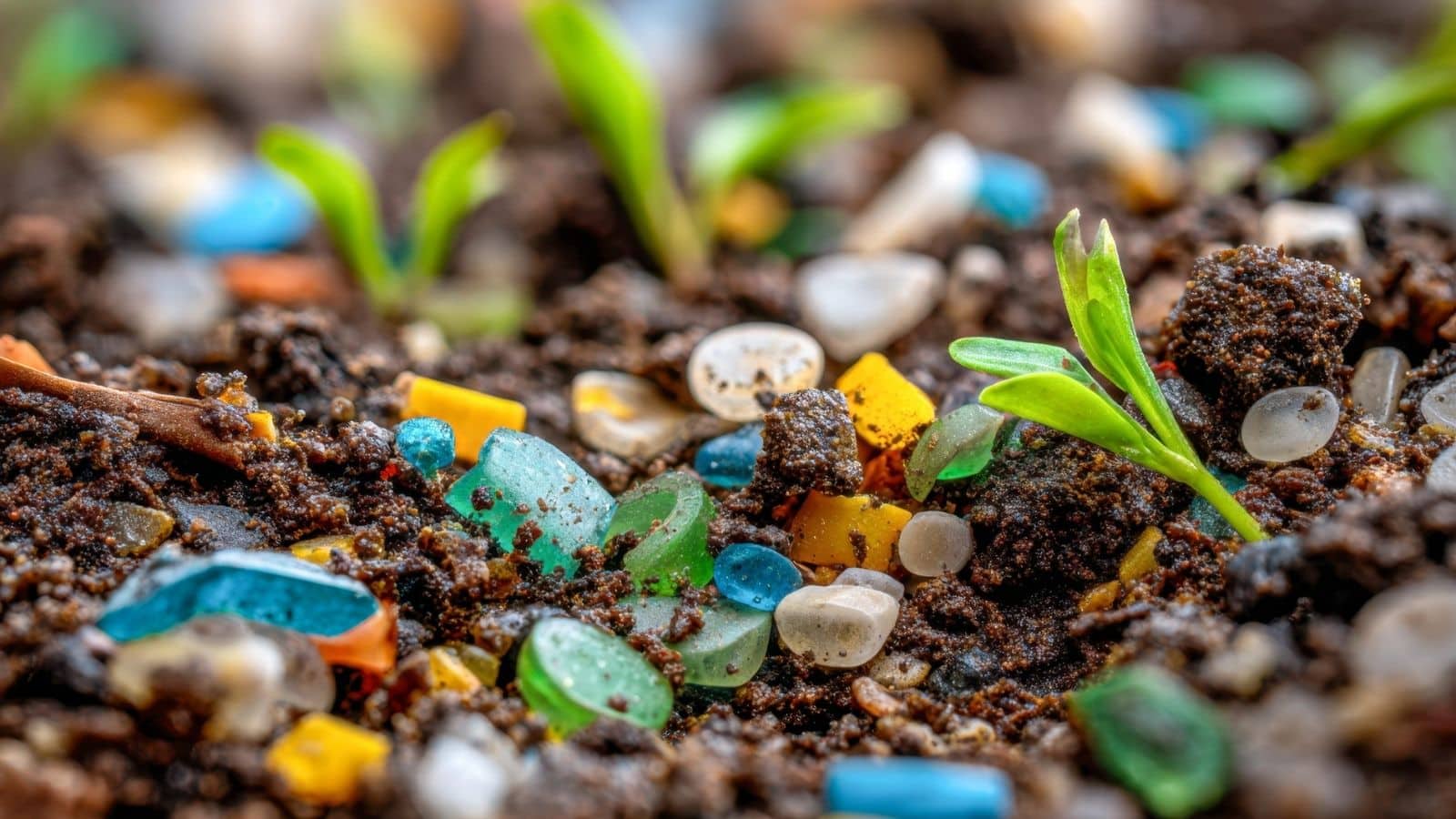
Microplastics are generally defined as plastic particles smaller than 5 millimeters. Even smaller particles are often described as nanoplastics. They can originate when larger plastic objects break down or can be released from products and manufacturing processes. Humans can encounter them through food, water and air.
Exposure to microplastics appears to be widespread, but exposure and harm are not the same thing.
A recent systematic review of microplastics and human health noted that particles have been detected in human biological samples and that ingestion and inhalation appear to be important routes of exposure. That confirms that some particles can enter the human body. It doesn’t automatically tell scientists what happens next.
Finding plastic in tissue doesn’t prove it caused disease
This distinction has become particularly important as alarming headlines about microplastics proliferate.
Scientists have proposed several mechanisms through which micro- and nanoplastics could potentially affect health, including inflammation, oxidative stress and endocrine disruption. Laboratory experiments and animal studies provide reasons to investigate those possibilities seriously.
But human beings aren’t laboratory dishes.
Scientists still have limited direct evidence showing that typical real-world microplastic exposure causes specific diseases in humans.
Researchers have to determine not only whether particles are present but how many, what type of plastic they contain, how small they are, how long they remain in the body and whether they produce biologically meaningful effects.
Those are much harder questions.
Some human studies have raised legitimate concerns
One reason the issue is receiving increasing scientific attention is that observational human studies have begun linking microplastic exposure or tissue accumulation with health outcomes.
Such findings deserve investigation, but they require careful interpretation.
People exposed to greater amounts of plastic may differ in numerous other ways—diet, occupation, air pollution exposure, socioeconomic circumstances or underlying health—that could also influence disease risk.
An association between microplastics and a health outcome does not by itself demonstrate that the particles caused the outcome.
This is a classic challenge in environmental health research. Scientists often cannot ethically conduct randomized trials deliberately exposing people to a potentially harmful substance for years.
Instead, evidence accumulates from laboratory research, animal studies, observational human data and biological mechanisms.
Save this article
Measuring microplastics is surprisingly difficult
There’s another complication that rarely makes headlines: studying microscopic plastic in a world filled with plastic is technically challenging.
Samples can potentially become contaminated during collection or processing. Researchers also use different techniques to identify particles, and studies don’t always measure the same sizes or types of plastic.
Nanoplastics pose an even greater challenge because they’re extraordinarily small.
A broad review of micro- and nanoplastic research concluded that evidence of their presence in human tissues is growing while emphasizing substantial gaps in understanding their health effects.
Scientists aren’t arguing about whether plastic pollution exists. They’re working to determine how much human exposure matters biologically.
That distinction gets lost when preliminary findings become “Plastic is poisoning everyone” on social media.
Can you reduce your exposure?
It is probably impossible to eliminate microplastic exposure completely. Plastic is embedded throughout modern food production, clothing, packaging, buildings and consumer products.
That doesn’t mean reasonable exposure reduction is pointless.
Reducing reliance on unnecessary single-use plastics, avoiding heating food in plastic unless the container is designed for it and choosing alternatives when practical may reduce certain exposures. But consumers should be skeptical of expensive products claiming to “detox” microplastics from the body.
There is currently no established medical detox that has been shown to remove microplastics from your tissues and improve health.
The larger solution may ultimately require changes in manufacturing, waste management and environmental policy rather than expecting individuals to somehow live plastic-free lives.
Final word
Microplastics present an unusual scientific problem because two things can be true simultaneously.
It is genuinely remarkable—and reasonably concerning—that researchers are detecting plastic particles in human biological samples. At the same time, science has not yet established what every detection means for long-term human health.
That uncertainty shouldn’t be used to dismiss the issue. Nor should it be transformed into certainty that isn’t supported by the evidence.
The most accurate conclusion right now is that human exposure is real, potential biological effects deserve serious investigation, and the magnitude of the health risk remains uncertain. Science will almost certainly learn much more as detection methods improve and researchers follow exposed populations over longer periods.
In the meantime, reducing unnecessary plastic exposure is reasonable. Panicking because you’ve ever drunk from a plastic bottle isn’t.