Scientists have found a possible reason some livers may struggle to heal even after a person stops drinking.
Researchers studying severe alcohol associated liver disease discovered that damaged liver cells can lose the ability to properly restart the repair process, pointing to a new explanation for why some advanced cases continue to be difficult to recover from.
The study reveals how changes inside liver cells may interfere with the body’s natural ability to rebuild damaged tissue.
Published in Nature Communications on September 10, 2025, the research identified disruptions in RNA splicing, a process cells use to create working proteins, and linked those changes to reduced activity of ESRP2, a protein involved in maintaining normal liver cell function.
Inside the Liver’s Repair System
Scientists found that damaged liver cells can struggle to follow the biological instructions needed to return to normal function.
To repair itself, the liver must produce cells that can perform the specialized tasks the organ requires. Researchers found that in severe alcohol associated liver disease, this process can be disrupted by changes in RNA splicing.
RNA splicing is how cells process genetic instructions before using them to make proteins. When that process changes, cells may produce different instructions than usual, affecting how they behave.
The research linked these changes to reduced ESRP2 activity. The protein helps control programs that help liver cells maintain their proper characteristics.
When Repair Cells Cannot Complete the Job
The study found that some injured liver cells enter a quasi-progenitor-like state without becoming fully functional liver cells or effective regenerative cells.
Researchers described these cells as having features of less mature cells, but they did not complete the transition needed for productive repair.
Graduate researchers Ullas Chembazhi and Sushant Bangru explained the condition: “They are neither functional adult cells nor proliferative progenitor cells.”
The finding shows that regeneration depends on more than creating new cells. Those cells must also regain the specialized functions that allow the liver to work properly.
Related: 10 Body Warnings That Mean Alcohol Is Starting to Cost You More Than a Hangover
Save this article
How Inflammation Affects Liver Recovery
Researchers found that inflammation-linked signals can interfere with the cellular pathway involving ESRP2.
The study identified transforming growth factor beta, also known as TGF-β, as a signaling pathway that suppresses ESRP2-driven epithelial splicing in experimental settings.
Researchers found that communication between surrounding stromal and immune cells and liver cells contributed to this process. In cell culture experiments, blocking TGF-beta signaling restored ESRP2 levels and improved RNA splicing patterns.
The experiment provides insight into how the process works at the cellular level, but it does not represent a treatment currently available to patients.
Why This Research Matters
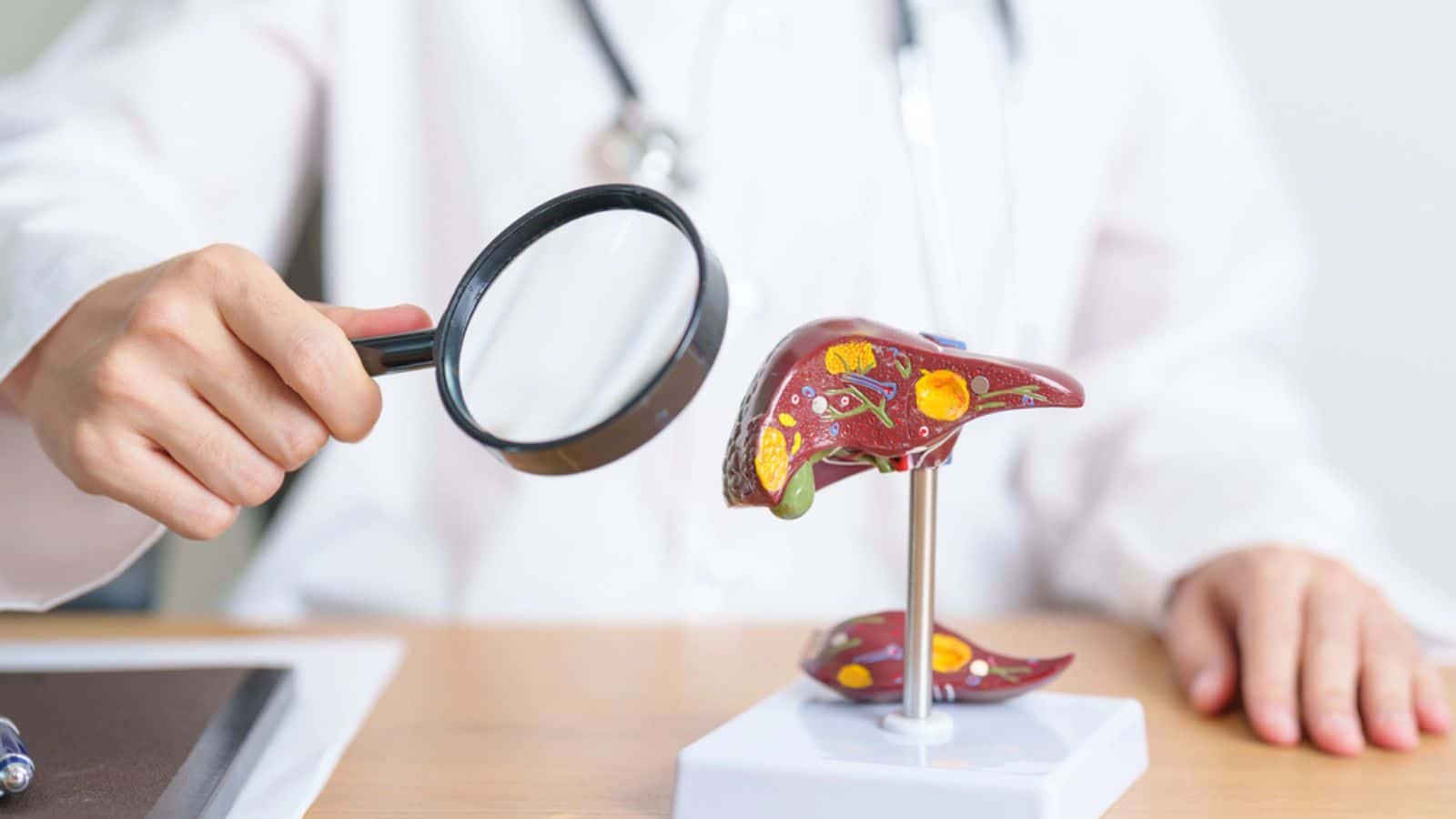
The study adds another layer to understanding severe alcohol associated liver disease by showing how damaged cells themselves can influence recovery.
Alcohol remains a major global health issue. The World Health Organization estimates that alcohol consumption was responsible for approximately 2.6 million deaths worldwide in 2019 from all causes combined.
Alcohol associated liver disease accounts for one part of that wider health impact. The current research specifically examined severe conditions including alcohol associated hepatitis and cirrhosis.
The findings expand earlier ESRP2 research by showing how changes in this protein are connected to disrupted regeneration pathways, giving scientists a clearer picture of what happens inside severely damaged liver tissue.
What Researchers are Studying Next
The findings point to possible future research targets, but they have not yet led to a medical therapy.
Scientists are continuing to examine whether correcting RNA splicing problems or restoring ESRP2-related pathways could improve liver recovery.
Researchers also need to understand why this process occurs more strongly in some patients and how other biological factors influence outcomes.
The liver’s ability to repair itself has always made it unusual among human organs. This study shows that regeneration is not a simple reset button. It is a carefully controlled process, and when the instructions inside cells become disrupted, rebuilding becomes much harder than it appears from the outside.
The liver has always been known for its ability to rebuild itself. The question now is: how can science help it finish the job when that ability starts to break down?