
Vitamin C and cancer have been tangled together in research for more than 70 years, usually without delivering a clean answer. A clinical trial published September 21 in Cancer adds another intriguing piece, this time involving people with blood disorders that can sometimes progress to leukemia.
The EVITA trial enrolled 109 patients. Half received a daily vitamin C supplement, while the others took a placebo, and researchers followed them for about three years. Neither the patients nor the trial staff knew who was receiving which treatment until the study ended.
The results did not match what the researchers expected. Their main measurement barely changed between the groups. Survival, however, looked strikingly different.
That unexpected split now sits alongside an unusual scientific trail involving vitamin C deficiency, inflammation, engineered mice, a cancer drug and a gene called TET2.
Eleven Deaths In One Group, 24 In The Other
The gap looks large on paper, and the group behind it is small and specific.
Every participant in the study had clonal cytopenia of undetermined significance (CCUS) or myelodysplastic syndrome (MDS). Both can progress to acute myeloid leukemia, and none of the 109 patients were receiving cancer treatment during the trial.
Fifty-five people took 1,000 milligrams of vitamin C daily for one year. Another 54 received placebo. More than half of the participants were vitamin C deficient at the start of the study, and supplementation brought their levels back into the normal range.
Over a median follow-up of 33.6 months, 35 participants died. Eleven deaths occurred in the vitamin C group, compared with 24 in the placebo group.
That difference is hard to ignore, but it also needs context. Researchers describe survival as an exploratory finding that would need confirmation in a larger phase 3 trial. A phase 2 study this size can uncover an interesting signal. It cannot prove that vitamin C caused the survival difference or that an individual patient lived longer because of it.
The Test The Trial Was Built Around
The best-looking result was not the one the researchers set out to find.
EVITA’s primary goal was to measure how quickly abnormal blood-cell clones grew from the beginning to the end of treatment. On that main test, researchers found no significant difference between the vitamin C and placebo groups.
Survival was not a prespecified primary endpoint, and the trial was not designed to settle whether vitamin C helps patients live longer. That makes the death numbers interesting, but not definitive.
The question now is what, if anything, might explain the gap.
Vitamin C changed levels of cytokines, signaling molecules involved in inflammation, in ways associated with better outcomes. Even so, the study did not establish that those changes caused the survival difference. Researchers are still analyzing the possible mechanism.
The trial also did not show that fewer patients developed acute myeloid leukemia. Whether vitamin C can prevent progression remains unanswered.
Related: The Surprising Superfoods That Boost Energy and Mood
The Safety Picture Had A Wrinkle
Serious problems were less common among vitamin C recipients, though not in every category.
Save this article
Across the trial and follow-up period, participants receiving vitamin C experienced fewer adverse events overall. Serious adverse events affected 18 of 55 people in the vitamin C group (33 percent), compared with 30 of 53 people in the placebo safety analysis (57 percent).
There is one unexplained detail in the published abstract: 54 people were assigned placebo, but the safety comparison lists 53.
A separate analysis found that anemia, pneumonia, internal bleeding, and acute aseptic arthritis, a sudden joint inflammation not caused by infection, appeared less often among people taking vitamin C. Gastrointestinal problems, meanwhile, were more common.
That breakdown does not provide event-by-event counts or establish that every difference was statistically significant. It therefore cannot show that vitamin C prevents pneumonia, anemia, bleeding, or the other conditions listed.
The Mouse Experiments Behind The Idea
A gene called TET2 gave researchers something concrete to test.
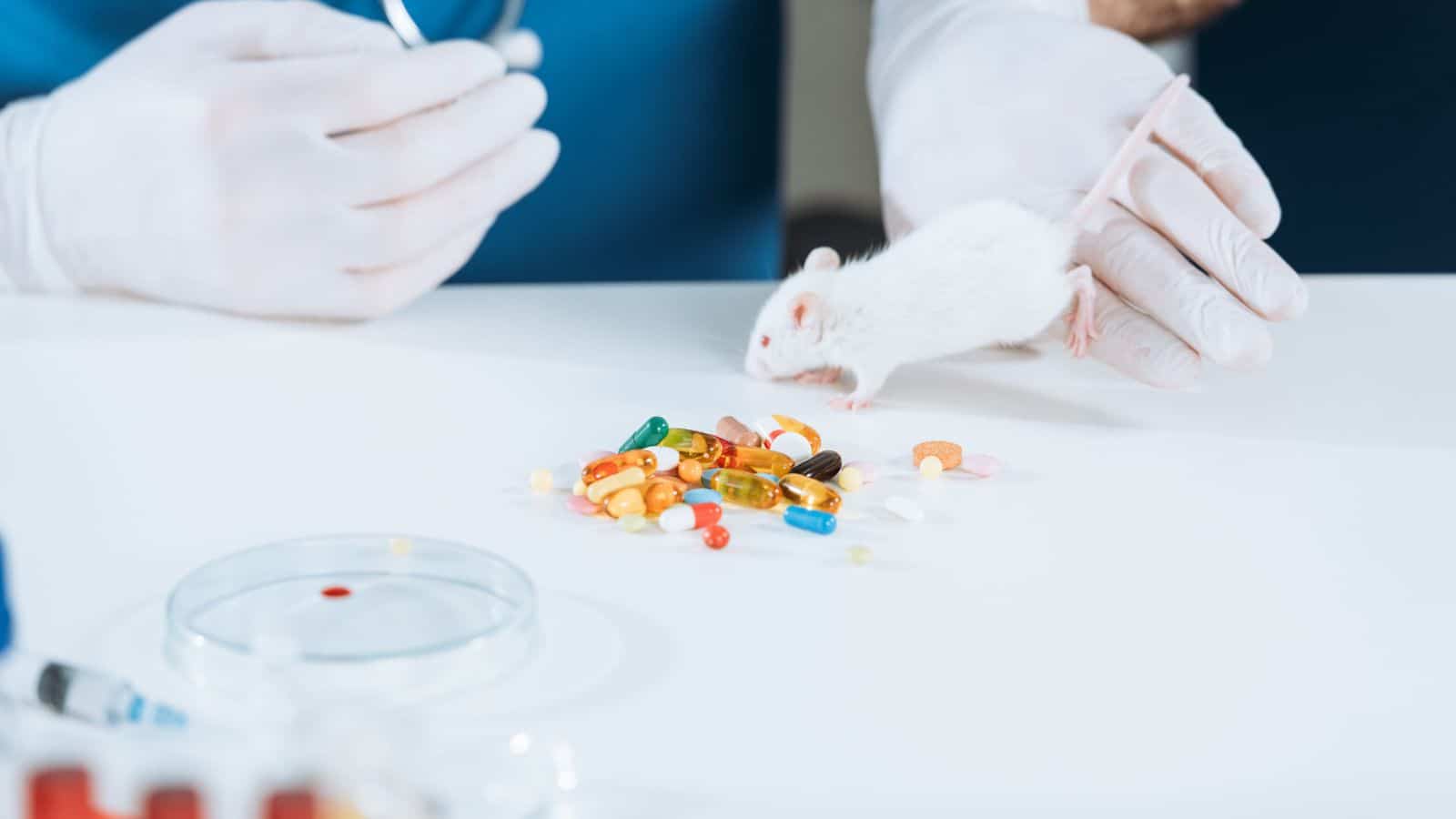
In 2017, New York University researchers studied genetically engineered mice in which they could manipulate TET2 activity.
TET2 normally helps a type of stem cell mature into white blood cells and eventually die. When the gene is mutated, those cells can begin dividing uncontrollably.
Reducing TET2 activity by 50 percent was enough to induce cancer in the mice. Restoring its activity stopped the runaway replication. Researchers also found that daily injections of 100 milligrams of vitamin C for 24 weeks slowed leukemia progression in mice with low TET2 activity. Untreated mice ended the experiment with three times as many white blood cells, which researchers at the time described as a sign of pre-leukemia.
Another clue came from laboratory work involving olaparib. Vitamin C helped the cancer drug kill more human leukemia cells in a dish than either treatment did alone.
A separate team led by Michalis Agathocleous reached related conclusions, though their experiment required an extra step. Ordinary mice make their own vitamin C, so the researchers had to disable that ability before studying what deficiency did.
Why Oranges Won’t Do The Job
The doses in the mouse work and the human trial sit far apart, and neither doubles as a shopping list.
The mouse experiments and laboratory studies were not conducted in patients, and EVITA is not described as a direct follow-up. The connection is the biological rationale: vitamin C supports TET2, an enzyme that switches genes on and off.
High-dose intravenous vitamin C is not FDA-approved as a cancer treatment and carries risks, including kidney failure in people with a history of kidney disease. Those warnings apply to IV treatment, not the oral regimen used in EVITA.
For now, Kirsten Grønbæk, who leads EVITA internationally, says it is too early to make definitive recommendations.
The survival gap has given them a reason to keep looking. Whether that leads to a larger phase 3 trial, and whether the finding holds up when many more patients are studied, are the next questions that matter.
If you were told to watch and wait on a precancerous blood condition, would results like these make you want to join a larger trial?
More Articles You Might Be Interested in:
- 7 Foods That Are High in Vitamin C
- 12 fruits that contain more vitamin C than oranges
- Heavy Use of This One Substance Could Lead to a Vitamin Deficiency Linked to Fatigue and Memory Problems





