
Eating out should be an opportunity to enjoy good food and good company. When you have fructose intolerance, however, a restaurant menu can raise a lot of questions. Is there honey in the salad dressing? Does the cocktail contain agave? Is the chicken marinated in fruit juice?
You cannot always know exactly what goes into a restaurant meal, but a little preparation and a few specific questions can make ordering easier. The goal is to understand your own tolerance and find meals you enjoy without imposing unnecessary restrictions.
First, an essential distinction: This article addresses fructose malabsorption, sometimes called dietary fructose intolerance. It does not apply to hereditary fructose intolerance, a rare genetic disorder that requires strict, specialist-directed dietary management.
- Understand What You Actually Need to Limit
- Look at the Menu Before You Go
- Menu Language That Deserves a Closer Look
- Consider an enzyme supplement for added flexibility
- Give Your Server a Specific Request
- Do Not Let Your Drink Become an Afterthought
- Fructose Intolerance Does Not Automatically Require Gluten-Free Ordering
- You May Still Have Room for Dessert
- Use Your Own Experience to Make the Next Meal Easier
- The Takeaway
Understand What You Actually Need to Limit
Fructose is a sugar found in many fruits, some vegetables, and various sweeteners. With fructose malabsorption, the small intestine does not fully absorb the fructose consumed. In susceptible people, particularly those with irritable bowel syndrome (IBS), this can contribute to gas, bloating, abdominal pain, and diarrhea.
You can read more in our article: Fructose Intolerance: Symptoms, Foods to Watch, Testing, and Management
Both the amount consumed and the balance of fructose and glucose matter. With the low FODMAP diet, the concern is excess fructose, meaning fructose present in greater amounts than glucose. This is why foods containing fructose do not all receive the same dietary advice.
Having fructose malabsorption does not automatically mean you need to avoid all fruit, all sugar, or every FODMAP group. Monash University recommends restricting FODMAPs when they cause troublesome symptoms and working with a Registered Dietitian to identify appropriate portions and personal tolerance. A breath-test result alone does not tell you exactly what you can comfortably eat at dinner.
Look at the Menu Before You Go

Reading the menu in advance gives you time to consider your choices without feeling rushed. Look for dishes with clearly described components and opportunities for simple changes.
A grilled fish entrée with rice and vegetables may be easier to adapt than a dish cooked in a premade sweet sauce. A salad might work well with a different dressing or without a fruit topping. The important question is whether the kitchen can adjust the ingredients that matter to you.
If the menu leaves you uncertain, call during a quieter period. Ask about one or two dishes you would actually like to order. A focused question gives the restaurant something concrete to investigate. Checking menus, calling ahead, and requesting sauces separately are practical dining-out strategies.
Menu Language That Deserves a Closer Look
Certain menu descriptions can alert you to ingredients worth asking about. “Honey-glazed,” “honey-roasted,” “honey mustard,” “agave-sweetened,” “mango salsa,” “apple reduction,” and “pear chutney” name ingredients that may contribute excess fructose. They are reasons to investigate, rather than automatic reasons to rule out a dish. The recipe, serving size, and your personal tolerance matter.
Other descriptions are less specific. “Fruit-glazed,” “fruit reduction,” “fruit compote,” “fruit-sweetened,” “juice-sweetened,” and “sweetened with fruit juice concentrate” call for a follow-up question: Which fruit or juice is used? An apple juice reduction and a squeeze of lemon are very different ingredients.
Watch for these descriptions throughout the menu, including on savory dishes. A “sweet onion jam,” “sticky glaze,” “sweet chili sauce,” “barbecue glaze,” or “house vinaigrette” does not necessarily contain excess fructose, but the name alone will not tell you which sweetener the kitchen uses. Ask whether it contains honey, agave, high-fructose corn syrup, or apple or pear juice concentrate.
On the drinks menu, “agave margarita,” “honey syrup,” “fruit nectar,” “juice blend,” and “house-made sour mix” are useful prompts to check ingredients. Smoothies and juice-based drinks also deserve attention because a large serving can deliver a substantial amount of fruit sugar.
Finally, “naturally sweetened,” “no refined sugar,” “no added sugar,” and “sugar-free” do not establish whether something will suit you. A naturally sweetened dessert may contain honey or agave. A no-added-sugar smoothie can still contain considerable fructose from fruit and juice. Sugar-free products may contain sugar alcohols, which are a separate potential digestive trigger.
Ask whether sauces and glazes can be served on the side, and whether the protein has already been marinated. Leaving off a finishing glaze will not remove ingredients used in the marinade.
Consider an enzyme supplement for added flexibility
Even with careful planning, dining out can mean encountering unexpected sources of fructose in sauces, dressings, marinades, and desserts. For people managing fructose malabsorption, an enzyme supplement such as Fructaid may provide another useful tool. Fructaid contains glucose isomerase, an enzyme that helps convert fructose into glucose in the small intestine, where it can be more readily absorbed.
Taken just before eating or drinking foods containing fructose, Fructaid is designed to help reduce digestive discomfort associated with fructose malabsorption. Its convenient capsules are easy to carry when dining out or traveling. While it doesn’t replace understanding your personal triggers or making informed menu choices, Fructaid may offer additional flexibility and peace of mind when enjoying meals away from home. Fructaid is not intended for people with hereditary fructose intolerance.

Give Your Server a Specific Request
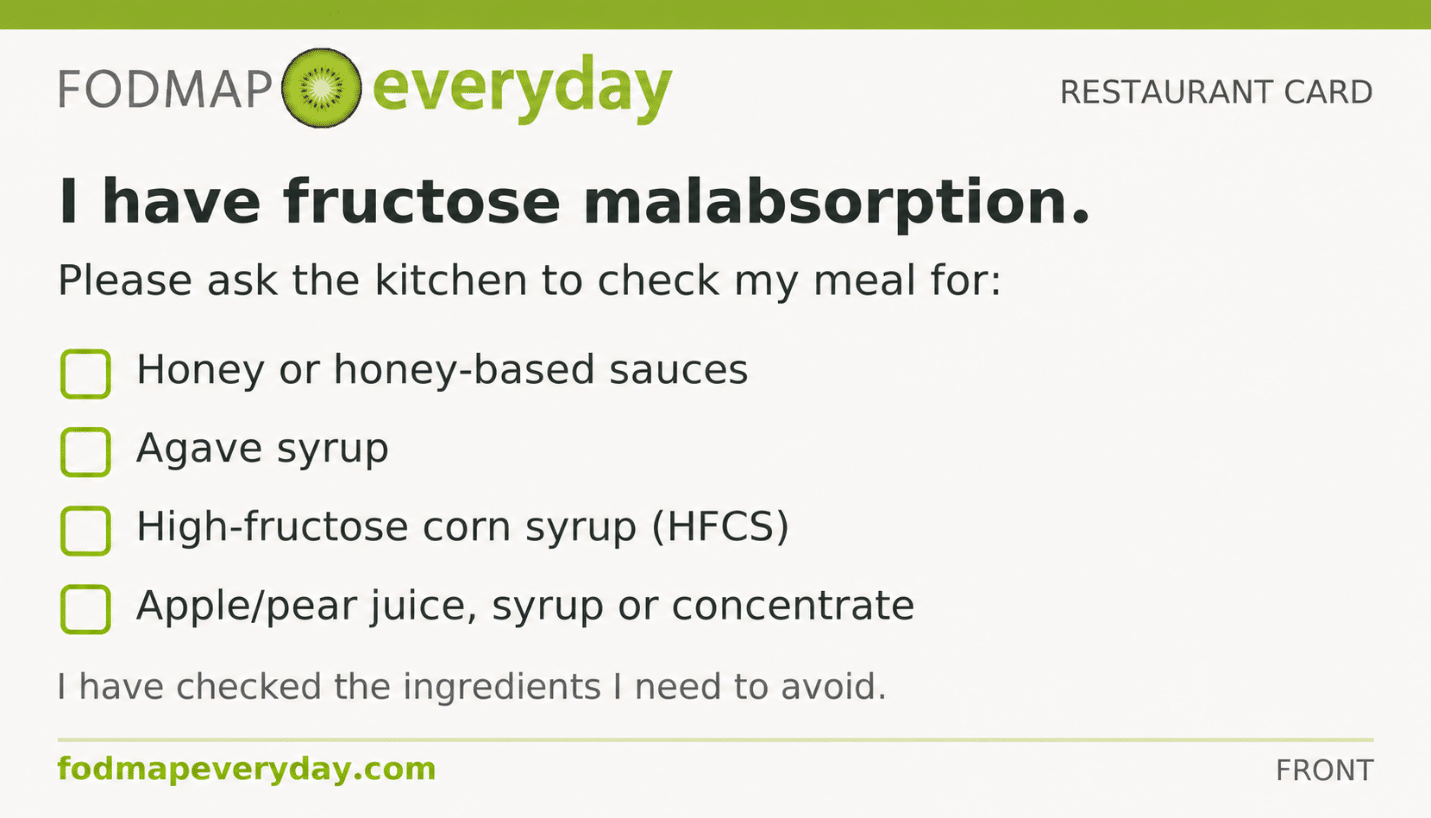
“I have fructose intolerance” does not tell a server enough to help you. They may understandably associate fructose only with fresh fruit or assume that every type of sugar is a problem. See the downloadable waiter card below.
Instead, explain the ingredients you need the kitchen to check.
For example:
“I have a dietary intolerance and need to avoid honey, agave, and apple or pear juice in this meal. Could you check whether the chicken is marinated with any of those? If possible, I’d like the sauce on the side.”
Adapt that wording to your own established triggers. You do not need to recite a long list of foods you tolerate perfectly well.
If the server is unsure, ask whether someone in the kitchen can confirm. A clear answer that a dish cannot be modified is useful information, too. It allows you to choose something else.
Take our free fructose intolerance restaurant card with you
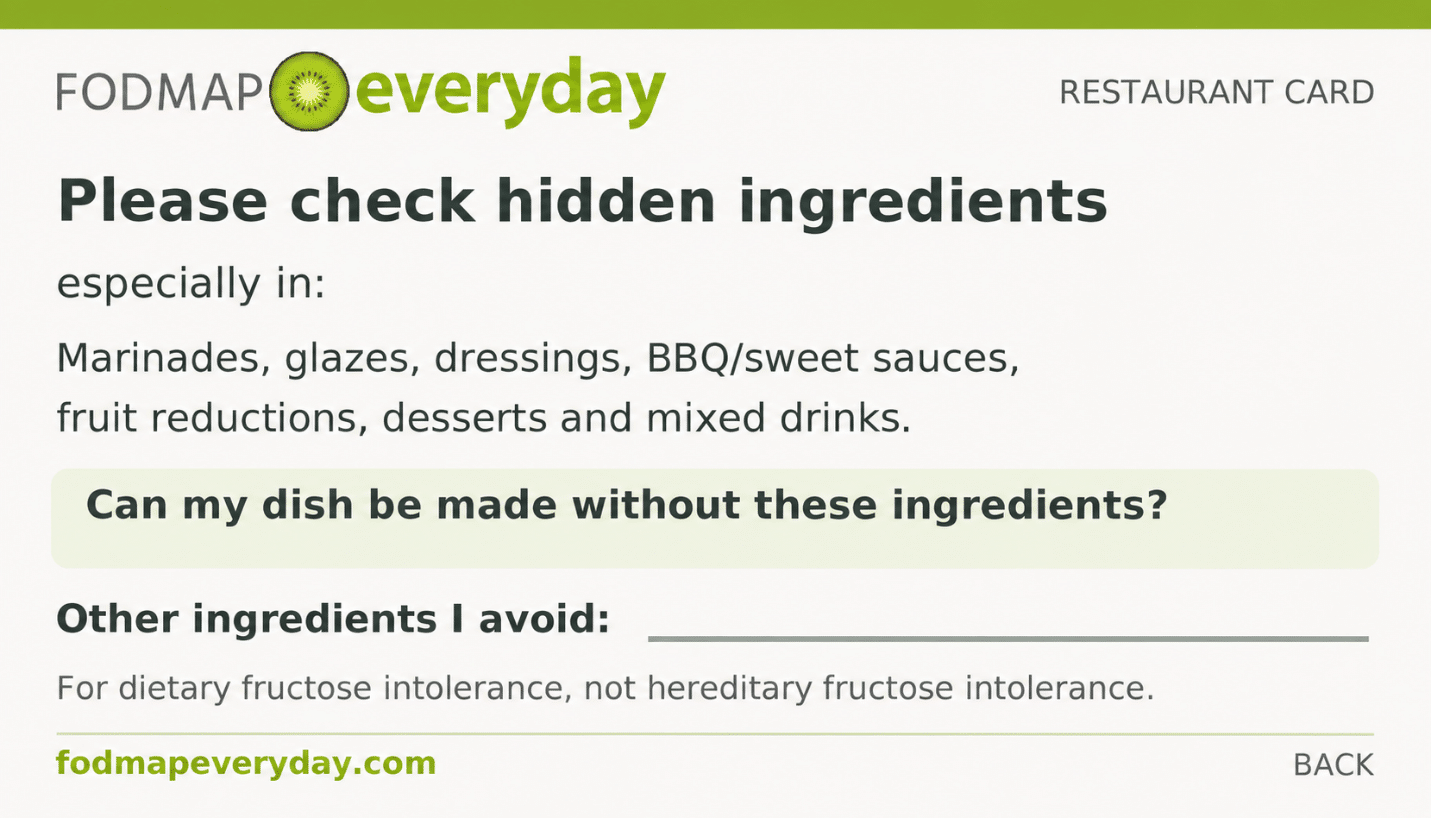
To make dining out easier, we’ve created a free, printable, wallet-size fructose intolerance card you can show your server when ordering. Simply download and print the card, check off the ingredients you need to avoid, and add any additional personal triggers.
The card highlights common hidden sources of excess fructose, including honey, agave, and certain fruit-based sweeteners, and asks restaurant staff to check sauces, marinades, dressings, and other ingredients that may not be listed on the menu. Keep it in your wallet or save it to your phone so you can communicate your dietary needs clearly and confidently whenever you eat out.
Do Not Let Your Drink Become an Afterthought

It is easy to scrutinize an entrée and then order a drink without asking what is in it. Smoothies, juice blends, specialty lemonades, and cocktails or mocktails can contain multiple fruit ingredients or added sweeteners.
Ask what is used in the house mix and whether honey or agave is added. A large juice-based drink also represents a different amount of fruit sugar than a small garnish. Concentrated fruit sources and large servings of juice deserve particular attention when managing fructose intake.
Water or an unsweetened drink you already tolerate can simplify the meal. If you want something more elaborate, ask the same ingredient questions you would ask about your food.
Fructose Intolerance Does Not Automatically Require Gluten-Free Ordering
Fructose and fructans are different carbohydrates. Despite their similar names, they are separate FODMAP categories. Garlic, onion, and wheat are commonly discussed because of their fructan content, not because they are interchangeable with excess fructose.
If excess fructose is your only identified dietary trigger, you may not need to request gluten-free bread, omit garlic, or avoid dairy. Those changes should reflect your individual needs, including any separately diagnosed conditions.
Likewise, a gluten-free, vegan, or dairy-free symbol does not tell you whether a dish contains honey, agave, or fruit juice concentrate. Ask about the relevant ingredients rather than relying on a menu label designed for a different dietary requirement.
You May Still Have Room for Dessert
Fructose malabsorption does not necessarily mean dessert is off the menu. Table sugar, or sucrose, contains equal amounts of glucose and fructose and is not treated the same way as a sweetener containing excess fructose. White granulated sugar and pure maple syrup are low FODMAP sweetener options, while noting that large quantities of sucrose can still be poorly tolerated by some people with IBS.
That does not make every cake, custard, or scoop of ice cream suitable for everyone. Other ingredients, your portion, and any additional intolerances still matter.
Ask about fruit fillings, honey drizzles, and sauces. You might find that a smaller portion of a dessert made with ingredients you tolerate works better for you than a large fruit-based option marketed as “naturally sweetened.”
Use Your Own Experience to Make the Next Meal Easier
After a successful restaurant meal, save a quick note about what you ordered and any modifications. Over time, you can build a useful collection of restaurants and dishes that work for you.
If a meal causes symptoms, try not to turn one uncomfortable evening into a permanent ban on every ingredient on the plate. Restaurant meals contain many variables. A dietitian can help you assess patterns and distinguish a fructose issue from other possible triggers.
The Takeaway

Eating out with fructose malabsorption becomes more manageable when you know which ingredients and portions tend to bother you. Review the menu, ask specific questions, and choose dishes the kitchen can realistically adapt.
You do not have to solve every dietary question at every meal. A few reliable ordering strategies can help you spend less time investigating your plate and more time enjoying the people around your table.