

For much of the 20th century, a trip to the big downtown department store was an event. Families dressed up, rode the elevator to the toy floor, ate lunch in a tea room and lined up on the sidewalk to see the holiday windows. The store was a place to shop, but it was also a place to spend a whole afternoon.
Most of those rituals faded so gradually that few shoppers noticed the moment they ended. Malls, big-box chains and online ordering changed where money gets spent, and the extras that once set department stores apart were trimmed one by one. Here are 8 department store traditions that quietly slipped away, along with what is left of them today.
Many of these customs live on mostly in memory and in attics. Collectors who enjoy sourcing and decorating with vintage Christmas decorations still hunt for store-branded ornaments and mascot toys, and several of the habits below would fit right in on a list of odd American traditions that confuse the rest of the world. The season itself still carries plenty of rituals, as any roundup of strange Thanksgiving traditions that everyone pretends aren’t weird shows, even if fewer of them happen inside a department store.
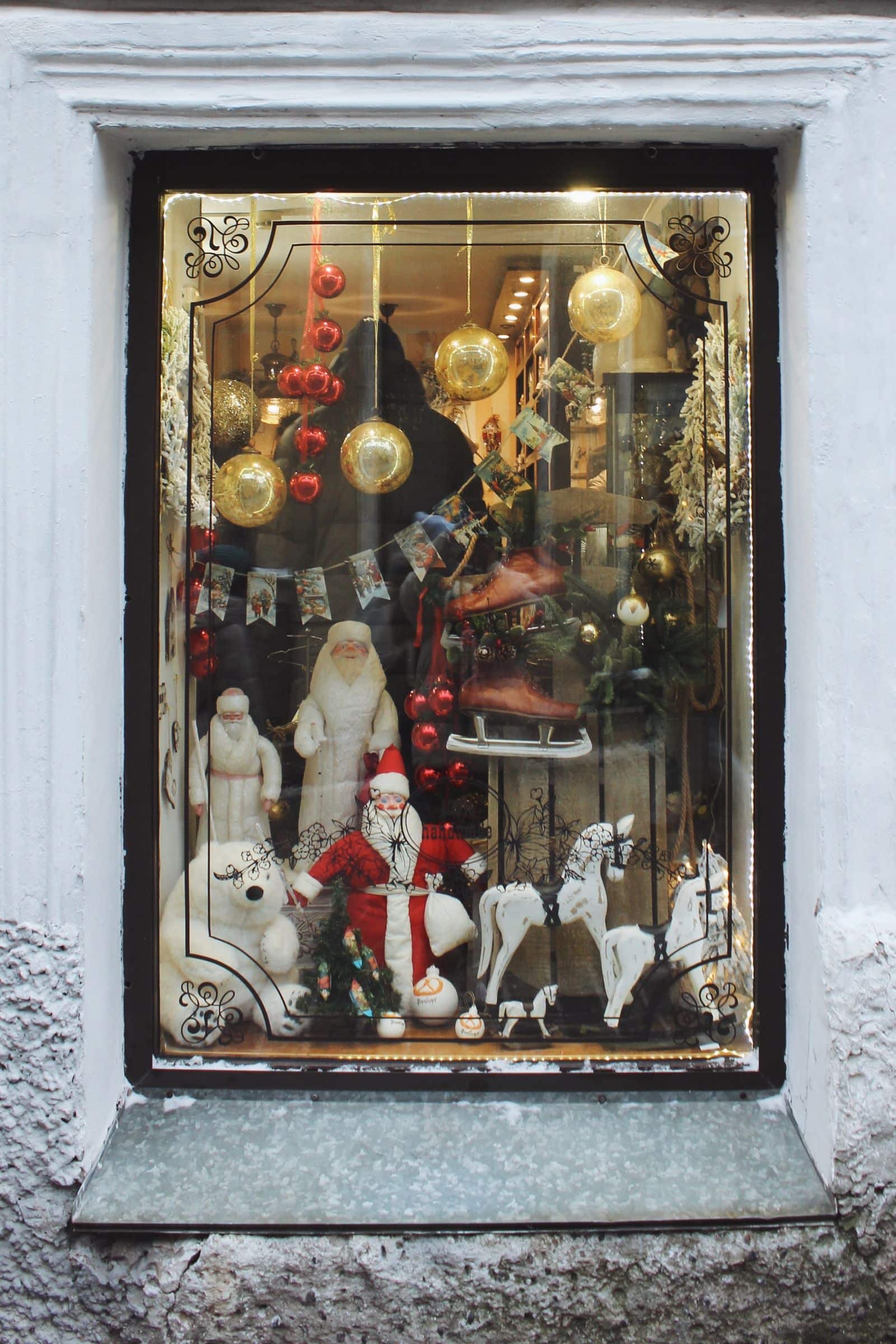
1. Block-Long Holiday Window Displays
In Chicago, Marshall Field’s, Carson Pirie Scott and Sears once lined State Street with competing Christmas windows, and crowds walked the block to compare them. A MeTV look at the fate of department store Christmas windows notes that only Macy’s remains on that stretch today, after suburban malls without street-facing windows pulled shoppers away from downtown.
A handful of flagship stores still dress their glass every year, but the list keeps shrinking. When Lord & Taylor sold its Fifth Avenue flagship to WeWork in February 2019, it meant the end of one of Manhattan’s best-known window traditions.
2. Downtown Santas With Bragging Rights
Before mall Santas became the norm, a visit to Santa at a big downtown store was the main event of the season. According to a Retail Dive report on what department stores gave up when they gave up on the holidays, shoppers in cities with several big stores used to argue over whose Santa was the “real Santa Claus,” a rivalry historian Bruce Kopytek described. Suburban malls eventually took over hosting Santa, with less fanfare.
3. Kids-Only Gift Shops and Toyland Monorails
Some stores set aside special rooms where children could pick out presents for parents or siblings on their own while the adults shopped elsewhere. The same Retail Dive report recalls stores running kid-size monorails above the sales floor, giving young shoppers a bird’s-eye view of the toy department. These spaces took up valuable floor space and staff time, and they disappeared as stores cut costs.
4. Store Mascots and Yearly Collectibles
Regional chains once had holiday characters of their own. Mr. Bingle, the snowman created by New Orleans store Maison Blanche, became a local icon, and Dayton’s in Minneapolis capped holiday visits with an annual Santa Bear collectible. After Dillard’s acquired Maison Blanche, Mr. Bingle survived only as a remnant, with some merchandise still sold at the holidays. When local chains were bought and rebranded, many of these hometown mascots simply faded out.
5. Tea Rooms and Upper-Floor Lunch Spots
A sit-down lunch on an upper floor was once part of the shopping trip. A Tasting Table roundup of forgotten department store restaurants describes Lord & Taylor’s Bird Cage tea room, which served afternoon tea for 50 cents per person, and Bloomingdale’s Le Train Bleu, a train-carriage-themed restaurant that left its sixth-floor home in 2016 after 37 years. Saks Fifth Avenue’s Café SFA closed in 2018.
A few survivors remain. The Walnut Room, which opened in 1907 on Marshall Field’s seventh floor and now operates inside Macy’s in Chicago, is billed as the longest continuously running department store restaurant in America, and Neiman Marcus still serves popovers with strawberry butter at The Zodiac in Dallas.
6. Uniformed Elevator Operators
In many big stores, the elevator ride came with a guide. As the history of the elevator operator explains, department store operators greeted riders, announced which merchandise waited on each floor and sometimes mentioned special offers along the way. Push-button elevators let shoppers choose floors for themselves, and the job nearly vanished. Some department stores in Japan and Taiwan, such as Mitsukoshi and Sogo, still keep operators on staff.
7. Free Holiday Gift Wrapping
A wrapping counter staffed by clerks who could turn a shirt box into a polished present was once a standard holiday perk. In a Marketplace interview on department store gift wrapping, Wall Street Journal reporter Elizabeth Holmes explained that retailers competing on price came to see wrapping as time-consuming and costly, so many free services became paid add-ons or branded marketing. Gift bags and self-serve stations have largely filled the gap.
8. The Giant Holiday Wish Book
For decades, the arrival of a thick holiday catalog was a family event, with children circling toys page by page. Sears published its first Sears Wish Book in 1933, and earlier editions ran more than 300 pages. After Sears stopped its big-book catalogs in the U.S. in 1993, the Wish Book shrank, returning in 2007 as a smaller catalog of about 100 pages.
That shift from page-turning to scrolling mirrors changes in many other parts of daily life, from the classic U.S. traditions fading fast to the city customs covered in Vegas traditions that quietly disappeared over time.
What Is Left of the Old Department Store Experience
Not everything is gone. Macy’s still stages the Thanksgiving Day parade it has televised since 1948, a handful of flagships still compete with holiday windows, and a few historic dining rooms still seat holiday crowds under giant Christmas trees. The difference is that these are now special destinations rather than everyday parts of a shopping trip.
For shoppers who remember the elevator operator calling out floors or the smell of popovers in a tea room, these 8 traditions are reminders that department stores once sold an experience along with the merchandise. Retail designers even had a name for it: “retail theater.”
This article was written with the help of AI tools and checked against the sources linked above.




