

A crumpled cup on a sidewalk is a tiny thing, and most passersby step around it without a second thought. A smaller group stops, bends down and carries it to the nearest bin, even though someone else dropped it and nobody is watching. That quick decision says more about a person than it seems to.
Researchers who study litter have spent decades asking why some people tidy up public spaces while others ignore the mess or add to it. Their findings, combined with what behavioral scientists know about social norms, point to a set of habits and outlooks that tend to show up together. These 7 traits come up again and again among the people who quietly clean up after strangers.

1. A Strong Sense of Personal Responsibility
The most consistent thread is a feeling that the problem belongs to everyone, including the person looking at it. A team from Singapore Management University analyzed survey answers from about 1,400 Singapore residents and found that a sense of personal obligation was a key driver of litter prevention. As the Singapore Management University summary of that research explains, beliefs about what people ought to do were a stronger push toward responsibility than simply watching what others do.
People who pick up stray trash usually skip the mental step of asking whose fault the mess is. They see a small fix within reach and handle it. That attitude echoes many of the old-school etiquette rules that have disappeared over the years, which were built around leaving shared spaces better than they were found.
2. They Resist the Bystander Effect
The same Singapore research flagged something counterintuitive. When people believe others are already handling a problem, some feel let off the hook. Researchers described this as a version of the bystander effect, where responsibility spreads so thin across a crowd that nobody acts.
Those who stop for a wrapper on a busy street tend to break that pattern. They do not wait for a city crew, a store employee or the original litterbug to come back. Interestingly, the researchers also noted that when few people are doing the right thing, some individuals feel a stronger pull to step in and make a difference. Plenty of the people who pick up litter seem to fit that description exactly.
3. They Notice Their Surroundings
Picking up litter starts with seeing it, and many people simply do not register a bottle cap in the grass or a receipt by a bench. Those who clean up often have a habit of scanning their environment, whether it is a park trail, a parking lot or a train platform.
That awareness matters more than it might seem. Social psychologist Robert Cialdini, Regents Professor Emeritus at Arizona State University, has long argued that litter spreads because people take cues from what is already on the ground. In an ASU W. P. Carey School of Business article, he summed it up in three words: “Litter begets litter.” People who remove the first piece are, in effect, interrupting a chain reaction before it starts.
4. They Care About Community Standards
A clean block sends a message, and people who tidy up public spaces tend to understand that. Cialdini’s advice to cities is to keep cleaning, because a pristine area signals that littering is not acceptable there. Individuals who grab a stray can are doing the same job on a smaller scale.
This sense of shared standards is something many older generations took for granted, and it is one of several Boomer habits that are making a comeback as neighborhoods organize cleanup days and walking groups carry bags along their routes. It also connects to how communities are seen from the outside, a point raised in lists of American habits and phrases that are rude in other countries.
5. They Act the Same Whether or Not Anyone Is Watching
Being observed changes behavior. A field experiment published in PLOS ONE by Melissa Bateson and colleagues found that signs showing images of watching eyes reduced littering, though only when 6 or more people were nearby. The same study confirmed that litter already on the ground encouraged more littering.
The people described here do not need the eyes on the sign. The Singapore survey even asked respondents whether they would pick up litter they had dropped by accident when no one saw, which gets at the heart of this trait. Those who clean up after strangers tend to have internal standards that stay steady in an empty park and a crowded plaza alike. That kind of consistency is what many people mean when they talk about integrity.
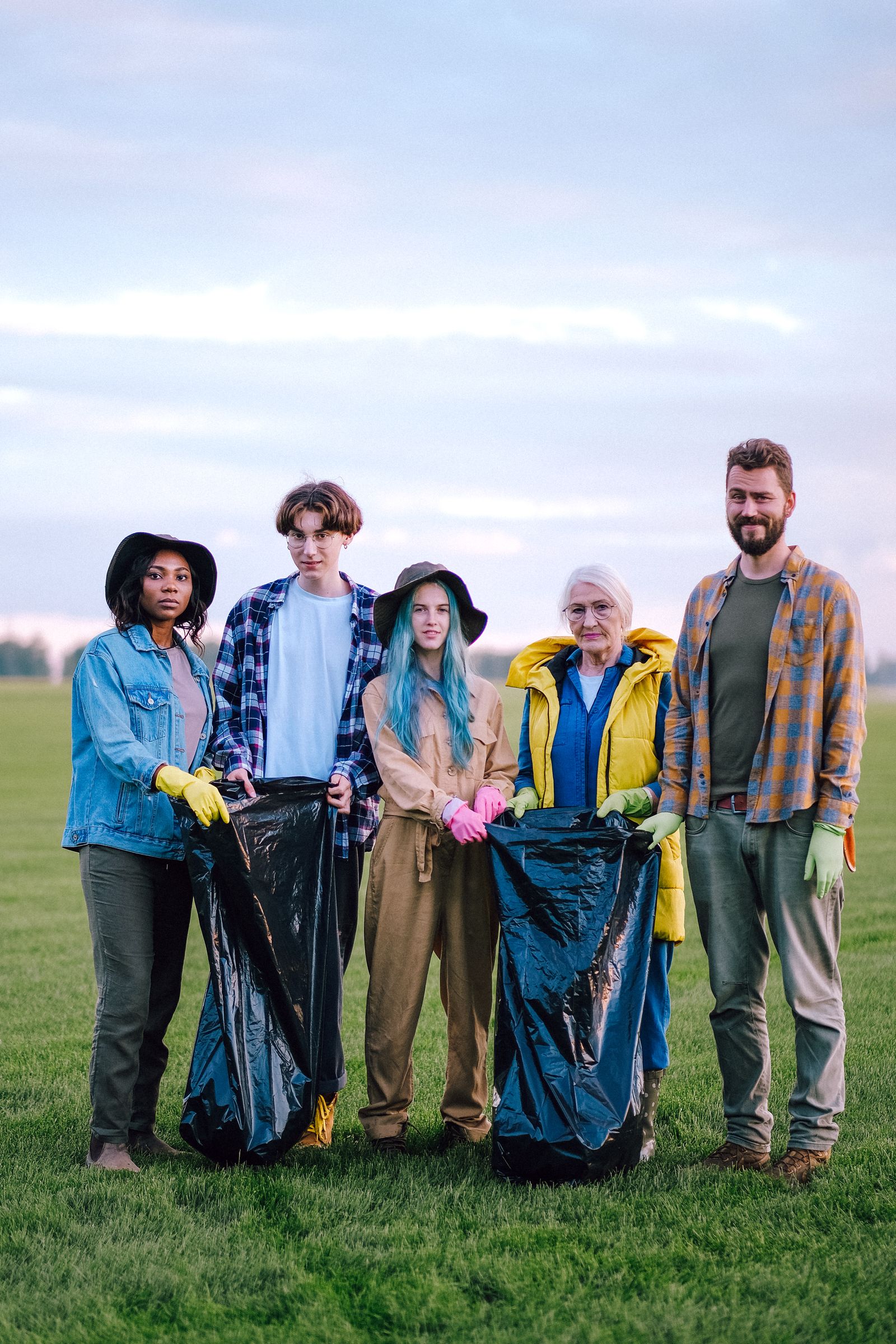
6. They Prefer Quiet Action Over Confrontation
When someone litters right in front of a crowd, how do people react? Researchers Joël Berger and Debra Hevenstone tested this by staging littering at tram stops in Bern, Switzerland, and subway stops in New York City. According to the British Psychological Society’s Research Digest, nearly half of the staged littering in Bern drew some response, while in New York only about a third did. Subtle disapproval such as head-shaking was more common than direct confrontation, and in a follow-up in Zürich bystanders tidied up after the litterer in 26% of cases.
That pattern fits the people who pick up litter. Many would rather fix the problem than lecture anyone about it. The study also found bystanders tidied up in 16% of cases in clean surroundings but only about 1% in grubby ones, another sign that tidy spaces encourage more tidiness. This low-key style is a lot like the qualities described in why the kindest people often have the smallest circles, where kindness tends to show up in actions rather than announcements.
7. They Think About the Bigger Picture
One piece of trash can feel meaningless, but the totals are huge. Keep America Beautiful’s national litter study, reported by Waste Advantage Magazine, estimated about 50 billion pieces of litter on the ground in the U.S., with roughly 24 billion along roadways and 26 billion along waterways. The same study found roadway litter had dropped 54% since 2009, and 90% of residents agreed litter was a problem in their state.
People who pick up after others tend to connect their small act to those larger numbers. They understand that a wrapper on a sidewalk can end up in a storm drain, and that progress on the national scale is simply millions of individual choices added together. That long view also makes them less tolerant of everyday carelessness, the kind of behavior that shows up on lists of annoying habits everyone wishes people would stop doing.
A Small Habit That Adds Up
None of these traits requires a cleanup crew, special gear or a weekend commitment. It usually comes down to a few seconds and a willingness to treat public space as shared space. The research suggests that each piece removed makes the next piece less likely to appear, which means the people who bend down for a stranger’s trash are doing more good than a single bottle cap would suggest.
For anyone hoping to build the habit, the lesson from the studies is simple: clean places stay cleaner, and visible examples of good behavior spread. The person who picks up one cup on a busy morning may be setting the tone for everyone who walks by after.
This article was written with the help of AI tools and checked against the sources linked above.




