

Owning a dog comes with plenty of unwritten rules, from sharing the couch to sneaking a bite of toast under the table. It also comes with written ones. State legislatures have spent years adding laws about how dogs ride in vehicles, how long they can be chained outside and what owners owe when things go wrong, and many people only learn about them after a neighbor calls animal control.
Rules vary from state to state and city to city, so local ordinances are always worth checking. Still, these 8 habits are against the law in a large share of the country, and some carry fines or even felony charges.
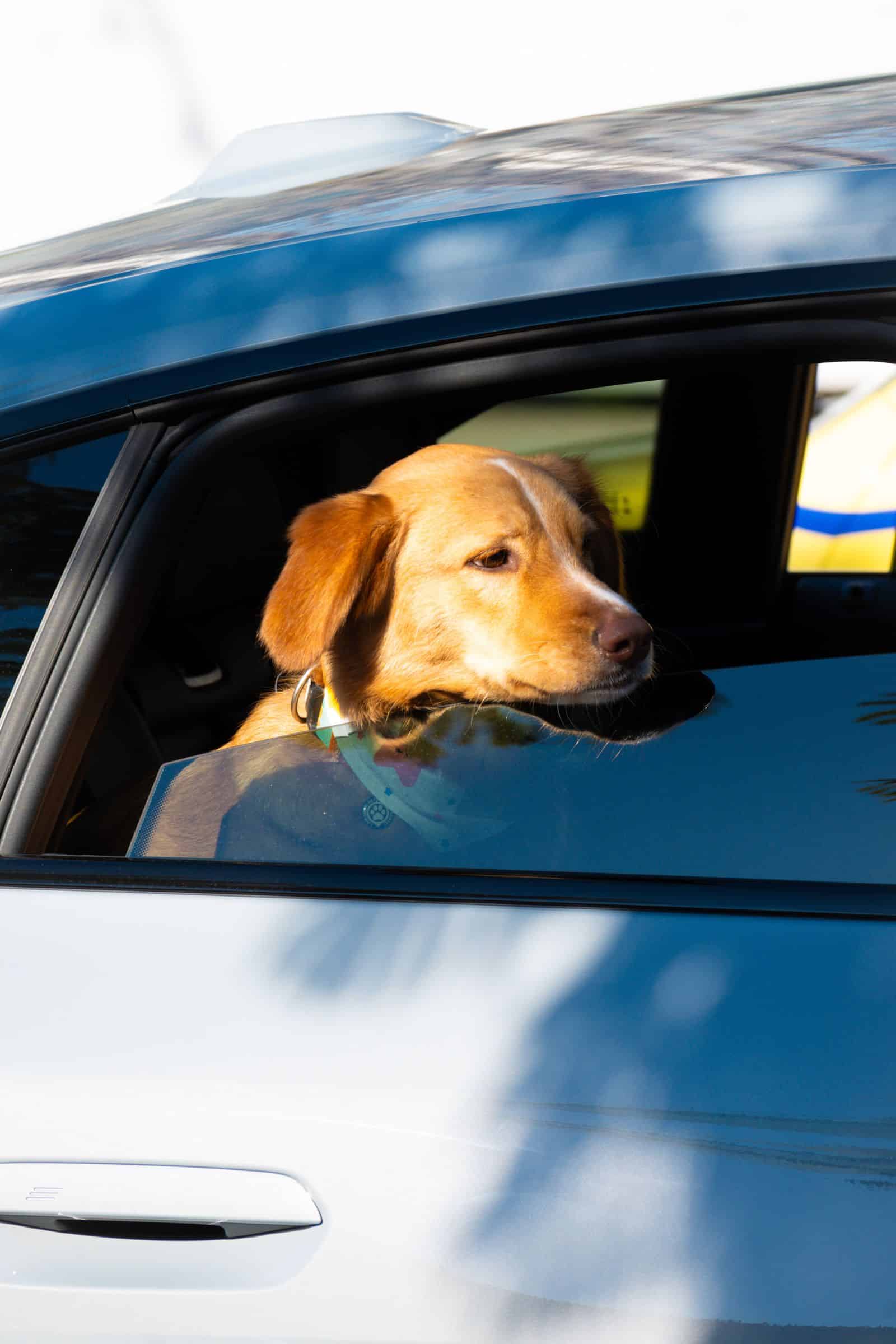
1. Leaving a dog in a parked car when conditions are dangerous
This is the one most people have heard about, and for good reason. The Animal Legal and Historical Center at Michigan State University counts roughly 32 states with laws dealing with animals left in unattended vehicles, according to its table of state hot-car laws. Penalties range widely. California can fine a first offender up to $100 per animal, New Jersey sets a civil penalty of $500 to $2,000, and New Hampshire can treat a second offense as a felony.
About 14 states, including Arizona, Colorado, Florida, Ohio and Tennessee, go further and allow any person to rescue a distressed animal from a locked car, as long as specific steps are followed, such as calling 911 first and staying with the animal until help arrives. Anyone planning a long drive with a pet can pick up ideas from these tips for surviving road trips with a dog, which make it easier to avoid leaving the dog behind during stops.
2. Letting a dog ride loose in an open truck bed
The image of a dog riding in the back of a pickup is common in movies, but several states restrict it. A Michigan State animal law FAQ lists Maine, Connecticut, New Hampshire, California, Massachusetts and Rhode Island as states with open-bed rules. Connecticut requires a dog in the open rear of a pickup to be caged or otherwise secured, while Massachusetts calls for side and tail racks at least 46 inches high plus cross-tethering, with a fine of at least $50 for violations.
Washington and Oregon also bar carrying animals on the outside of a vehicle without an adequate harness, cage or enclosure. Farm and hunting dogs are sometimes exempt, but for a family pet headed to the park, the safest legal choice is the cab or a secured crate.
3. Driving with a dog in the driver’s lap
A small dog perched on the steering wheel may look sweet, but in Hawaii it is spelled out as illegal. The state’s traffic code bars a driver from holding an animal in the lap or allowing one in the driver’s immediate area if it interferes with control of the vehicle. According to GoPetFriendly, the fine there is $97.
The same roundup says New Jersey and Rhode Island expect pets in moving vehicles to be restrained or controlled by someone other than the driver, and that drivers in states such as Connecticut and Maine can face distracted driving charges. Washington, D.C., lists a $100 fine for a first offense of “interacting with pets” behind the wheel. Since dogs have plenty of opinions about car rides already, it is worth reviewing the things humans do that dogs hate before strapping one in.
4. Keeping a dog chained or tethered for too long
Tethering laws have spread quickly. The Animal Legal and Historical Center’s table of state dog tether laws lists 23 states plus Washington, D.C., with rules on chaining dogs as of 2022. California bans tethering a dog to a stationary object except for as long as it takes to complete a temporary task. Nevada caps tethering at 14 hours in a 24-hour period and requires a tether at least 12 feet long, and Massachusetts limits it to 5 hours a day with no outdoor tethering between 10 p.m. and 6 a.m.
Many of these laws also ban prong, pinch or choke collars on a tethered dog and set minimum tether lengths so the animal can move freely. Plenty of long-held beliefs about what dogs “like” turn out to be wrong, and this list of common “facts” about dogs that are actually false covers a few more.
5. Leaving a dog tied outside in extreme heat or cold
Weather adds another layer. Pennsylvania’s Libre’s Law, passed in 2017, treats tethering a dog outside for more than 30 minutes in temperatures above 90 degrees or below 32 degrees as a misdemeanor, and the case can become a felony if the dog dies or is seriously injured, as Adopt a Pet explains. Connecticut and Massachusetts limit tethering during weather advisories to 15 minutes, and Delaware bars leaving dogs outside during hazardous weather advisories.
Adopt a Pet also notes that animal neglect is at least a misdemeanor in all 50 states, and that neglect can be charged as a felony in states such as Massachusetts and Oklahoma.

6. Skipping the rabies vaccine
Rabies shots are not just a vet’s suggestion in most of the country. The Animal Legal and Historical Center’s table of state rabies vaccination laws shows that about 39 states plus Washington, D.C., have a state-level requirement for dogs. The required age is usually somewhere between 3 and 6 months. Alabama and Vermont set 3 months, Texas and Illinois set 4 months, and Massachusetts and Oregon set 6 months.
In the states without a statewide rule, such as Colorado and Utah, counties and cities often fill the gap with their own requirements, and proof of vaccination is commonly needed to get a dog license. Vet visits are one of several recurring bills, and this breakdown of annual pet ownership costs for dogs and cats shows how the expenses add up.
7. Abandoning a dog
Leaving a dog on a country road or in an empty apartment is not a gray area. Nolo’s guide to animal cruelty and neglect says that in most states it is illegal to abandon an animal, whether that means dumping it in a public place or leaving it without providing for its needs. Serious or repeated abuse often leads to felony charges, while neglect or general cruelty can bring misdemeanor or occasionally felony charges.
Nolo also notes that enforcement can be difficult because abandoned pets rarely carry identification, so witnesses often can only report a license plate number. Rehoming the dog with a trusted person or surrendering it properly to a shelter or rescue are the responsible paths.
8. Letting a dog chase or attack a neighbor’s livestock
In farm country, this one matters a great deal. Arizona’s statute on dogs killing or chasing livestock makes it a class 1 misdemeanor for an owner to intentionally or recklessly allow a dog to wound or kill another person’s livestock, and the owner can owe three times the value of the animals harmed. Chasing that injures livestock is a class 3 misdemeanor.
Nolo’s guide to what happens when dogs hurt or chase livestock adds that owners are generally financially responsible across the country, California doubles the damages, and many states allow farmers to kill a dog that is harassing their animals. A sturdy fence and a reliable recall help, and this missing pet guide on preventing future escapes has practical ideas for keeping a wandering dog at home.
The bottom line
Most of these laws grew out of the same idea: a dog depends entirely on its owner for safety, shelter and care. The specific rules may differ between Hawaii and Massachusetts, but the pattern is consistent. Secure the dog in vehicles, give it room and shelter outdoors, keep vaccinations current and never simply walk away. A quick look at state and city animal codes is the easiest way to stay on the right side of these 8 rules.
This article was written with the help of AI tools and checked against the sources linked above.




