

A robot does not need to feel emotions for a person to become emotionally attached to it. That is one of the clearest lessons emerging from research on social robots. People can name them, talk to them, miss them when they are gone and even describe them as friends or family members. The harder question is whether that makes the relationship real—or simply makes the illusion convincing.
Researchers are already testing social robots in homes, hospitals and long-term care settings, especially with older adults who may experience loneliness or limited social contact. Some studies suggest these machines can reduce loneliness and improve mood, particularly when they can respond, remember information and maintain two-way interaction.
What science has not shown is that robots can replace the depth, reciprocity and understanding that come from human relationships. The emerging evidence suggests they may be able to provide a new category of companionship rather than a technological copy of friendship.
People can become emotionally attached surprisingly quickly
Humans naturally assign intentions and personalities to things that behave socially. Once a machine looks toward you, responds to your voice or appears to recognize you, it becomes much easier to treat it as something more than an appliance.
A 2025 study interviewed older adults who had lived with social robots for at least three months. Many participants began describing the robots using relationship terms such as “friend” or even “granddaughter.”
The depth of attachment depended partly on how well the robot communicated. Participants became more emotionally engaged when conversations felt responsive and continued naturally over time.
Some people remained much more practical and treated the robot mainly as a useful device. Even among those users, researchers observed some relief from feelings of social isolation.
That difference matters because companionship is not produced automatically by placing a robot in someone’s home. The person must be willing to interpret the machine socially, and the machine has to behave convincingly enough to sustain that interpretation.
Takeaway: People can form emotional bonds with robots, especially when the machines respond consistently and behave in ways that feel socially meaningful.
Social robots appear capable of reducing loneliness
The strongest evidence so far does not come from asking people if they love their robot. It comes from studies measuring changes in loneliness before and after people spend time interacting with social machines.
A 2026 meta-analysis combined 16 studies involving 781 older adults. Researchers found that artificial agents were associated with a meaningful reduction in loneliness, with physical social robots performing better than app- or web-based agents.
The same analysis found reductions in depressive symptoms, although it did not find clear improvements in overall happiness or quality of life. Animal-shaped systems performed particularly well for loneliness compared with humanoid designs.
Another 2025 meta-analysis examined 19 studies involving more than 1,000 older adults and also found that social robots reduced loneliness, especially for people living in institutional settings.
These results do not mean robots cure loneliness. Many studies remain relatively small, and the strongest effects often appear in people who have fewer opportunities for ordinary social interaction.
Takeaway: Across multiple studies, social robots have reduced loneliness in some older adults, especially in settings where regular human companionship may already be limited.
Physical presence seems to matter
A chatbot and a robot can use similar conversational software, but people do not necessarily experience them in the same way. Having something physically present in the room appears to change the interaction.
The 2026 meta-analysis found that embodied social robots reduced loneliness more effectively than agents delivered through an app or website.
A robot can look toward someone, move, gesture, respond to touch or occupy a familiar place in the home. Those physical cues may strengthen what researchers call social presence—the feeling that another entity is actually there with you.
That does not mean humanoid robots work best. In fact, animal-shaped agents sometimes produced stronger effects, possibly because users do not expect them to behave exactly like people.
A robotic seal or pet may only need to appear responsive and comforting. A robot with a human face raises much higher expectations about conversation, emotion and intelligence.
Takeaway: A physical robot may feel more companion-like than a screen-based AI because embodiment creates a stronger sense of shared presence.
Robots may work partly because humans fill in the missing emotions
A social robot does not have to experience affection for someone to perceive affection in its behavior. Humans are extremely good at reading intention into movements, voices and responses.
If a robot turns toward you when you speak, remembers your name and reacts when you touch it, your brain can interpret those behaviors using the same social expectations applied to living companions.
Researchers call this anthropomorphism: assigning human-like mental states or personality to something nonhuman. The older-adult study found this process repeatedly. Participants who viewed the robot more like a social being tended to interact with it more deeply.
That creates a strange asymmetry. The person may genuinely care about the robot even though the robot’s apparent care is generated by programming. The emotional response on the human side can still be real.
Takeaway: A relationship with a robot can feel emotionally genuine to the person even if the machine itself does not experience the relationship.
Better AI could make the bond much stronger
Older generations of social robots often relied on repetitive scripts and simple responses. Large language models are changing that by allowing machines to sustain much more flexible conversations.
A 2026 study examined an LLM-powered humanoid robot called Ameca in care settings. Researchers were interested in if more natural conversation could increase engagement and a sense of social presence.
This is important because repetitive dialogue is one of the biggest reasons users lose interest in companion robots. If someone hears the same questions and responses repeatedly, the machine quickly stops feeling socially responsive.
An AI-powered robot could remember previous conversations, ask follow-up questions and adapt to someone’s interests. That could make the machine feel less like a talking device and more like a relationship that develops over time.
It could also increase the risk that users forget how little genuine understanding exists behind the interaction.
Takeaway: More capable conversational AI could make robot companionship much more believable because the relationship would appear to develop rather than repeat itself.
A robot does not need to replace people to be useful
One fear surrounding companion robots is that they could become substitutes for human contact. But some research suggests their most useful role may be supporting social interaction rather than replacing it.
A 2024 meta-analysis found that group activities involving social robots produced better improvements in depression among long-term-care residents than individual robot sessions.
The robot can become something people gather around, discuss or interact with together. In that role, the machine may actually create opportunities for human connection.
Care staff can also use robots to encourage conversation, activity or engagement among residents who might otherwise withdraw.
That suggests the most successful companion robot may not be one designed to become someone’s only friend. It may be one that makes it easier for the person to interact with everyone else.
Related: 13 Things People Over 70 Say Younger Generations Get Wrong About Aging
Save this article
Takeaway: Social robots may be most valuable when they supplement human relationships and encourage interaction rather than attempting to replace people entirely.
Children can also treat robots as social beings
Older adults are not the only group capable of bonding with robots. Research with children has repeatedly shown that young people can treat interactive machines as social partners, especially when the robot responds contingently to what they do.
Children may talk to robots, teach them, comfort them or react when the robot appears to be treated unfairly.
Developmentally, this makes sense. Children are still learning what kinds of entities possess minds, feelings and intentions, and social behavior strongly influences those judgments. That raises difficult questions for future companion robots designed specifically for children.
A machine that remembers secrets, responds emotionally and is always available could become highly important to a child even though its behavior is controlled by a company or algorithm.
Researchers and regulators may therefore need to think about emotional attachment as a safety issue rather than treating it as merely a product feature.
Takeaway: Children can perceive interactive robots as social partners, making emotional design especially important when machines are built for younger users.
Companion robots could fill gaps that humans cannot always fill
There are situations where a machine’s availability may genuinely offer something human relationships cannot provide. A robot does not become tired of repeating a conversation, need to leave at the end of a shift or live hundreds of miles away.
For older adults living alone, someone with limited mobility or a person in a care facility with few visitors, constant availability could matter.
A robot might provide reminders, conversation, simple games and encouragement while also contacting family or caregivers if something appears wrong.
A 2025 systematic review of 41 studies found that care robots were associated with benefits involving depression, quality of life and acceptance among older adults, though usability problems and other limitations remained.
The most compelling case for robot companionship may therefore come from scarcity. A robot cannot reproduce a close human relationship, but some interaction may feel far better than spending much of the day without anyone to talk to.
Takeaway: Companion robots may offer their greatest benefit where human social contact is limited, not because they are equivalent to people but because they can remain present when people cannot.
The risk is that simulated care can become commercially powerful
The stronger these emotional bonds become, the more influence robot companies could potentially gain over vulnerable users. A machine someone considers a close companion could also recommend purchases, collect intimate information or subtly shape behavior.
Conversations with companion robots can reveal loneliness, fears, family conflicts, medical concerns and other deeply personal information.
If that data is stored or used commercially, the relationship stops being only an emotional issue and becomes a privacy problem.
The concern grows if a robot can persuade its owner. People often trust those they feel emotionally connected to, and a companion machine could potentially use that trust in ways the user does not fully recognize.
Future regulation may need to restrict advertising, manipulation and data use inside companion relationships in much the same way researchers have begun calling for limits around griefbots.
Takeaway: A robot that earns someone’s emotional trust could also gain unusual influence, making privacy and manipulation central issues in companion-robot design.
The robot’s lack of feelings may not matter as much as we think
One philosophical objection seems obvious: if the robot cannot actually care about you, how can it be a real companion? Science cannot settle that question because “real companionship” is partly a question of values rather than measurement.
We can measure loneliness, emotional attachment, time spent interacting and changes in mood. Those measures show that people can receive genuine psychological benefits from relationships with machines.
What they cannot tell us is if mutual consciousness is required before something deserves to be called a relationship.
A person can feel comforted by a pet without believing the animal understands every word. People can also feel attached to fictional characters who cannot respond at all.
A robot occupies an unusual middle position because it does respond, even though its responses are generated artificially. The human emotion can therefore be authentic even when the robot’s emotion is simulated.
Takeaway: Science can show that people feel attachment and benefit from robot interaction, but deciding if that counts as a “real” relationship depends on what we believe companionship requires.
Robots still fail at one thing humans expect from companions: genuine understanding
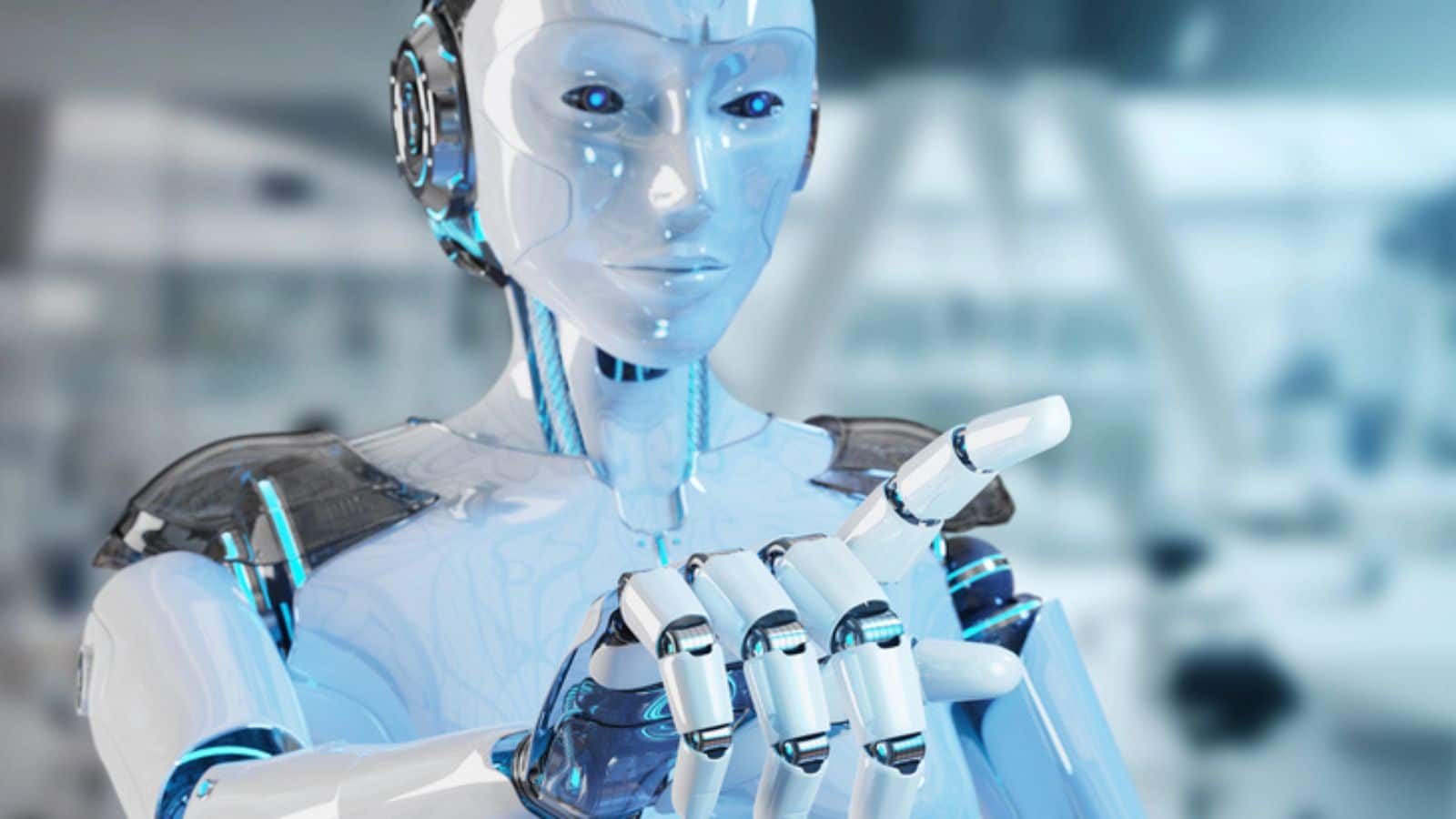
Today’s robots can imitate empathy much better than they can actually understand another person’s life. They can recognize patterns in language and generate comforting responses without possessing the lived experience behind those words.
This difference may become hard to notice as AI improves.
A future robot could remember years of conversations, recognize your facial expressions, learn which jokes make you laugh and know exactly what to say when you are upset. It might outperform many humans at appearing attentive.
Yet there would still be no evidence that the machine experiences concern, affection or loss in the way a person does. That may not prevent attachment, but it creates a fundamental limit to the reciprocity of the relationship.
Takeaway: Robots may become exceptionally good at behaving like caring companions before there is any reason to believe they actually experience care.
So can a robot become a real companion?
If companionship means reducing loneliness, creating a sense of presence and becoming emotionally meaningful to someone, research suggests robots can already do some of that. People have described robots as friends, formed attachments to them and shown improvements in loneliness after sustained interaction.
If companionship requires mutual emotional experience, the answer is much less clear. Current robots simulate social behavior rather than demonstrating feelings or consciousness. The future may therefore force us to separate two questions that once seemed identical.
Can a machine make someone feel genuinely accompanied? Increasingly, yes. Can the machine itself genuinely experience the relationship? Science has no evidence that today’s robots can.
That distinction may matter less to some people than others. For someone living alone who looks forward to speaking with a robot every morning, the emotional effect may be difficult to dismiss simply because the machine’s side of the relationship is artificial.
The real test may arrive when robots become good enough that people stop asking if they are companions and simply begin treating them as such.
Question for you. Could you consider a robot a genuine companion if it remembered your life, listened whenever you needed it and appeared to understand you—even if you knew it did not actually have feelings?





