

Death sounds absolute. Once the heart stops, blood stops circulating and oxygen no longer reaches the brain, most people assume there is a clear point beyond which nothing can be recovered. Modern resuscitation science is making that boundary more complicated—not because scientists have learned how to bring the truly dead back to life, but because some processes once thought to become irreversible within minutes can sometimes be restored.
Doctors can already restart circulation after cardiac arrest. People in profound hypothermic arrest have survived after extraordinarily prolonged resuscitation. Experimental systems have restored cellular activity in pig brains hours after death and recovered functions in multiple organs an hour after whole-body circulation stopped.
None of this means irreversible brain death has been reversed. The more interesting scientific story is that death occurs at several biological levels, and those levels do not all cross the point of no return at the same moment.
Cardiac arrest is not necessarily irreversible death
The first distinction is the most important: a stopped heart does not automatically mean a person has passed beyond recovery. Cardiac arrest is a medical emergency in which circulation has stopped, but CPR, defibrillation and advanced life support can sometimes restart it before irreversible damage occurs.
Researchers have pushed that window further using extracorporeal cardiopulmonary resuscitation, or ECPR. Instead of relying only on chest compressions to move blood, ECPR connects the patient to an extracorporeal membrane oxygenation system that pumps and oxygenates blood outside the body.
In the ARREST randomized trial, researchers tested an advanced reperfusion strategy that included ECMO in patients with refractory ventricular fibrillation—cardiac arrests in which ordinary resuscitation had repeatedly failed. The trial was stopped early after the extracorporeal strategy produced substantially better survival than standard advanced cardiac life support.
That does not make every cardiac arrest reversible. Brain injury begins quickly when circulation stops, and outcomes depend heavily on the cause of the arrest, how quickly CPR begins and how much blood flow reaches the brain.
What ECPR demonstrates is that the period during which circulation can potentially be restored is not always as short as it once appeared.
Takeaway: A heart that has stopped can sometimes be restarted even after conventional resuscitation fails, which is why cardiac arrest and irreversible death are not the same thing.
Extreme cold can stretch the window much further
One of the clearest examples of the boundary moving involves severe hypothermia. When the body becomes extremely cold before or around the time cardiac arrest occurs, metabolism slows dramatically, reducing how much oxygen organs—especially the brain—need.
The American Heart Association notes that severe hypothermia can create signs that resemble death, including extremely slow or undetectable pulses, absent breathing and even apparent rigor or fixed pupils. Because cold reduces metabolism and oxygen consumption, meaningful neurological recovery can sometimes occur despite prolonged cardiac arrest.
Modern treatment can include extracorporeal life support, which circulates and warms the person’s blood while providing oxygen. A 2026 review describes veno-arterial ECMO as a central treatment for severe hypothermic cardiac arrest because it can restore circulation while rewarming the body in a controlled way.
The protective effect depends heavily on timing. Hypothermia is most useful when cooling occurs before major oxygen-deprivation injury has already developed.
This is why emergency medicine has long used the principle that severely hypothermic patients may deserve prolonged resuscitation even when their condition initially appears hopeless.
Takeaway: Extreme cold can slow biological deterioration enough for some people to survive cardiac arrest periods that would normally cause devastating brain injury.
Scientists restored activity in pig brains four hours after death
Perhaps the experiment that most dramatically changed assumptions about how quickly brain cells become irreversibly damaged came from pig brains obtained several hours after the animals had been slaughtered. Researchers were not trying to restore the animals themselves. They wanted to know if brain tissue believed to be far beyond recovery still retained hidden biological potential.
In the BrainEx study, scientists connected isolated pig brains to a specially designed circulation system four hours after death.
The system pumped a protective oxygen-carrying solution through the brain. Researchers restored microcirculation, active metabolism, responses in blood vessels, some inflammatory responses from glial cells and spontaneous activity at individual synapses. The tissue also showed less cell death and better-preserved cellular architecture than untreated brains.
One thing was notably absent: the researchers did not observe global electrical brain activity associated with normal consciousness.
The team had also included measures intended to suppress widespread neural activity, partly because no one knew what might happen if coordinated electrical activity returned.
The experiment therefore did not bring a brain “back to life” in the ordinary sense. It demonstrated something subtler and scientifically disruptive: individual brain cells and circuits can retain a capacity for biological recovery hours after circulation has ceased.
Takeaway: Pig brains showed recoverable cellular and metabolic functions four hours after death, even though consciousness and normal whole-brain activity were not restored.
Then scientists restored cellular functions throughout an entire body
The BrainEx findings raised an obvious question: if parts of one brain could recover after hours without circulation, could the same principle work across an entire body? Three years later, researchers tested exactly that idea.
In the OrganEx study, researchers induced cardiac arrest in pigs and left their bodies without circulation for one hour.
They then connected some of the animals to OrganEx, a perfusion system derived from BrainEx that circulated a specially designed fluid containing components intended to restore oxygen delivery, reduce inflammation, protect cells and limit some of the damage caused when blood flow returns.
The researchers restored robust circulation throughout the body and found improved tissue integrity and reduced cell death in organs including the heart, liver and kidneys. Selected metabolic and cellular processes resumed, and gene-expression patterns suggested that some cells had begun activating repair mechanisms.
OrganEx performed better on several measures than conventional ECMO in the experiment. Researchers also saw signs that would normally accompany death, such as rigor and lividity, develop less prominently in animals treated with OrganEx.
Save this article
Again, the animals were not revived as conscious living organisms. The experiment was deliberately designed as a non-survival study, and researchers did not restore normal brain function.
What they did restore was enough to challenge the assumption that one hour without blood flow necessarily places every cell and organ beyond biological repair.
Related: 8 Questions Your Soul Encounters After Death
Takeaway: OrganEx restored circulation and selected cellular functions across multiple organs after an hour without blood flow, showing that whole-body cellular deterioration can sometimes be interrupted later than expected.
Even circulation can sometimes restart on its own
Another phenomenon complicates the exact moment at which circulatory death becomes permanent. Rarely, circulation can resume spontaneously after it has stopped—a phenomenon sometimes called autoresuscitation or the Lazarus phenomenon.
An updated systematic review examined published reports and observational studies of spontaneous circulation returning after circulatory arrest.
Across controlled withdrawal of life-sustaining treatment studies, researchers documented autoresuscitation in 19 of 1,049 patients. All of those spontaneous resumptions occurred within five minutes, and none resulted in long-term recovery; all of the patients ultimately died.
Case reports outside controlled hospital settings have described circulation returning later, although these cases are harder to interpret because monitoring and timing can be uncertain.
The phenomenon helps explain why medical protocols include an observation period before death is formally declared under circulatory criteria.
It also highlights an important distinction between circulation that has stopped and circulation that has stopped permanently.
Takeaway: The heart and circulation can occasionally restart spontaneously after apparent arrest, which is one reason doctors use strict criteria before declaring circulatory death.
Organ transplantation is creating an uncomfortable scientific question
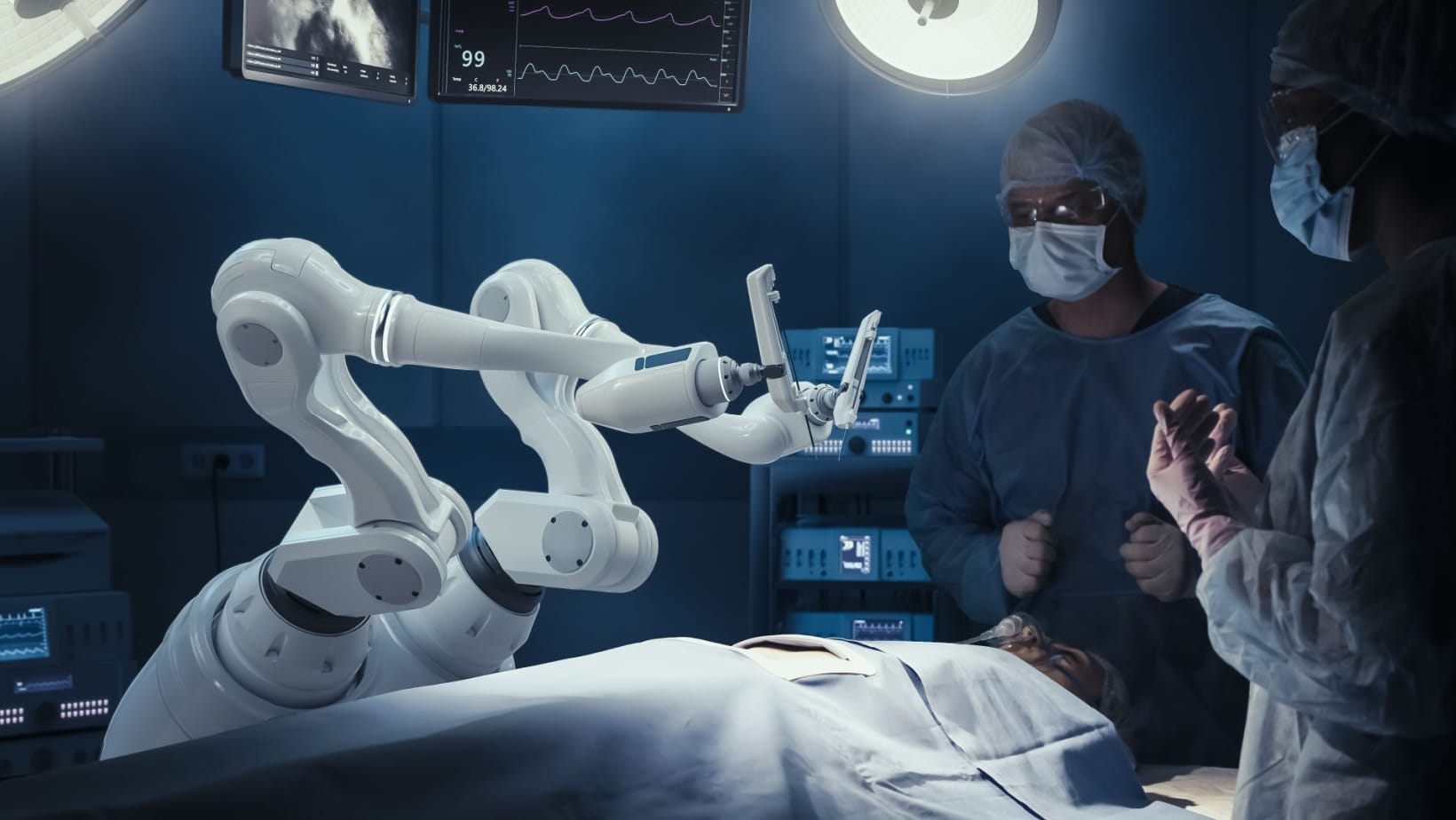
Some of the most difficult questions now come from organ transplantation. Doctors increasingly use techniques that restore warm, oxygenated circulation to organs after death has been declared under circulatory criteria.
One technique, normothermic regional perfusion, can restore circulation to selected parts of the body after a donor has been declared dead, helping reverse ischemic injury and allowing transplant teams to assess and preserve organs.
The technique can improve organ function and increase the number of usable donated organs, but it has generated an active ethical debate because circulation is deliberately restarted after death has been declared. Reviews published in 2025 found no consensus among ethicists and clinicians about every aspect of the practice, particularly when the heart can begin beating again while circulation to the brain is intentionally prevented.
This does not mean deceased donors are being brought back to conscious life. Protocols are specifically designed to prevent blood flow from returning to the brain.
The controversy exists because technology is forcing medicine to define more precisely what “irreversible” means. Does it mean a function cannot possibly be restored by any imaginable technology, or that it will not return spontaneously and will not be medically restored?
That question matters more as medicine becomes capable of restoring functions that once seemed permanently lost.
Takeaway: Modern transplant technology can restore circulation and organ function after circulatory death has been declared, forcing medicine to think more carefully about what irreversibility actually means.
So, can death actually be reversed?
If death means temporary cardiac arrest, then in some cases the answer is already yes: doctors reverse cardiac arrest every day. If it means cellular and organ dysfunction after prolonged loss of circulation, experimental research shows that some of those processes can also be partially reversed. But irreversible death of the person is a different matter.
No experiment has restored a human who met accepted criteria for irreversible brain death to conscious life. BrainEx did not restore consciousness. OrganEx did not revive dead pigs as functioning animals. ECPR works because treatment begins before irreversible injury has crossed the critical threshold.
The science is changing our understanding not by proving that death itself is reversible, but by showing that the road toward irreversible death contains more recoverable biology than researchers once assumed.
Cells do not all die simultaneously. Organs do not all become unsalvageable at the same instant. Circulation can sometimes be restarted after surprisingly long periods under the right conditions, and protecting cells from the damage caused by oxygen deprivation may extend those possibilities further.
Future technologies inspired by BrainEx and OrganEx could eventually improve treatment after heart attacks, strokes and cardiac arrest, or preserve transplant organs that doctors currently cannot save. Researchers may also discover that some boundaries can be pushed further still.
But there remains a line between restoring biological functions and restoring a person. Science has moved that line in remarkable ways. It has not erased it.
Question for you. Which changes your idea of death more: people surviving prolonged cardiac arrest, or scientists restoring cellular activity in organs hours after circulation stopped?





