

Scientists have not found a true second Earth. But they have discovered a growing number of rocky planets that resemble our world in important ways, including size, temperature range and distance from their stars. The evidence does not show that any of them is inhabited, but it does show that Earth-like conditions may not be unique.
The hardest part is deciding what “another Earth” actually means. A planet can be roughly Earth-sized and still have a crushing atmosphere, no oceans or temperatures completely unsuitable for life.
Researchers are therefore moving beyond simply counting planets. They are beginning to investigate atmospheres, surface conditions and chemistry to determine which distant worlds might genuinely resemble Earth rather than merely looking similar on paper.
Scientists have already found Earth-sized planets in habitable zones
One of the clearest developments in exoplanet science is the discovery of rocky worlds similar in size to Earth that orbit within what astronomers call the habitable zone. This is the range around a star where temperatures could potentially allow liquid water on a planet’s surface if its atmosphere is suitable.
Kepler-186f became an important example because it was the first validated Earth-size planet discovered in the habitable zone of another star. Other candidates followed, giving astronomers several worlds that match at least some of Earth’s basic characteristics.
Kepler-1649c is particularly interesting. NASA says it is only about 6% larger than Earth and receives roughly 75% as much energy from its star as Earth receives from the Sun.
Those similarities do not make it another Earth. Researchers still do not know enough about its atmosphere or surface conditions, and its red-dwarf host star may expose it to conditions very different from those experienced on Earth.
Takeaway: Scientists have already confirmed planets that resemble Earth in size and receive potentially suitable amounts of stellar energy. What remains unknown is if their environments actually resemble ours.
A planet discovered in 2026 looks unusually familiar in some ways
Researchers are still finding candidates that push closer to the basic dimensions of Earth. In 2026, scientists reported a possible rocky planet known as HD 137010 b orbiting a star broadly similar to the Sun.
The candidate lies about 146 light-years away and may have an orbital period close to one Earth year. NASA described it as slightly larger than Earth and potentially sitting near the outer edge of its star’s habitable zone.
There is an important catch. Researchers think the planet could be much colder than Earth, perhaps even colder than Mars, depending on its atmosphere.
That illustrates why finding an Earth-sized planet at roughly the right distance from its star is only the beginning. Atmosphere can completely transform a planet’s climate.
Venus provides the obvious nearby example. It is similar to Earth in size, yet its dense atmosphere produces surface conditions dramatically different from ours.
Takeaway: Some recently identified planets resemble Earth in size and orbit, but those similarities do not guarantee an Earth-like climate.
Researchers may have found a rocky habitable-zone planet with an atmosphere
One of the biggest hurdles in finding another Earth is proving that a small rocky planet can retain an atmosphere. In 2026, researchers reported evidence suggesting that LHS 1140 b may have one.
The planet orbits within its star’s habitable zone and has attracted scientific interest for years because its size and density suggest a rocky or water-rich world.
New observations detected helium escaping from the planet, providing evidence that it possesses an atmosphere. The finding was important because small planets around red-dwarf stars can have their atmospheres stripped away by intense stellar activity.
Researchers still do not know exactly what LHS 1140 b’s atmosphere contains or if liquid water exists on its surface. The research moves the planet closer to being a serious target for habitability studies, not closer to being declared another Earth.
Takeaway: Scientists now have evidence that at least one intriguing rocky habitable-zone planet may retain an atmosphere, giving them more to investigate than size and orbit alone.
Being in the habitable zone is not enough
The phrase “habitable zone” can sound much stronger than it really is. It does not mean a planet is habitable, only that its distance from its star could allow liquid surface water under suitable conditions.
A planet still needs the right atmosphere, pressure and chemistry. Its star also matters because some stars produce powerful flares that can strip atmospheres or expose planets to intense radiation.
A 2026 study added another complication. Researchers examined how rocky planets form and found that the availability of important elements such as nitrogen and phosphorus may depend strongly on the chemical conditions present when a planet’s core develops.
Their models suggested a relatively narrow range of formation conditions allows useful amounts of both elements to remain accessible in the planet’s mantle.
In other words, two planets could look similar from a distance while having very different chemical prospects for life.
Takeaway: Distance from a star is only one ingredient. A genuinely Earth-like world may also require the right atmosphere, chemistry, geological history and stellar environment.
Earth-sized does not necessarily mean Earth-like
Planet size is one of the easiest properties astronomers can estimate, which is why headlines often describe worlds as “Earth-sized.” But two planets with nearly identical radii can have completely different compositions.
One may be rocky like Earth. Another could contain enormous amounts of water, a dense atmosphere or a very different internal structure.
Scientists often combine radius with mass to estimate density, which can provide clues about what the planet is made of. Yet even density leaves unanswered questions about the surface and atmosphere.
This is why NASA says no planet has yet been found that is confirmed to support life like Earth. Researchers have found many promising pieces of the puzzle, but not a complete match.
Takeaway: An Earth-sized planet is only physically similar in one important measurement. It may still be nothing like Earth at the surface.
Red-dwarf planets may be our easiest targets—and some of the hardest places to live
Many of the most interesting Earth-sized planets discovered so far orbit red-dwarf stars. These stars make small planets easier to detect, which gives astronomers more opportunities to study them.
TRAPPIST-1 is a famous example. The system contains seven roughly Earth-sized rocky planets, with several orbiting in or near the star’s habitable zone.
The complication is stellar activity. Red dwarfs can produce powerful flares and radiation that may alter or destroy planetary atmospheres.
Some planets may retain atmospheres despite that activity, while others may become barren.
Save this article
Researchers are therefore trying to determine not simply if red-dwarf planets occupy habitable zones, but if those worlds can maintain the conditions necessary for long-term surface habitability.
Takeaway: Many potentially Earth-like planets orbit red dwarfs, but the same stars that make those worlds easier to find may also make them difficult places for life.
Scientists are beginning to inspect atmospheres directly
For decades, astronomers could often determine little more than a distant planet’s size, orbit and mass. Newer telescopes are beginning to let researchers examine what some planetary atmospheres contain.
When a planet passes in front of its star, some starlight travels through the atmosphere. Different molecules absorb particular wavelengths, allowing astronomers to look for chemical fingerprints.
Researchers are interested in compounds such as water vapor, carbon dioxide, methane and oxygen. None of these molecules by itself would prove that a planet hosts life.
Scientists need to understand the planet’s entire chemical environment because geological or atmospheric processes can sometimes produce gases that initially look biological.
This is why the first genuine “second Earth” may not be identified through one dramatic observation. Researchers may need years of repeated atmospheric measurements before they are confident about what a planet is really like.
Takeaway: Astronomers are moving from simply discovering distant planets toward directly analyzing the gases surrounding some of them.
Future telescopes are being designed specifically to find worlds more like ours
Current instruments were not built solely to find another Earth, which makes some of the most important measurements extremely difficult. Scientists are now designing future observatories around that exact goal.
NASA is developing plans for the Habitable Worlds Observatory, a future mission intended to directly image potentially Earth-like planets orbiting nearby Sun-like stars.
Direct imaging is difficult because a star is overwhelmingly brighter than a small planet orbiting beside it. Researchers need technology capable of suppressing the star’s light enough to reveal the much fainter planet.
NASA is also studying other concepts that could improve direct imaging. One 2026 proposal combines a large ground telescope with an orbiting starshade to block starlight.
If these techniques succeed, astronomers could study worlds much closer to the Earth-Sun configuration than many of the planets we can investigate today.
Takeaway: The next generation of telescopes is being designed not merely to find planets, but to search specifically for rocky worlds with conditions resembling Earth’s.
Another Earth may not need to be an exact copy
Scientists also debate how closely another world needs to resemble Earth before it deserves to be called Earth-like. A planet could potentially support life while looking very different from our own world.
It might have more ocean and fewer continents, a thicker atmosphere or a slightly different climate. Its star could be smaller and cooler than the Sun.
A 2026 perspective even argued that some of the most common potential habitats for life may be oceans hidden beneath thick ice rather than Earth-like surfaces.
That broadens the question considerably. If the goal is finding another planet exactly like Earth, the requirements become extremely restrictive.
If the goal is finding another world capable of supporting life, nature may provide many more possibilities.
Related: Steven Spielberg Warns There’s “Overwhelming” Proof Aliens Exist and It Changes Everything
Takeaway: A habitable planet may not need blue oceans, green continents and an Earth-like sky. Life could potentially exist under conditions that look very different from our own planet.
The hardest evidence is still missing
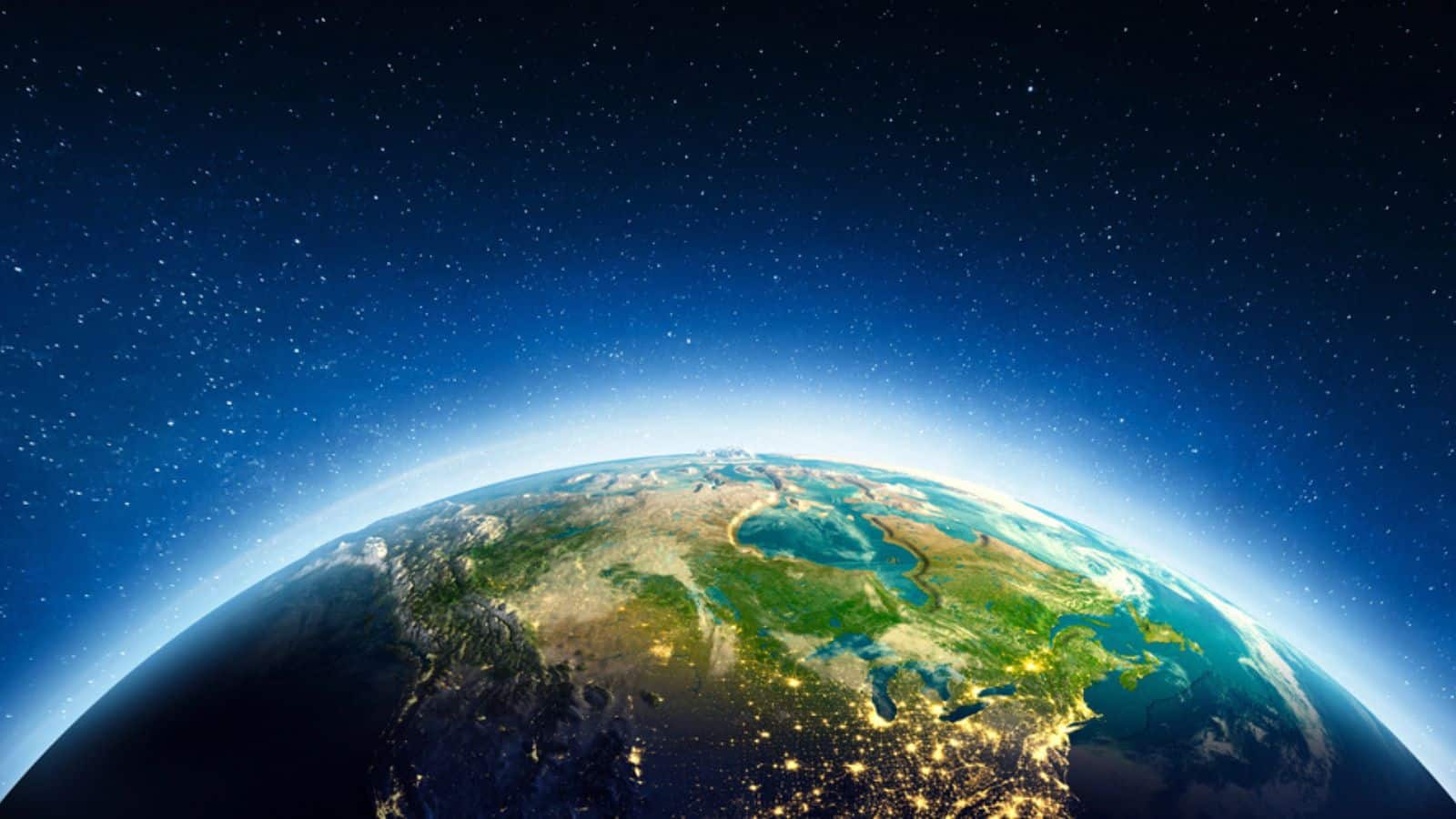
Despite all the discoveries, scientists have not confirmed a planet that matches Earth in the ways that matter most. No distant world has been shown to possess Earth-like oceans, an Earth-like breathable atmosphere and biological activity.
Researchers also cannot yet take detailed photographs of the surfaces of Earth-sized exoplanets. Most visual images people see are artistic reconstructions based on limited physical data. That makes the current evidence promising but incomplete.
Scientists have shown that rocky planets exist, that Earth-sized planets can occupy habitable zones and that some small planets may retain atmospheres. The next step is determining which of those worlds actually have environments capable of supporting life.
Takeaway: We have discovered pieces of the Earth-like planet puzzle, but no known exoplanet has yet been confirmed as a true second Earth.
So could there really be another Earth somewhere?
The evidence says it is possible, not proven. Scientists have found rocky planets close to Earth’s size, planets in habitable zones and worlds receiving amounts of stellar energy comparable with what Earth receives. They are now beginning to gather atmospheric information as well.
Those discoveries make the idea of another Earth scientifically testable in a way it was not a few decades ago.
But a true Earth analogue requires much more than the right size and temperature. Researchers would need strong evidence about its atmosphere, surface water, chemistry, geological stability and perhaps eventually biology.
NASA itself remains cautious. Its current answer to the question of if another planet like Earth has been found is essentially no: there are promising Earth-sized rocky worlds, but none is confirmed to support life as Earth does.
That could change as new telescopes become capable of directly studying smaller planets around stars more similar to the Sun.
For now, we have not found Earth 2.0.
But scientists have found enough worlds with pieces of the same recipe that the possibility is becoming increasingly difficult to dismiss.
Question for you. What would make a planet a true “second Earth” in your mind: similar size and climate, liquid oceans or confirmed evidence of life?





