While thousands of people filled the streets of Messina for one of Italy’s biggest summer celebrations, thieves quietly entered a museum. They walked away with priceless Renaissance masterpieces connected to one of Sicily’s greatest artists.
The robbery at the Museo Regionale di Messina (MuMe) has left Italy’s art world searching for answers after four works attributed to Renaissance painter Antonello da Messina disappeared in what officials are calling a devastating blow to the city’s cultural heritage.
The stolen pieces included three panels from Antonello’s 1473 “San Gregorio Polyptych” and a rare double-sided painting depicting the Virgin with Child and a Franciscan monk on one side, and Christ in the Pietà on the other.
The estimated value of the missing works is between €70 million and €80 million. Still, experts say money can’t measure their true importance because Antonello’s surviving paintings are incredibly rare.
For Messina, this was not simply a museum robbery. It was the disappearance of pieces of the city’s own story.
The Night Renaissance Treasures Vanished
The thieves struck during Ferragosto, one of Italy’s busiest holiday periods, when Messina was celebrating while criminals carried out a carefully planned operation nearby.
While the streets were filled with celebrations, investigators say the thieves entered the museum, bypassed security measures, and targeted specific artworks rather than taking random valuables.
The criminals removed the wooden panels of the San Gregorio Polyptych from their frame. The thieves initially took all five panels, but later abandoned two outside the museum as they escaped, leaving three panels missing. They also removed the double-sided Antonello painting from an armored display case.
The precision of the theft immediately raised questions among investigators. How did criminals know exactly what to take? And who wanted these particular Renaissance works badly enough to steal them?
View this post on Instagram
Why These Paintings Were Irreplaceable
The stolen works were not just valuable paintings; they were among the few surviving links to Antonello da Messina, an artist whose legacy is deeply tied to Sicily.
Born around 1430 in Messina, Antonello became one of the most influential painters of the early Italian Renaissance, known for combining Italian artistic traditions with techniques influenced by Flemish painters, particularly his use of oil painting and detailed realism.
Only about 40 authenticated works by Antonello da Messina are believed to survive worldwide, making each piece exceptionally rare.
The San Gregorio Polyptych held special meaning because it had remained in Messina for centuries. The altarpiece was created for a local monastery that was later destroyed during the catastrophic 1908 Messina earthquake. Despite disasters and decades of change, the art remained connected to the city where Antonello was born.
That history is what made the theft so painful for locals. The paintings were not simply displayed in Messina. They belonged to Messina.
Save this article
A City Left in Shock
For residents and officials, the robbery felt like losing a piece of their identity rather than losing an ordinary possession.
Messina culture councilor Enzo Caruso said the city was “truly stunned” by the theft, describing it as a devastating loss.
Mayor Federico Basile confirmed that the robbery happened during the city’s major holiday celebrations, while officials began working with investigators to recover the missing works. Italy’s Culture Minister Alessandro Giuli also condemned the theft, emphasizing the importance of recovering the masterpieces. Museum director Marisa Mercurio described the loss as a major blow to both the institution and the wider art world.
The emotional reaction showed why art thefts involving historic works often feel different from ordinary crimes. The damage extends beyond ownership. It affects memory.
Who Wanted These Paintings?
The biggest mystery now is not only who stole the artworks, but why someone would risk taking pieces that are almost impossible to sell.
Authorities suspect the theft may have been a commissioned crime, meaning the paintings may have been stolen for a specific buyer rather than taken by criminals hoping for a quick profit.
Experts say famous Renaissance works are extremely difficult to sell legally because museums, collectors and authorities immediately recognize them. A stolen masterpiece cannot simply appear at an auction. Its identity follows it. Art crime specialists warn that criminal groups sometimes use such works as bargaining chips or hidden assets rather than selling them openly.
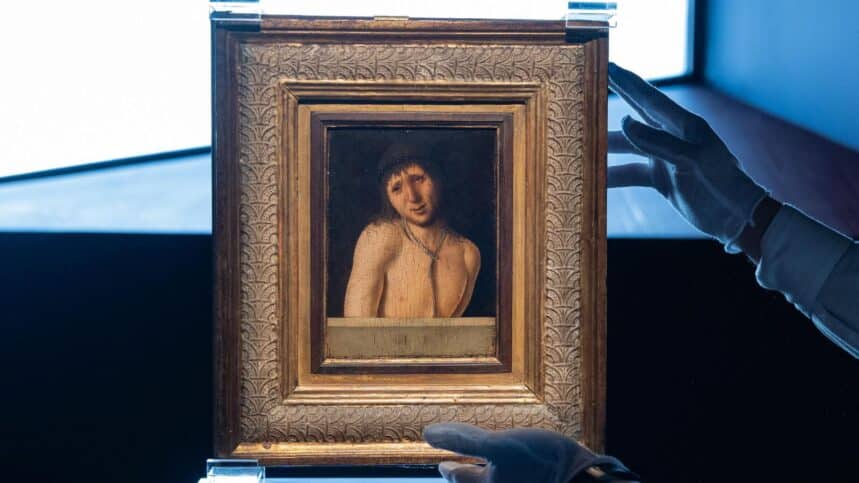
Investigators are now examining whether recent attention surrounding Antonello da Messina’s work made the museum a target. Earlier in the year, the Italian government purchased another Antonello painting, “Ecce Homo,” for more than €12 million, bringing renewed attention to the artist’s surviving works. The painting, sold at Sotheby’s, is an intensely human portrait of the suffering Christ, believed to have been completed in about 1460.
Questions Over Museum Security
The theft has also raised serious questions about how such important works could disappear from a protected museum.
Reports indicate the thieves bypassed alarm and security systems during the operation. Authorities have launched investigations into possible weaknesses in the museum’s protections.
The incident has renewed concerns about protecting Italy’s enormous collection of historic artworks. The country holds some of the world’s most important artistic treasures, making museums frequent targets for organized criminals.
The Messina robbery came shortly a day after Italian authorities announced the recovery of stolen works by Paul Cézanne, Pierre-Auguste Renoir and Henri Matisse from another museum theft.
A Search for Lost History
The thieves may have removed paintings from a museum wall, but they also took away pieces of a story that survived for more than 500 years.
The people of Messina are now waiting for answers.
Investigators are searching for the missing Antonello works, while officials hope the masterpieces can return to the city where they were created and preserved for generations.
For now, the empty the empty frames left behind inside the museum serve as a reminder of what was taken. Four paintings. Centuries of history. And a mystery that has only just begun.
Do you think priceless artworks like these should be protected with stronger security, or are museums risking history by keeping these treasures available for public viewing?
Read More:
- Keanu Reeves Says Alexandra Grant Is ‘Easy to Love’ and Her Answer About Her Paintings Says Everything
- Diddy Sues Producer Lil Rod Over Stealing Private Documentary Footage and Selling It to 50 Cent’s Netflix Documentary
- 10 Medieval Artifacts That Will Make You Say “Whoa”
- She paid $4 for a thrift store painting. It turned out to be worth up to a quarter of a million dollars.