

For decades, “reversing aging” belonged mostly to science fiction, supplement marketing and speculative longevity research. That changed in 2026 when ER-100, an experimental therapy developed by Life Biosciences, moved into human testing with an unusually ambitious goal: restore older or damaged cells toward a more youthful biological state rather than simply slow their decline.
David Sinclair, the Harvard geneticist who co-founded Life Biosciences, has spent years arguing that aging involves a loss of epigenetic information—the instructions that help cells remember which genes should be active and which should remain silent. ER-100 is one of the first serious clinical attempts to test part of that idea in people.
The experiment is far narrower than reversing whole-body aging. The therapy is being tested in patients with optic-nerve diseases, and its first job is to demonstrate safety. But the trial matters because a technology designed around cellular rejuvenation has finally moved from animal experiments into human patients.
ER-100 is trying to reset cells without turning them back into stem cells
The central idea behind ER-100 is partial epigenetic reprogramming. Instead of changing a person’s DNA sequence, the treatment attempts to alter the way existing genes are regulated so damaged or aged cells behave more like younger versions of themselves.
The therapy uses three transcription factors called OCT4, SOX2 and KLF4, collectively abbreviated OSK. These belong to a larger group known as the Yamanaka factors, named after the research that showed mature cells could be reprogrammed into a stem-cell-like state.
Full reprogramming creates an obvious problem for medicine. If a mature retinal cell is pushed all the way back toward a pluripotent stem-cell state, it can lose the identity and function that made it useful in the first place. Uncontrolled reprogramming can also raise concerns about abnormal growth and tumors.
Partial reprogramming aims to stop earlier. The hope is that cells can recover more youthful patterns of gene activity without forgetting what kind of cells they are.
That distinction is what makes the approach scientifically interesting. Researchers are not trying to replace old cells with embryonic ones. They are asking if some of the biological changes associated with aging can be reset while the cells remain inside an adult body.
Takeaway: ER-100 is designed to make damaged cells behave more youthfully without completely erasing their identity. If that balance proves possible in humans, it could open a very different approach to age-related disease.
The idea grew from experiments that restored vision in mice
The human trial did not appear from nowhere. One of the most influential pieces of evidence came from experiments in mice showing that OSK expression could restore youthful molecular patterns and improve visual function after aging or injury.
In a landmark study, Sinclair and colleagues used OSK in retinal ganglion cells, the neurons that carry visual information from the eye toward the brain.
The researchers reported that OSK restored younger DNA-methylation patterns, promoted regeneration of damaged optic-nerve axons and improved vision in aged mice and in a mouse model of glaucoma.
That result attracted attention because the treatment appeared to do more than protect cells from further decline. Some measures moved in the opposite direction, toward a state associated with younger cells.
Animal results are not proof that the same thing will happen in people. Many interventions that look impressive in mice fail during human trials because human biology is more complicated, treatment doses behave differently or unexpected safety problems appear.
Still, those experiments provided enough evidence to justify moving toward larger animals and eventually human testing.
Takeaway: The original mouse work suggested that some age-related changes in nerve cells might be reversible rather than permanent. The current human trial exists to find out how much of that result survives outside laboratory animals.
The eye is being used as the first real-world test
ER-100 is not being injected throughout the body to make people biologically younger. The Phase 1 trial is targeting the eye, specifically patients with open-angle glaucoma and non-arteritic anterior ischemic optic neuropathy, or NAION.
Both conditions damage retinal ganglion cells and the optic nerve, and the resulting vision loss can become permanent. That makes the eye a useful test of the rejuvenation idea because researchers can measure visual function and examine the treated tissue much more precisely than they could measure vague claims of “whole-body youthfulness.”
The registered trial plans to enroll up to 18 adults. ER-100 is delivered into one eye using a modified adeno-associated virus vector, and participants take doxycycline for eight weeks to activate OSK expression.
The study is primarily designed to evaluate safety and tolerability. Participants are scheduled for long-term follow-up extending several years because gene therapies can create risks that may not appear immediately.
Researchers are also measuring vision, which means they may see early signals suggesting the treatment is doing something useful. But Phase 1 trials are generally too small to establish that a therapy works.
Takeaway: The first human experiment is deliberately narrow. Researchers are testing a measurable age-related problem in the eye before anyone can seriously discuss rejuvenating an entire person.
The first human results arrived in October 2026
The trial has now produced its first preliminary human data. On October 8, 2026, Life Biosciences reported results from the first three participants with open-angle glaucoma who received the lowest ER-100 dose.
According to the company’s interim results, the treatment was well tolerated through 56 days in all three participants. The trial’s safety-monitoring board recommended moving to the higher dose.
Life Biosciences also reported preliminary improvement signals on visual-field testing in two of the three participants.
Those findings are intriguing, but they need to be kept in perspective. Three people are nowhere near enough to establish efficacy, the study is open-label and these are interim company-reported results from an ongoing Phase 1 trial.
There is also an important distinction between improving visual measurements and proving that human aging has been reversed. Researchers would need much stronger evidence showing that treated cells became biologically younger and that those changes produced lasting clinical benefits.
Still, this is the point where the story becomes more than theoretical. ER-100 has now been administered to people, and the earliest safety findings have allowed the experiment to continue.
Takeaway: The first three patients produced encouraging early safety data and preliminary visual signals, but this is only the beginning. The trial has not yet proved that ER-100 restores vision or reverses human aging.
Why scientists think the epigenome could matter so much
Every cell in your body contains essentially the same genetic code, yet a neuron behaves nothing like a liver cell. Part of the reason is the epigenome—a system of chemical modifications and regulatory structures that influences which genes cells use.
As cells age, some of these patterns change. Researchers can measure age-associated changes in DNA methylation and use them to create what are often called epigenetic clocks.
Sinclair’s Information Theory of Aging goes further by proposing that a loss of epigenetic information is not merely a sign of aging but an important cause of it. In that framework, cells gradually lose some of the information needed to maintain youthful gene-expression patterns.
Partial reprogramming is an attempt to restore that information.
This remains an actively debated area. Aging involves many processes beyond epigenetic change, including mutations, mitochondrial dysfunction, senescent cells, altered immune function, declining stem-cell activity and changes in proteins.
Even if epigenetic restoration works, it may turn out to address one important layer of aging rather than being a master switch capable of resetting the entire body.
Takeaway: ER-100 is testing a bold hypothesis: that some age-related decline results from information cells have lost rather than damage that can never be repaired. How important that information loss really is remains unresolved.
Reversing disease is not the same as reversing a person’s age
The phrase “age reversal” can easily outrun the science. If ER-100 eventually helps regenerate retinal cells and restores some lost vision, that would be an extraordinary medical achievement—but it would not mean the treated person suddenly became younger throughout the rest of the body.
Biological aging happens differently across tissues. The brain, immune system, liver, muscles, blood vessels and eyes can age at different rates and through overlapping but distinct mechanisms.
A therapy delivered locally to the eye could therefore rejuvenate some characteristics of retinal cells without changing someone’s cardiovascular age, muscle function or overall lifespan.
Proving whole-body age reversal would require something far more demanding. Researchers would need evidence that an intervention safely produces younger biological function across several organs and that those changes translate into lower disease rates, longer healthspan or longer life.
ER-100 is much earlier in that journey.
Its importance comes from testing one of the basic principles that whole-body rejuvenation would probably require: can an old or damaged human cell be pushed meaningfully toward a younger functional state inside a living person?
Save this article
Takeaway: ER-100 could succeed medically without proving that humans can reverse aging as a whole. The current experiment is testing cellular restoration in one part of the body, not turning older people into younger versions of themselves.
Safety could become the biggest obstacle
The ability to make cells younger would be useful only if scientists can control the process. Reprogramming biology is powerful precisely because it changes fundamental decisions about cell identity and gene activity, and pushing that process too far could be dangerous.
One concern surrounding cellular reprogramming is cancer. Several of the same processes that allow cells to become more flexible or proliferative can become dangerous if regulation fails.
ER-100 avoids c-MYC, one of the four original Yamanaka factors, and uses an inducible system so OSK expression can be controlled with doxycycline. Those design decisions are intended to make partial reprogramming more manageable.
The current clinical trial also follows participants for years rather than simply looking for short-term eye irritation or inflammation.
If the treatment eventually expands beyond the eye, delivery will become another major challenge. Reaching cells in the liver, brain or other organs safely could require different vectors and different levels of OSK activity.
The same rejuvenation signal may not be appropriate for every cell type.
Takeaway: The central challenge is not simply proving that cells can be rejuvenated. Researchers need to show they can control that rejuvenation precisely enough to avoid creating new problems.
ER-100 is only one piece of a much larger longevity race
Partial reprogramming is attracting enormous attention, but it is not the only strategy researchers are exploring to alter aging. Other approaches target senescent cells, nutrient-sensing pathways, chronic inflammation, mitochondrial function and stem-cell decline.
Senolytic drugs attempt to remove damaged cells that stop dividing but remain in tissues. Rapamycin and related compounds target mTOR signaling, a pathway linked to lifespan in several animal models.
Other groups are developing their own forms of epigenetic reprogramming, often using different combinations of factors, delivery systems or tissue targets.
That diversity matters because aging is unlikely to have one simple cause.
Future rejuvenation medicine may eventually combine multiple approaches, with one therapy repairing epigenetic information while another removes damaged cells and another protects organs against metabolic decline.
ER-100 is important because it is among the first serious tests of one of the most radical strategies: resetting cells rather than merely slowing their deterioration.
Related: 6 Longevity Habits That Matter More Than Genetics
Takeaway: ER-100 is not the only attempt to influence aging, but it is testing an idea that goes beyond conventional prevention. Instead of merely slowing damage, partial reprogramming attempts to restore lost function.
A successful eye trial would still leave enormous questions
Suppose the trial eventually shows that ER-100 safely restores meaningful vision in people with damaged optic nerves. That would strongly support continued development, but researchers would immediately face several new questions.
Would the effect last for years, or would cells gradually return to their older state? Could repeated treatment maintain the benefit safely?
Would partial reprogramming work in organs with very different biology? A retinal neuron is not a liver cell, muscle cell or heart cell.
Researchers would also need to determine which people benefit most. Someone with severely destroyed tissue may not have enough surviving cells to rejuvenate, while earlier treatment might produce much stronger effects.
Then comes the biggest question of all: if several tissues can be partially rejuvenated independently, could scientists eventually combine those treatments into something approaching systemic age reversal?
Nothing in the current trial answers that yet.
Takeaway: Even a successful ER-100 trial would represent the beginning of age-reversal medicine rather than its completion. Moving from one tissue to an entire human body would require many more breakthroughs.
The experiment is also a test of David Sinclair’s broader aging theory
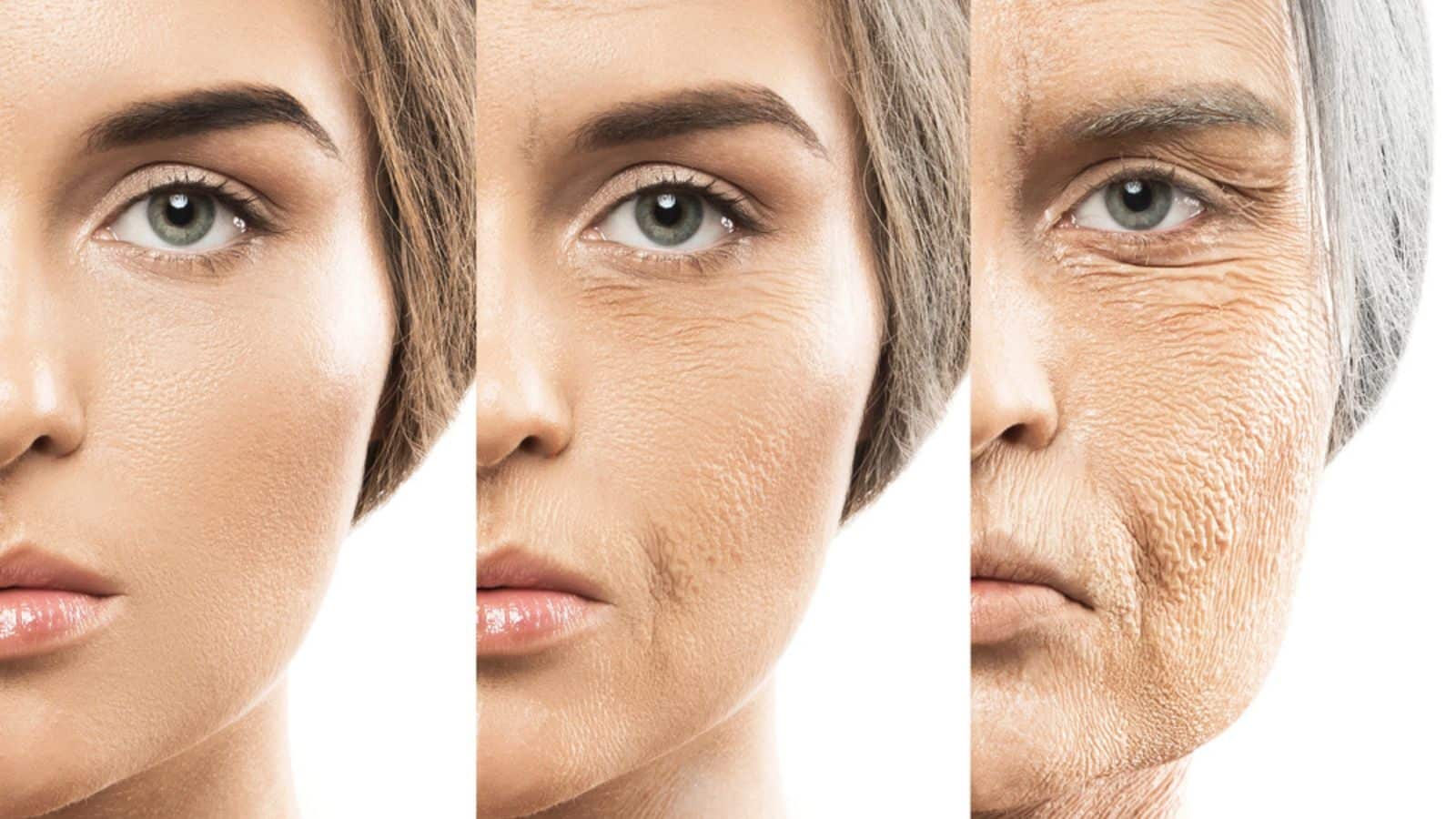
Sinclair has become one of the most visible advocates for the idea that aging is not simply unavoidable accumulation of irreversible damage. His work argues that cells may retain enough hidden information to recover some of the functions they had when they were younger.
That claim has attracted both enthusiasm and criticism.
Animal experiments have provided evidence that partial reprogramming can restore youthful molecular patterns and function in specific tissues. Human evidence has been the missing part. ER-100 now provides a test with outcomes that can fail.
If the therapy proves unsafe or produces no meaningful biological or clinical benefit, that would weaken expectations around this particular approach. If it safely restores function associated with younger cells, it would strengthen the argument that some forms of biological aging are more reversible than previously assumed.
This is why the trial matters even if it never becomes a general anti-aging treatment.
Science advances by turning ambitious ideas into experiments that can produce an answer.
Takeaway: ER-100 moves cellular rejuvenation from a compelling theory into a clinical test. The results can now provide evidence for—or against—one of the most ambitious ideas in modern aging research.
So is age reversal actually possible?
At the cellular and animal level, researchers have already demonstrated changes that reasonably deserve to be described as forms of rejuvenation. Old cells can be reprogrammed, biological-age markers can move toward younger patterns and some lost functions can return in experimental models.
The unanswered question is how far that can be pushed safely in humans.
ER-100 does not yet prove that human aging is reversible. Three early trial participants cannot answer that question, and improving an eye condition would still be very different from rejuvenating an entire body.
But something important has changed.
Instead of asking only if cellular age reversal might someday be tested in humans, scientists are now administering a partial-reprogramming therapy to actual patients and measuring what happens.
The current experiment could fail. It could produce modest benefits restricted to the eye, or it could provide evidence that damaged human cells retain more capacity for rejuvenation than scientists once thought.
Any of those outcomes would teach researchers something.
For the first time, one of the boldest claims in longevity science is being forced to confront the test that ultimately matters: human biology.
Question for you. If scientists eventually proved they could safely make some of your organs biologically younger, would you consider that true age reversal even if your chronological age never changed?





