

Plant-based meat was supposed to reshape the American dinner plate. Instead, momentum is slowing.
After years of rapid growth, the category is facing a pullback. The Good Food Institute reports that U.S. retail sales of plant-based meat and seafood declined in 2024, with both dollar sales and unit purchases slipping. At the same time, data from NielsenIQ shows the broader meat category continuing to grow.
The shift is visible in stores. Plant-based options still occupy shelf space, but fewer households are buying them than just a few years ago. According to the Good Food Institute, penetration has dropped notably since its peak earlier in the decade.
This doesn’t signal the end of plant-forward eating. It suggests something more specific: many shoppers are rethinking whether highly processed meat alternatives are the answer they once seemed to be.
It costs more than people want to pay
Price is the first crack in the story, and it is a big one. GFI’s 2025 U.S. consumer snapshot found that 37% of lapsed buyers said plant-based meat is “too expensive,” and among people who have never tried it, 22% gave the same reason.
GFI’s retail analysis also found that average retail prices for plant-based meat and seafood rose 4% in 2024, while prices for animal meat rose just 1%, leaving plant-based meat at a steep premium. Jody Kirchner, who leads market research and consumer insights at GFI, put it plainly in late 2024, saying that the two factors “above all else” motivating consumer decisions are taste and price.
That line lands because it sounds like every family standing in front of a freezer case, calculator in hand. In a year when even loyal shoppers were trimming extras, a pricey meat alternative started to seem less like a smart swap and more like a luxury detour.
The novelty passed off
Hype can carry a category only so far. Once the first wave of curiosity passed, shoppers started choosing based on their habits, budgets, and taste memory, not their social media feed.
GFI says plant-based meat and seafood’s dollar share was only 1.7% of packaged meat sales in 2024, and spending among households buying both plant-based and conventional meat was about $50 per buyer for plant-based meat compared with $632 for conventional meat. NielsenIQ’s 2025 meat trends report adds supplementary context, noting that alternative meats were down 2.3% year over year by the end of 2024, while retailers shifted focus back toward core meat products.
That contrast matters. Plant-based meat previously seemed like a cultural event. Now it looks more like a niche purchase in a country where the meat department still moves billions and still anchors many dinner plans.
Shoppers see it as processed
Many people do not discuss plant-based meat in the language of nutrition science. They talk about it in the language of instinct. Does it feel real? Does it sound like food? GFI’s 2025 consumer snapshot found that among Americans who have never tried plant-based meat, 32% say it is “too processed,” 19% say it has too many ingredients or ingredients they avoid, and 11% say it is hard to find.
In the same survey, Americans rated conventional meat 20 points higher on understanding the ingredients and 31 points higher on taste. Johns Hopkins public health professor Julia Wolfson added a needed layer of nuance in 2025, saying that some ultra-processed foods are still useful and that “meat alternatives… are ultra-processed and can be beneficial,” though she also noted that almost 75% of the U.S. food supply is estimated to be ultra-processed.
That is the bind. Consumers hear “processed” and think of danger, even when the nutrition story is more complex than the label suggests.
The health advantage no longer feels obvious
Early buyers often treated plant-based meat like a clean-health shortcut. That halo has dulled. In GFI’s 2025 Morning Consult poll of 3,009 U.S. adults, people did give plant-based meat an edge on low cholesterol, low saturated fat, and environmental impact, however conventional meat still won on taste, ingredient clarity, complete protein, and high protein.
Among Americans who have never tried plant-based meat, 52% said they do not see a reason to eat it, 14% said it does not have as much protein as conventional meat, and 9% pointed to sodium. At the same time, the 2024 IFIC Food and Health Survey found that 71% of Americans are trying to consume protein, and half want more fresh foods in their diet.
Put those numbers together, and the consumer mood starts to make sense. If you are chasing protein and freshness, a boxed patty with a long label may stop looking like the healthiest answer in the room.
Taste and texture breaks the spell
The mouth does not care about a marketing deck. It cares about bite, salt, juiciness, aroma, and that small moment of relief when dinner tastes like you hoped it would.
GFI found that 40% of lapsed buyers stopped buying plant-based meat because they did not like the taste or texture, and 60% of people who have never tried it assume they will not like it in the first place. The sensory gap shows up in product testing, too.
In a 2024 NECTAR report cited by Jody Kirchner, nearly 50 plant-based meat products were tested with a U.S.-representative sample of 1,150 omnivore participants, and average plant-based burgers, bacon, tenders, and hot dogs still trailed conventional benchmarks, in some cases by two to three and a half points on a seven-point liking scale. Several nuggets reached parity, which is encouraging, though the wider category still carries the burden of one bad bite too many.
Inflation pushed shoppers back toward basics
When money gets tight, people start asking a colder question: what keeps everyone fed without turning the week into a budgeting puzzle? NielsenIQ says alternative meats were down 2.3% by the end of 2024, and its 2025 meat trends note ties that slump to inflation pressure, shifting prices, and volume weakness.
GFI’s retail data shows the same pattern from another angle: plant-based meat and seafood sales were down 7% and units down 11% in 2024. This is the part people miss when they talk about consumer values as if values float above the checkout line.
A shopper can care about animals, climate, and health, then still grab a cheaper pack of chicken or ground beef because rent is due and two kids need lunch money. Inflation did not just trim spending. It made many households more literal. They went back to familiar proteins, familiar recipes, and prices that made fewer demands.
More to read:
- Eating Plant-Based on The Low FODMAP Diet
- Plant Power: 31 Low FODMAP Vegan and Plant-Based Recipes
- What Is A Plant Based Diet? And Why Should I Care?
Shrinking shelf space made it easier to ignore
You cannot buy what you barely see. GFI’s 2025 retail analysis says total distribution points for plant-based meat fell 9% in conventional multi-outlet channels and 15% in the natural channel in 2024. In refrigerated sections, losses were steeper, down 12% in the conventional channel and 15% in the natural channel.
Save this article
NielsenIQ says retailers are responding to soft sales by limiting their meat-free meat offerings and focusing more on core meat products. That matters more than it sounds.
A category lives or dies partly by visibility. If the shelf gets thinner, the endcap disappears, and the product moves out of the fresh set where shoppers expect to see dinner ideas, casual buyers drift away fast. Plant-based meat then starts to look less like a mainstream option and more like a side aisle experiment you neglected to revisit.
The buyer base stayed small
Part of the category’s problem is that it spread sideways before it spread deep. GFI says the top five product groups, patties, nuggets and tenders, grounds, sausages, and breakfast links, made up nearly 80% of all plant-based meat and seafood dollar sales in 2024.
Frozen products solely accounted for nearly 70% of category dollar sales, while refrigerated products accounted for 30%. Yet household penetration fell to 13%, and repeat rates held at 63%, which signals a loyal core but not a broad recruiting wave. That is why the market can feel crowded and fragile at the same time.
There are plenty of burgers, nuggets, and sausages in the mix, though too few new households are coming through the door. The category built a larger stage, but the audience didn’t grow fast enough to fill the seats.
Americans want more plants but in simpler forms
This is where the story gets more interesting than the usual plant-versus-meat shouting match. Americans are not rejecting plant-forward eating across the board. GFI says total plant-based food dollar sales fell 4% in 2024, though tofu, tempeh, and seitan posted 11% dollar growth and 4% unit growth.
The 2024 IFIC Food and Health Survey found that 71% of Americans are trying to increase their protein intake, and 50% are looking to increase their intake of fresh foods. Then, on March 31, 2026, Reuters reported that the American Heart Association’s updated guidance emphasized plant-based proteins, such as legumes, nuts, and seeds, while urging people to limit ultra-processed foods.
That trio of facts points to a softer shift, not away from plants, but away from the lab-coat version of plants. Beans, lentils, tofu, tempeh, nuts, and grain bowls feel cheaper, cleaner, and easier to trust than a burger built to imitate beef.
The health halo collides with ingredient-label scrutiny
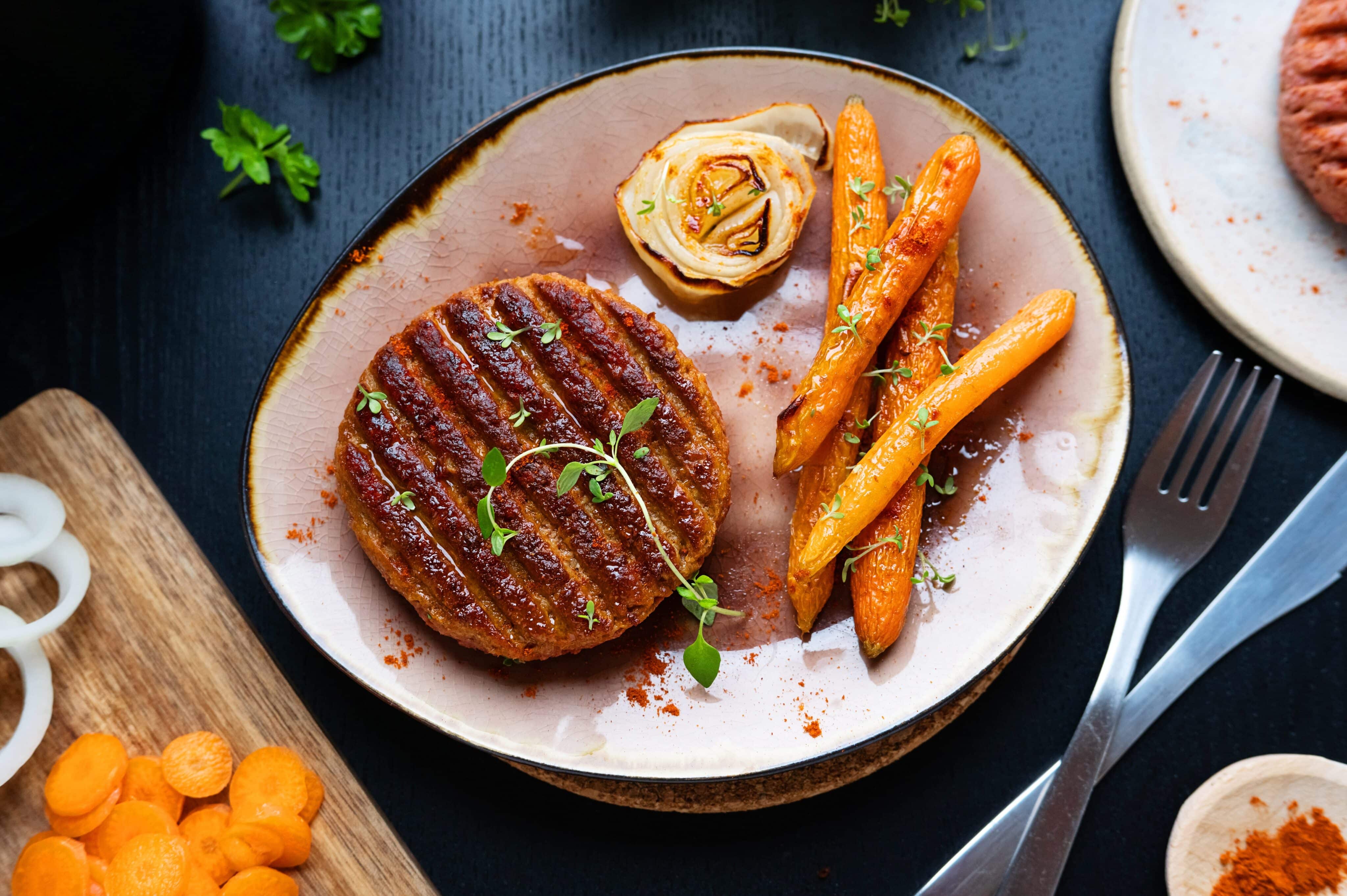
Consumers now read labels with a squint, and that changes everything. NielsenIQ reported in 2024 that the share of shoppers who say transparent product information matters rose from 69% in 2018 to 72% in 2021 and 76% in 2023.
GFI’s 2025 perception data clearly shows the conflict. Americans see plant-based meat as better for low cholesterol and saturated fat, yet they still rate conventional meat higher for ingredient clarity, protein, and taste. Harvard nutrition professor Walter Willett offered a useful correction in 2025, saying plant-based patties can still be “a better option than beef for personal and planetary health,” though he urged shoppers to watch sodium and fat on the label.
That is exactly where the market now sits, in a tension between nutrition math and ingredient anxiety. The old health halo said plant-based meat was the modern good choice. The new shopper wants proof, and that proof has to survive a close read of the back panel.
The hype cycle created curiosity
You can launch a category with zeal, though you keep it sustained by repeat dinner decisions. GFI’s 2025 snapshot says 53% of Americans have eaten plant-based meat at some point, and 40% did so in the past year, yet 13% are now lapsed consumers who have not eaten it in the past year, and the report notes that few consumers reported trying plant-based meat for the first time in 2025.
Among lapsed buyers, 40% blamed taste or texture, 37% blamed cost, and 30% said they simply never think about it. That last figure says a lot. Plant-based meat once had the energy of a headline, a celebrity launch, a fast-food collab, a little sense of tomorrow in every wrapper.
Now it has to survive the Tuesday-night test, the moment a shopper asks, do I actually want this again. For many Americans, the answer has turned from eager curiosity to a quiet shrug.
The long story is alive, but short looks shaky
Plant-based meat is not dead. It is just no longer getting the benefit of the doubt. GFI says the wider U.S. plant-based food market still totaled $8.1 billion in 2024, more than double its size from seven years earlier, yet that total was still down from prior highs.
Globally, GFI’s 2024 state-of-the-industry data showed plant-based meat and seafood retail sales rising 4%, indicating some regions are still advancing even as the U.S. market cools. At home, though, the category’s own numbers read like a waiting room.
Sales are down, household penetration is stuck at 13%, and large groups of consumers say price, taste, and unclear value are holding them back. That is why many shoppers are sitting on the fence. They have not sworn off the category forever. They are waiting for a product that tastes better, costs less, and appears less like a compromise wearing a green label.
Key Takeaways
Plant-based meat lost its easy-go-to status for a stack of reasons that work together like weather, not lightning.
- GFI’s 2024 retail data shows sales down 7% to about $1.2 billion, units down 11%, household penetration down to 13%, and market share stuck at 1.7% of packaged meat dollar sales.
- GFI’s 2025 consumer snapshot adds the human side, 60% of never-triers doubt the taste, 52% do not see a reason to eat it, 37% of lapsed buyers say it is too expensive, and 32% of never-triers say it feels too processed.
- NielsenIQ fills in the shelf story, with alternative meats down 2.3% at the end of 2024 and retailers cutting back assortments. So the category’s problem is not one fatal flaw. It is a pileup of price, trust, texture, shrinking visibility, and the rise of simpler plant proteins that feel more natural to many shoppers.
- The deeper point is even more revealing. Americans still seem open to eating more plants. IFIC says 71% are trying to get more protein, and 50% want more fresh foods. GFI says tofu, tempeh, and seitan rose 11% in dollar sales, and the American Heart Association’s March 31, 2026, guidance again pushed legumes, nuts, and seeds to the front of the conversation.
- That tells you the appetite for plant-forward eating did not disappear. It just slipped away from imitation and drifted back toward familiarity. The freezer-aisle future may still return in a stronger form. For now, many shoppers want their plant foods cheaper, clearer, and closer to the shape they came in.
Disclosure: This article was developed with the assistance of AI and was subsequently reviewed, revised, and approved by our editorial team.
Like our content? Follow us on Newsbreak.
26 Plant-Based Recipes For People Who Hate Vegetables
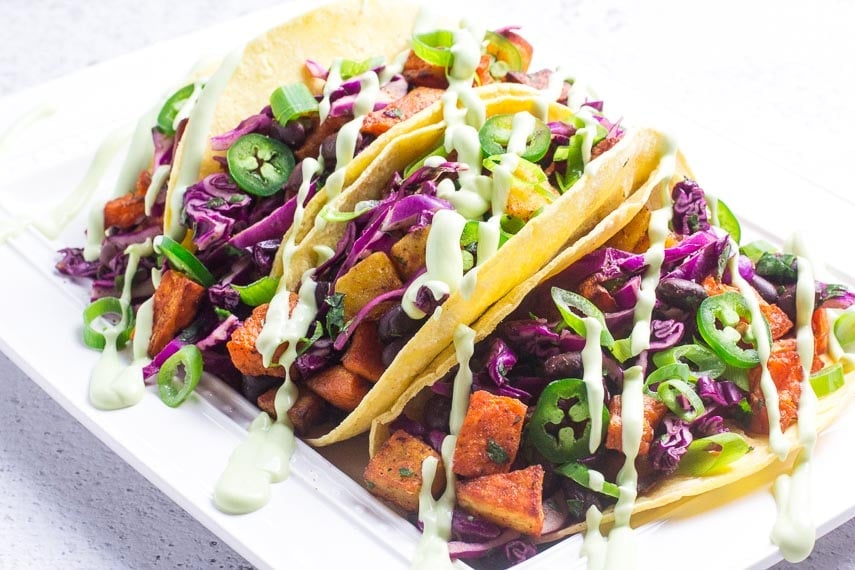
Plant-based diets are about incorporating all the incredible variety of foods from plant sources like fruits, veggies, legumes, nuts, seeds, and whole grains. Research shows that eating more plant-based foods compared to animal-based ones can do wonders for your heart, metabolism, and digestion in the long run.
And the best part? You don’t have to go fully vegan or vegetarian to start reaping these benefits – every plant-based meal counts! Here is a roundup of 26 plant-based recipes that we have in rotation in our homes and even our pickiest eaters who say they hate vegetables love. Learn more.





