

Most searches for alien life begin with planets because Earth is the only place where life has been confirmed. But astrobiologists have increasingly considered a stranger possibility: life elsewhere may not require an Earth-like planet at all.
It could exist beneath the ice of wandering worlds, inside artificial habitats, or in environments so different from ours that the usual definition of a “habitable planet” becomes too restrictive.
There is currently no verified evidence of extraterrestrial life anywhere. These ideas are possibilities grounded in physics, chemistry and what scientists have learned about extreme environments on Earth rather than evidence that such organisms or civilizations actually exist.
Still, they raise an important question. If life is more adaptable than humans expect, scientists may be searching too narrowly by concentrating mainly on planets that resemble Earth.
Life may not need a planetary surface
A habitable world does not necessarily need forests, oceans and continents exposed beneath a star. Some researchers think the most common biological habitats could actually exist beneath thick layers of ice.
Europa and Enceladus are moons rather than planets, yet both are believed to contain oceans beneath frozen surfaces. Those oceans could potentially remain liquid because of internal heating rather than sunlight alone.
A 2026 Nature Astronomy perspective argued that salty oceans protected beneath thick ice shells could potentially represent major habitats for life, perhaps even more commonly than Earth-like surfaces.
This radically changes the search. A world might look frozen and lifeless from outside while protecting a stable environment beneath kilometers of ice.
Takeaway: A world does not need an exposed Earth-like surface to be potentially habitable. Life could theoretically survive in protected oceans hidden beneath ice.
Rogue planets do not orbit any star
Astronomers have discovered free-floating, or rogue, planetary-mass objects traveling through space without orbiting a star. At first glance, they appear terrible places for life because they receive no steady sunlight.
NASA has confirmed such free-floating objects, some with masses several times that of Jupiter.
A rogue world would be extremely cold at its surface, but a sufficiently thick atmosphere or internal geological heat could potentially preserve warmer environments deeper inside.
A subsurface ocean could therefore remain insulated even while the planet travels through interstellar darkness.
Scientists have not found life on a rogue planet, but the concept shows that starlight may not be an absolute requirement for every imaginable habitat.
Takeaway: A planet wandering through darkness could theoretically preserve internal environments capable of supporting chemistry even without a nearby star.
Life does not always need sunlight
Earth itself proves that sunlight is not the only possible energy source for biology. Ecosystems surrounding deep-sea hydrothermal vents survive without photosynthesis forming the base of their food chains.
Microorganisms there can obtain energy from chemical reactions involving compounds released from Earth’s interior.
That process, called chemosynthesis, provides an important model for astrobiology.
If organisms can survive using chemical energy on Earth, then subsurface alien ecosystems could potentially live in permanent darkness as long as liquid chemistry and usable energy remain available.
This is one reason icy moons have become important targets even though sunlight barely reaches the environments scientists are most interested in.
Takeaway: Alien organisms would not necessarily need sunshine if they could obtain energy from chemical reactions instead.
Alien life may not need oxygen either
Humans depend on oxygen so completely that it is easy to treat breathable air as a universal requirement for life. Earth contains many organisms that function without oxygen.
Anaerobic microorganisms use other chemical pathways to obtain energy.
NASA’s astrobiology research specifically notes that scientists consider oxygen-free environments when searching for extraterrestrial life.
This matters because a world lacking an oxygen-rich atmosphere could still host biology.
Oxygen may become an interesting biosignature in some situations, but its absence does not automatically mean an environment is sterile.
Takeaway: Oxygen is essential to humans, not to all known life. An alien ecosystem could potentially operate without breathable air entirely.
Even liquid water may not be the only imaginable solvent
Every confirmed organism on Earth requires liquid water at some stage, which is why astrobiologists usually “follow the water.” Scientists have nevertheless considered chemistry built around other liquids.
Titan, Saturn’s largest moon, has lakes and seas containing liquid methane and ethane at temperatures far below water’s freezing point.
The SETI Institute notes that researchers have considered whether extremely unfamiliar carbon-based life might theoretically use liquid hydrocarbons instead of water. Its astrobiology overview describes such organisms as examples of possible “life as we don’t know it.”
No such biology has been discovered.
The idea simply reminds scientists that searching only for exact copies of Earth’s chemistry could overlook possibilities nature might allow elsewhere.
Takeaway: Water remains the strongest known requirement for life, but scientists have not proved that every possible form of biology must use it.
Advanced aliens might eventually stop depending on natural worlds
If a technological civilization survived long enough, it might become less dependent on its original planet. Artificial habitats could provide controlled environments containing air, water, food and energy.
Humans have already demonstrated the most primitive version of this idea aboard spacecraft and space stations.
A far more advanced civilization could theoretically build enormous habitats in space, mine asteroids for materials and use stars or other energy sources without living permanently on a planetary surface.
At that point, asking which planet the civilization inhabits could become the wrong question.
Its population might live across thousands of artificial structures distributed through a star system.
Takeaway: A sufficiently advanced civilization could potentially create its own habitats rather than relying indefinitely on naturally habitable planets.
Generation ships could become moving worlds
Another speculative idea is a generation ship: an enormous spacecraft capable of sustaining a population for journeys lasting longer than a human lifetime.
Save this article
Such a vessel would need reliable food production, recycling, energy, maintenance and enough biological diversity for generations of inhabitants.
No human-built system comes close to achieving this independently for centuries.
Yet the underlying concept does not require faster-than-light travel.
An alien civilization could theoretically move slowly between stars while entire generations lived and died aboard the spacecraft.
The ship itself would effectively become their world.
Takeaway: Interstellar civilizations may not need to cross enormous distances quickly if they can create habitats designed to remain viable for generations.
Artificial worlds could be more attractive than planets
Natural planets come with problems that engineers cannot choose: inconvenient gravity, dangerous weather, radiation, unstable climates or unsuitable atmospheres. An artificial habitat could theoretically be designed around the biology of its inhabitants instead.
Rotating structures could produce artificial gravity.
Radiation shielding could be engineered into their walls, while temperatures, atmosphere and available daylight could be controlled.
For a sufficiently advanced civilization, constructing many smaller controlled environments might eventually be easier than transforming an entire hostile planet.
This remains far beyond current human engineering, but it follows known physical principles rather than requiring supernatural technology.
Takeaway: A civilization capable of large-scale engineering might prefer environments it designed itself rather than adapting to whatever conditions a planet happened to provide.
Could organisms survive directly in space?
Known Earth life cannot normally grow and reproduce indefinitely in the vacuum of space, but some organisms can survive extraordinary exposure when they enter dormant states.
Tardigrades and certain microbes have survived limited exposure to vacuum, radiation and extreme temperatures under experimental conditions.
That does not mean organisms could simply float between stars while remaining active.
Space lacks the stable liquid environment, accessible nutrients and protection that known life needs.
Dormancy might allow biological material to survive portions of a journey, though, which is one reason scientists have considered ideas such as panspermia.
Takeaway: Known life cannot simply flourish in empty space, but temporary survival is different from active growth and could matter for biological material traveling between worlds.
Panspermia suggests life could move between worlds
Panspermia is the hypothesis that microorganisms or biological precursors could move between planets naturally, perhaps inside rocks thrown into space by asteroid impacts.
Scientists have found meteorites on Earth that originated on Mars, demonstrating that rocks can move naturally between planets.
The uncertain part is biological survival.
A microorganism would have to survive the initial impact, years or much longer in space, radiation exposure and another impact upon arrival.
Researchers continue studying portions of that chain, but panspermia has not been shown to explain the origin of life on Earth or anywhere else.
Takeaway: Rocks can travel between planets, creating a possible transportation mechanism for biology even if scientists do not know if life can survive the entire journey.
Searching only for Earth-like planets could miss something
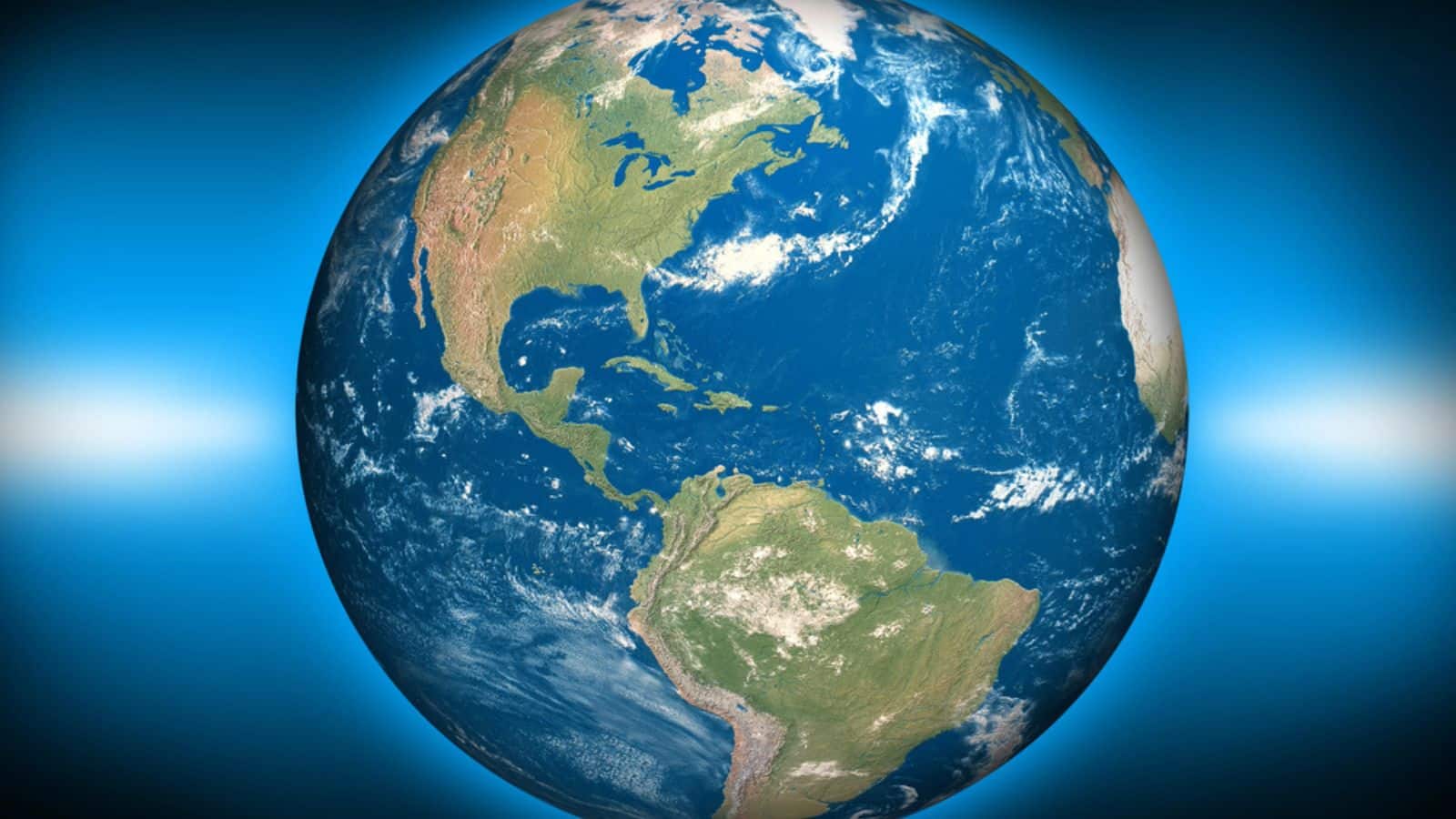
NASA currently focuses heavily on liquid water, usable energy and chemistry because Earth provides the only confirmed example of life. That is scientifically sensible, but researchers also recognize the limitation.
NASA’s discussion of alien life notes that detecting “life as we don’t know it” would be considerably harder because scientists may not recognize unfamiliar biological signatures.
An extraterrestrial organism using unusual chemistry might fail tests designed around Earth biology.
An advanced civilization living in artificial habitats might also leave technological signatures rather than familiar biological ones.
Related: Steven Spielberg Warns There’s “Overwhelming” Proof Aliens Exist and It Changes Everything
Takeaway: The more different alien life is from Earth life, the greater the chance that our current search methods could fail to recognize it.
So could aliens survive without planets?
Possibly, but science has no evidence that any do. The strongest examples come from environments showing that planetary surfaces are not the only places where habitable conditions can theoretically exist.
Subsurface oceans could support biology without sunlight. Rogue worlds might preserve internally heated environments without orbiting a star, while advanced technological civilizations could potentially build artificial habitats and eventually abandon planets almost entirely.
More speculative possibilities involve unfamiliar solvents, generation ships and biological material traveling between worlds.
None has produced confirmed extraterrestrial life.
What these ideas change is the search itself.
If life does not always require an Earth-like planet beneath a Sun-like star, then potentially habitable environments may be much more diverse than the ones humans naturally imagine.