You may walk around feeling pretty confident about history, right up until you realize how many “facts” you’ve been casually repeating that just aren’t true.
History class was often a blur of dates, dusty maps, and facts that seemed etched in stone, but it turns out that your teacher might have been passing along some serious fiction. We tend to accept these stories because they make for great drama, even if the truth is far less theatrical and much more complicated.
It is remarkably easy for a good story to replace the facts, creating a version of the past that is more Hollywood than history, and we all fall for it. Sadly, some of the things we think we know are often just repeated errors. Let’s set the record straight on the myths that have fooled us for decades.
Ben Franklin And Daylight Saving Time

You have likely heard the old tale that Daylight Saving Time was invented to give farmers more time to work in their sunny fields. Some Americans still believe this agrarian legend is true. The reality is that farmers actually lobbied hard against the change because it disrupted their strict schedules.
The practice was really adopted to save energy during World War I and was later pushed by retail lobbyists. Farmers lost an hour of morning light, which meant they had to rush their goods to market in the dark. It is funny how we blame the agricultural industry for a policy that they never even wanted.
Napoleon Bonaparte Was Short

This might be the most famous height complex in human history, and it is completely unfair to the French emperor. At the time of his death, Napoleon measured roughly 5 feet 2 inches in French units, which equals about 5 feet 7 inches today. He was actually slightly taller than the average Frenchman of his era.
The confusion stemmed from differences between the French and British measurement systems, which the British propaganda machine happily exploited. They loved depicting him as a tiny, angry man to diminish his terrifying military achievements. We still use his name to describe short-tempered men, even though he was perfectly average.
The Salem Witches Were Burned

Pop culture has filled our heads with horrific images of women being tied to stakes and set on fire in colonial Massachusetts. While the hysteria was real, the method of execution was strictly hanging for nineteen of the victims. One man was pressed to death with heavy stones because he refused to enter a plea.
Burning at the stake was a punishment used in Europe for heresy, but it was not the style of the American colonists. We often mix up the brutal medieval history of Europe with the specific tragedies of New England. It is a grim distinction to make, but the truth matters in such dark times.
Vikings Wore Horned Helmets

You cannot picture a Viking without that iconic headgear, but you have 19th-century costume designers to thank for that image. There is absolutely no historical evidence that Norse warriors went into battle with heavy horns protruding from their heads. It would have been wildly impractical and dangerous in close combat.
The image became popular after costume designer Carl Emil Doepler created horned helmets for a Wagner opera in 1876. We have accepted this theatrical fashion choice as a historical fact for over a hundred years. Real Viking helmets were simple, practical, and definitely not designed for show.
Christopher Columbus Discovered America
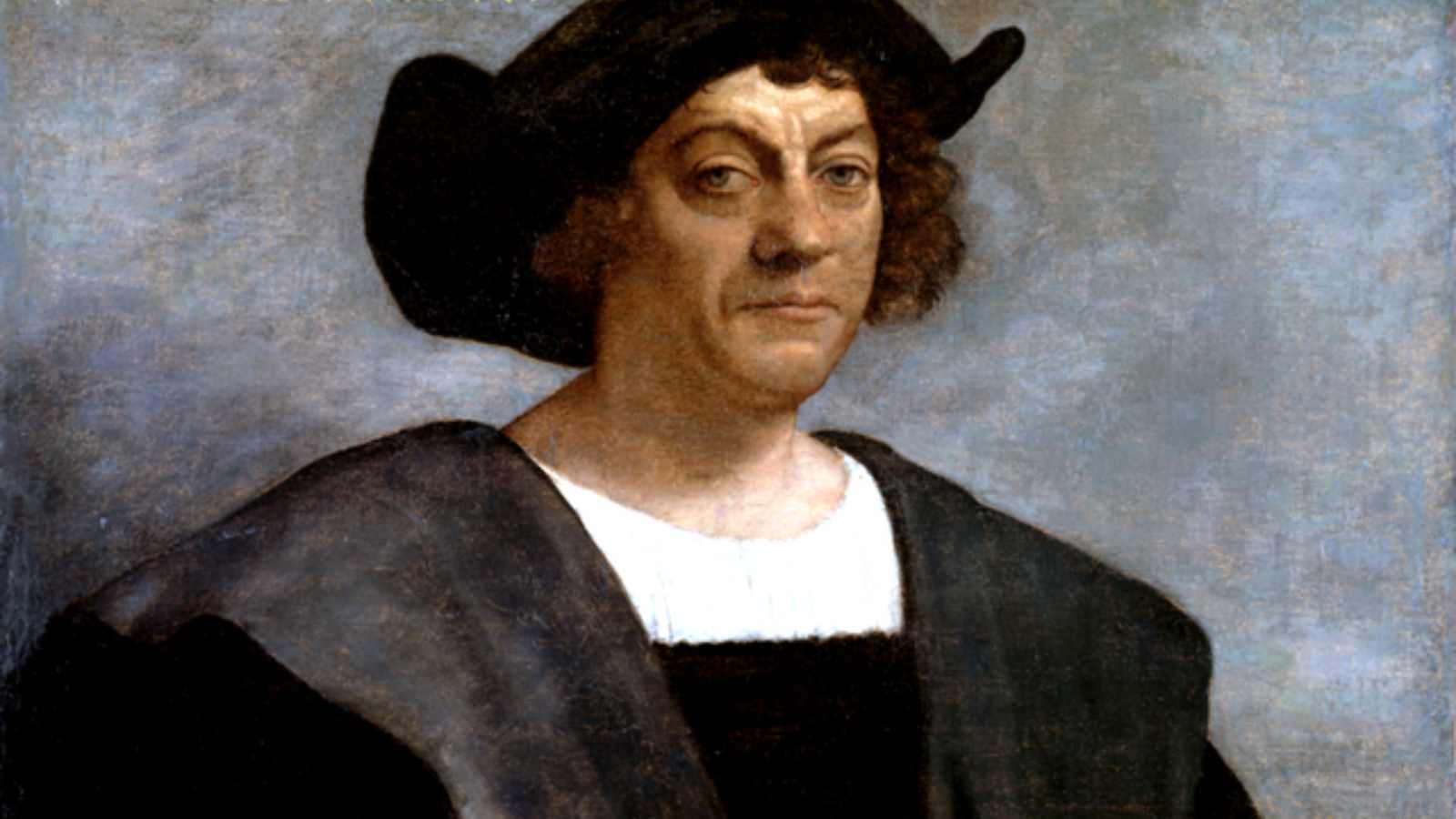
We get a day off work for it, but the idea that Columbus discovered a place where millions of people already lived is absurd. Indigenous populations had been thriving on the continent for thousands of years before his ships ever arrived. Even if we only count Europeans, the Vikings led by Leif Erikson beat him by about 500 years.
Save this article
Columbus actually landed in the Caribbean and never even set foot on the mainland of what is now the United States. His voyages opened the door for European colonization, but he was certainly not the first to find the New World. It is a classic case of history being written exclusively by the victors.
Marie Antoinette Said Let Them Eat Cake

This quote is the ultimate symbol of out-of-touch royalty and is said to have sparked the French Revolution. Historians have found no record of the French queen ever uttering those specific words when told her people were starving. The phrase had been floating around in stories about other princesses long before she arrived.
The poor queen was a convenient target for revolutionary anger and propaganda that wanted to paint her as a villain. She was definitely disconnected from the struggles of the poor, but she was not quite that cruel. It is easier to hate a villain who mocks your hunger than one who just ignores it.
Einstein Failed Math In School

Everyone loves the underdog story of the genius who flunked out of school before changing the world. The truth is that Albert Einstein was an exceptional student who had mastered differential and integral calculus by age 15. He actually failed an entrance exam for a polytechnic school because he struggled with the non-science sections.
The rumor might have started because the grading scale at his school reversed, making what looked like a failing grade a top score. We cling to this myth because it makes us feel better about our own academic struggles. It is nice to think that even a genius can have a bad report card.
George Washington Had Wooden Teeth

The father of the country had terrible dental health, but his dentures were made of much sterner stuff than wood. His false teeth were a gruesome mix of gold, ivory, lead, and human teeth that were likely purchased from enslaved people. Wood would have become soggy and rotted very quickly in a human mouth.
This myth likely arose because his dentures became stained over time, giving them a brown, wooden appearance. A NU.edu study estimates that 54% of U.S. adults read below a sixth-grade level, which helps explain why simple myths persist over complex truths. The reality of his dental situation was far more disturbing than the wooden legend.
The Great Wall Of China Is Visible From Space

This is one of those facts that sounds so impressive that we just accept it without question. The Times of India reports that NASA has repeatedly confirmed that the Great Wall is generally not visible to the naked eye from low Earth orbit. It is too narrow and blends in too well with the natural colors of the surrounding earth.
You can barely see airports or highways from that height, so seeing a wall is nearly impossible without a camera lens. Human eyes are simply not strong enough to pick out that kind of detail from hundreds of miles away. We love to believe our creations are massive enough to be seen by the stars.
Bulls Hate The Color Red

Matadors have used red capes for centuries, but the color has nothing to do with the anger of the bull. Cattle are effectively colorblind to red and green, so the bull literally cannot tell what color the cape is. It is the whipping motion of the fabric that provokes the animal to charge.
We use the phrase “seeing red” to describe anger, which reinforces this old misconception in our daily language. These animal myths persist because we prefer dramatic stories over biological facts.
Disclaimer – This list is solely the author’s opinion based on research and publicly available information. It is not intended to be professional advice.
Like our content? Be sure to follow us