

Every generation has its own picture of the perfect holiday season, and for baby boomers that picture often includes things that simply no longer exist. Shiny metal trees, toy catalogs thick enough to stop a door and savings accounts opened just for Christmas were once ordinary parts of December in American homes.
Most members of Gen Z, born from the late 1990s onward, grew up with streaming services, online shopping and LED lights instead. Here are 10 holiday traditions that many boomers remember clearly but that younger people have mostly never experienced firsthand, along with what made each one fade away.
Nostalgia for that era runs deep, from the 15 foods from the ’60s most boomers loved with a passion to the growing hobby of sourcing and decorating with vintage Christmas decorations. Some older customs are even returning, as seen in these 14 boomer habits that are making a comeback.
1. Circling Toys in the Sears Wish Book
For decades, the arrival of the Sears Christmas catalog marked the true start of the season for kids. The separate Wish Book first appeared in 1933, according to the Sears Wish Book’s history on Wikipedia, and children would spend weeks flipping through it and circling everything they hoped Santa would bring. The 1969 edition alone had 225 pages of toys. Sears stopped publishing its big U.S. catalogs in 1993, and while later versions appeared, the giant print book that boomers remember never returned in the same form.
2. The Aluminum Tree and Its Spinning Color Wheel
In the late 1950s and 1960s, a glittering silver tree was the height of modern style. Because strung lights on metal branches posed fire and shock risks, families placed a rotating color wheel on the floor that bathed the tree in shifting red, blue and green. The Aluminum Specialty Company in Manitowoc, Wisconsin, made more than 1 million of them during the 1960s, with its Evergleam model retailing for $25, according to Wikipedia’s entry on the aluminum Christmas tree. Many people credit “A Charlie Brown Christmas,” which aired in 1965, with making the trees seem cold and commercial, and by 1967 they had nearly vanished.
3. Heavy Strands of Lead Tinsel
Older tinsel had a satisfying weight that made it hang straight from every branch, and for good reason: it was made with lead. MeTV’s look at vintage Christmas traditions from the 1950s and 1960s notes that lead tinsel was banned in 1972, and tinsel use declined afterward. Today’s lightweight plastic versions float and cling instead of draping, which is why the look of a boomer-era tree is hard to recreate.
4. Catching ‘Rudolph’ on Its One Night a Year
The stop-motion special “Rudolph the Red-Nosed Reindeer” premiered on NBC on Dec. 6, 1964, and has aired every year since, which Wikipedia’s history of the Rudolph TV special describes as the longest continuously running Christmas TV special in the United States. Before home video and streaming, missing that single broadcast meant waiting a full year. The special became streamable on services such as Hulu and YouTube TV for the first time in 2024, a convenience that would have amazed kids in the 1960s.
5. Paying Off Gifts Through Layaway
Instead of putting presents on a credit card, many families once chose gifts in the fall and paid for them in small weekly installments. Genealogy Explained’s list of Christmas traditions from the 1960s and ’70s that vanished describes shoppers starting payments in October and picking up their items in December. Credit cards largely replaced the practice, and although layaway made a modest return during the 2008 recession, it never regained its earlier popularity.
6. Saving Up in a Christmas Club Account
Banks once offered special Christmas Club accounts, where members deposited a set amount, often $1 to $10 a week, throughout the year. By 1965, more than 14 million Americans took part, saving over $2 billion a year, according to Genealogy Explained. The same source says credit cards made the clubs largely obsolete by 1980.
7. Downtown Department Store Windows
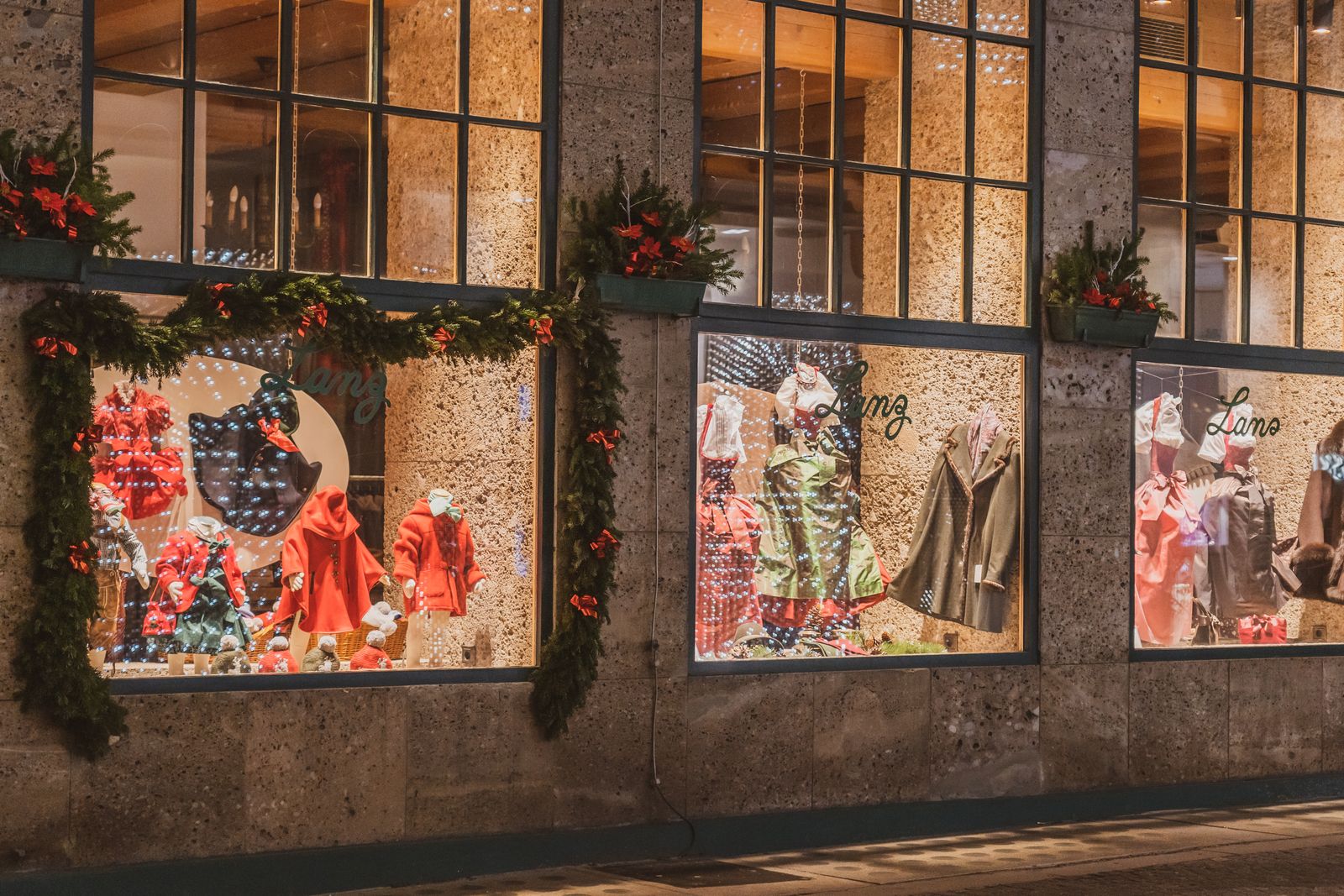
A trip downtown to see the animated windows at stores like Macy’s, Gimbel’s and Marshall Field’s was a family event in many cities. Lord & Taylor’s 1966 Enchanted Forest display featured 50 moving animals. As suburban malls drew shoppers away from city centers, most stores had dropped elaborate window displays by 1985. A few famous windows survive, but the neighborhood-store version that boomers recall is mostly gone.
8. Watching the Yule Log on Television
New York station WPIX began broadcasting a three-hour loop of a crackling fireplace in 1966, giving apartment dwellers without a hearth a cozy holiday glow. Other stations copied the idea, and the original run was canceled in 1990. Digital fireplace videos exist today, but gathering around a single TV channel to watch a log burn is a memory unique to older viewers.
9. Caroling Door to Door
Groups of neighbors once walked from house to house singing carols, a custom that peaked in the late 1960s. Concerns about safety, along with the spread of gated communities and apartment buildings, made spontaneous caroling harder. A widely shared AOL roundup of holiday traditions that are disappearing notes that caroling now happens mostly at churches, schools, malls and tree lightings rather than on front porches.
10. Mailing Stacks of Christmas Cards
In the boomer years, the holiday card list could run long, and mailboxes filled up through December. Americans sent about 4 billion cards by 1968, according to Genealogy Explained, while today’s average household sends about 20. Long-distance calling, then email and social media, gave families easier ways to stay in touch, though some reports suggest millennials are helping revive the habit.
A Season Worth Remembering
Many of these traditions faded for practical reasons, whether safety, convenience or the rise of credit cards and the internet. Still, they shaped the way millions of families celebrated, and they remain a favorite topic when generations swap stories at the holiday table. Some of these memories overlap with the customs in 10 classic U.S. traditions fading fast.
The generational trade goes both ways, too. As 15 things Gen Z thinks are original but boomers did first shows, plenty of trends that feel new today have roots in an earlier era. A vintage tree or a handwritten card may yet find a fresh audience.
This article was written with the help of AI tools and checked against the sources linked above.




