Do you picture heaven as a boring, endless jam session on a cloud? You might be surprised by what the experts—and the original texts—actually say.
Let’s be real, most of us have some idea of what heaven is like. And why not? A vast majority of Americans—67% according to a 2023 Gallup poll—believe in it. Pew Research puts that number even higher at 71%. It’s a topic that fascinates us.
But here’s the catch. Our ideas about the afterlife are often a wild mashup of different things. The Barna Research Group found that people are essentially creating their own personal heaven, “cutting and pasting religious views from a variety of different sources—television, movies, and conversations with their friends.”
This list isn’t meant to be preachy. It’s about exploring what’s behind our most common beliefs and uncovering a vision of the afterlife that’s surprisingly different—and way more exciting—than you might think.
You’ll spend eternity floating on a cloud playing a harp

This is the most famous image of heaven, and it’s almost entirely made up. Seriously, you won’t find it in the Bible. It’s a cultural cocktail, mixed over centuries.
The idea of halos, for instance, didn’t even start with Christianity. It likely originated in ancient Zoroastrianism in Iran as a symbol of “Divine Favor” and was later used in Greek and Roman art to signify a person’s power or divinity. Christian artists began using it only around the 4th century.
That whole harp-playing thing? It didn’t become a popular image until the 14th century, influenced more by philosophical ideas about cosmic harmony than by scripture.6 Author and theologian Randy Alcorn dismisses the whole scene as an unbiblical and unappealing “platonic drift”.
Heaven is your final, forever home

This one is a half-truth, and the whole story is way more interesting. The Bible actually talks about two stages of the afterlife for believers.
Right now, when a Christian dies, their spirit goes to be with God in a place the Bible calls heaven. Think of this as the “intermediate” or temporary heaven. It’s where you are “absent from the body but at home with the Lord” while you await the final chapter.
But that’s not the end of the story. The ultimate, eternal home for believers isn’t up in the clouds—it’s down here, on a renewed and perfected Earth.
Theologian Ian K. Smith puts it bluntly: “Heaven is neither our original home nor our eternal home”. The grand finale of the biblical story isn’t about us being evacuated from Earth. Instead, it describes a “New Jerusalem, coming down out of heaven from God” to a restored Earth, where God will live with humanity forever (Revelation 21:1-3).
The Earth is going to be destroyed

Many of us hear “fire” and think total annihilation. But that’s not what the original language suggests. This idea often comes from a single verse, 2 Peter 3:10, which, in the old King James Version, says that the earth and its works “will be burned up.”
But here’s a fascinating detail: older and more reliable Greek manuscripts of that text use a different word. Instead of “burned up,” they say the earth will be “laid bare” or “exposed.”
Theologians say this paints a picture of purification rather than destruction. It’s like a refining fire that burns away all the sin, corruption, and decay, but leaves the good intact.
Theologian Anthony Hoekema argued that if God just destroyed the planet, it would mean Satan won. Instead, Hoekema says, “God will reveal the full dimensions of that defeat when he shall renew this very earth”. It’s a total restoration project, not a demolition job.
You’ll become an angel

It’s a sweet thought, often said to comfort grieving children, but it’s a huge misconception. A surprising number of people believe it, too. A 2021 Pew Research survey found that 43% of American adults think people can become angels after they die.
But biblically speaking, humans and angels are entirely different beings. Angels are spiritual beings created by God to serve as His messengers (the Greek word angelos means “messenger”). Humans are physical beings created in God’s image. We don’t graduate from one category to the other.
The Christian hope isn’t about becoming an angel; it’s about becoming a perfected, resurrected human. We will have glorified physical bodies, unlike angels. It’s like saying a cat will eventually become a dog—they’re just fundamentally different creatures with unique purposes.
You’ll lose your identity and forget your life on earth

This might be one of the scariest misconceptions—the idea that you’ll be zapped into a generic, memory-wiped being. The good news is, the Bible teaches the exact opposite. You will be you.
This lines up with what most people hope for. A Pew Research poll found that being reunited with loved ones is one of the top things Americans believe about heaven, with 65% expecting it.
The ultimate proof is the resurrected Jesus. He was still himself. He had his memories, his personality, and even the scars on his hands and feet. He told his disciples, “Look at my hands and my feet. It is I myself!” (Luke 24:39).
Author Randy Alcorn puts it perfectly: “If Bob, a man on Earth, is no longer Bob when he gets to Heaven, then, in fact, Bob did not go to Heaven.” Your identity, your history, and your relationships are part of who you are, and that continues into eternity. The Bible even says our earthly names are written in the “Lamb’s Book of Life”.
It’s a purely spiritual place with no physical bodies

Many people imagine the afterlife as a ghostly, disembodied existence. An old ABC News poll found that 82% of believers thought heaven was a place where people existed only spiritually. This idea is so common that theologian Randy Alcorn gave it a name: “Christoplatonism,” a mix of Christian thought and ancient Greek philosophy that viewed the physical body as a prison for the soul.
But the central promise of Christianity is the resurrection of the body. The Bible is clear that our eternal future is physical. Jesus, our example, was resurrected with “flesh and bones” and even ate a meal with his disciples to prove he wasn’t a ghost.
Theologian N.T. Wright explains, “God’s plan is not to abandon this world… Rather, he intends to remake it. And when he does, he will raise all his people to new bodily life to live in it”.
It’s going to be one long, boring church service

Save this article
Let’s be honest, the idea of an endless worship service sounds exhausting to many of us. This fear comes from a really narrow view of what “worship” is.
One pastor noted, “Our mistake is when we equate ‘worship’ only with ‘singing'”. The Bible presents a much broader picture. True worship is offering our entire lives—our work, our creativity, our relationships—as an act of service to God.
In the new world, work will be redeemed. It will be joyful, creative, and fulfilling, without any of the stress or burnout we experience now. As Randy Alcorn says, we will have “satisfying and enriching work that we can’t wait to get back to, work that’ll never be drudgery”.
Everyone will be the same

The idea of a bland, uniform eternity where everyone is a carbon copy of each other is another myth. The Bible actually teaches that our individuality will be celebrated and that our lives on earth will directly impact our roles in eternity. Jesus often spoke about “rewards” in heaven. This isn’t about earning your way in, but about God honoring the faithful work of his people.
In the famous Parable of the Talents, the master rewards his faithful servants by putting them in charge of more responsibility, saying, “Well done, good and faithful servant! You have been faithful with a few things; I will put you in charge of many things” (Matthew 25:23).
This suggests a future with unique roles, responsibilities, and honors. It’s not a one-size-fits-all experience, but one where our unique gifts and faithful service in this life are carried forward and celebrated for eternity.
Everyone automatically gets in

This is a comforting thought, but it’s not what the Bible teaches. While a 2021 Pew survey shows Americans are divided on who gets into heaven —39% say non-believers can get in and 32% say they can’t —Jesus himself spoke about it in clear terms.
He famously described two paths. “Enter through the narrow gate,” he said. “For wide is the gate and broad is the road that leads to destruction, and many enter through it. But small is the gate and narrow the road that leads to life, and only a few find it” (Matthew 7:13-14).
Throughout the New Testament, the message is consistent: entrance into God’s eternal kingdom is based on a personal choice to accept the grace offered through faith in Jesus Christ. This isn’t about a God who is trying to keep people out, but about a heaven that is, by its very nature, the home of those who have chosen a relationship with Him.
The Bible doesn’t really say much about it
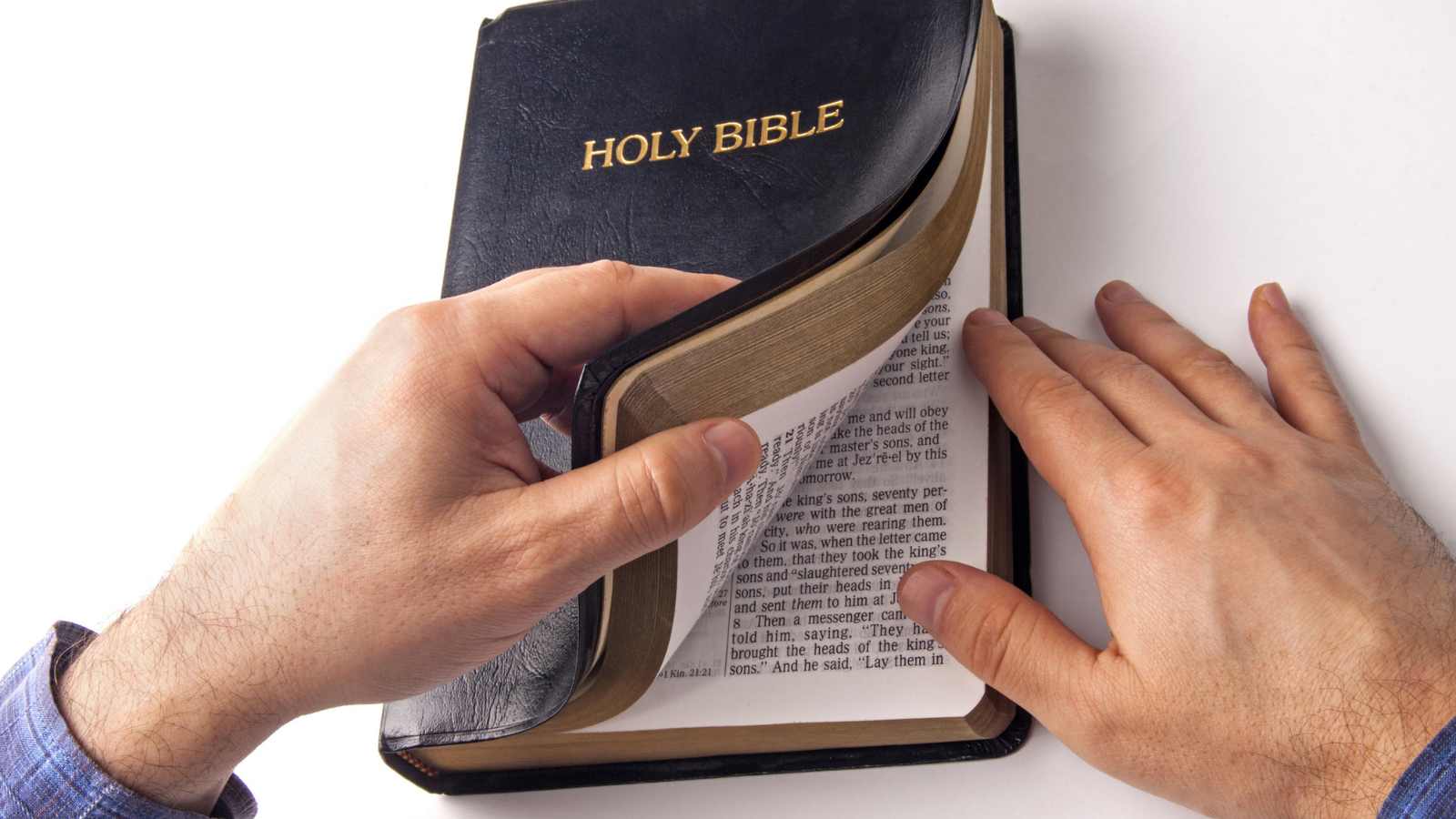
Of all the misconceptions, this one might be the most surprising. People often quote a part of a verse from 1 Corinthians 2:9: “No eye has seen, no ear has heard, no mind has conceived what God has prepared for those who love him.” They stop there and assume it’s all a big mystery.
But they’re missing the essential second half of the thought. The very next line says, “…but God has revealed it to us by his Spirit”. The message isn’t that heaven is unknowable; it’s that we couldn’t have known about it unless God chose to show us. And He has.
The Bible gives us far more than just hints. The prophet Isaiah gives beautiful descriptions of the New Earth. And the final two chapters of the entire Bible, Revelation 21 and 22, are a detailed, vibrant vision of our eternal home—a place of stunning beauty, joyful activity, and the direct presence of God.
Key Takeaway

The popular vision of heaven—a wispy, boring, disembodied eternity—is more a product of pop culture and ancient myths than the Bible. The biblical promise is far more grounded and exciting: a future where we live in resurrected, physical bodies on a restored, tangible Earth. This future is filled with meaningful relationships, purposeful work, and endless discovery in the presence of God—a reality designed not to be escaped, but to be eagerly anticipated.
Disclaimer: This list is solely the author’s opinion based on research and publicly available information. It is not intended to be professional advice.
Disclosure: This article was developed with the assistance of AI and was subsequently reviewed, revised, and approved by our editorial team.
14 Things That Label You as ‘Uneducated’ on Social Media

14 Things That Label You as ‘Uneducated’ on Social Media
Welcome to the digital world, a place as intriguing as treacherous, where your online persona can instantly charm or alarm others. In this realm, your social media presence is your calling card —a digital mirror reflecting your thoughts, beliefs, and, perhaps inadvertently, your level of education. Yet, fear not! This guide is here to help you navigate the vast ocean of social media with grace and wisdom.
How to Save on International Money Transfers: What Banks Don’t Tell You

How to Save on International Money Transfers
Normally, I’d question the secret fees that are hidden in my bank’s international money transfer services. While banks sometimes advertise low transfer fees, they usually do not mention the substantial exchange rate margins that quietly siphon money out of your funds. It shouldn’t be expensive to send money overseas.