

More than 5 billion copies of the Bible have been distributed worldwide, making it the most circulated book in human history. It influences law, education, literature, music, politics, and personal belief systems across continents.
Yet familiarity has not eliminated curiosity. For believers, skeptics, and scholars alike, the same foundational questions continue to surface as people seek clarity about where the Bible came from, what it teaches, and why it still matters.
Here are 10 typical questions people inquire about the Bible.
Who actually wrote the Bible?

The Bible emerged through dozens of writers over more than a thousand years, including shepherds, kings, prophets, fishermen, physicians, and teachers.
Christian tradition holds that God inspired these authors, while historians emphasize the role of culture, language, and political context in shaping each book. This blend of divine purpose and human authorship remains central to how the Bible is understood today.
How old is the Bible?

Most Old Testament writings date to roughly 1200-100 BCE, while the New Testament was written between 50 and 100 CE. That means parts of the Bible are over three millennia old.
Despite this age, the text continues to circulate widely in both print and digital formats.
Is the Bible historically accurate?

Archaeological discoveries have confirmed the existence of ancient cities, rulers, and events mentioned in Scripture, such as Babylon, Jerusalem, and the Roman census system.
At the same time, scholars note that the Bible also contains poetry, theology, and moral storytelling, which means its purpose extends beyond strict historical documentation.
Why are there so many translations and versions?

The Bible was originally written in Hebrew, Aramaic, and Greek. As Christianity spread, scholars translated it into Latin and later into hundreds of modern languages.
Differences in translation philosophy, word-for-word versus thought-for-thought, explain why modern editions vary in style and tone.
How was the Bible compiled into one book?
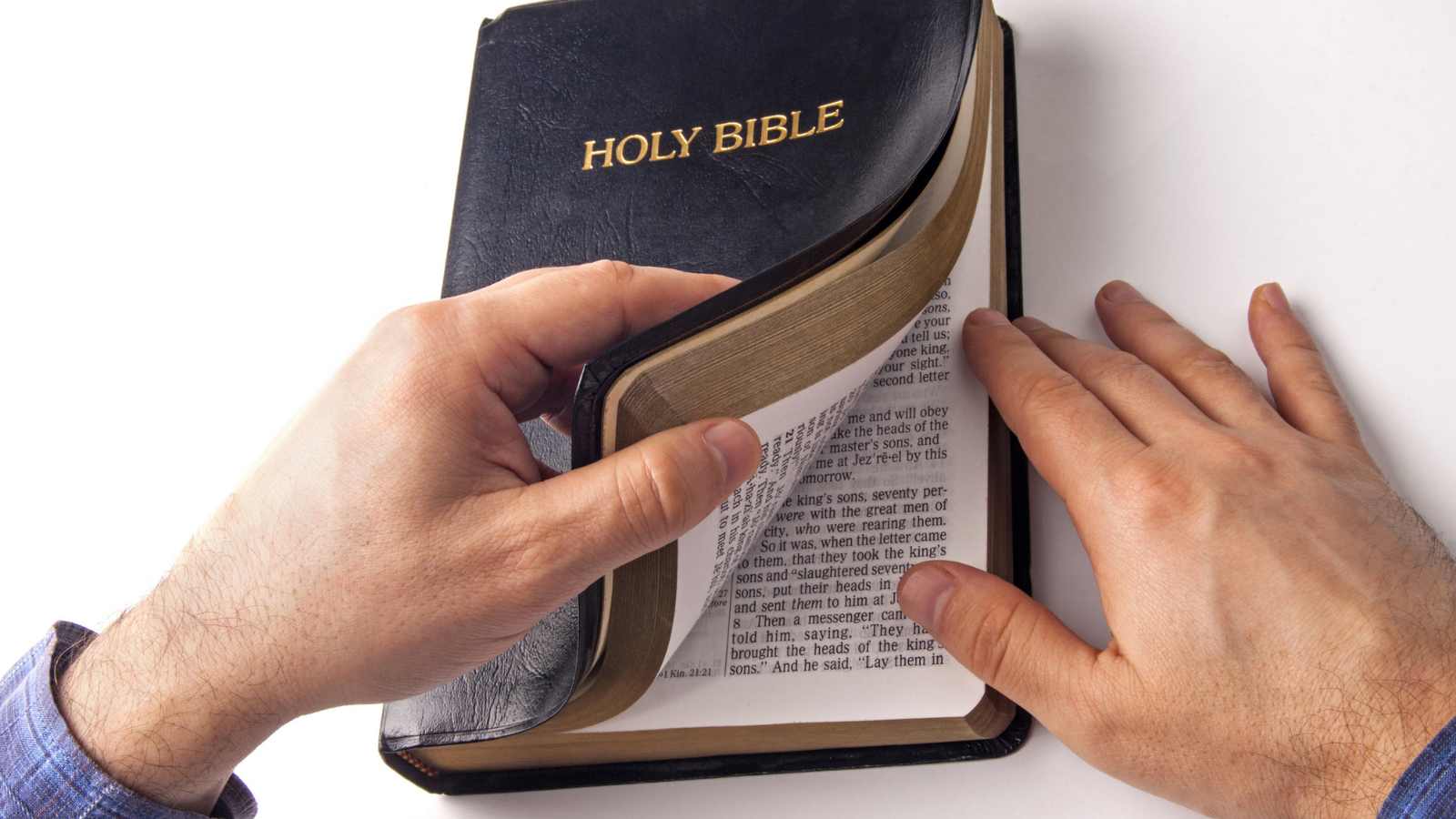
Early Jewish leaders and Christian councils evaluated hundreds of ancient writings before selecting those considered authentic, consistent, and widely used in worship.
Save this article
This gradual process, known as canonization, unfolded over several centuries and shaped the Bible used today.
Why does the Bible sometimes seem to contradict itself?

Multiple authors wrote in different eras to different audiences, often describing the same events from unique perspectives.
Scholars argue that many “contradictions” reflect literary style or emphasis rather than factual disagreement.
Should the Bible be read literally or symbolically?

The Bible includes history, poetry, legal codes, prophecy, letters, and parables. Interpreting it requires recognizing genre. A psalm differs from a legal command, and a parable differs from a historical report.
Why has the Bible influenced so many societies?

Biblical ideas shaped Western legal systems, concepts of human dignity, charity, education, and civil rights movements. Universities, hospitals, and humanitarian organizations often trace their origins to biblical teachings.
How do scholars study the Bible today?

Modern researchers analyze ancient manuscripts, compare translations, excavate archaeological sites, and study original languages to better understand how the Bible developed and how early communities interpreted it.
Why do people still read the Bible in the digital age?

Despite technological change, people continue turning to the Bible for meaning, comfort, moral guidance, and identity. Its stories address suffering, injustice, hope, forgiveness, and purpose, experiences that remain universal.
Key Takeaways

- The Bible is a collection of ancient writings, not a single book.
- It blends history, theology, poetry, and moral teaching.
- Translation and compilation took centuries of careful effort.
- Scholarly study continues to uncover new context and meaning.
- Its influence persists because it addresses timeless human struggles.
Also on MSN: Sorry, Gen Z—Baby Boomers were right about these 12 things all along
Disclosure: This article was developed with the assistance of AI and was subsequently reviewed, revised, and approved by our editorial team.
Disclaimer: This list is solely the author’s opinion based on research and publicly available information. It is not intended to be professional advice.





