

A chemical storage tank at Nippon Dynawave Packaging in Longview, Washington, failed, killing 11 workers and releasing about 900,000 gallons of hot white liquor, the caustic mixture used in the paper-making process.
The failure appeared sudden. The inspection history tells a more complicated story.
Months before the rupture, a contractor had identified serious thinning in the tank’s structure and warned that it was not fit for continued service unless corrected. That finding is now central to a federal investigation into how the disaster unfolded.
The U.S. Chemical Safety and Hazard Investigation Board (CSB) has not issued a final determination on what caused the failure. But the timeline already raises a difficult question for industries that depend on massive equipment: what happens after a serious safety problem is identified?
A Deadly Failure at a Washington Paper Mill
A routine workday at a Longview paper mill ended with one of the deadliest industrial accidents in the facility’s history.
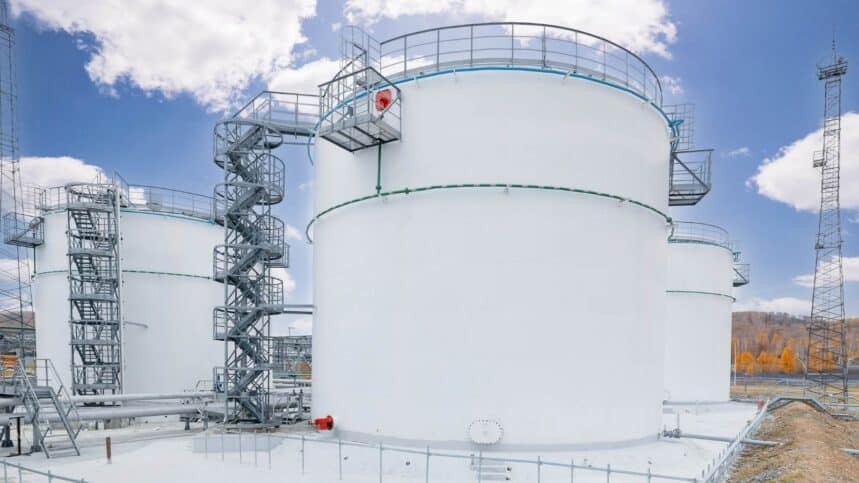
The failure happened at the Nippon Dynawave Packaging facility when G Tank, a large atmospheric storage tank, ruptured.
According to investigators, the tank released approximately 900,000 gallons of white liquor, a highly caustic chemical mixture used during paper production. The liquid was around 200 degrees Fahrenheit as it spread through the facility.
Eleven Nippon Dynawave employees were killed. Others were injured, including a firefighter who suffered serious chemical burns after entering the released liquid while believing it was water, according to the CSB.
Investigators say the events leading up to the rupture began with a process disruption involving a digester. The equipment had been taken offline for repairs, but white liquor continued flowing into the storage tank while the normal outflow was interrupted.
The tank eventually reached about 90 percent capacity before failing at approximately 7:09 a.m.
Months Before the Failure, Inspectors Found a Serious Problem
The tank’s condition had already raised concerns nearly a year before the disaster.
A July 2025 inspection found significant thinning in the lower sections of the tank shell through external visual examination and ultrasonic thickness testing.
The contractor’s report stated that the tank was:
“Not fit for continued service” unless corrective action was taken.
The inspection also identified a high likelihood and consequence of failure and recommended additional internal inspection and repairs to sections of the tank shell.
The finding did not predict the exact timing or circumstances of a possible failure. It warned that the tank no longer met expected conditions for continued operation without corrective measures.
Follow-up inspections in October 2025 and February 2026 found that large areas of the tank remained below the calculated minimum safe wall thickness, according to the CSB.
Investigators reported that an internal inspection was not completed, repairs were not made, and the tank was not removed from service or operated under reduced conditions before the May 2026 failure.
Save this article
Investigators Are Examining the Decisions Made After the Warning
The CSB’s investigation now centers on the period between the inspection findings and the tank’s collapse.
CSB Chairperson Steve Owens said the agency was concerned about the tank’s condition before the incident.
“We are greatly concerned that the tank was not promptly removed from service or properly repaired after the clear findings in the inspection report.”
The agency has not determined that any person or organization caused the failure. It has also not announced whether any regulations were violated.
The final investigation will examine several parts of the incident, including the tank’s mechanical condition, maintenance decisions, operating circumstances, and emergency response.
A Disaster Measured in More Than Numbers
The investigation is also about the workers, families, and responders affected by what happened inside the facility.
The Association of Western Pulp and Paper Workers addressed the impact through spokesperson Josh Estes.
“Eleven of our brothers lost their lives, others were seriously injured, and their families, coworkers and the Longview community continue to carry an immeasurable loss.”
Emergency response conditions became another part of the CSB review.
Investigators found that the initial radio call requesting medical assistance did not mention that white liquor had been released. As a result, responders arrived without knowing the full nature of the chemical hazard.
The CSB continues to examine how information was communicated during the response and what lessons may come from that part of the incident.
What Investigators Still Need to Determine
The investigation has uncovered important details, but the final explanation is still incomplete.
The CSB has not identified the exact mechanical reason the tank ruptured.
Investigators have not said whether corrosion, structural issues, operating conditions, or another factor caused the failure. They also have not released a conclusion about the decisions made after the earlier inspection findings.
Nippon Dynawave President Matt Peerboom said he was “disappointed” with the federal report and said the company believes it is missing additional context about its actions before the incident.
The investigation remains ongoing, and the final report is expected to provide more detail about what happened before, during, and after the failure.
The Longview disaster leaves behind a question that extends beyond one paper mill. In industries built around complex equipment, inspections can identify danger before disaster happens. The challenge is what comes next.
When a warning appears in a report months before a tragedy, how should companies and regulators ensure it does not become just another document sitting on a shelf?





