
Nonstick pans are kitchen workhorses, especially for eggs, pancakes, and delicate fish. Their slick coating helps food slide right out of the pan with little or no added fat, and cleanup usually takes just a quick wipe.
But some nonstick coatings are made with chemicals from a larger group known as PFAS—often called “forever chemicals”—that can persist in the environment and our bodies for years.
While newer pans are typically marketed as “PFOA‑free,” concerns remain about other PFAS compounds and what happens when nonstick coatings are overheated, scratched, or simply used for a long time. Health experts generally say that nonstick cookware can be used relatively safely if you follow a few key precautions—but certain everyday habits may increase your exposure to chemicals released from these coatings.
Here are five common nonstick habits that may increase exposure, plus safer ways to cook.
Habit 1: Heating Nonstick Pans on Very High Heat
One of the biggest concerns with nonstick cookware is using it over very high heat.
The most common coating, PTFE (often known by the brand name Teflon), can begin to break down and release fumes if the pan gets too hot, especially above about 500–570 degrees Fahrenheit. That kind of temperature is easier to reach than it sounds—tests have shown that a lightweight nonstick pan on high heat can exceed 500 degrees within minutes, especially if you preheat it empty.
At extreme temperatures, PTFE coatings can emit gases and small chemical fragments that may cause a short‑term, flu‑like illness in humans sometimes called “polymer fume fever,” and can be deadly to pet birds with very sensitive lungs. Manufacturers and health organizations therefore advise using nonstick cookware only on low to medium heat and avoiding techniques like broiling or searing at very high temperatures.
Safer habit: Use low to medium heat with nonstick pans and avoid preheating an empty pan; if you need to sear at very high heat, switch to stainless steel, cast iron, or carbon steel instead.
Habit 2: Preheating an Empty Nonstick Pan
Closely related to high heat is the common habit of preheating an empty nonstick pan while you prep ingredients.
Without food or liquid to absorb some of the heat, the temperature can climb very quickly, increasing the risk that the coating will start to degrade. Some manufacturers specifically warn against preheating nonstick pans empty for this reason.
When the coating overheats, it can release fumes that may irritate your lungs and create chemical byproducts you would not otherwise encounter at normal cooking temperatures. Over time, repeated overheating can also damage the surface, making it more prone to flaking and scratching, which may further increase the chance that particles end up in food.
Safer habit: Add a little oil, water, or food to the pan before turning on the heat, and avoid leaving nonstick cookware unattended on a hot burner.
Habit 3: Using Old, Scratched, or Chipped Nonstick Pans
Many people hang onto the same nonstick pan for years, even after the surface is visibly worn.
But heavy scratching, chipping, or peeling can mean that bits of the coating—and sometimes the metal underneath—are more likely to flake off into food, especially when you cook or scrub at high temperatures. Older pans made before PFAS regulations changed are also more likely to have been manufactured with chemicals that have since been phased out because of health concerns.
Historically, chemicals such as PFOA were used in the production of some nonstick coatings, and long-term exposure to certain PFAS has been linked in studies to higher risks of kidney and testicular cancers, liver problems, high cholesterol, and changes in immune function. While major U.S. manufacturers have eliminated PFOA from new Teflon products, questions remain about the safety of replacement chemicals and the PFAS family as a whole.
Safer habit: Replace nonstick pans that are badly scratched, peeling, or more than several years old, and consider using PFAS‑free alternatives such as stainless steel, cast iron, carbon steel, or well‑tested ceramic coatings for everyday cooking.
Habit 4: Using Metal Utensils and Abrasive Cleaners on Nonstick
Metal spatulas, forks, and aggressive scouring pads can scratch and thin the nonstick coating over time, making it more likely to wear away, chip, or release tiny plastic‑like particles during cooking and cleaning.
Once the surface is damaged, food is more likely to stick, tempting you to cook at higher heat or scrub harder, which can further degrade the coating.
Save this article
Some research suggests that damaged nonstick surfaces can shed microplastics or small fragments into food, though the exact health impact of ingesting these particles is still being studied. Because many nonstick coatings are part of the PFAS family, experts advise avoiding unnecessary wear and tear that could increase the amount of material that breaks off.
Safer habit: Use wooden, silicone, or plastic utensils and soft sponges or cloths with mild soap, and avoid abrasive cleaners or steel wool on nonstick surfaces.
Habit 5: Relying on Nonstick Cookware for Almost Everything
Using nonstick pans occasionally and carefully is different from relying on them for nearly every cooking task, every day.
The more frequently you heat PFAS‑based nonstick coatings—especially at higher temperatures or in older, worn pans—the more chances there are for small amounts of chemicals or particles to be released over time. Nonstick cookware is also just one of many potential PFAS sources in daily life, along with some food packaging, water‑repellent textiles, and contaminated drinking water.
Public‑health and environmental groups now recommend limiting avoidable PFAS exposures where you can, since these chemicals tend to build up in the body and environment and have been associated with a range of health issues. Choosing a mix of cookware—such as stainless steel, cast iron, glass, and enamel—can reduce how often you rely on nonstick and still give you flexibility in the kitchen.
Safer habit: Reserve nonstick pans for particularly sticky foods, like eggs or pancakes at moderate heat, and use other cookware materials for high‑heat searing, roasting, and everyday cooking.
We are huge fans of cast iron pans – to learn about our favorites read: Best Cast Iron Cookware: Types, Benefits & How to Choose the Right One
How to Reduce Your Risk While Using Nonstick
If you are not ready to toss your nonstick pans, the goal is to use them in the safest way possible:
- Keep heat at low to medium, and never broil or sear at very high temperatures in a nonstick pan.
- Do not preheat an empty pan; add liquid or food before turning on the burner.
- Ventilate your kitchen by using an exhaust fan or opening a window when cooking.
- Avoid metal utensils and abrasive scrubbers that can scratch the surface.
- Replace old, damaged, or heavily worn nonstick pans and consider shifting more of your cooking to PFAS‑free options like stainless steel, cast iron, carbon steel, or well‑tested ceramic.
Used thoughtfully, nonstick cookware can still have a place in your kitchen. But understanding which habits may increase chemical exposure—and making a few simple changes—can help you protect your health while you cook.
Safer Cookware Alternatives
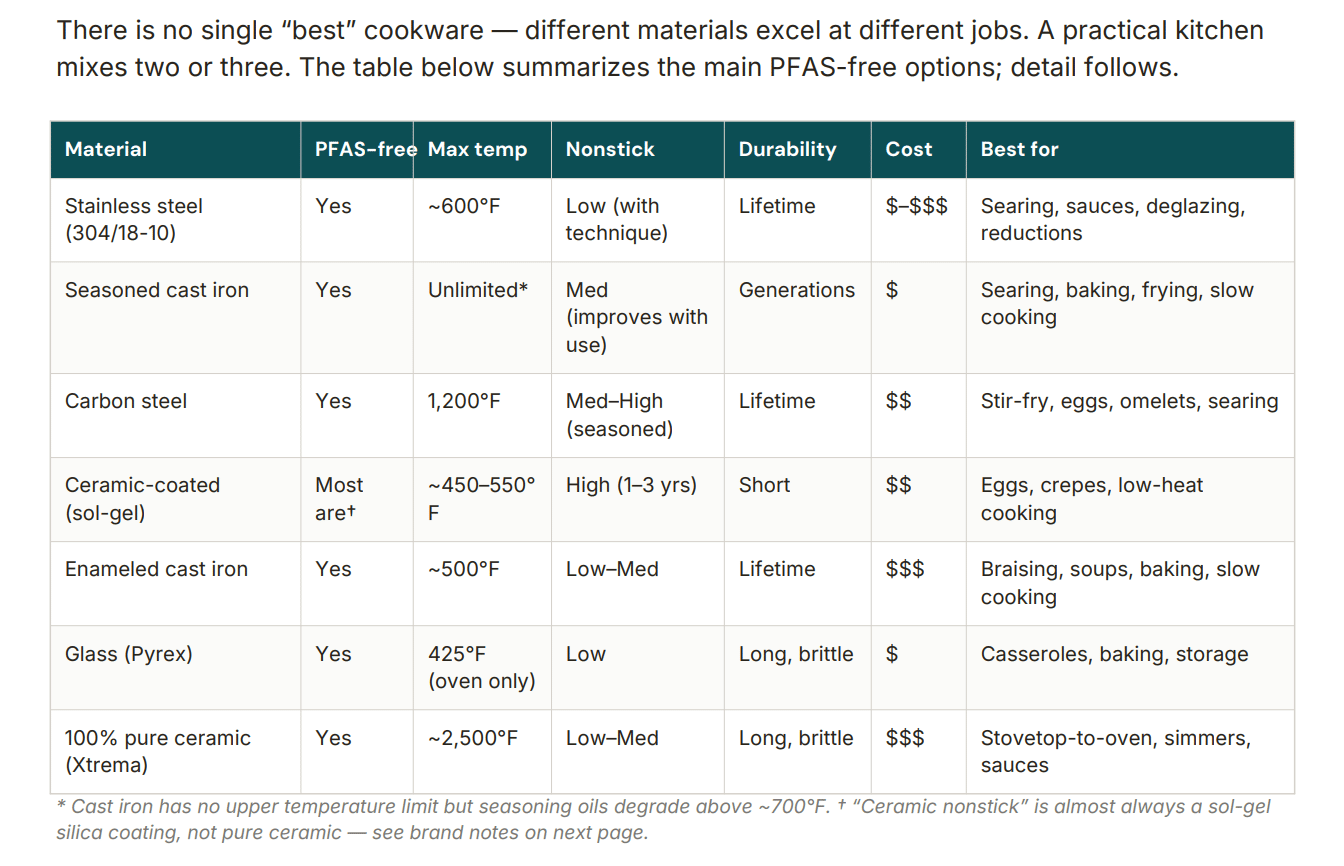
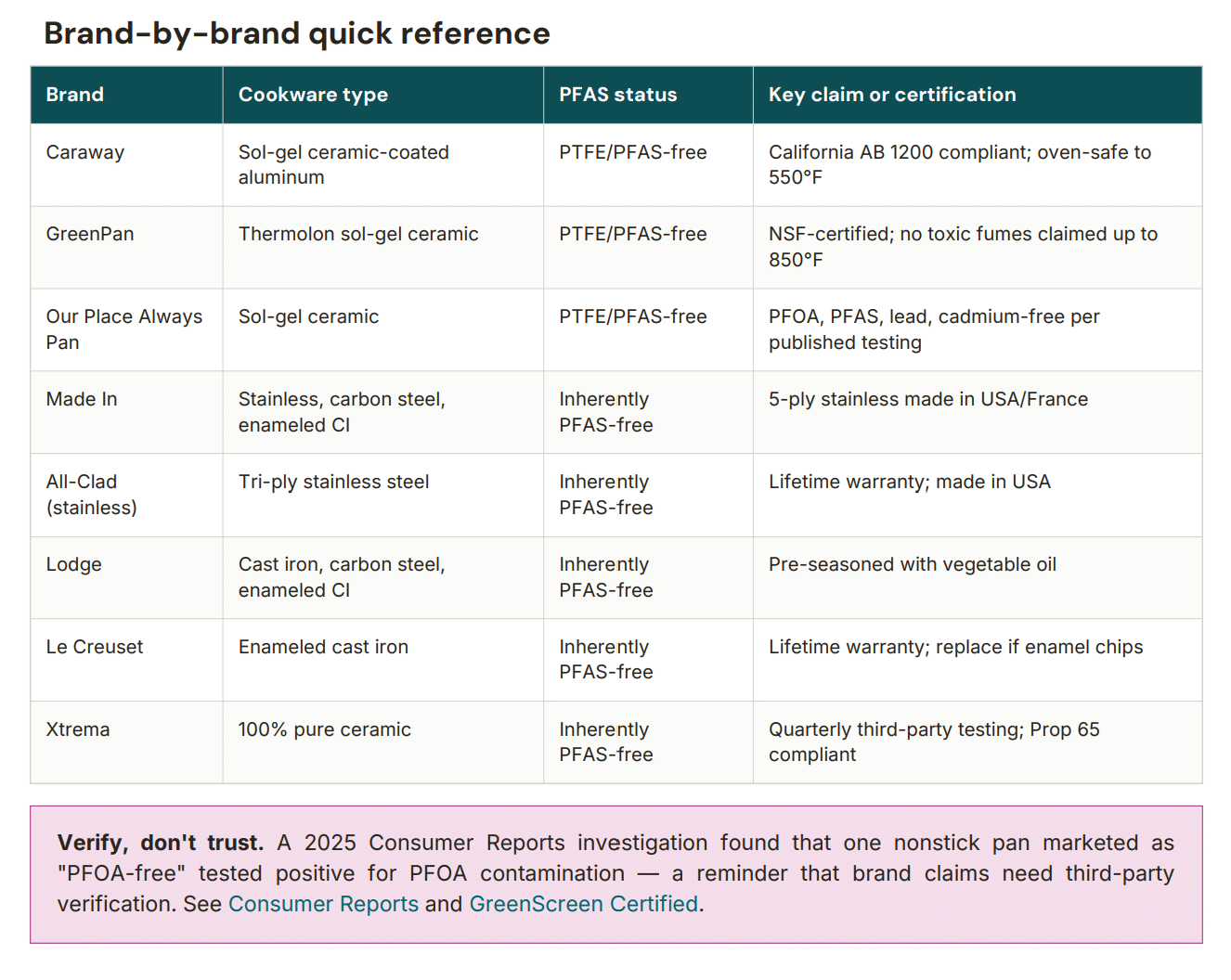
For a downloadable HEALTH & SAFETY RESEARCH BRIEFING PFAS, PTFE & PFOA in Nonstick Cookware
What the science says, the five habits raising your exposure, and the cookware actually worth replacing it with.
Disclaimer. This guide is a research compilation for educational purposes and does not constitute medical advice. Individual exposure risk varies with diet, water source, geography, and personal health. Consult a healthcare provider for medical questions and your local water utility’s Consumer Confidence Report for tap-water PFAS data.
Disclosure: This article was developed with the assistance of AI and was subsequently reviewed, revised, and approved by our editorial team.**
Like our content? Be sure to follow us on Newsbreak.





