

Sonya Massey called 911 because she thought someone was outside her house. She was 36, a mother of two, alone in the dark in Springfield, Illinois, and she did the thing you are supposed to do when you are scared. She called for help.
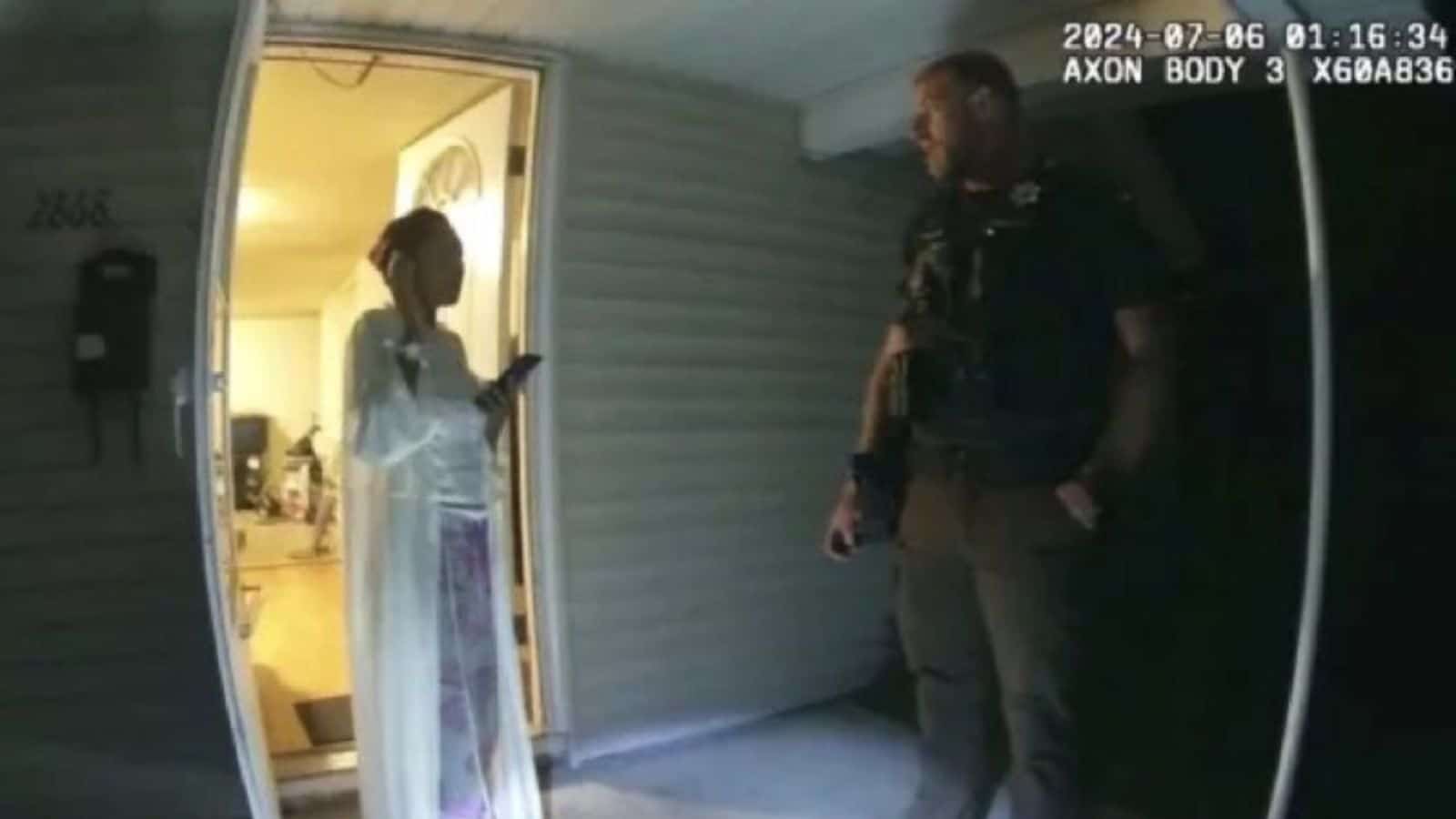
Help arrived. Two Sangamon County sheriff’s deputies searched her yard, found nothing, and came to her door. On the body-camera footage, Massey tells them, “I love ya’ll.” They talked. It was calm. And then, in the space of a few seconds near the end of that visit, one of them shot her in the face.
That is the clock that should never leave your head. Not the twenty-year sentence. Not the six months her killer actually served before he died in prison last Sunday. The clock that matters is the few seconds it took a sworn deputy to go from “why would I hurt you, you called us” to three shots fired across her own kitchen.
What He Gave Her
Inside the house, Deputy Sean Grayson noticed a pot of water on the stove and told Massey to move it. She went to the stove. Somewhere in the next moments he drew his gun and threatened to shoot her in the face. She put her hands up. She said, “I’m sorry.” She dropped to the floor behind her own kitchen counter.
He fired three times anyway.
Then, as she lay bleeding on the linoleum, the other deputy said he would get the medical kit from the car. Grayson waved him off. “No, head shot, dude. She’s done,” he said. The other deputy went and applied pressure to her wound anyway. Grayson did not. That is the measure of the mercy he extended to Sonya Massey: he had just fired three rounds at a woman crouched on her own kitchen floor, and his instinct was that a bandage would be a waste.
She was pronounced dead within the hour.
What the System Gave Him
Now hold those few seconds against everything that came after, because the contrast is the whole story.
Sean Grayson was arrested, not shot. He was read his rights. He got a lawyer, then several lawyers. He got a seven-day jury trial, where he took the stand and told his version, that he feared the boiling water, that he had no choice. The jury weighed it and convicted him, though only of second-degree murder, a lesser charge that still stings Massey’s family to this day.
He got a sentencing hearing, where his attorneys asked for leniency. He got an appeal to the Fourth District Appellate Court. And this past July, dying of the colon cancer he’d carried since before he ever pulled into Massey’s driveway, he got one more thing: a hearing before the Illinois Prisoner Review Board, where he asked the state to let him out early on medical grounds.
Think about what that request actually was. Sean Grayson, who waved off a colleague’s offer to grab the first-aid kit for a woman he’d just shot in the head, who said “she’s done” and let her bleed, went before the state of Illinois and asked for compassion. He asked to be released, to be shown the exact grace he denied Sonya Massey on her kitchen floor.
The board said no, a unanimous denial in late July. The State’s Attorney had opposed it, writing that Grayson’s temper and his “willingness to escalate minor misunderstandings into fatal encounters” made him a danger to anyone he met, and that cancer did not change that. About three weeks later, he was dead.
Six Months Is Not Justice
Save this article
And this is the arithmetic that should keep a country up at night. A jury said twenty years. Sean Grayson served six months. He died in custody, of an illness, after a system spent two years carefully weighing his rights, his testimony, his appeal, and his suffering.
Sonya Massey got minutes. She got a gun in her face for moving a pot of water in her own home. She got “I’m sorry” as her last words and a deputy who wouldn’t cross the room for a bandage. Her family got a $10 million settlement and a lifetime of the empty chair. “I don’t think I’ve seen one day since the day she died that I haven’t cried,” her mother, Donna, has said. Her cousin put it more plainly this week: now, finally, the family can start to grieve, because most of them never had the time.
None of this is justice. Justice was never on the table the second Grayson raised his weapon. What the last two years gave us was process, and process is not the same thing. Process is what the living get. Sonya Massey got minutes, and then she got a funeral.
Sean Grayson’s death closes nothing. It does not balance a ledger, because the ledger was never close to balanced. A man who served six months of a twenty-year sentence did not pay a debt. He escaped one. And the woman he killed is still gone, still 36 forever, still the reason her children will spend the rest of their lives learning what it means to call for help and have it kill you.
Say her name louder than his. Sonya Massey.





