

Hey, remember the 80s? The decade of big hair, bigger shoulder pads, blockbuster movies, and the birth of MTV. It was a wild time of bold colors, consumerism, and some seriously iconic music. But let’s be real, underneath all that neon and hairspray, the 1980s had a set of social rules and norms that are just, well, unbelievable by today’s standards.
We’re not just talking about fashion choices that make us cringe. We’re talking about everyday things people did that would get you canceled, fined, or, at the very least, a whole lot of side-eye today. The gap between then and now is staggering, from health and safety to what was considered “entertainment.”
Take smoking, for instance: in the 1980s, 32% of adults in the US smoked, compared to just 11.6% in 2022, according to the CDC. Drunk driving fatalities were shockingly high as well, with 21,000 deaths in the 1980s, a figure that has dropped to 12,429 in 2023, as per the National Highway Traffic Safety Administration. The cultural and societal shifts over the decades are nothing short of dramatic.
Smoking… everywhere. Even on airplanes

Okay, let’s start with the big one. Picture this: you’re on a flight, cruising at 30,000 feet, and the person next to you lights up a cigarette. Not only was this normal in the 80s, but flight attendants sometimes even offered you cigarettes as part of the in-flight service. It sounds like a scene from a parody movie, but it was just… Tuesday.
The culture of smoking was everywhere because, well, almost everyone smoked. The National Institutes of Health found that the average adult smoking rate in the 1980s was 32%, nearly three times what it is today. This widespread acceptance was no accident. The tobacco industry was a powerhouse, fighting regulations tooth and nail while spending a fortune on product placement in movies to make smoking look glamorous and cool.
The change was painfully slow. The first major step was a 1988 ban on smoking during domestic flights of two hours or less. This was extended in 1990, and finally, in 2000, all flights to and from the U.S. became permanently smoke-free.
The real turning point was the growing public awareness of secondhand smoke. A 1986 Surgeon General’s report highlighted the need for more research into its dangers. We now know that secondhand smoke is responsible for over 7,300 lung cancer deaths annually among non-smokers.
“Come home when the streetlights come on” parenting

If you grew up in the 80s, you probably remember the ultimate rule of childhood: “Come home when the streetlights come on”. This wasn’t just a saying; it was a whole parenting philosophy. Kids had a level of freedom that seems almost mythical now. You could ride your bike for miles, build forts in the woods, and your parents might have a vague idea of where you were, but they certainly weren’t tracking you on an app.
This “laissez-faire” style gave rise to the “latchkey kid.” In 1982, an estimated 3 million kids between 6 and 13 came home from school to an empty house, their house key often worn on a string around their neck. This wasn’t just a quirky cultural trend; it was a direct result of massive societal shifts. Soaring divorce rates and the number of working mothers doubling meant that for many families, there was simply no one home after school.
While many look back on that independence with nostalgia, the reality was often more complicated. In 1982, education researchers described the phenomenon as a “national disgrace,” highlighting the loneliness and fear many children experienced, particularly those from poorer households.
Driving kids around without car seats

This one is truly mind-boggling. For most of the 80s, the sight of kids bouncing around in the back of a car, completely unrestrained, was totally normal. Early “child seats” were more about parental convenience than safety—they were essentially booster chairs designed to prevent a child from crawling around and to provide them with a better view out the window. A 1970s ad for one such seat even boasted that its padding would absorb “bumps”. Yikes.
The movement for actual safety standards began in the late 70s, and by 1985, every state had passed laws requiring the use of child safety seats. But here’s the crazy part: the laws didn’t magically change behavior. A 1984 report from the National Highway Traffic Safety Administration (NHTSA) found that car seat usage for kids under 4 was a dismal 46%. And it gets worse. Of the parents who were using a car seat, a jaw-dropping 61% were using it incorrectly.
The stakes couldn’t have been higher. We now know that a correctly used car seat reduces the risk of fatal injury by 71% for infants. The shift from that 46% usage rate in 1984 to today’s rate of about 88.2% for children under 13 is a public health triumph that has saved an estimated 11,606 young lives since 1975.
Having “a few for the road” was no big deal

It’s hard to imagine today, but in the early 1980s, drunk driving was often treated as a joke. People would openly boast about their ability to drive “under the influence,” and the legal penalties were often little more than a slap on the wrist with a small fine. This casual attitude had devastating consequences. In 1987 alone, an estimated 23,630 Americans were killed in alcohol-related car crashes. It was a full-blown public health crisis that had been hiding in plain sight.
The catalyst for change came from an unimaginable tragedy. On May 3, 1980, a 13-year-old girl named Cari Lightner was killed by a drunk driver who had multiple prior offenses. Her grieving mother, Candace Lightner, channeled her anger into action and founded Mothers Against Drunk Driving (MADD).
MADD’s approach was revolutionary. Instead of just citing cold statistics, they “put a face to the victims.” They shared heartbreaking personal stories that transformed the public perception of drunk driving from a personal failing into a violent, unacceptable crime. This powerful grassroots movement successfully pressured politicians across the country to pass tougher laws, including the 1984 National Minimum Drinking Age Act, which tied highway funding to raising the drinking age to 21.
The results have been nothing short of miraculous. Since 1982, drunk driving fatalities in the U.S. have plummeted by 41%. MADD estimates that its efforts have helped save nearly 475,000 lives. They didn’t just change the laws; they fundamentally changed our culture, turning a deadly norm into a social taboo.
Baking in the sun (covered in baby oil)

In the 80s, the ultimate summer goal was a deep, dark tan. It was seen as a sign of health and glamour. Commercials for Coppertone sunscreen urged people to “flash them your Coppertone tan,” and it wasn’t uncommon for people to slather themselves in baby oil or even iodine to accelerate the process.
This obsession wasn’t just limited to the beach. The indoor tanning industry exploded. The first tanning salon in the U.S. opened in 1978. By 1988, there were over 18,000 of them across the country. Use among people under 25 tripled between 1986 and 1996.
The marketing behind this trend was built on a dangerous lie. As dermatologist Dr. Erika Summers explains, tanning products claim to let in the “good” tanning rays while blocking the “bad” burning rays, a concept she calls completely “inaccurate”.
Today, we know the terrifying truth. The International Agency for Research on Cancer classifies indoor tanning devices as carcinogenic to humans. Dr. Summers puts it bluntly: “All freckling and tanned skin is damaged skin”. The “healthy glow” of the 80s was, in reality, a sign of widespread cellular damage.
Workplace “culture”: hierarchies and harassment

The 80s office was a world of rigid hierarchies, power suits, and the “work hard, climb the ladder” mentality. Loyalty to the company was expected, face time at the office was mandatory, and the phrase “work-life balance” hadn’t even been invented yet.
Beneath this buttoned-up surface, however, a toxic culture often thrived. A landmark 1987 survey of the federal workforce revealed that a shocking 42% of women and 14% of men had experienced unwanted s3xual attention on the job. Incredibly, these numbers were almost identical to those from a 1980 survey, indicating that the behavior itself wasn’t changing.
But something important was changing: awareness. Between 1980 and 1987, the percentage of women who defined “pressure for dates” from a supervisor as s3xual harassment jumped from 77% to 87%, according to the U.S. Merit Systems Protection Board. The number of women who saw “suggestive looks” as harassment rose from 72% to 81%. People were starting to develop the vocabulary to name what was happening to them.
Even so, taking action was rare. In 1987, only 5% of victims filed any kind of formal complaint. Most just tried to ignore it and get on with their jobs. This 80s paradox—static behavior but rising awareness—set the stage for the future. The frustration that simmered for decades finally boiled over with movements like #MeToo. Today, total harassment charges filed with the Equal Employment Opportunity Commission (EEOC) have surged by over 47% in just the last three years.
Big hair that was literally bad for the planet

Nothing screams “80s” quite like big hair. We’re talking gravity-defying, teased, permed, and sprayed-into-place masterpieces. And the magic ingredient holding it all together? Hairspray. Lots and lots of hairspray. But this iconic look had a hidden, and frankly terrifying, dark side. Most of those aerosol cans were powered by chemical propellants called chlorofluorocarbons, or CFCs.
In 1974, scientists first discovered that CFCs were drifting up into the stratosphere and depleting the Earth’s protective ozone layer. This theory became a chilling reality in 1985, when British scientists confirmed the existence of a massive “ozone hole” over Antarctica.
The discovery sent shockwaves around the globe and spurred one of the most successful acts of international cooperation in history. In 1987, world leaders gathered to sign the Montreal Protocol, a landmark environmental treaty that phased out the production of CFCs and other ozone-depleting substances.
The treaty worked. Experts now hail the Montreal Protocol as “one of the most profound success stories of international climate action” and “one of the most successful multilateral environmental agreements” ever signed. It proved that when faced with a clear and present danger backed by solid science, the world can come together to solve a problem. It’s a powerful and optimistic lesson that started, in a way, with our obsession with big hair.
The “satanic panic” media frenzy

Save this article
If you thought the 80s were just about fun and games, allow me to introduce you to the “Satanic Panic.” This was a bizarre and terrifying period of mass hysteria where communities across America became convinced that devil-worshipping cults were operating out of suburban daycare centers, abusing children in horrific rituals.
It sounds insane, and it was. The panic led to over 12,000 unsubstantiated accusations of “Satanic Ritual Abuse” (SRA). The frenzy was ignited by a 1980 book called Michelle Remembers, which made its sensational claims based on the now-discredited and dangerous practice of “recovered-memory therapy”.
These wild accusations were fanned into a national firestorm by the rise of a new media landscape. Tabloid TV shows and “infotainment” news programs eagerly and uncritically reported on the alleged conspiracies, presenting fear as fact. The most famous case, the McMartin Preschool trial in California, dragged on for seven years and cost millions, becoming the longest and most expensive criminal trial in U.S. history. It ended with zero convictions.
Sociologists now recognize this as a textbook “moral panic”. It was a perfect storm of social anxiety about working mothers and changing family structures, a sensationalist media, and junk science, all weaponized by a rising religious right. It was a modern-day witch hunt where innocent daycare workers became the “folk devils,” and the consequences for those falsely accused were devastating and life-ruining.
Fighting for your right to… censor music?

The 80s were the golden age of MTV, but it was also the era of a full-blown culture war over rock and pop music. In 1985, a group of politically connected “Washington Wives,” including Tipper Gore, formed the Parents Music Resource Center (PMRC) to fight back against what they called “p*rn rock”. The movement kicked off after Gore bought Prince’s Purple Rain for her 11-year-old daughter and was horrified by the explicit lyrics of the song “Darling Nikki.” The PMRC soon compiled their infamous “Filthy Fifteen” list of objectionable songs, targeting artists from Madonna and Cyndi Lauper to heavy metal bands like Judas Priest and W.A.S.P..
The conflict came to a head in a dramatic, nationally televised Senate hearing in September 1985. The PMRC argued for a ratings system to warn parents about explicit content. In response, musicians Frank Zappa, Dee Snider, and John Denver delivered passionate testimony, defending artistic freedom and blasting the proposal as censorship that violated the First Amendment.
Zappa’s testimony was legendary. He famously called the PMRC’s proposal “an ill-conceived piece of nonsense which fails to deliver any real benefits to children” and compared it to “treating dandruff by decapitation.”
In the end, to avoid the threat of government regulation, the Recording Industry Association of America (RIAA) “voluntarily” agreed to a compromise. On November 1, 1985, the iconic black-and-white “Parental Advisory: Explicit Lyrics” sticker was born. Ironically, the sticker often had the opposite of its intended effect. Instead of a warning, it became a badge of honor for teens—a perfect marketing tool for rebellion, proving that attempts to control culture can backfire in spectacular ways.
Watching movies with casual s3xual assault for laughs

Looking back at some of the most beloved 80s comedies is… an experience. Many of the decade’s biggest hits are filled with deeply problematic scenes, portraying s3xual harassment and even ass*ult as casual, funny, or even romantic plot points.
The examples are jarring. In Revenge of the Nerds (1984), a main character wears a disguise to trick a woman into having s*x with him, and it’s framed as a triumphant victory. In Sixteen Candles (1984), a group of male characters conspires to let one of them have s*x with a girl who is passed out drunk at a party.
These movies didn’t just feature bad behavior; they actively promoted toxic myths about consent. They pushed the dangerous ideas that women who say “no” are just playing “hard to get,” and that someone drunk or unconscious is still able to consent.
This wasn’t just “edgy humor.” It was a reflection of a profoundly s*xist culture that had a dangerously flawed understanding of consent. For a generation of young people, these films were a form of education about relationships and s*xuality, and they normalized predatory behavior in a way that is truly shocking to see today. The work of movements like #MeToo has been, in part, to un-teach the very lessons that these 80s “comedies” made seem normal.
Life before the internet: pagers, pay phones, and patience

Try to imagine a world without the internet. No Google, no social media, no smartphones. That world was the 1980s. The digital revolution was just a distant whisper. In 1984, according to the Current Population Survey (CPS), a mere 8% of American households owned a computer, and the World Wide Web as we know it didn’t exist for the public.
Life moved at a different pace, dictated by the limits of analog technology. If you needed to talk to someone, you used a landline. If they weren’t home, you left a message on an answering machine and hoped the cassette tape didn’t get eaten. Business was conducted by mail or in person.
“Mobile” technology meant having a pager, or “beeper,” clipped to your belt. It would vibrate and display a phone number, and it was then up to you to go find a pay phone to call the person back. Entertainment was a physical affair. The Sony Walkman was a revelation, letting you listen to your favorite bands on the go, but it meant curating and carrying a collection of cassette tapes.
The VCR brought movies into our living rooms, but it required a trip to Blockbuster to rent a clunky VHS tape. This analog world created a culture of what you might call “information scarcity.” There was less media saturation, and celebrities had a certain “mystique” because you couldn’t follow their every move online. Life required patience.
Power dressing to smash the glass ceiling

As more women entered the corporate world in the 1980s, a new fashion emerged to help them navigate these male-dominated spaces: “power dressing.” The defining feature of this look was a suit or jacket with massive, unmissable shoulder pads.
The goal was to create a broad, authoritative, and imposing silhouette that commanded respect in the boardroom. This look was championed by high-fashion designers like Giorgio Armani and Thierry Mugler and was famously worn by powerful women of the era, from British Prime Minister Margaret Thatcher to Joan Collins’s iconic character Alexis Carrington on the hit TV show Dynasty.
But there was a deep irony to the power suit. While it was a bold statement of female ambition, the silhouette it created was distinctly masculine. Women were essentially adopting a male form to be taken seriously in a man’s world. It was a form of sartorial armor, a visual strategy for assimilation rather than revolution.
Key takeaway
The 1980s were more than just a decade of questionable fashion and catchy synth-pop. It was a critical and often chaotic turning point for society. It was an era when the hidden dangers of long-accepted norms, from smoking on planes and casual drunk driving to ignoring workplace harassment and environmental threats, were finally dragged into the spotlight by a combination of scientific discovery, grassroots activism, and heartbreaking tragedy.
The social awareness and safety standards we often take for granted today weren’t inevitable. They were hard-won, built on the often unbelievable and sometimes downright dangerous lessons of the 1980s.
Disclaimer – This list is solely the author’s opinion based on research and publicly available information. It is not intended to be professional advice.
16 Grocery Staples to Stock Up On Before Prices Spike Again

16 Grocery Staples to Stock Up On Before Prices Spike Again
I was in the grocery store the other day, and it hit me—I’m buying the exact same things I always do, but my bill just keeps getting higher. Like, I swear I just blinked, and suddenly eggs are a luxury item. What’s going on?
Inflation, supply-chain delays, and erratic weather conditions have modestly (or, let’s face it, dramatically) pushed the prices of staples ever higher. The USDA reports that food prices climbed an additional 2.9% year over year in May 2025—and that’s after the inflation storm of 2022–2023.
So, if you’ve got room in a pantry, freezer, or even a couple of extra shelves, now might be a good moment to stock up on these staple groceries—before the prices rise later.
6 Gas Station Chains With Food So Good It’s Worth Driving Out Of Your Way For
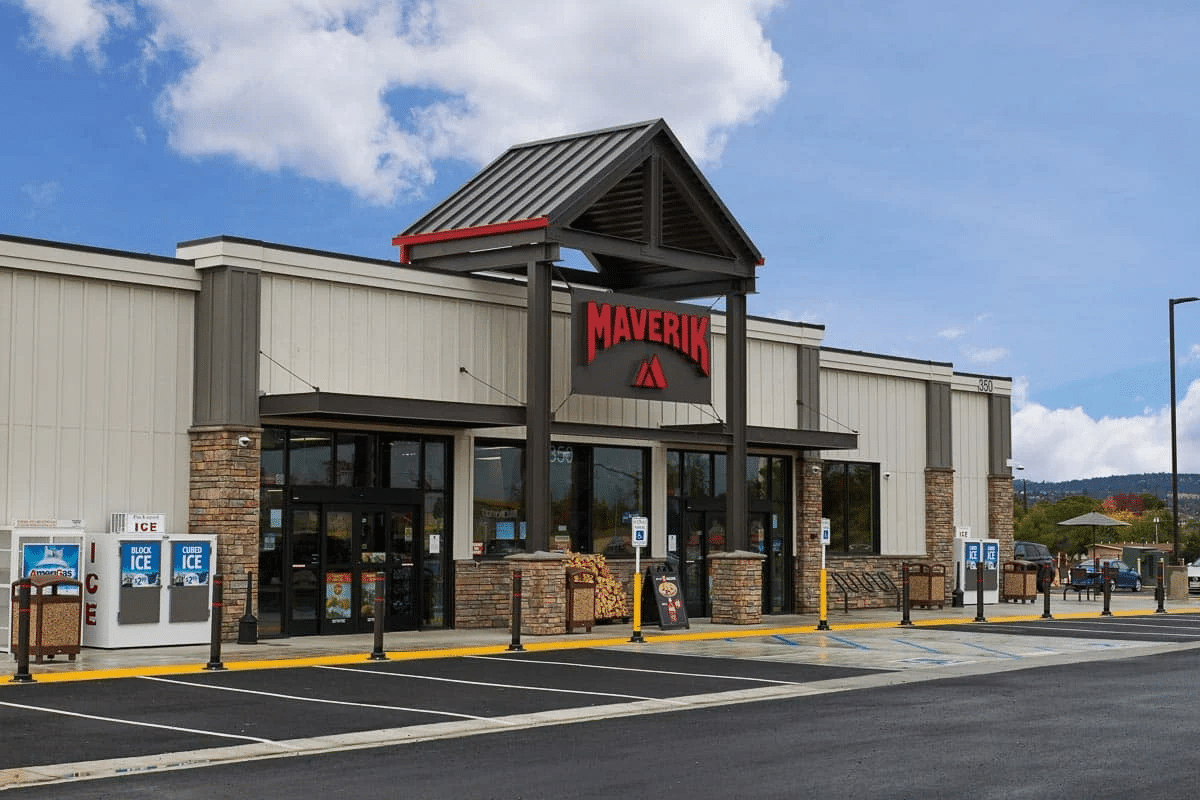
6 Gas Station Chains With Food So Good It’s Worth Driving Out Of Your Way For
We scoured the Internet to see what people had to say about gas station food. If you think the only things available are wrinkled hot dogs of indeterminate age and day-glow slushies, we’ve got great, tasty news for you. Whether it ends up being part of a regular routine or your only resource on a long car trip, we have the food info you need.
Let’s look at 6 gas stations that folks can’t get enough of and see what they have for you to eat.





