

Remember the sound of a screen door slamming shut? That was the starting pistol for a day of adventure. The only rule was simple and echoed from front porches across the country: “Be home when the streetlights come on.” It was a different world. A world before GPS trackers on smartwatches, before monitored social media accounts, and before the constant hum of parental anxiety.
Parenting in the 1980s was largely guided by a hands-off philosophy that sociologists call the “accomplishment of natural growth.” The idea was that kids, given space and freedom, would naturally develop the resilience and independence they needed.
Today, the dominant philosophy is “intensive parenting,” a child-centered approach that demands huge investments of parental time, money, and emotion. And it’s taking a toll. Here’s the wild part: this shift is fueled by a paradox. While parental fear is at an all-time high, our world is, by many objective measures, safer. Violent crime rates, for instance, were significantly higher throughout the ’80s and peaked in the early ’90s.
So, what changed? It seems our perception of danger has skyrocketed, creating a new kind of childhood. As author Julie Lythcott-Haims puts it, “our behavior actually delivers the rather soul-crushing news: ‘Kid, you can’t actually do any of this without me.” Let’s take a look back at the things ’80s kids did that have become relics of a bygone era of freedom.
Roamed the Neighborhood Until the Streetlights Came On

Getting kicked out of the house after breakfast with a screen door slamming behind you was the norm. The world was your playground, and the only curfew was the faint flicker of the streetlights.
This kind of “free-range” childhood is now a ghost. Data shows that children today spend at least 50% less time in unstructured outdoor activities than previous generations did
This isn’t just about kids staying indoors. It has fundamentally changed childhood from an active experience to a passive one. Professor Lia Karsten coined the term “backseat children” to describe this new generation, who are passively chauffeured from one structured activity to the next instead of actively exploring their own world. That unsupervised roaming was the primary training ground for learning navigation, social negotiation, and problem-solving skills that don’t come from the backseat.
Walked or Biked Miles to School, Solo

The morning commute for an ’80s kid was often a journey on foot or by bike, with a pack of friends and zero adults in sight. It was a daily dose of responsibility and freedom.
Today, the school drop-off line is a modern marvel of traffic engineering. The numbers are shocking: in 1969, nearly half of all kids (48%) walked or biked to school. By 2009, that figure had crashed to just 13%.
This change perfectly illustrates the safety paradox of modern parenting. Parents cite safety as the main reason for driving their kids, yet stranger abductions are incredibly rare. In a strange twist of logic, to avoid a statistically minuscule risk, parents are exposing kids to a greater one, as car accidents are a far more significant danger to children. As author Julie Lythcott-Haims warns, “If we prevent our children from learning how to navigate the world beyond our front yard, it will only come back to haunt them later on”.
Stayed Home Alone (and Actually Liked It)

The “latchkey kid” was a cultural icon of the ’80s. Letting yourself into an empty house after school was a rite of passage. It meant an hour or two of glorious, unsupervised freedom with the TV and the snack cabinet.
Today, leaving a child home alone is a legal and social minefield. While most states don’t have a specific law, the ones that do set the age high—Illinois, for example, requires a child to be 14. What was once a common practice can now trigger calls to child protective services for “inadequate supervision”.
This shift reveals a broader trend: the legalization of childhood. Parenting choices that were once left to personal judgment are now subject to legal scrutiny. This forces parents to adopt “Worst-First Thinking”—parenting to avoid a low-probability, worst-case scenario rather than to foster independence. It robs kids of the chance to prove they can handle what leadership expert Gever Tulley calls “difficult problems,” which is the only way to build real resilience.
Played on “Dangerously Fun” Metal and Concrete Playgrounds

Remember the searing heat of a metal slide in August? The dizzying, vomit-inducing speed of a merry-go-round? The scraped knees and gravel-embedded palms from a fall? ’80s playgrounds were built on asphalt and adrenaline.
Today’s playgrounds are marvels of safety, with soft rubber surfaces and risk-averse designs. But in making them perfectly safe, we may have created a different kind of danger. Psychologist Peter Gray argues that the decline in “risky play”—the kind that involves heights, speed, and the thrill of potential minor injury—has contributed to a generation of kids with higher anxiety and a lower sense of control over their lives.
Risky play is really important for kids because it teaches hazard assessment, delayed gratification, resilience, and confidence. By engineering away every physical risk, we’ve inadvertently removed the very experiences that build psychological fortitude.
Drank Straight From the Garden Hose

On a sweltering summer day, nothing beat the cool, metallic-tasting water from a kinked green garden hose. It was the original hydration station, and nobody thought twice about it.
Today, that simple act is fraught with peril. Health experts warn that many hoses contain chemicals like lead, phthalates, and BPA, which can leach into the water, especially when the hose is baking in the sun. One Consumer Reports study found that some hoses leached lead at levels 10 to 100 times higher than what’s considered safe for drinking water.
The garden hose is a perfect symbol of a larger shift toward “optimized childhood.” An activity that was once “good enough” is now seen as a risk that must be managed with research and specialized products (like “drinking-water-safe” hoses). This culture of micro-anxiety, where every everyday item is a potential threat, is a key driver of parental burnout.
Rode in the Back of a Pickup Truck

The wind in your hair, the sun on your face, bouncing down a country road in the open bed of a pickup truck—it was pure, unadulterated freedom. Before the late 1980s, this was almost entirely unregulated. Today, it’s a patchwork of laws.
This change shows how society has moved to regulate risks that parents once managed with common sense formally. A parent in the ’80s would make a judgment call based on the road, the speed, and the situation.
Now, that informal assessment has been replaced by one-size-fits-all laws, driven partly by a fear of liability.
Used the Stove and Other “Adult” Appliances to Make Snacks

The smell of ramen noodles or Jiffy Pop on the stove was the scent of after-school independence. Making your own grilled cheese was a rite of passage, a sign that you were capable and trusted.
Today, the kitchen is often a restricted zone. Safety organizations like the Tennessee Electric Cooperatives Association advise parents to “keep children at least three feet away from all cooking appliances” and to supervise them at all times near a stove.
This well-intentioned safety focus results in what can be called “competence deprivation.” By preventing kids from using real tools to accomplish real tasks, we deny them the chance to build basic life skills. This approach deprives kids of the chance “to problem solve, to develop coping skills, to build resilience… to figure out who they are.” The fear of a minor burn is traded for the certainty of a less capable, less confident young adult.
Went Trick-or-Treating Without a Parental Escort

Halloween night in the ’80s: a pillowcase for candy, a cheap plastic mask with a flimsy elastic band, and a gang of friends roaming the neighborhood after dark. Parents were home, handing out candy, not tailing their kids down the block.
Today, Halloween is a highly orchestrated, parent-led event. Official safety guides recommend that children under 12 be accompanied at all times. Parents are advised to map out pre-approved, well-lit routes and inspect every piece of candy for tampering. The rise of “trunk-or-treat” events held in church or school parking lots is a direct result of this fear.
This shift speaks volumes about a deeper change: the erosion of community trust. ’80s trick-or-treating assumed neighbors were friendly and the community was fundamentally safe. Today’s rules operate on the opposite assumption: every house is a potential threat. It’s a fear that’s statistically unfounded.
Babysat Younger Siblings as a Pre-Teen

Being 11 or 12 and put in charge of your younger siblings was a huge deal. It was your first real job, a massive vote of confidence from your parents.
While the American Red Cross still offers babysitting courses for kids as young as 11, many experts and parents now feel that 13 or even older is a more appropriate age to start. This shift is a clear symptom of a broader trend: the deliberate lengthening of childhood.
Save this article
Across the board, the age of autonomy is being pushed back. Kids are staying home alone later, walking to school later, and taking on responsibilities later. By trying to protect them, we may be sending them into late adolescence with far less practical experience in decision-making, responsibility, and caring for others.
Settled Their Own Fights (No Adults Needed)

A fight over who was “out” in kickball or whose turn it was on the swings was a normal part of any ’80s afternoon. These disputes were adjudicated by a jury of their peers, with no adults intervening. It was messy, but it was how you learned to get along.
Today, we’ve taken this organic process and turned it into a therapeutic curriculum. Modern parenting guides are filled with adult-led conflict resolution techniques like “I statements,” “emotion thermometers,” and structured problem-solving exercises. Research confirms that kids in the past learned to “work in groups, share, negotiate, resolve conflicts, and learn self-advocacy skills” through this unstructured play.
By professionalizing social skills, we risk sending the message that children are incapable of solving their own interpersonal problems. They learn to rely on an adult authority figure to mediate, which can hinder the development of true social competence learned through the authentic, trial-and-error process of peer interaction.
Built Forts With Real Hammers, Nails, and Scrap Wood

The ultimate summer project was the backyard fort, cobbled together with scavenged 2x4s, a coffee can full of nails, and a very real hammer. It was a masterpiece of questionable engineering and pure childhood creativity.
Today, “building a fort” is more likely to involve a commercial kit. Ironically, these “safe” alternatives are sometimes recalled for their own dangers, like choking hazards from loose magnets or ingestible button batteries. Using real tools is now considered a “risky play” activity that requires intense adult supervision and a gradual introduction, starting with things like vegetable peelers for whittling.
Researcher Ellen Sandseter’s work shows that “play with dangerous tools” is a crucial type of play that builds resilience and responsibility. The move away from it seems driven less by the actual danger—a smashed thumb is a powerful teacher—and more by the modern fear of liability. The manageable physical risk is avoided, but at the cost of the immense developmental benefits that come from hands-on creation.
Sold Things Door-to-Door to Earn Money

Whether it was World’s Finest Chocolate for a school fundraiser or a subscription to the local newspaper, going door-to-door was the original childhood side hustle. It taught you how to make a pitch, handle rejection, and make change.
This practice is virtually extinct. The same decline in community trust that killed the door-to-door encyclopedia salesman has made it untenable for kids. Today, a child knocking on doors is often viewed with suspicion, sometimes even as a potential victim of a scam run by adult “handlers”.
This represents the loss of a crucial “third space” for kids—a realm outside of home and school where they could practice social skills in low-stakes interactions with a wide range of adults in their community.
Answered the Landline Phone (and the Front Door) to Strangers

When the phone rang, you answered it. When the doorbell rang, you opened the door. It was that simple. You learned to say, “Hello, Smith residence,” and take a message.
Today, these actions are considered major safety breaches. Parents drill into their kids to never, ever open the door to a stranger. Technology like caller ID and video doorbells has turned the home from a porous hub of the community into a sealed fortress.
This shift has redefined the home as a bubble, reinforcing the message that the world outside is inherently dangerous. The old way was actually closer to what experts now recommend: teach kids not to go with strangers, rather than the impossible rule of never talking to strangers. After all, sometimes a stranger is a police officer or firefighter who is there to help.
Navigated Malls, Parks, and Arcades Without Supervision

Being dropped off at the mall with $10 and your friends was the peak of pre-teen freedom. You had hours to wander, browse record stores, play games at the arcade, and meet back at the food court at a designated time.
This was a training ground for “environmental competence”—the ability to navigate a complex space, manage a budget, interact with clerks, and handle yourself in public. Today, with kids being ferried everywhere as “backseat children,” these opportunities for mastery have all but disappeared.
This lack of practice contributes to the “failure to launch” phenomenon, where young adults enter the world without the basic skills to fend for themselves because they’ve never been given the chance.
Were Simply… Bored (and It Was a Good Thing)

Remember the sheer, endless boredom of a summer afternoon? No screens, no scheduled activities, nothing to do. That empty space was where creativity was born. You had to invent your own fun.
Today, childhood is a whirlwind of structured activities, and any empty moments are instantly filled with screens. It’s a stark contrast to the ’80s, when boredom was an unavoidable, and valuable, part of life. The data is clear: kids aged 8-18 now spend an average of 7.5 hours a day on entertainment media alone.
Experts mourn this loss. “I think it’s necessary to let kids get bored once in a while — that’s how they learn to be creative,” said actress Kim Raver. Others note that boredom is a “vehicle for children to create their own happiness, enhance inventiveness, and develop self-reliance”.
The modern war on boredom is, in effect, a war on a child’s interior life. By providing constant external stimulation, we may be preventing them from developing the ability to reflect, imagine, and generate their own entertainment. We’re raising passive consumers of fun rather than active creators.
Key Takeaway

The world of childhood has changed in a few short decades, and the differences are more than just nostalgic. The shift from the “free-range” 1980s to today’s “intensive” parenting is one of the most significant cultural transformations in recent history.
It’s a change driven not by a real increase in danger—violent crime is actually down—but by a culture of fear amplified by a 24/7 news cycle and social media. This well-intentioned overparenting has led to a documented decline in childhood independence, unstructured play, and risk-taking.
Experts overwhelmingly believe this loss of autonomy is directly linked to a lack of resilience, underdeveloped life skills, and the rising rates of anxiety and depression among young people. The challenge for modern parents is to find a balance—to acknowledge their fears without being ruled by them. It’s about consciously creating the opportunities for independence that were once a natural, unquestioned part of growing up.
Disclaimer – This list is solely the author’s opinion based on research and publicly available information. It is not intended to be professional advice.
16 Grocery Staples to Stock Up On Before Prices Spike Again

16 Grocery Staples to Stock Up On Before Prices Spike Again
I was in the grocery store the other day, and it hit me—I’m buying the exact same things I always do, but my bill just keeps getting higher. Like, I swear I just blinked, and suddenly eggs are a luxury item. What’s going on?
Inflation, supply-chain delays, and erratic weather conditions have modestly (or, let’s face it, dramatically) pushed the prices of staples ever higher. The USDA reports that food prices climbed an additional 2.9% year over year in May 2025—and that’s after the inflation storm of 2022–2023.
So, if you’ve got room in a pantry, freezer, or even a couple of extra shelves, now might be a good moment to stock up on these staple groceries—before the prices rise later.
6 Gas Station Chains With Food So Good It’s Worth Driving Out Of Your Way For
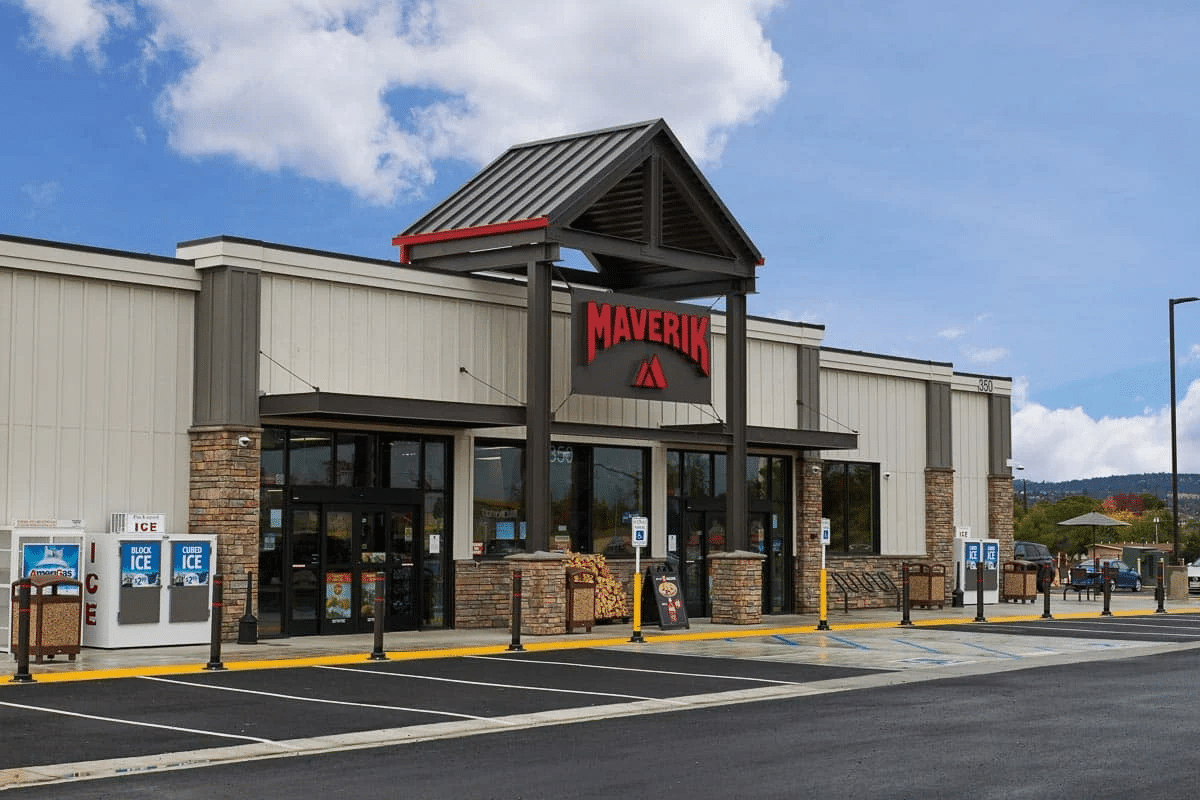
6 Gas Station Chains With Food So Good It’s Worth Driving Out Of Your Way For
We scoured the Internet to see what people had to say about gas station food. If you think the only things available are wrinkled hot dogs of indeterminate age and day-glow slushies, we’ve got great, tasty news for you. Whether it ends up being part of a regular routine or your only resource on a long car trip, we have the food info you need.
Let’s look at 6 gas stations that folks can’t get enough of and see what they have for you to eat.





