

Cheap ingredients, rising food costs, and survival-level budgeting turned 1960s lunchboxes into a showcase of America’s most infamous sandwiches.
Packed lunches have evolved since the 1960s, when nearly 70 % of American kids took homemade lunches to school from home every day. Then, in the 1960s, the National School Lunch Program served only about 18.9 million children, compared with nearly 29.7 million today, which resulted in many working-class families making whatever lunches they could afford.
U.S. Inflation Calculator points out that in 1960, the average family grocery budget was a mere $20 a week, so being able to conjure up meals from cheap ingredients was an essential bulwark to survival. The result was a generation raised on sandwiches that catered more to pennies than to palate, and whose impact is still felt in cringe-worthy lunchbox memories decades later.
Deviled Ham Spread Sandwich
This canned mystery meat was the stuff of lunchroom lore, not the good kind. Underwood’s Deviled Ham, the pink paste that looked more like cat food than real meat, was slathered between two slices of white bread for millions of children.
The spread was so high in sodium that it would make your tongue curl, but it was cheap and did not require refrigeration. Kids used to slap them in chalk dust for an impromptu snack exchange even more frenzied than swapping baseball cards, hoping against hope that they would not end up with the salty, mushy substance that adhered to the roof of your mouth like a coat of edible glue.
Peanut Butter and Jelly
The classic PB&J sounds innocent, but the 1960s iteration was a different animal. The 1960s marked a turning point for peanut butter, as brands like Jif, Skippy, and Peter Pan vied for their vision of peanut butter and a larger market share, according to the Food and Drug Administration. The bread was usually the lowest-price white loaf on offer, getting mushy by lunchtime as the jelly soaked through.
The sandwich tended to disintegrate in your hand, leaving purple traces on everything it touched. There were thousands of kids eating these every day for months and months, because a single jar of peanut butter and a single jar of grape jelly could literally stretch a family’s lunch budget for ten times.
Bologna and Cheese
Bologna sandwiches were the ultimate “we’re trying our best” lunch option for working families. This cylinder of processed meat, made from any number of mystery parts, was matched with a single slice of American cheese, which had the same consistency as plastic wrap. Bologna would frequently curl at the edges, forming little meat bowls into which water pooled, and the bread turned to mush.
Kids could smell these sandwiches out of the cafeteria; they had a particularly pungent, salty scent that said “budget lunch” loud and clear. But the worst was when the bologna was cut too thick; it was nearly impossible to chew without ending up looking like you were working on a piece of gum.
Egg Salad
Mayonnaise mixed with hard-boiled eggs made a sandwich that was half protein and half humiliation. According to U.S. Poultry & Egg Association and historic agricultural reports, per capita egg consumption in the U.S. in the 1960s era held steady between 300 and 320 eggs per person each year, depending on the year. That’s close to an egg a day and an indication of how integral eggs were to the American diet at the time.
The egg salad would go gray-green by lunch, especially if it had been sitting all morning in the same warm locker. The stench was unmistakable, sulfurous and acrid enough to clear a lunch table in seconds. Kids learned to tear through these fast and in secret, praying no one else could smell the unmistakable aroma emanating from their isolated corner of the cafeteria.
Spam Sandwiches
Spam was included in my lunchbox; however, it was cheap, lasted forever, and didn’t require any cooking ability. The pink, gelatinous block would be sliced thick and slapped between two slices of bread today, occasionally with a thin layer of mustard if parents felt fancy.
It would pass through the lunch line in a shower of grease and be dumped on our trays, where kids would pick the Spam out, eating just the bread, and leaving behind pink, square-shaped evidence of lunch-room shame. And when the Spam was cold, the jelly bit would congeal into something hardly resembling food.
Tuna Salad with Miracle Whip
Canned tuna mixed with Miracle Whip made a creation that was dry yet soggy all at once. The cheapest tuna came in oil with a strong whiff of fish: You were announcing to your entire cafeteria what you were having for lunch. According to Bradley’s Fine Diner, a 5-ounce can of tuna cost about 25 cents in 1960, or around $2.50 today.
Miracle Whip, not mayonnaise, was spread on the rolls served to these aunts, because a jar of Miracle Whip was 12 cents cheaper and had a tangy sweetness that covered up the metallic taste of discount tuna. How to eat these was easy to learn over napkins, until the flow of tuna-smeared paper reached mountainous proportions by the time lunch was over.
Liverwurst and Onion
This combination of sandwiches is a test to see how far a child can be pushed. The liverwurst was a paste with an uneven spread, resulting in fat globs that would squish out the sides.
Raw onion slices contributed a fierce bite that could clear sinuses and empty the lunch table at the same time. The smell was so unique that teachers could smell liverwurst sandwiches from the far side of the classroom. Some kids would sneak into the bathroom stall to avoid being made fun of for their lunch that day.
Pimento Cheese
The Southern “delicacy” invaded lunch bags across America, to the horror of unsuspecting children everywhere. Dairy Global reports Americans ate nearly 10 pounds of cheese per person in 1967, a great deal of it processed cheese. The running orange paste was a mix of sharp cheddar and cream cheese, diced pimentos and red pepper flakes, a creation that looked the way a Frankenstein might have supposed it belonged in the lab.
There was always something off about the pimentos’ texture, with little hints of mush and string, and I dare not mention the stringy cheese shreds, which often muddied a cheese spread to the consistency of spackle. Schoolchildren would usually pluck out the pieces of pimento, a little red wreckage, to leave scattered on their trays. The sandwiches tended to disassemble as the cheese mixture never quite adhered to the bread properly.
Banana and Mayo
The sliced bananas would turn brown and mushy by lunch, while the mayo would get all sweaty and separate.
The sweetness of the banana combined with the tartness of the mayo to create a flavor combo that left your taste buds and your stomach unsure about what to think. They were prone to crumbling in your hands, so you’d end up wading through glops of brown banana roundabout and mayonnaise-soaked bread. They would find themselves munching on the banana slices and leaving the mayo-soaked bread behind. Lunch strategy was suddenly something that required care and haste.
Save this article
Ham Salad
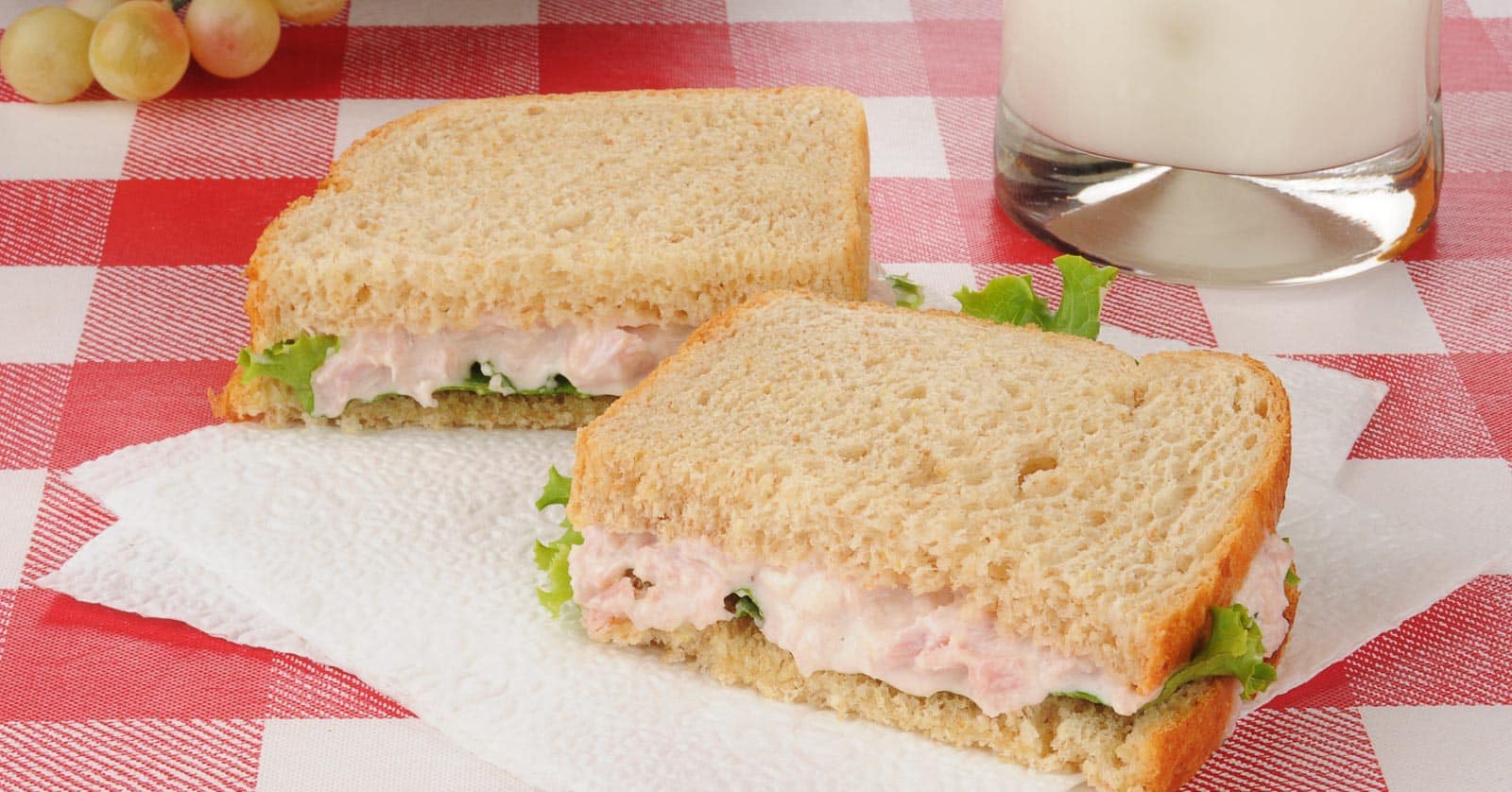
Ham salad was the result of leftovers combining with desperation and a food processor: It mushed together minced pieces of ham, mayonnaise, pickle relish, and a starch squeeze of mustard or a zip of garlic, and sometimes hard-boiled eggs, into a very chunky paste that looked more like pet food than human lunch.
The texture was unpredictable; you’d bite into one smooth paste speckled with random chunks of pickle or egg. They were pink and disconcerting, particularly when they began to brown at the edges from the heat of a lunch bag. Some kids would scrape this filling off the bread and just eat the sandwich plain, hoping no one would notice their innovative lunch hacking.
American Cheese Slice with Butter
This was the very “we’re out of everything else” sandwich choice. Per capita cheese consumption during the 1960s was an average of 9.5 pounds per year, according to the USDA’s Economic Research Service. One slice would do, with a prominent mountain of butter in between a sandwich that was more dairy than bread.
The cheese would frequently slide entirely out of the sandwich following the first bite, resulting in you eating butter-drenched bread and a slice of cheese on its own. The combination of flavors was bland, even to make cardboard appear thrilling. Still, it was filling and cheap enough to help stretch a grocery budget. Many kids would add salt and pepper to give the sandwich some personality and turn lunch into a seasoning experiment.
Soggy Tomato and Lettuce
In theory, all of that should have been healthy, but in practice, it was a mess. The tomato slices would weep their juice into the bread, which would become a soggy mass that disintegrated with the least touch. The lettuce would wilt and get slimy, especially when mixed up with the tomato moisture and left in a warm lunch bag.
The result was a sandwich that was more salad than sandwich, one that you had to carefully deconstruct and eat strategically so as not to end up wearing your lunch. Children discovered how to jam these with extra napkins and wolf them before total structural failure took place.
Key Takeaway
These sandwiches are more than just poor choices at lunchtime; they are a reflection of the economic circumstances that influenced childhood for millions of American families. These unworthy sandwiches taught a whole generation about making do with what you’ve got, even when what you’ve got is highly questionable at best.
They also produced memories and lifelong food aversions that for many people persist to this day, a reminder that sometimes the most memorable meals are the ones you’d prefer to forget.
More articles:
- 12 fruits that contain more vitamin C than oranges
- 12 reasons dragon fruit may be one of the healthiest fruits you’re not eating enough of
- Starting Your First Garden? Here Are the 10 Easiest Vegetables to Grow
Disclosure: This article was developed with the assistance of AI and was subsequently reviewed, revised, and approved by our editorial team.
Like our content? Be sure to follow us on Newsbreak.
The Best Root Vegetables for Better Vision

Around the world, most conversations about eye health focus on things like glasses, screen time, or supplements. But in public-health circles, the story actually starts much deeper—literally underground. Root vegetables, especially the ones loaded with carotenoids, play a major role in keeping our eyes healthy.
Vitamin A deficiency is still the leading cause of preventable childhood blindness around the globe, according to the World Health Organization. It contributes to an estimated 250,000 to 500,000 cases every year, especially in places where people don’t have access to foods rich in provitamin A. Learn more.
Common spices linked to colon cancer prevention

In the quiet routine of seasoning a meal, you may be adding small, powerful defenses against one of the most common cancers.
Your spice rack might actually be hiding some powerful health benefits. It turns out that a handful of common pantry staples pack a serious punch against serious illnesses. Medical researchers are looking closely at how everyday seasonings can fight back against cellular damage in the digestive tract. Learn more.
Which protein is actually better for arthritis, plant or animal?
With more than 53 million Americans living with arthritis, emerging research points to nutrient balance—not protein source alone—as the real driver of bone and joint health.
CDC estimates from 2019–2021 show about 21.2% of US adults (around 53.2 million people) report a doctor’s diagnosis of some form of arthritis (including osteoarthritis, rheumatoid arthritis, gout, lupus, etc.). Osteoarthritis (OA) is the most common joint disorder in the US (over 32.5 million US adults live with it), mainly affecting knees, hips, hands, and spine. Learn more.





