

The Ark of the Covenant was made during the time of Moses, traditionally dated to the 13th–12th century BCE, after the Israelites received the Ten Commandments at Mount Sinai. It disappeared from historical records around 586 BCE, when the Babylonians destroyed Jerusalem and the First Temple. Its fate after that remains one of history’s greatest mysteries.
There’s something about the Ark of the Covenant that pulls you in, even if you only learned the basics in Sunday school. The intrigue hits differently when you start wondering what it actually looked like, how people treated it, and why it mattered so much.
It was built with specific measurements that still fascinate historians

The Ark wasn’t a vague idea—it was designed with exact dimensions: about 45 inches long, 27 inches wide, and 27 inches tall, according to Exodus. It was something the size of a large coffee table but carrying spiritual weight that shaped an entire nation.
Scholars still debate the purpose behind those precise measurements. Some think it reflected the architectural style of the Late Bronze Age, while others say it symbolized structure and order.
Some traditions claim it may have been taken to Ethiopia

The Ethiopian Orthodox Church holds the belief that the Ark is stored in Aksum at the Church of Our Lady Mary of Zion. Only one guardian monk is allowed to see it, and that secrecy fuels decades of curiosity.
Researchers haven’t been able to verify the claim, which adds another layer of mystery. Still, the tradition has shaped Ethiopian culture in meaningful ways.
It was made from acacia wood and covered in pure gold

Acacia wood is naturally resistant to decay, making it perfect for something meant to last for generations. Covering it entirely in gold added both beauty and symbolism, as gold was associated with holiness and kingship in the ancient Near East.
Pure gold wasn’t easy to come by, so this alone suggests the Ark was one of the most valuable objects of its time. Gold was often used for sacred furnishings in Egypt, which was part of the cultural environment the Israelites were familiar with. The materials alone tell you the Ark wasn’t just an artifact—it was a statement.
It traveled with the Israelites for centuries
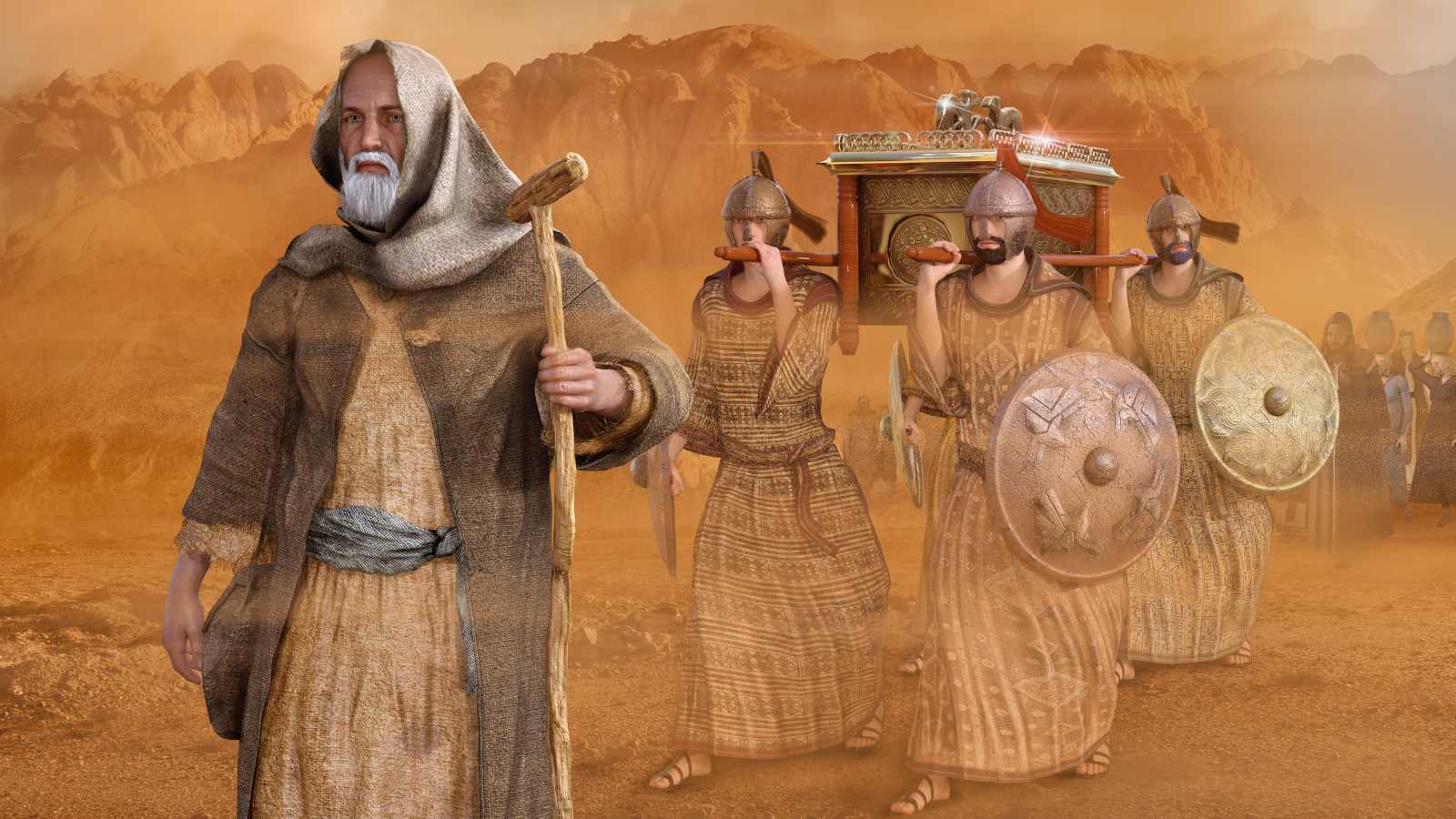
The Ark wasn’t hidden away somewhere—it moved with the people through battles, deserts, and new lands. It led the Israelites across the Jordan River, and ancient accounts say the waters parted once the priests carrying it stepped in.
The Ark also accompanied them during the fall of Jericho, another well-known moment in biblical history. It was a symbol of guidance during some of their most significant transitions.
Also on MSN: 13 things people often get wrong about the Bible
It housed three sacred items that held deep meaning

Inside the Ark were the stone tablets of the Ten Commandments, a jar of manna, and Aaron’s rod that blossomed. Each item represented a moment where God showed up for the Israelites in unmistakable ways.
Many scholars say the combination of law, provision, and leadership created a complete picture of covenant identity. These symbolic items traveled with the people wherever they went.
Its disappearance remains one of the world’s biggest mysteries

By the time the Babylonians invaded Jerusalem in the 6th century BCE, the Ark had vanished from historical records. That absence has sparked many practical and dramatic theories.
Some believe it was hidden to avoid destruction, while others suggest it was taken or lost during conflict. Even bible scholars emphasize that the lack of records is unusual for something so important. Its disappearance is part of why it still intrigues people today.
It once rested in a home for 20 years

After a chaotic battle, the Ark ended up staying in the house of Abinadab in Kiriath-Jearim for two decades. Some communities today maintain traditions in which sacred objects are kept in homes, but this was an unusually long period.
King David eventually arranged to bring it back, and that moment is described in terms of music, dancing, and celebration. It shows how deeply people longed for its return.
Its lid, the mercy seat, played a significant spiritual role

Save this article
The mercy seat wasn’t just a lid—it was considered the meeting point between God and humanity. Two golden cherubim faced each other with wings outstretched, forming a space described in Scripture as God’s presence dwelling “between the cherubim.”
Once a year, the high priest sprinkled blood here during the Day of Atonement. It symbolized forgiveness and restoration in a very physical way. That single spot carried more spiritual weight than an entire building.
It had to be carried a particular way

Priests used long poles inserted through gold rings on the sides of the Ark to carry it, and touching it directly was strictly forbidden. This wasn’t a random rule—the poles ensured no one handled something considered intensely sacred.
In fact, there’s a well-known account of someone touching the Ark, trying to steady it, and losing his life instantly. It was a clear sign that this wasn’t something you treated casually.
Archaeologists continue searching for clues

Even though there’s no confirmed discovery, archaeologists actively study sites tied to the Ark’s story. Excavations in Israel and surrounding regions have uncovered altars, inscriptions, and artifacts from the periods mentioned in the biblical texts.
Nothing has definitively proved the Ark’s final location, but the research adds context to the world it came from. Some scholars say the significance lies less in finding it than in understanding its role in history. Still, the idea of seeing it someday sparks the imagination.
There’s evidence it may have been placed in multiple cities

The Ark was kept in Shiloh, moved to Kiriath-Jearim, brought to Jerusalem, and possibly housed in other locations during conflicts. These shifts usually happened during moments of political or spiritual change. It wasn’t stationary—it was part of the life of the people.
The Ark still influences modern culture and storytelling

Movies, books, documentaries, and museum exhibits still feature the Ark as a symbol of mystery and divine power. Even people who don’t consider themselves religious recognize it instantly. Its mix of history, faith, and unanswered questions makes it perfect for storytelling.
And honestly, who hasn’t at least once wondered what they’d do if they stumbled upon it in a forgotten cave? The Ark’s legend continues because it taps into something universal—our curiosity.
Key takeaways

The Ark of the Covenant continues to fascinate because its story blends history, symbolism, faith, and mystery. Its design, materials, and sacred objects give us a vivid picture of its importance to ancient Israel.
Even its disappearance adds to its allure, inviting theories and exploration. The more we learn, the more it becomes clear why the Ark remains one of the most captivating artifacts in religious history.
Disclaimer – This list is solely the author’s opinion based on research and publicly available information. It is not intended to be professional advice.
Disclosure: This article was developed with the assistance of AI and was subsequently reviewed, revised, and approved by our editorial team.
20 Odd American Traditions That Confuse the Rest of the World

20 Odd American Traditions That Confuse the Rest of the World
It’s no surprise that cultures worldwide have their own unique customs and traditions, but some of America’s most beloved habits can seem downright strange to outsiders.
Many American traditions may seem odd or even bizarre to people from other countries. Here are twenty of the strangest American traditions that confuse the rest of the world.
20 of the Worst American Tourist Attractions, Ranked in Order

20 of the Worst American Tourist Attractions, Ranked in Order
If you’ve found yourself here, it’s likely because you’re on a noble quest for the worst of the worst—the crème de la crème of the most underwhelming and downright disappointing tourist traps America offers. Maybe you’re looking to avoid common pitfalls, or perhaps just a connoisseur of the hilariously bad.
Whatever the reason, here is a list that’s sure to entertain, if not educate. Hold onto your hats and explore the ranking, in sequential order, of the 20 worst American tourist attractions.





