

Religion and spirituality are often talked about in sweeping generalizations: young people are abandoning God, faith always helps mental health, or religion is dying out. But the data paints a more nuanced picture. Across the globe, religious belief is shifting, not disappearing.
According to Pew’s 2010–2020 update, about 85 percent of people worldwide identify with a religion, with Christians and Muslims together making up just over half of humanity. Meanwhile, nearly a quarter of the global population—about 24 percent, or roughly 1.9 billion people—identified as religiously unaffiliated.
These 12 myths and assumptions are worth revisiting in light of the latest research.
“Young people are abandoning belief in God”

It’s common to hear that Gen Z is the least religious generation, but the numbers tell a different story. In the UK, YouGov reports that belief in God among 18–24-year-olds jumped from roughly 16% in 2021 to 45% by early 2025. Researchers at the Theos think tank called this rise “astonishing.”
In the US, Barna data shows Millennials and Gen Z have had the sharpest post-pandemic increases in commitment to Jesus, while older cohorts remain largely unchanged. Young people are not abandoning belief—they’re finding it in new, often non-institutional ways.
“Institutional religion is still widely trusted”

Belief and trust are not the same. While many young people report spiritual curiosity, only a small fraction trust organized religion completely. Springtide/Springtide-cited data, discussed by the Fetzer Institute, shows that 27% of young people say they do not trust organized religion at all, and just 9% trust it fully.
Interestingly, more young respondents felt connected to nature than to a higher power. This suggests a shift from traditional institutions toward more personalized, diffuse forms of spirituality.
“Religion is disappearing in modern societies”

Despite claims of secularization, religion remains a near-universal marker of identity. Pew Research estimates that 83.4% of women and 79.9% of men across 192 countries still identify with a religious group.
An Ipsos Global Advisor survey emphasizes two patterns: secularization is strong in specific regions and among certain generations, but religious identity remains robust in the Global South. So while the ways people practice faith are changing, religion itself is far from disappearing.
“Religion is always good for mental health”

Religion is often assumed to be protective, but the evidence is more complex. A classic review found that religious involvement has modest protective associations with psychological distress, addiction, and mental health, mainly through social support and meaning-making.
Yet a 2024 nine-year longitudinal study found no consistent effect of religion on mental health over time. Benefits depend heavily on context, culture, and the type of belief, showing that faith is not universally a mental health booster.
“Secular people lack coping resources”

Many assume that people without faith are at a disadvantage when it comes to coping, but research shows that coping is multifaceted. A cultural perspective paper in Frontiers in Psychology notes that while spiritual or religious beliefs can help some, they are only one of many coping frameworks.
Think Global Health highlights that including spirituality in therapy may help some patients, but lack of religious practice is rarely the primary driver of distress. Secular people find resilience through culture, community, and other forms of meaning-making.
“Women are naturally more religious than men”
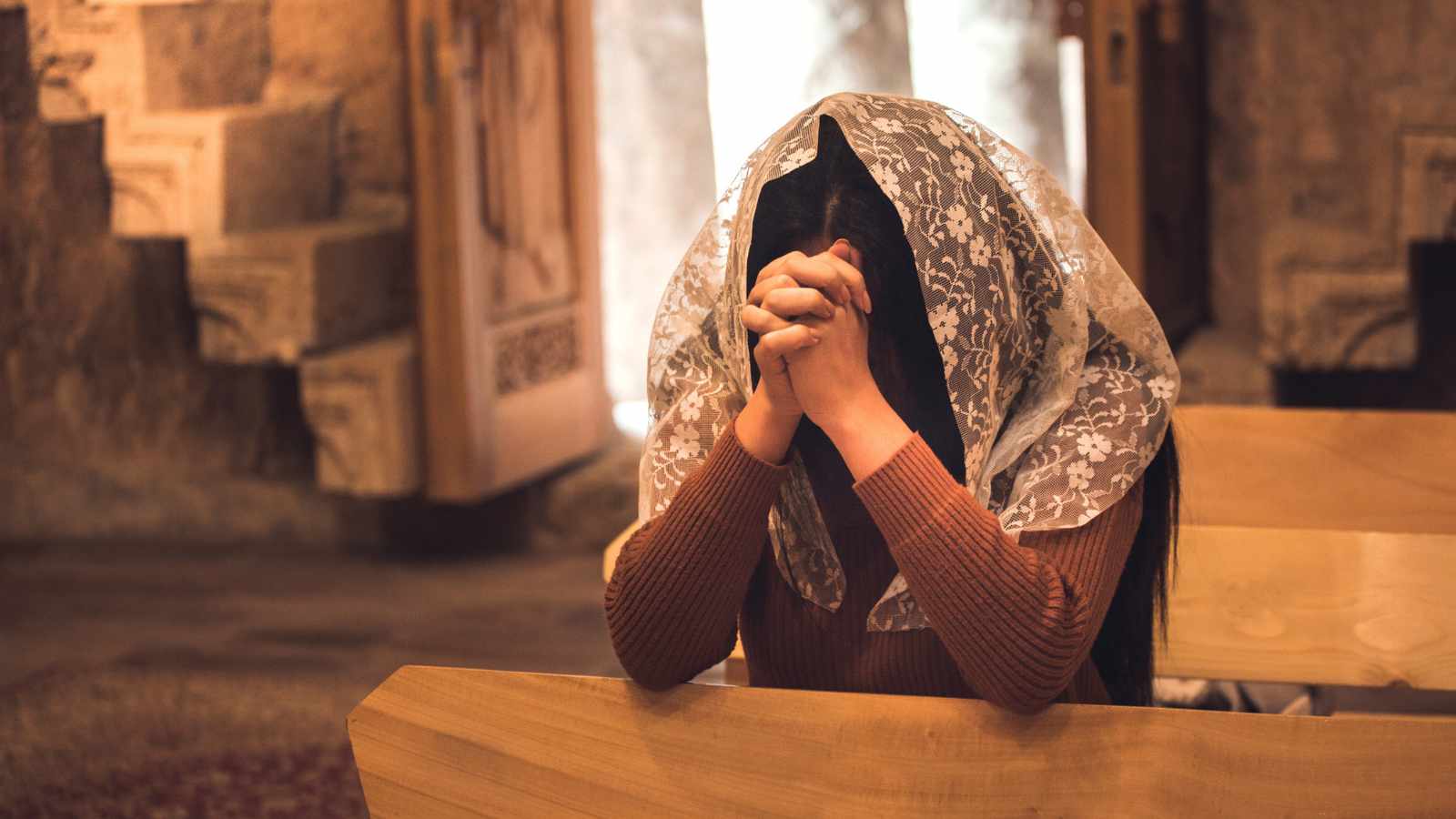
The claim that women are biologically predisposed to be more religious is increasingly challenged. Pew’s global analysis shows that women are slightly more likely than men to be affiliated with religion, but the gap varies widely by country and tradition.
In some Muslim-majority societies, men are more religious. The data suggest social and cultural factors—gender roles, labor force participation, and norms—play a bigger role than biology in shaping religiosity.
“Religion and politics are separate”

Religion is deeply entwined with politics in many regions. Pew surveys show that majorities in some countries, like Nigeria, want religion to play a stronger role in governance.
Save this article
A 2024 USC review highlights that religious actors are central in political crises and social movements, demonstrating that faith continues to influence public life worldwide, whether through policy advocacy or grassroots organizing.
“Hell is an outdated concept nobody believes in”

The idea that hell is a relic of the past doesn’t hold up. In Britain, Gen Z is the cohort most likely to claim no religion and yet most likely to believe in hell. Pew’s 2023–24 Religious Landscape Study shows that about 70% of U.S. adults believe in heaven, hell, or both.
Even as formal affiliation declines, beliefs in afterlife concepts remain remarkably resilient.
“Modern people are purely materialist”

Rejecting organized religion doesn’t mean rejecting spiritual ideas. According to the 2023–24 Religious Landscape Study, roughly 83% of Americans believe in God or a universal spirit, and 79% believe in something spiritual beyond the natural world.
This reflects a “spiritual but not religious” pattern: institutional belonging erodes faster than belief in the transcendent.
“Religious identity is fixed and inherited”

Young people are increasingly treating religion as a personal, fluid choice. A 2024 issue of Social Compass documents how youth navigate social media, migration, and cultural influences to engage with religious symbols pragmatically.
Many adopt hybrid identities, partial participation, or secular labels while still using religious practices when emotionally useful. Religious identity is now something negotiated, not simply inherited.
“Religion is losing relevance in crisis”

Contrary to the idea that faith fades under pressure, crises often increase religious salience. Post-pandemic Barna data shows rising commitment to Jesus among under-40s, described as “quiet, personal, unconventional” spirituality.
USC’s 2024 trends overview emphasizes that global crises create opportunities for faith communities to shape social services, advocacy, and public debate. Religion remains a powerful lens through which people navigate uncertainty.
“Religion is only about the next life”

Modern religious engagement increasingly focuses on this-worldly issues like climate, migration, and mental health. Faith communities are deeply involved in wellbeing, suicide prevention, and addiction services.
Global demographic studies also show that religious families significantly shape population trends, with Christian parents alone accounting for roughly one-third of recent world births. Religion continues to influence life here, not just the afterlife.
Key Takeaways

- Belief persists, even if practice changes: Young people are engaging with God and Jesus, often outside formal institutions.
- Trust in institutions is low: People separate spiritual curiosity from faith in organized religion.
- Mental health benefits are context-dependent: Religion helps some, but coping and resilience exist in many forms.
- Religious identity is fluid: Younger generations adopt hybrid, pragmatic approaches to faith.
- Faith remains culturally and politically relevant: Crises, social issues, and public life continue to intersect with religion.
- Spirituality extends beyond institutional affiliation: Many modern adults hold supernatural or transcendent beliefs without formal religious labels.
Disclaimer – This list is solely the author’s opinion based on research and publicly available information. It is not intended to be professional advice.
Disclosure: This article was developed with the assistance of AI and was subsequently reviewed, revised, and approved by our editorial team.
20 Odd American Traditions That Confuse the Rest of the World

20 Odd American Traditions That Confuse the Rest of the World
It’s no surprise that cultures worldwide have their own unique customs and traditions, but some of America’s most beloved habits can seem downright strange to outsiders.
Many American traditions may seem odd or even bizarre to people from other countries. Here are twenty of the strangest American traditions that confuse the rest of the world.





