

Ever feel like modern dating is a part-time job you never wanted and definitely aren’t getting paid for? You’re not just imagining it. This isn’t just a feeling; it’s a massive social shift. According to the Pew Research Center, a staggering 71% of single women over 40 say they are not looking for a relationship or even casual dates. This isn’t a story about giving up on love. It’s a story about women waking up to the reality of the dating market and making a powerful, conscious choice to protect their peace, finances, and already whole lives.
Let’s get into the real, data-backed reasons why so many wise, successful women are hanging up their dating app profiles for good. It’s less about a lack of options and more about a lack of good options that add genuine value to their lives.
She’s looked at the numbers, and the math just isn’t working

The first truth is that the dating pool for heterosexual older women is fundamentally skewed. It’s not just a feeling that the options are limited; the data paints a stark picture of a marketplace where the supply and demand are wildly out of sync.
The gender gap in dating interest becomes a chasm after age 40. While 71% of women in this age group are contentedly single and not looking, only 42% of their male counterparts feel the same way. This creates a lopsided dynamic where dating apps are flooded with men, but a considerable portion of the women they’re trying to meet simply aren’t interested.
This isn’t just an online phenomenon; it mirrors real life. The common assumption that more single older women means more dating opportunities for men is a myth, because the majority of these women have intentionally opted out. As Jennifer Teplin, a clinical director and counselor, points out, society often devalues women as they age while viewing older men as more distinguished or attractive, adding another layer of complexity to the dating scene.
She’s done being an unpaid therapist for grown men
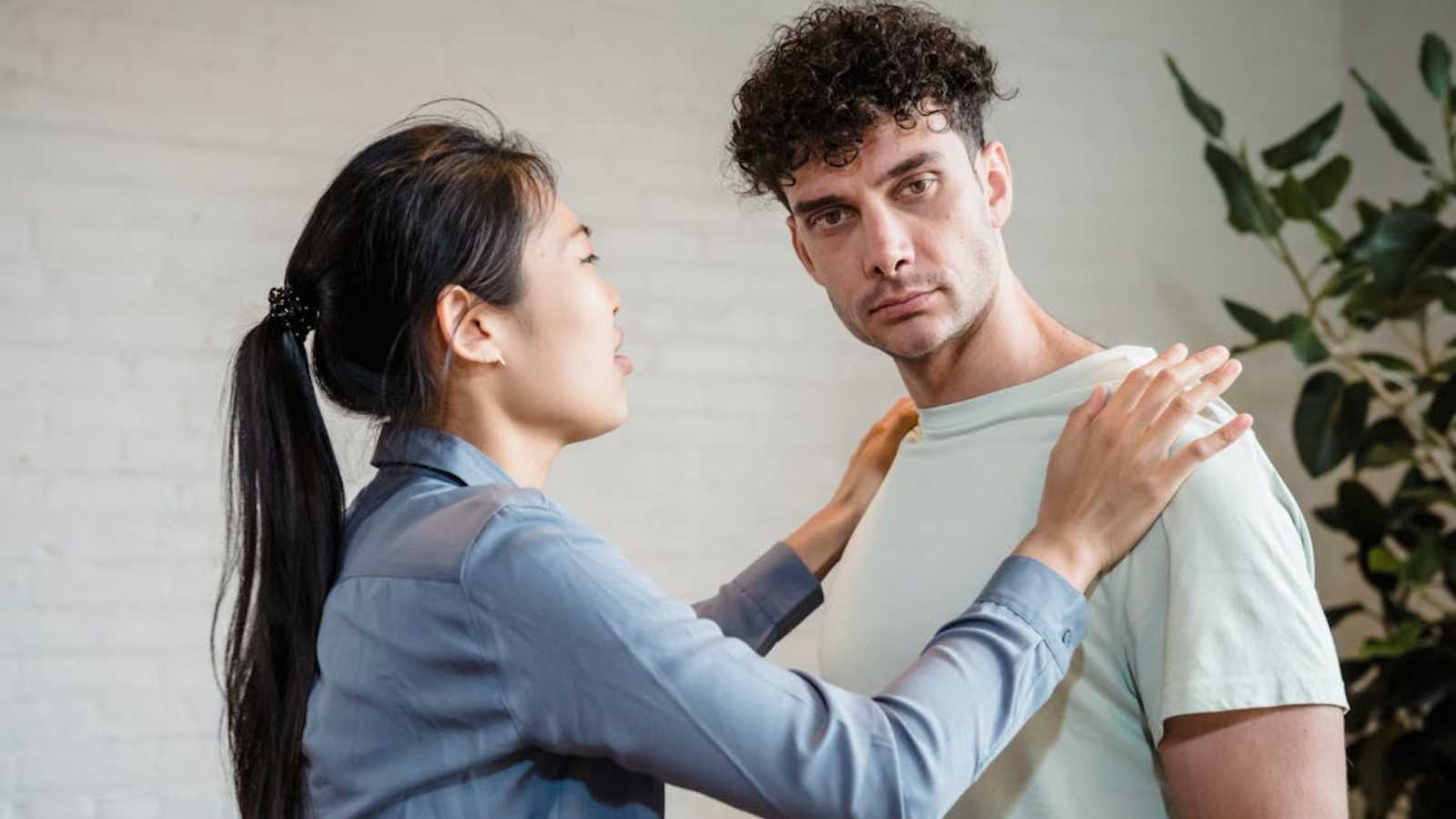
Many women are walking away from dating because they’re exhausted by the expectation that they will serve as a partner’s sole emotional support system. This isn’t just about being a good listener; it’s a pervasive dynamic that researchers have now given a name: “mankeeping”.
Mankeeping describes the intense, unreciprocated emotional labor women perform in many heterosexual relationships. It means managing a partner’s stress, decoding their moods, and being their one-person crisis team for feelings they won’t share with anyone else. This trend is closely linked to what experts are calling the “male loneliness epidemic,” where a decline in close male friendships means men often offload their entire emotional world onto their romantic partner.
The result? The woman is cast in the role of an unpaid therapist, life coach, and emotional manager—a job she never applied for. The statistics starkly reflect this fatigue. While 61% of single men are actively looking for a partner, only 38% of single women are doing the same. This gap isn’t about women giving up on love; it’s about them refusing to sign up for a role that is emotionally draining and rarely reciprocated.
By stepping back, women are setting a powerful boundary and forcing a necessary conversation about the importance of men building their own emotional support networks beyond a single romantic partner.
The “Peter Pan” problem is real, and she’s not auditioning to be Wendy

Another primary reason women are quitting is the prevalence of men who exhibit “Peter Pan Syndrome” (PPS)—a term for adults who avoid the responsibilities of adulthood. Coined by psychologist Dr. Dan Kiley, it describes individuals who struggle with commitment, are financially unstable, lack emotional depth, and resist growing up.
Key traits of PPS include a fear of commitment (sometimes called gamophobia), an unstable career path, an unwillingness to handle household chores, and a heavy reliance on a partner to make significant life decisions. In a relationship, this often manifests as a refusal to define the partnership, an avoidance of conversations about the future, and a preference for socializing with friends over building intimacy.
This dynamic inevitably creates a “Wendy”—the partner who enables the “Peter Pan” by taking on all the adult responsibilities. She pays the bills, makes the plans, and essentially manages his life, creating a parent-child dynamic instead of a partnership of equals.
For an older woman who is already established, financially independent, and has likely raised children, the idea of mothering a romantic partner is not just unappealing—it’s a regression. She is looking for a trustworthy partner to co-navigate life, not a dependent who adds to her workload, which is why the Peter Pan persona is an immediate deal-breaker.
She has zero patience left for weaponized incompetence

Beyond immaturity, women are also fed up with a more manipulative tactic: weaponized incompetence. This is when a partner deliberately performs a task poorly to avoid being asked to do it ever again.
It’s the classic, “Oh, I’m just not good at folding clothes, you do it so much better,” after leaving a wrinkled mess. Or, “I always mess up the grocery list,” so he never has to shop again. This isn’t just about physical chores; it extends to the invisible “mental load”—the planning, scheduling, and emotional work that keeps a household running.
This behavior is incredibly damaging. It breeds resentment, destroys trust, and creates a deeply unfair imbalance in the relationship. The statistics are telling: one study found that in heterosexual marriages, women end up with seven more hours of housework per week, while men gain one less hour.
Psychologist Dr. Susan Albers calls it what it is: a “manipulative tactic to shift the blame and avoid dealing with their own shortcomings”. It’s not about a lack of skill; it’s about a lack of respect. When a partner employs this strategy, they implicitly suggest that their time and energy are more valuable than those of their partner.
Dating apps feel more like a soul-crushing second job than fun

The modern dating app experience is a primary driver of the burnout that leads many women to quit dating altogether. The promise of connection has been replaced by the reality of a high-volume, low-yield task that feels more like work than romance.
Dating app fatigue is a documented phenomenon. According to Forbes, 78% of users report feeling burnt out, and the number is even higher for women at 80% (compared to 74% of men). For women in the Gen X demographic (born 1965-1980), the burnout rate is also a high 78%.
This exhaustion stems from several factors. Women are far more likely to feel overwhelmed by the sheer volume of messages they receive, with 54% of women reporting this compared to just 25% of men. The experience is also often negative; women are evenly split on whether their online dating experiences have been positive (48%) or negative (51%).
A 2024 study published in New Media & Society confirmed that emotional exhaustion and feelings of inefficacy increase the longer people use dating apps. As psychologist Dr. Sabrina Romanoff observes, people are tired of the “games, the ghosting, the emotional whiplash,” and dating can feel like a “second job sometimes, with very little pay”.
For a woman whose time and emotional energy are precious, the return on investment from dating apps is too low to justify the cost.
Her hard-earned financial independence is non-negotiable

For many older women, the decision to stay single is a strategic financial one. After decades of building careers and saving for retirement, they are unwilling to risk their financial security for the sake of a relationship. This is a monumental societal shift. Reports suggest that roughly one-third of millionaires in the U.S. are women, reflecting a growing trend of women accumulating significant personal wealth.
Remarrying later in life can trigger a cascade of financial complications. It can lead to higher income taxes, the loss of survivor’s Social Security or pension benefits from a previous marriage, and new financial obligations for a partner’s debt or his children’s college tuition.
Inheritance is another critical factor. Many women are determined to ensure their hard-earned assets go to their own children, not a new spouse or his family. As financial adviser Lynn S. Evans puts it, “We are the first generation of women to accumulate a significant amount of wealth in 401(k) plans.
Why would a woman want to give that up in the name of being married?“.
The peace of being single is simply too valuable
Many women have discovered that a life free from relationship drama, conflict, and compromise is profoundly peaceful, and they are unwilling to trade that tranquility for a partner. This isn’t about loneliness; it’s about a cherished state of solitude.
Research backs this up. A study in APA PsycNet found that individuals who remain single tend to become more satisfied with their lives as they age. Furthermore, happiness expert Paul Dolan of the London School of Economics concluded from his research that the “healthiest and happiest population subgroup is women who never married or had children”.
Why? Married women often shoulder a heavier load of domestic chores and emotional labor, and middle-aged married women face a higher risk of physical and mental health conditions compared to their single peers. In contrast, single women tend to have stronger social networks, investing more time in friendships and family, which is a key predictor of happiness.
Save this article
Women themselves articulate this best. On forums, they celebrate “living their lives, investing in themselves and finding purpose beyond service to men”. Another woman states simply, “being single is so much better than a soul-sucking relationship.”
She’s not interested in taking on another “project”

After years of personal growth, older women are seeking a partner who is their equal—not a “fixer-upper” who needs to be coached into adulthood. They have little interest in dating men who are not on their level emotionally, financially, or in terms of basic life skills.
This ties directly back to the frustrations with “Peter Pan Syndrome” and “weaponized incompetence.” Women repeatedly encounter men who require a significant amount of work, whether it’s emotional support, financial assistance, or guidance on how to operate a dishwasher. This is not the partnership they are looking for.
This isn’t about demanding perfection. It’s about expecting a baseline of adult competence and emotional maturity. In her younger years, a woman might have been socialized to believe in a man’s “potential.” With age and wisdom, she knows that a person’s present reality is what matters, and she is hiring for a partner, not signing up to be a mentor.
The gap between what she wants and what’s offered is too broad to ignore

There is often a fundamental mismatch in what older men and women are looking for in a partner, particularly when it comes to age. This creates a dating landscape where women feel overlooked and undervalued by their male peers.
Research consistently shows that as men age, their preference for younger partners increases significantly. A study found that for every five years a man gets older, his preferred age gap for a new partner grows by about one year. This means that, on average, a 60-year-old man is looking for a woman around 50 years old.
Women’s preferences, however, tend to be much closer to their own age. The same study revealed that a 60-year-old woman is typically looking for a partner who is also around 60 years old. This creates a frustrating numbers game. A 55-year-old woman often competes for the attention of a 55-year-old man with women who are a decade younger, a dynamic that many find exhausting and demeaning.
This fundamental mismatch makes her feel invisible in the dating market, leading many to walk away.
Her life is already whole, and a partner must add value, not fill a void

For many older women, a romantic partner is no longer seen as a necessity to complete their life, but as an optional addition to a life that is already rich and fulfilling. This fundamentally changes the criteria for who is eligible to participate.
Unlike younger daters who might be building a life from scratch, an older woman often has a robust existence filled with deep friendships, engaging hobbies, a successful career, and a strong sense of self. Research indicates that single individuals often have stronger social networks and are more likely to support and maintain close relationships with friends, family, and neighbors. These connections are a powerful source of happiness and well-being.
This reality shifts the entire framework for evaluating a potential partner. The question is no longer, “Is this person good enough for me?” but rather, “Is this person better than my peaceful, happy solitude?” The baseline is not loneliness, but a contented and whole life.
A relationship must therefore actively enhance her life, not just provide companionship or fill a perceived void. When most dating experiences involve emotional labor, immaturity, and mismatched goals, they fail this cost-benefit analysis, making her single life the more valuable and logical choice.
She’s learned from the past and is choosing self-preservation over settling

Many older women are veterans of past relationships—some good, some bad, some truly toxic. These experiences have served as a powerful, if painful, education in what they will and will not tolerate again.
A large percentage of older singles are divorced or widowed, and the data shows they are among the least likely to be looking for a new relationship. Having been through the emotional and often financially tumultuous experience of a separation or loss, they are understandably cautious about repeating it. The strongest predictor of divorce among older couples is, in fact, having been divorced before.
Past encounters with toxic behaviors like gaslighting or the “Four Horsemen” of criticism, contempt, defensiveness, and stonewalling have given them a highly sensitive radar for red flags. As one woman bluntly stated, “Some women are just so scarred from previous relationships that they aren’t taking any more chances. They’re done”.
She is, finally and unapologetically, choosing herself

Ultimately, the decision to quit dating is the culmination of all these truths. It is an act of profound self-worth, where a woman prioritizes her own happiness, peace, and well-being above the outdated societal expectation that she must be partnered to be complete.
The good news is that this societal pressure tends to fade with age. A Pew Research Center survey found that over half of single adults aged 65 and older report feeling no pressure at all to find a partner. This freedom enables women to make choices that are authentically their own, rather than ones dictated by external validation. This aligns with what psychologist Abraham Maslow called a “self-actualizing personality”—someone who sets their own goals and pursues them without being controlled by others.
This is the ultimate paradigm shift. For generations, a woman’s value was often tied to her relationship status. The modern older woman is increasingly defining her life on her own terms. Quitting dating is a powerful declaration that her life is not a problem to be solved by a partner; it is an existence that is already whole, and she is unapologetically choosing herself.
Key Takeaway

For a growing wave of older women, walking away from the dating scene isn’t an act of defeat—it’s a declaration of independence. Backed by data on everything from dating app burnout to the unequal burden of emotional labor, they are making a conscious choice. They are choosing their hard-won financial security, their peaceful solitude, and their already fulfilling lives over the exhausting and often unrewarding search for a partner who can truly add value. This isn’t about being anti-love; it’s about being profoundly pro-self.
Disclaimer – This list is solely the author’s opinion based on research and publicly available information. It is not intended to be professional advice.
Like our content? Be sure to follow us
6 Gas Station Chains With Food So Good It’s Worth Driving Out Of Your Way For
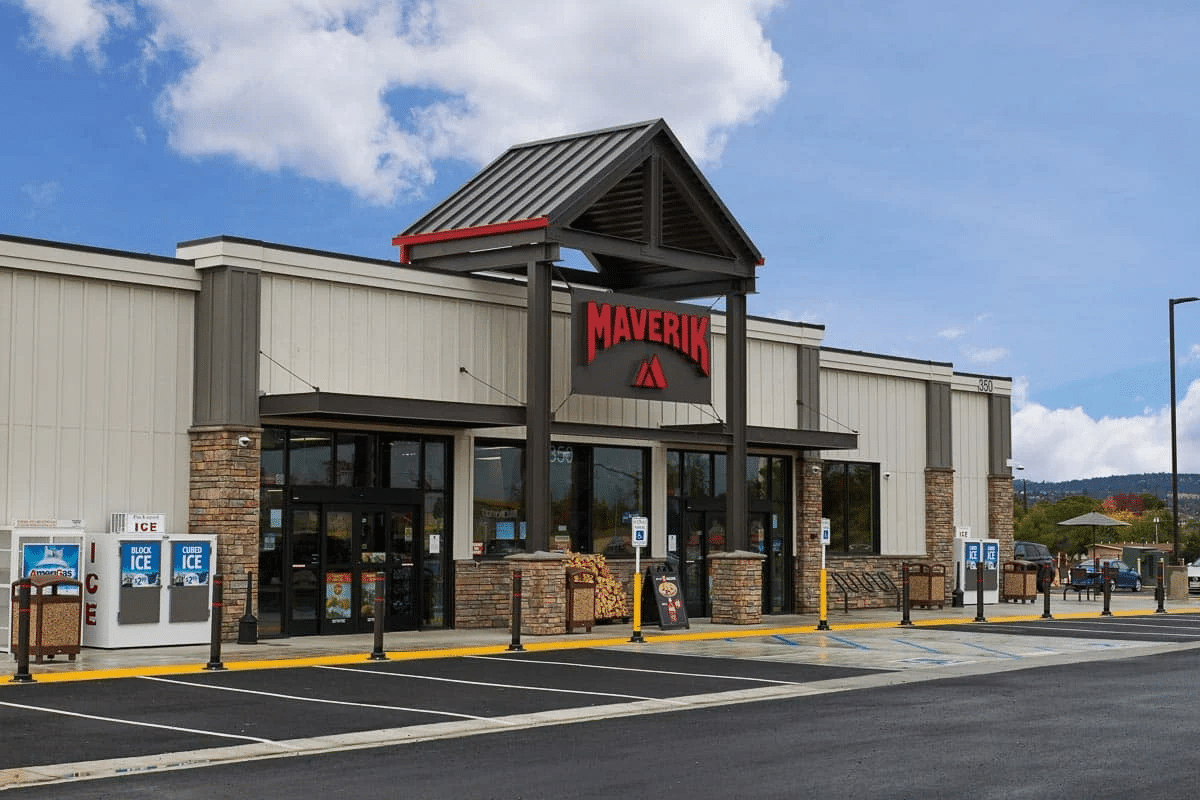
6 Gas Station Chains With Food So Good It’s Worth Driving Out Of Your Way For
We scoured the Internet to see what people had to say about gas station food. If you think the only things available are wrinkled hot dogs of indeterminate age and day-glow slushies, we’ve got great, tasty news for you. Whether it becomes part of a routine or your only resource on a long car trip, we have the food information you need.
Let’s look at 6 gas stations that folks can’t get enough of and see what they have for you to eat.
16 Grocery Staples to Stock Up On Before Prices Spike Again
16 Grocery Staples to Stock Up On Before Prices Spike Again
I was in the grocery store the other day, and it hit me—I’m buying the same things I always do, but my bill just keeps getting higher. Like, I swear I just blinked, and suddenly eggs are a luxury item. What’s going on?
Inflation, supply-chain delays, and erratic weather conditions have modestly (or, let’s face it, dramatically) pushed the prices of staples ever higher. The USDA reports that food prices climbed an additional 2.9% year over year in May 2025—and that’s after the inflation storm of 2022–2023.
So, if you’ve got room in a pantry, freezer, or even a couple of extra shelves, now might be a good moment to stock up on these staple groceries—before the prices rise later.





