

With millions unprepared for even a $400 emergency, financial experts warn that old-school cash at home is becoming essential again.
A power outage doesn’t care that your money is digital. When a tow truck, urgent-care desk, or gas station needs payment, you can’t always wait for an app, a password reset, or a slow bank transfer.
That’s why this old-school advice endures: Bankrate reported in 2025 that only 46% of Americans had enough emergency savings for three months, while 24% had none. The Federal Reserve similarly found 37% of adults can’t fully cover a $400 emergency.
Empower said 29% couldn’t afford an unexpected $400 expense. A cash stash at home isn’t a relic from your grandparents’ kitchen drawer. It’s a quiet bridge between a bad surprise and a worse decision.The pressure behind that advice has only grown.
Do you have cash on hand?
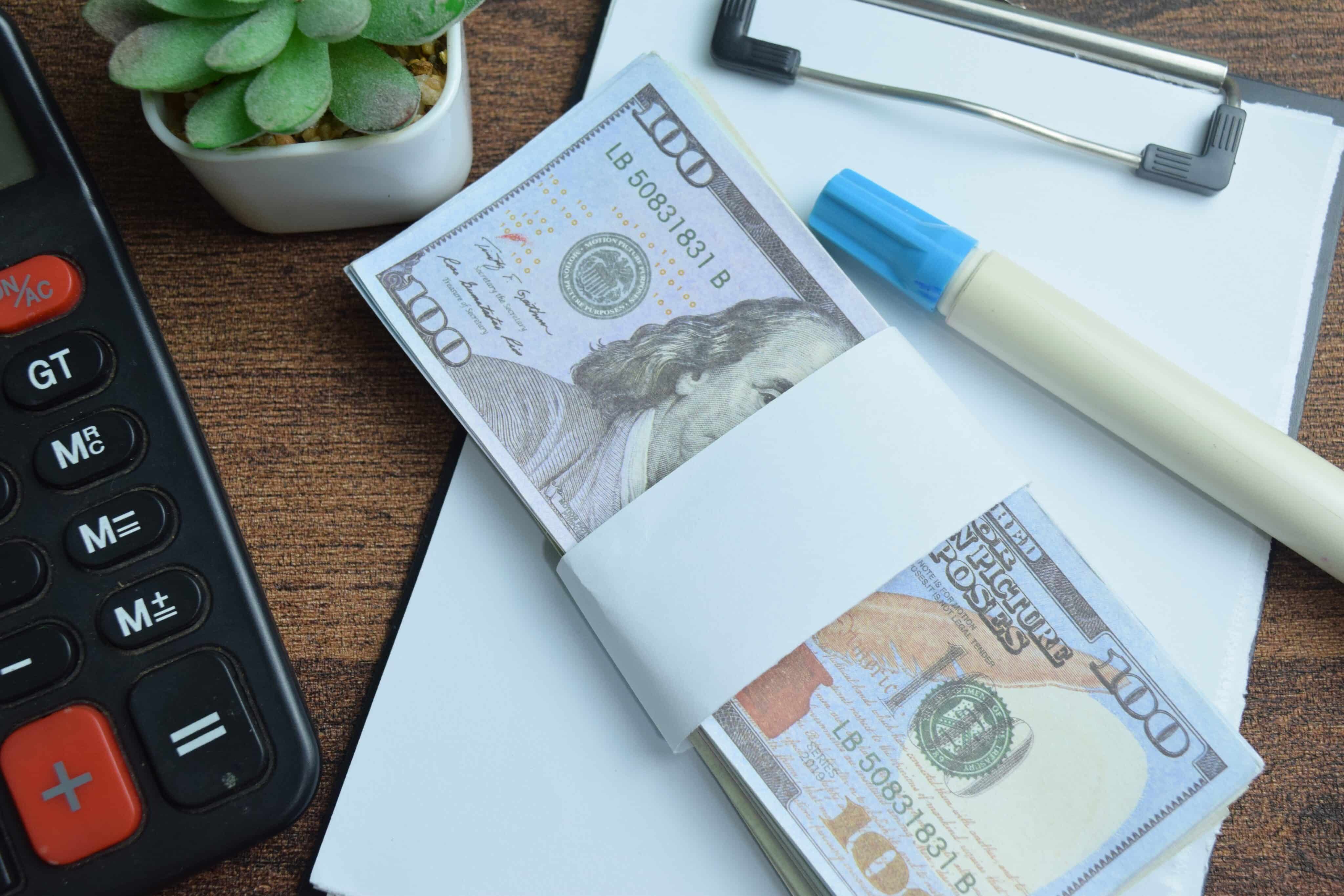
Bankrate’s 2026 emergency savings report says 54% of Americans are saving less for emergencies because of inflation, and Bureau of Labor Statistics data cited there show consumer prices are still about 26% higher than they were in December 2019. Add in a job-search stretch that averaged 25.3 weeks in March 2026, according to BLS and FRED, and the danger becomes easier to see.
An emergency fund in a bank is important. A small amount of cash you can reach without signal, power, or permission is important too. The point is not fear. The point is friction. When life goes sideways, cash removes one more thing that can fail.
People have no emergency fund at all
A lot of households are already standing closer to the edge than they look. Bankrate found that 24% of U.S. adults had no emergency savings in 2025, and another 30% had some savings but not enough to cover three months of expenses.
Empower’s 2025 research told a similar story from a slightly different angle, finding that 32% of Americans had no emergency savings fund and 29% couldn’t afford an unexpected expense of $400 or more. CBS News quoted Bankrate senior economic analyst Mark Hamrick, who said, “We are essentially a paycheck-to-paycheck nation.” That is not just a gloomy line.
It explains why even a modest at-home stash matters. If the bigger cushion does not exist yet, a first layer of cash at home can still soften the first hard hit. Start with what sounds almost too small to matter, because small is still bigger than zero.
A $400 shock can topple financial stability
Financial trouble does not always arrive dressed like a disaster. Sometimes it is a car battery, an urgent prescription, a plumbing leak, or a school bill that could not wait. The Federal Reserve’s 2025 household well-being report shows 37% of adults could not fully cover a $400 emergency with cash or its equivalent.
Empower found 29% said they could not afford an unexpected expense over that same amount. Greg McBride put the danger in practical terms in Bankrate’s 2025 emergency-savings release: “Unpredictable expenses or fluctuating income can make access to emergency savings a regular occurrence – or result in costly credit card debt without it.”
That is why the first target for many homes need not be perfection. It needs to be enough to catch the kind of surprise that shows up on a Tuesday and ruins the rest of the month. A useful first goal is a stash in the $400 to $1,000 range that you can reach without borrowing.
People are dipping into emergencies
Emergency money is not hypothetical money. People are using it constantly. Bankrate reported in March 2025 that 37% of Americans had tapped their emergency savings in the previous 12 months, and among those who did, 26% withdrew between $1,000 and $2,499, more than any other range listed.
The same release noted that many were not withdrawing funds solely for rare catastrophes. They were using it for unplanned emergencies, monthly bills, and day-to-day expenses. That pattern matters because it shows how quickly a careful buffer can become ordinary survival cash.
A small home stash cannot solve every bigger money problem, but it can keep a flat tire or a broken appliance from forcing you to raid retirement savings, overdraft an account, or swipe a card at 24% interest. The smart move is to separate your emergency money from long-term money and make at least some of it physical, visible, and hard to confuse with spending cash.
Inflation is eroding savings momentum
Savings goals do not stand still when prices do not. Bankrate’s 2026 report says 54% of Americans are saving less for emergencies because of inflation, while 26% blame changing income or unemployment. The same report says prices remain about 26% higher than they were in late 2019. That means a stash that felt decent a few years ago may now feel thin without anything dramatic changing in your life.
A thousand dollars still matters, but it does not buy what it used to buy. The hidden danger here is not just that inflation makes life cost more. It also quietly makes old savings targets feel more protective than they really are.
The practical fix is not to panic and chase some impossible number overnight. It is to revisit your stash twice a year, admit that prices have moved, and nudge the target upward in whatever increments your budget can bear.
The job-search process is longer
A lot of emergency-fund advice still talks like layoffs belong to a faster era. The labor market has not been moving that way. BLS and FRED data show the average duration of unemployment was 25.3 weeks in March 2026, which is roughly six months. That is much longer than the old “maybe two or three months” mental shortcut many families still use when they picture a rough patch.
A few-week shortfall can become a crisis fast when rent, utilities, insurance, groceries, and gas keep marching in on schedule. The danger is not only job loss itself. It is the gap between how long people imagine recovery will take and how long it often actually takes.
That is why the classic guidance of three to six months of expenses still holds up for bank savings, while a smaller pile of cash at home helps cover the first hard days before everything else gets sorted. If you cannot build the entire runway yet, build the first stretch.
Digital-only banking can leave you stranded
Modern banking is smooth right up until it is not. Bankrate’s 2026 report found that 60% of Americans were still uncomfortable with their emergency savings levels, and 85% said they would need at least 3 months of expenses saved to feel comfortable.
That discomfort exists in a world where more people bank digitally, rely on apps, and assume access will always be instant. Usually it is. Then a fraud system freezes a card, the internet goes down, a storm knocks out power, or an ATM runs out of cash, and your money becomes real only in theory.
This is not an argument against online banking. It is an argument against single points of failure. A labeled envelope or lockbox with crisis-only cash will not earn interest, but it will not require a working tower, a functioning router, or an approval text that never arrives. The smart household move is to treat physical cash as backup infrastructure, not as your main savings plan.
Electronic payments can fail in emergencies
The promise of digital payment is convenience. The weakness of digital payment is that convenience depends on systems you do not control. The Fed’s broader household well-being findings show millions of Americans still cannot fully absorb even a modest surprise with cash, and FRED data show households continue to hold large amounts in checkable deposits and currency, a sign that liquidity still matters in a supposedly cashless age.
The lesson is simple. When the lights flicker, the card reader freezes, or a fraud filter mistakes urgency for suspicious behavior, cash becomes the least glamorous and most useful thing in the room. It can buy gasoline, a cab ride, bottled water, medicine, or dinner without a signal, a password, or a customer-service call.
That is why a home stash works best when it is not mixed into daily spending. It should feel a little boring and a little off to the side, because its whole job is to work on the day everything sleek stops working.
Save this article
Medical emergencies hit fast and hard
A medical bill does not always arrive all at once, but the first money often leaves your hands before the full paperwork story clears up. Empower’s emergency-savings research says 26% of Americans who tapped their fund in the past year used it for medical or prescription-related emergencies.
At the same time, KFF reports that medical debt still drives people to delay treatment, cut back on household basics, and lean on credit or retirement savings, while recent consumer health-cost reporting indicates that a single ER visit can cost roughly $1,500 to $3,000 before insurance adjustments.
That is why a cash stash matters even for insured households. The bill may be revised later. The prescription, co-pay, child care, transportation, or urgent test often cannot wait. If your home includes kids, older adults, or anyone with ongoing health needs, the first $1,000 in emergency cash is not an indulgence. It is part of the care plan.
Cars and homes break down at the worst time
Things that matter most have a rude habit of failing on the worst possible day. Angi’s 2026 State of Home Spending report found that average emergency-repair spending rose to $1,143 in 2025, up from $978 the year before.
Bankrate’s tapped-savings survey also found that more than a quarter of people who pulled money from emergency funds needed at least $1,000, which matches the real cost of many urgent repairs. A dead water heater, failing brakes, a burst pipe, or an air conditioner giving up in July does not wait for your tax refund or your next bonus. It demands cash, time, and a decision.
This is where a home stash earns its keep. It keeps one ugly surprise from turning into a week of improvisation and high-interest damage control. A smart next step is to build your stash with your real life in mind. If your car is older or your home is aging, your cushion should quietly admit that.
Many people over-rely on credit cards
Credit feels like a safety net right up until the bill arrives with interest attached. Bankrate’s February 2026 survey found 44% of Americans had more emergency savings than credit card debt, which is encouraging, but 29% had more credit card debt than emergency savings, and 19% had neither emergency savings nor credit card debt.
Stephen Kates, a Bankrate financial analyst, described that last balance as especially fragile, warning that “a single unexpected expense” could disrupt it. That is the trap. People say they have room on a card, but what they often mean is that they have room to buy stress at a very high APR.
A cash stash does not replace all borrowing. It reduces the number of times borrowing has to play a hero. In a real emergency, the best credit decision is often the one you never need to make because cash handles the first blow.
Financial psychology makes “starting small” key
People often fail at emergency savings long before they move a dollar, because the full target feels so large that the brain treats it like fantasy. Bankrate’s 2026 report says only 21% of Americans increased their emergency savings over the prior year, while 58% said their savings had not grown, and 29% said their emergency savings had actually decreased.
Stephen Kates summed up the psychology well in the same release: “Most American households want to grow their savings, but few are making meaningful progress right now.” That is exactly why small beginnings matter. A first $500 at home can do real work. So can $25 a week, an automatic transfer, or a coffee-can rule that turns loose cash into quiet protection.
Winning is not glamorous. The win is momentum. Once people stop treating the goal as a mountain and start treating it as a staircase, resilience becomes much easier to build.
Families face different regional stress levels

Financial pressure does not affect every part of the country equally. Bankrate’s 2026 regional breakdown found that 27% of both Southerners and Midwesterners had no emergency savings, compared with 22% in the Northeast and 18% in the West.
It also found that 54% of Northeasterners and 49% of Westerners had enough saved to cover three months of expenses, compared with 44% in the Midwest and 42% in the South. Those are not tiny differences. They hint at different combinations of wage growth, savings habits, household costs, and local stress.
A national recommendation still helps, but not all families live in the same economic weather. That is one more reason a cash stash makes sense. It is flexible. It meets households where they are, not where a generic rule says they should already be. In a higher-stress region, getting that first $500 to $1,000 tucked away at home can be one of the most stabilizing money moves a family makes all year.
Reflective close
There is nothing glamorous about emergency cash. It does not earn applause, and it does not photograph well next to a vision board. But it does something better. It makes a household a little less fragile.
In a time when prices are still high, job hunts can run for months, and routine surprises still knock a lot of families into debt, a modest cash stash is not a sign of fear.
It is a sign of respect for how real life behaves. You may never need it. That is the best outcome. But on the day you do, it can feel like the smallest pile of money in the house and the most powerful one.
Key Takeaways
The numbers behind this advice are not subtle. Bankrate says 24% of Americans have no emergency savings, the Federal Reserve says 37% cannot fully handle a $400 shock with cash or its equivalent, Bankrate says 37% tapped emergency savings in the past year, prices remain about 26% above late-2019 levels, and the average unemployment stretch hit 25.3 weeks in March 2026.
That mix explains why an emergency cash stash still belongs in the conversation. It is not a substitute for a full emergency fund in a bank. It is the fast, friction-free part of that safety net, the piece that works when the app fails, the card stalls, the car dies, or the week goes bad all at once.
NOTE –This list is solely the author’s opinion based on research and publicly available information. It is not intended to be professional advice.
Disclosure: This article was developed with the assistance of AI and was subsequently reviewed, revised, and approved by our editorial team.
Like our content? Follow us on Newsbreak.
Gas is normal but this is when it is not

What if the discomfort you’ve been brushing off as “just gas” is actually your body revealing how it responds to stress, food, and daily habits?
It’s one of those topics that rarely makes it into polite conversation, yet almost everyone has experienced it. Gas is often brushed off as a minor inconvenience, something to laugh about or ignore. But for many people, it can feel persistent, uncomfortable, and sometimes even confusing. Learn more.





