

Smartphones are everywhere. There are over 7.2 billion of them worldwide, and a whopping 91% of Americans own one, according to the Pew Research Center. We’re not just carrying them; we’re glued to them. App monitoring firm App Annie found that on average, we spend a solid 4.8 hours on our phones every single day.
This constant connection has significantly altered how we behave in public, and not always for the better. It’s created a minefield of digital slip-ups that drive everyone around us crazy.
So, what are the absolute worst offenses? Here are the most annoying phone habits we all need to break.
The public speakerphone broadcast

You’re in the grocery store, trying to decide between oat and almond milk, and suddenly you’re an unwilling participant in a stranger’s conference call. Sound familiar?
This isn’t just a minor annoyance; it’s the undisputed king of phone pet peeves. A 2025 study by NumberBarn found it’s the #1 most annoying phone offense, with 58% of Americans citing it as their top grievance. Another global survey by Expedia found 53% of adults worldwide agree.
There’s a huge generational gap here. A survey by PC Mag found that while a massive 87% of Boomers think it’s inappropriate, 41% of Gen Zers see it as perfectly acceptable behavior.
But it’s not just rude, it’s a brain-hijacker. Research from Cornell University found that overhearing a one-sided conversation is way more distracting than hearing both sides. Why? Because your brain automatically tries to fill in the missing half of the conversation. So, that person on speakerphone isn’t just being loud; they’re forcing everyone’s brains to work overtime, which helps explain why some people feel “enraged” by it.
The headphone-free personal concert

This is a close second in the annoyance olympics: the person blasting TikToks on the bus or treating the coffee shop like their own private listening party. According to that same NumberBarn study, 57% of people find watching videos or playing music without headphones incredibly irritating. It’s a behavior that Ofcom, the UK’s communications regulator, refers to as “loudcasting.”
Their research found that while 46% of people admit to watching videos without headphones in public, that number skyrockets to 83% among teens aged 13-17. For people over 55? Only 21% do it.
Here’s the kicker: eight in ten people find loudcasting annoying, even the loudcasters themselves! Almost three-quarters of people who do it admit they get frustrated when they hear other people doing it. Yet, most of us just suffer in silence. Only about 9% will ever ask the person to stop.
This habit speaks to a modern impulse to avoid boredom at all costs. Loudcasting is what happens when that personal need for constant stimulation steamrolls the shared social expectation of peace and quiet.
The zombie walk of the distracted texter

We’ve all seen it: the slow, weaving pedestrian with their head buried in their phone, completely oblivious to the world around them. It’s the urban obstacle course none of us signed up for. This habit isn’t just annoying; it’s dangerous. Researchers have found that texting while walking has led to more than 11,100 injuries over a ten-year period.
There’s a major disconnect in how we see this problem. A study by the American Academy of Orthopedic Surgeons revealed that 78% of U.S. adults believe distracted walking is a “serious” issue, but only 29% admit they do it themselves. It’s always someone else’s problem, right?
While the “distracted pedestrian” narrative is popular, some research suggests it may be a bit of a red herring. A Rutgers University study concluded that distracted walking is likely a factor in only 5-10% of crashes, far less than major factors like driver speed and inattention. While it’s definitely an annoying and risky habit, the intense public focus on it may be distracting us from more significant road safety issues.
The mid-sidewalk full stop

You’re walking down a busy street, keeping a good pace, when the person in front of you suddenly slams on the brakes to answer a text, nearly causing a five-person pile-up. This is a perfect example of what psychologists call “inattention blindness.” When our brains are focused on one task (like reading a text), we can become completely blind to our physical surroundings, even if we’re looking right at them.
This sudden stop is often an involuntary, automatic behavior, not a conscious choice to be rude. It’s driven by the powerful dopamine loop our phones create. The little buzz or ping in our pocket signals a potential reward—a like, a message, a piece of news—and our brain compels us to check it right now, overriding the social contract of, you know, continuing to walk.
As Ryan Dwyer, a researcher at the University of British Columbia, points out, even minor phone use makes people “have more trouble staying present in the moment”. The mid-sidewalk stop is that trouble made physical, a brief moment where the digital world completely erases the real one.
The dinner date “phub”

Nothing kills the romance quite like competing with a glowing screen for your partner’s attention. This is “phubbing”—phone snubbing—and it’s doing serious damage to our relationships. A Baylor University study found that 46.3% of people have been phubbed by their romantic partner, and for 22.6%, it’s a source of conflict.
The consequences are grim. Partner phubbing is directly linked to lower relationship satisfaction, which in turn leads to lower life satisfaction and higher rates of depression. It’s even associated with increased relational aggression, where partners engage in behaviors meant to undermine the relationship.
According to MIT sociologist Sherry Turkle, the damage starts the second a phone is placed on the table. Its mere presence “decreases the quality of what you talk about” and “decreases the empathic connection that people feel toward each other.”
The face-to-face text snub

This is the broader, everyday version of the dinner date phub. It’s any conversation with a friend, family member, or colleague that gets hijacked by a screen. A Pew Research study found that 89% of Americans admitted to taking out a phone during their last social interaction, and a full 82% said it made the conversation worse.
Most of us know it’s rude. A PCMag survey found that three-quarters of U.S. adults say texting while actively talking to someone is unacceptable. However, there’s that generational divide again: 40% of Gen Zers believe this behavior is “no problem.”
The real damage, however, is more subtle than just plain rudeness. Research led by Shalini Misra at Virginia Tech found that conversations held in the absence of a mobile device were rated as “significantly superior” in quality.
Why? Because when a phone is present, even if it’s just sitting on the table, we subconsciously avoid deep or meaningful topics. We stick to things where we “wouldn’t mind being interrupted”. The phone’s mere presence acts as a silent conversation killer, ensuring our interactions stay shallow.
The TMI talker sharing all the drama

Save this article
We’ve all been there, trapped on a quiet train car, learning far too much about a stranger’s messy breakup or their latest medical procedure.
Etiquette expert Jacqueline Whitmore’s advice is simple: “Keep it private”.
So why do people do it? It’s not that they’re all exhibitionists. Psychologists suggest the phone creates a powerful “private bubble” in a public space. As you get deeper into the conversation, you feel more connected to the person on the other end and more psychologically removed from your physical surroundings.
The phone acts like a portal, and your brain essentially forgets that other people can hear you. It’s a technology-induced lapse of situational awareness.
The quiet space violator

There’s an unspoken social contract in places like libraries, waiting rooms, and the “quiet car” on a train. Then there’s the person who shatters that pact with a loud phone call. This is a top-tier annoyance. It’s a clear breach of a shared community expectation.
Interestingly, it’s a rule many of us break. A NumberBarn survey found that more than half (57%) of Americans admit to having taken a call in a coffee shop or waiting room.
Unlike a loud call on a busy street where noise is expected, this feels more deliberate and entitled. It’s a conscious choice to prioritize your personal convenience over a space that was specifically designed for the opposite. It’s not just about the noise; it’s about disrespecting a clear social agreement.
The symphony of dings, pings, and clicks

It’s the person sitting next to you in the office or on the bus whose phone provides a constant, maddening soundtrack of keyboard clicks, message alerts, and notification chimes.
Think about the sheer volume. Americans check their phones an average of 144 times per day, with some sources reporting a higher frequency of up to 221 times. Every one of those checks is a potential “ding” for everyone within earshot.
Research on digital distraction reveals that even minor interruptions can disrupt our concentration and compromise productivity. When someone’s phone is constantly going off, it forces an involuntary “micro-distraction” on everyone around them.
In essence, the person who refuses to use silent mode is offloading their digital chaos onto the shared environment, fragmenting the attention and focus of their neighbors.
The checkout line scroll-a-thon

You’re next in line at the grocery store, but the person at the register is too engrossed in a video to notice it’s time to pay, holding everyone up.
This is the one habit we’re most likely to be guilty of ourselves. But here’s the weird part: while we all do it, only 44% of people are actually annoyed by it. This is a massive “hypocrisy gap” compared to other habits like speakerphone use.
This likely comes down to perception. We view waiting in line as “dead time,” and scrolling feels like a private, harmless way to pass the time. Our tolerance for this passive phone use only evaporates the second it starts costing us our own time by delaying the transaction. It’s fine until it’s not.
The invisible service worker treatment

This one is just plain sad. It’s the act of ordering your coffee, paying for your items, or asking a question without ever making eye contact with the cashier or barista because you’re staring at your phone.
As etiquette expert Diane Gottsman explains, this behavior tells the other person, “you would rather be somewhere else, talking to someone else you find more interesting”.
In a customer service setting, there’s a power imbalance. The employee is typically required to be pleasant and attentive, regardless of the circumstances. When a customer phubs them, they’re leveraging that dynamic. It’s not just ignoring a peer; it’s ignoring someone who can’t call them out on their rudeness, which makes the act feel especially disrespectful.
Key takeaway
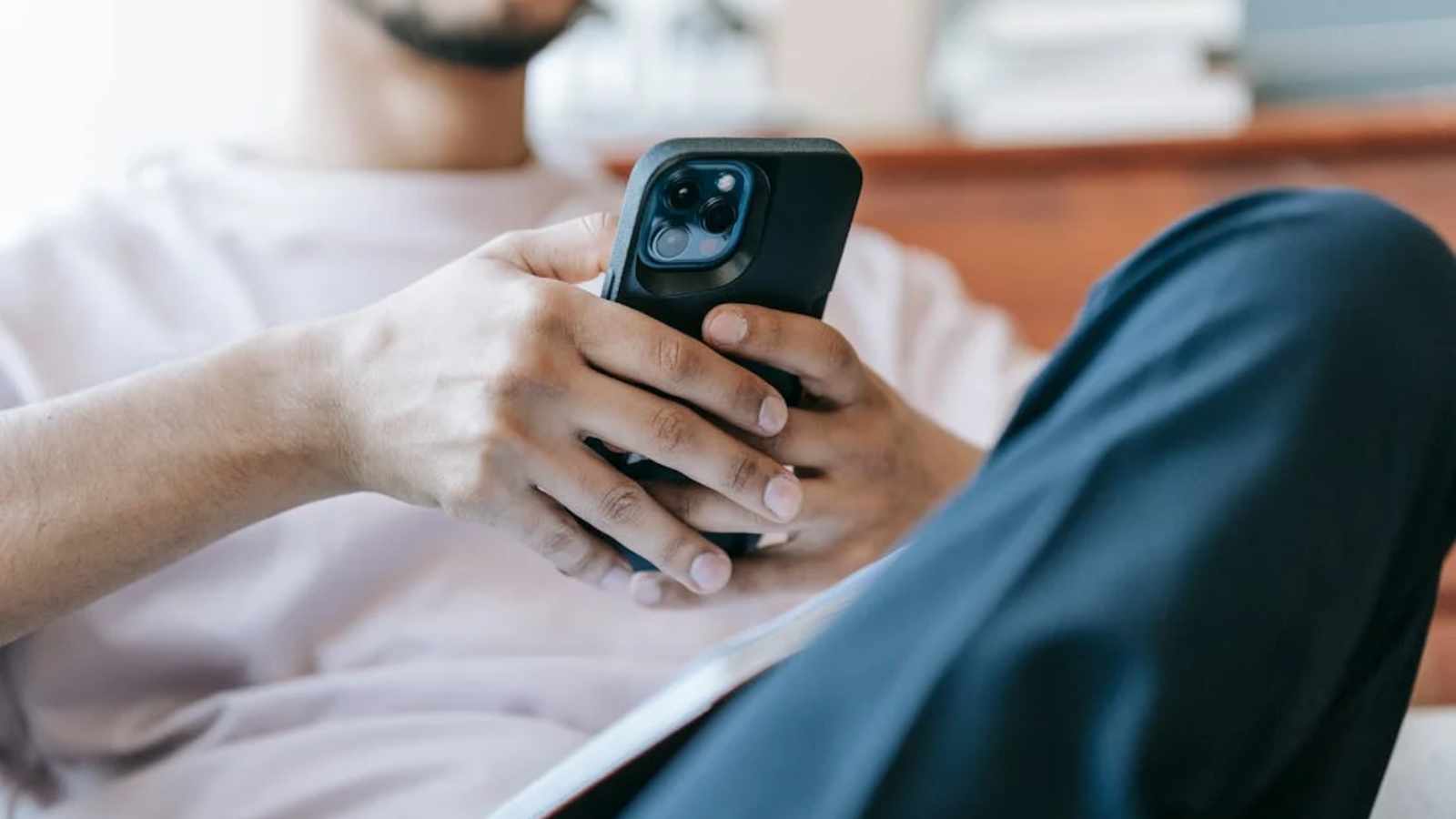
So, what’s the bottom line? Our phones are incredible tools, but the data is clear: they’re also powerful distraction machines that can make us less considerate and less present.
The common thread through all these annoying habits isn’t that people are trying to be jerks. It’s a lack of mindfulness. We get so lost in our little digital worlds that we forget about the real one—and the real people—right in front of us.
As MIT’s Sherry Turkle suggests, the solution is to create “sacred spaces”—like the dinner table or the car—that are device-free. It’s not about ditching our phones, but about using them more thoughtfully and reclaiming the simple, powerful art of being present with each other.
Disclaimer – This list is solely the author’s opinion based on research and publicly available information. It is not intended to be professional advice.
Like our content? Be sure to follow us





