Most of us have quoted the Bible at some point without being totally sure what it actually says. Maybe it was during an argument, a wedding toast, or that one dramatic Facebook post that felt deep at the time. I used to swear up and down that angels had wings — like, full-on feathery, glowing, ready-to-fly wings.
Turns out, the Bible says only certain types of angels —like seraphim and cherubim —actually have them, while others look just like regular people when they show up. That little discovery sent me down a rabbit hole of verses I’d clearly misunderstood for years. The Bible is full of surprises, reminders, and a few humbling “wait, what?” moments that make you laugh and learn at the same time.
Eve didn’t eat an apple

Ask almost anyone what fruit Eve ate in the Garden of Eden, and you’ll get the same confident answer: an apple. But the Bible never says that. Genesis 3:6 simply calls it “the fruit of the tree,” without naming what kind.
The apple connection came centuries later through European art and translations, especially after Latin used the word malum, meaning both “evil” and “apple.” So no, Eve didn’t doom humanity with a Honeycrisp.
Noah didn’t take just two of every animal

This one trips people up all the time. Genesis 7 explains that Noah took seven pairs of clean animals and one pair of unclean ones — not just “two of each.”
Clean animals were used for sacrifices and food after the flood. The “two-by-two” version is just the simplified Sunday school version.
Three wise men? Not necessarily

You’ve probably seen every Christmas nativity scene with exactly three Magi offering gold, frankincense, and myrrh. But the Bible never says there were three of them — just that they brought three gifts.
In fact, the Gospel of Matthew doesn’t even call them kings, but “wise men from the east.” Historians suggest there could have been a whole caravan of scholars. The “three kings” idea only stuck because of the gifts — not the guest list.
“Money is the root of all evil” isn’t quite right

This one’s been misquoted for centuries. The actual verse, 1 Timothy 6:10, says, “The love of money is the root of all kinds of evil.” That’s a big difference.
The Bible doesn’t condemn money itself — it warns about greed and obsession. It’s a lesson about priorities, not poverty. Turns out, the problem isn’t your paycheck, it’s what controls your heart.
Moses didn’t part the Red Sea alone

It’s easy to imagine Moses dramatically raising his staff and the sea splitting like a movie scene. But Exodus 14 describes something more gradual — “a strong east wind” that blew all night before the waters divided.
The miracle wasn’t just a special effect; it was a moment of divine timing and human courage. Some scientists even believe wind setdown effects could explain part of the phenomenon. Either way, it wasn’t instant — it was faith meeting physics.
“Cleanliness is next to godliness” isn’t in the Bible

It’s quoted in churches, homes, and even on refrigerator magnets — but it’s not a Bible verse. The saying comes from a sermon by John Wesley in the 1700s, centuries after the Scriptures were written.
The Bible talks about purity, yes, but mostly in a spiritual sense. Being tidy is great, but it’s not divine law. So you can relax — a messy kitchen isn’t a sin.
Also on MSN: 12 sins the Bible calls the most serious of all
The forbidden fruit wasn’t about food

Many people think the Garden of Eden story is about eating the wrong fruit. But in reality, it’s about disobedience, not diet.
The tree symbolized knowledge, control, and moral boundaries — things humans still wrestle with today. Biblical scholars often describe it as humanity’s first attempt to play God. The story isn’t about hunger; it’s about the cost of curiosity.
Angels don’t actually have wings (most of the time)

Pop culture has given us a clear image of angels — glowing robes, halos, and feathery wings. But in the Bible, most angels appear as ordinary people.
Genesis 19 describes two angels visiting Lot, and they look completely human. Only specific types, like cherubim and seraphim, are described with wings. So if an angel showed up today, you might not recognize one.
Save this article
The Bible doesn’t say Mary rode a donkey

Every Christmas play includes Mary riding a donkey to Bethlehem. But the Gospels never mention a donkey at all. Luke 2:4–5 simply says Mary and Joseph “went up from Nazareth to Bethlehem.”
She might have walked, ridden in a cart, or yes, used a donkey — but we don’t know. The detail probably came from later imagination, filling in the blanks of a quiet journey.
The Bible wasn’t written in English

This might sound obvious, but many people forget how much gets lost in translation. The Old Testament was mostly written in Hebrew (with some Aramaic), and the New Testament in Greek. That means every English Bible we read today has gone through centuries of linguistic decisions.
Reports show that there are more than 450 English translations in existence. Each one shades the meaning just a little differently — which is why context matters so much.
There wasn’t one “Lucifer” before the fall

“Lucifer” has become synonymous with Satan, but the original reference in Isaiah 14:12 was to a Babylonian king, not a fallen angel. The name means “morning star” or “light-bringer.”
The association with Satan developed much later through translation and interpretation in Christian tradition. Biblical scholars now agree it was never meant to be a personal name for the devil.
The Bible didn’t fall from the sky complete
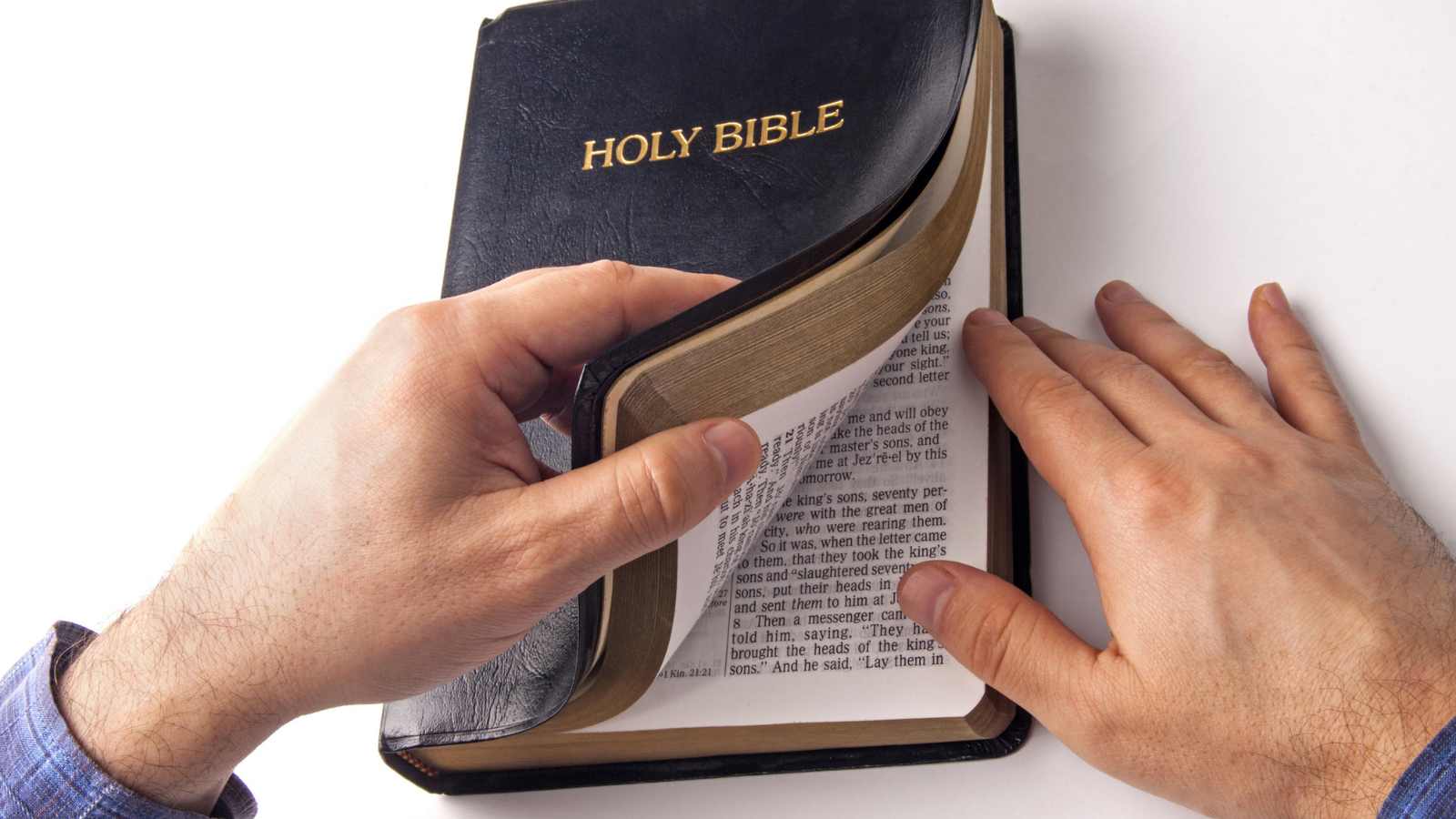
Some assume the Bible appeared one day, neatly bound and ready to read. In truth, it’s a collection of 66 books written over roughly 1,500 years by about 40 different authors. The process of deciding which books made it into the canon took centuries and multiple councils.
Even today, some traditions (such as Catholic and Orthodox Bibles) include texts that Protestant Bibles don’t. The Bible as we know it is the product of time, debate, and faith working together.
The apocalypse doesn’t necessarily mean total destruction

For many people, the word “apocalypse” brings to mind fire, chaos, and the end of the world. But the Greek word apokalypsis actually means “revelation” or “unveiling.”
The Book of Revelation is about revealing truth and hope, not just doom. It was written during a time of persecution to give believers courage. In a sense, the apocalypse is less about an ending and more about a beginning.
Key takeaways

The Bible’s full of surprises — even for people who think they know it by heart. From “Eve’s apple” to “three kings,” a lot of what we repeat isn’t actually written anywhere. It’s a mix of art, translation quirks, and centuries of storytelling that shaped what we think we know.
Context changes everything. Once you realize how ancient languages, culture, and interpretation shape meaning, those familiar verses hit differently. The Bible becomes less of a rulebook and more of a living story with layers worth exploring.
Faith and curiosity can coexist beautifully. Asking questions or correcting old assumptions doesn’t weaken belief — it deepens it. After all, understanding what the Bible really says might be one of the most faithful things you can do.
Disclaimer – This list is solely the author’s opinion based on research and publicly available information. It is not intended to be professional advice.
Disclosure: This article was developed with the assistance of AI and was subsequently reviewed, revised, and approved by our editorial team.
14 Things That Label You as ‘Uneducated’ on Social Media

14 Things That Label You as ‘Uneducated’ on Social Media
Welcome to the digital world, a place as intriguing as treacherous, where your online persona can instantly charm or alarm others. In this realm, your social media presence is your calling card, a digital mirror reflecting your thoughts, beliefs, and, perhaps, inadvertently, your level of education. Yet, fear not! This guide is he
12 Laws And Rules About Food In Other Countries

12 Laws And Rules About Food In Other Countries
Food is more than just nourishment; it’s a reflection of culture, tradition, and, in many cases, the law. Around the world, various countries have established distinct food regulations that may surprise travelers and food enthusiasts alike.
These laws reveal how deeply societies value what ends up on their plates. Here are 12 fascinating food laws and rules from around the globe that show just how diverse and sometimes unexpected our relationship with food can be.