There was a time when life moved slower and had its own charming quirks. You didn’t need five apps just to plan your day, and weekends were for flipping through CDs or chatting on a corded phone until dinner. Somewhere between smartphones and streaming, those little rituals just… vanished.
In 1999, there were over 2 million payphones across the U.S., but today fewer than 100,000 remain, says the Federal Communications Commission. It’s funny how fast “everyday” things can fade without us noticing. So, consider this list a time capsule—a nostalgic peek at the ordinary joys that quietly disappeared while we were all busy upgrading.
Handwritten letters

There was a time when getting a letter in the mail felt like opening a tiny piece of someone’s heart. You’d recognize their handwriting instantly—the little curls, the way they dotted their i’s—and maybe even catch a whiff of their perfume or cologne. Now, nearly all U.S. adults are digitally connected: 95% use the internet, 90% own a smartphone, and 80% have high-speed home internet, according to Pew Research.
Our inboxes feel more like chores than moments of connection. Sure, emails are convenient, but they can’t replace the warmth of real ink on paper. The art of letter writing didn’t just fade—it slowly turned into a nostalgic memory we keep promising to revive someday.
Mixed CDs and playlists you made by hand

Burning a CD for someone used to mean something. You’d spend hours choosing the perfect song order, maybe scribble a title like “Summer Vibes ‘05” on the front, and pray it didn’t skip.
Now, playlists are algorithmically curated and shared in seconds—no fingerprints or personality attached. There was something special about a handmade mix—it wasn’t just music, it was a piece of who you were.
Cash payments

Pulling out a crisp $20 bill feels oddly rare now. Even vending machines and parking meters prefer cards or mobile pay.
But paying with cash had a strange kind of satisfaction—you could actually see your spending, not just tap it away. Maybe that’s why budgeting used to feel a bit more real.
Also on MSN: 10 everyday items that could disappear by 2030
Printed TV guides

There was a ritual to flipping through the TV guide on Sunday mornings, circling your favorite shows with a pen. You knew exactly when “Friends” or “ER” was coming on, and missing it meant waiting for reruns.
Now, streaming platforms drop entire seasons at once, and we complain there’s still “nothing to watch.” The simplicity of anticipation is gone.
Landline phones

That nostalgic ring? Gone. Having a landline used to mean shared conversations, shouting “It’s for you!” across the house, and praying your sibling didn’t eavesdrop. As per the Chamber of Commerce, around 71.7% of U.S. adults (183 million people) live in wireless-only households — no landline at all.
Now, everyone’s got a phone in their pocket, and yet somehow, we talk less than ever. The idea of calling just to “chat” has quietly disappeared, replaced by voice notes and “text me later.”
Photo albums

Before cloud storage and Instagram grids, we had those chunky, plastic-covered photo albums that lived under coffee tables or in drawers. You could flip through years of family vacations, birthdays, and school photos in seconds.
Today, most people store thousands of pictures on their phones—photos they’ll probably never look at again. Something was grounding about those albums—proof that memories didn’t need a passcode.
Newspaper classifieds

Before Facebook Marketplace or Craigslist, classifieds were the heartbeat of local communities. You could find anything—from used bikes to wedding bands to odd jobs—in those little printed boxes.
What replaced it? Scroll fatigue and scams. There was trust in flipping through paper listings; you didn’t need a “verified” badge to make a deal.
Paper maps

Remember unfolding a map the size of your car windshield, turning it upside down, and still getting lost? Those moments were half the adventure.
Today, most Americans feel lost without GPS — a survey found that 53% wouldn’t feel confident driving anywhere at all without it. But there was a particular thrill to following a route you highlighted yourself, arguing over directions, and spotting landmarks instead of screen pins.
Save this article
Disposable cameras

Those clunky cameras with 27 shots taught us patience. You couldn’t delete or retake, so every click mattered. Waiting for your photos to develop was half the fun—and half the suspense.
Even though instant gratification rules now, disposable cameras are making a tiny comeback. Maybe we’re all secretly craving that imperfect, surprise-filled kind of nostalgia.
Drive-in theaters

There was nothing quite like the glow of headlights and popcorn scent in the open air. Drive-ins were once everywhere—by 1958, there were over 4,000 across the U.S. Today, fewer than 300 remain, according to the New York Film Academy.
Streaming and multiplexes took over, but the charm of watching a movie under the stars never really left our hearts. Some small towns are trying to revive them, and honestly, we could use more of that kind of magic.
Public payphones

That shiny silver box on every corner? Gone, except for a few vintage ones left for decoration. In 1999, there were over 2 million payphones across the U.S.; now, only 99,832 remain, says the FCC.
They were lifelines for forgotten wallets and “call me when you get there” moments. Today, if your phone dies, you’re basically stranded.
Home-cooked family dinners

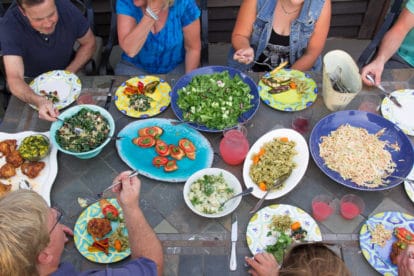
Once upon a time, dinner wasn’t just a meal—it was a nightly event. Families gathered, conversations flowed, and someone always complained about the vegetables. These days, only 30% of American families eat together regularly, according to a Harvard report.
Between long commutes, takeout apps, and busy schedules, the dinner table has become a rare gathering spot. Maybe we didn’t just lose a tradition—we lost one of the easiest ways to stay connected.
Libraries as social hubs

Libraries used to hum with quiet life—study groups, curious kids, and people flipping through magazines they couldn’t afford to buy. While libraries still exist, their role has shifted. Visits have declined, as e-books and internet research take over.
But libraries were more than books—they were safe, communal spaces where learning didn’t cost a cent. Some things, it seems, fade not because they fail, but because the world forgets how much it needed them.
Key takeaways
The little things that once filled our daily lives—letters, landlines, cash, and family dinners—may have slipped away quietly, but their absence says a lot about how much life has changed. We’ve traded patience for speed, connection for convenience, and simplicity for endless choice.
Yet, these vanished rituals remind us that “slower” didn’t always mean worse—it meant more human. Maybe the future doesn’t have to choose between progress and nostalgia; it can hold onto both.
Disclaimer – This list is solely the author’s opinion based on research and publicly available information. It is not intended to be professional advice.
Disclosure: This article was developed with the assistance of AI and was subsequently reviewed, revised, and approved by our editorial team.
15 Foods From the ’60s Most Boomers Loved With a Passion

15 Foods From the ’60s Most Boomers Loved With a Passion
The 1960s were a period of profound social and cultural transformation in America. As the baby boomer generation came of age, they embraced new ideas, fashion trends, and music styles. And when it came to food, some beloved dishes defined this era.
Here are 15 foods from the ’60s that most boomers loved passionately.
14 Boomer Habits That Are Making a Comeback

14 Boomer Habits That Are Making a Comeback
As trends in lifestyle and culture ebb and flow, certain habits from previous generations resurface, influencing new generations in unexpected ways. The boomer generation is now seeing many of its beloved practices and preferences re-emerge, often taking on a modern twist that appeals to today’s youth.
These 14 resurgent boomer habits reflect nostalgia and a growing appreciation for simplicity and authenticity in an increasingly changing world.