When it comes to heaven and hell, most of us grew up with vivid mental pictures — golden gates, fiery pits, clouds, harps, and maybe a few angels with perfect hair. But the truth? A lot of what people think they know didn’t actually come from the Bible at all.
Over centuries, art, movies, and culture have added their own layers of imagination to these ideas, blurring the line between theology and folklore. A Gallup Poll found that about 67% of Americans believe in heaven and 59% believe in hell. So let’s peel back the myths and talk about what’s real, what’s symbolic, and what just might surprise you.
Heaven is just floating on clouds forever

Let’s be honest — that doesn’t sound very exciting after a few centuries. The Bible actually describes a new heaven and a new earth —a restored creation where people live, work, and create in harmony.
Revelation 21 talks about a tangible place filled with light, beauty, and purpose — not endless lounging. The imagery of clouds and harps mostly came from early paintings and hymns. In reality, heaven sounds far more dynamic and grounded than we imagine.
Everyone instantly becomes an angel in heaven

It’s a comforting thought, but no, humans and angels are totally different beings. The Bible never says people “earn wings” after they die. Angels were created as messengers and spiritual beings, not as souls who once lived on Earth.
Luke 20:36 says we become like angels, meaning immortal, not that we turn into them. The wings-and-halo image mostly came from Renaissance art and movies, not scripture.
You can pray people out of hell

This belief has roots in historical practices such as indulgences and teachings about purgatory, but it’s not biblically supported. Catholic doctrine distinguishes between purgatory (a purification process) and hell (a permanent state of separation).
According to mainstream Christian teaching, once a soul is in hell, it’s not a place one can be “rescued” from by prayer. That said, praying for the dead remains a comfort and act of love in many traditions. The line between hope and doctrine has always been a tender one.
Hell is a fiery pit deep underground

That classic image of hell—fire, pitchforks, and lava rivers — mostly came from medieval art and Dante’s Inferno, not the Bible. In scripture, “hell” is translated from several words — Sheol, Hades, and Gehenna — each with different meanings.
Some describe a grave or place of waiting, not eternal torment. Modern theologians often interpret “fire” as a metaphor for separation from God rather than literal flames. The underground inferno? That’s more pop culture than theology.
Only certain denominations make it in

Some groups have long claimed a monopoly on heaven’s guest list, but that idea doesn’t hold up biblically. Scripture repeatedly emphasizes faith, grace, and the heart’s posture over membership cards.
In fact, Jesus’ parables often surprise people with who’s included. The point seems to be that heaven’s door isn’t controlled by human institutions. Love, not labels, is what lasts.
Heaven is only for “good” people

If heaven worked like a moral scoreboard, we’d all be in trouble. The Bible teaches that salvation isn’t earned by good behavior but through grace and faith (Ephesians 2:8–9).
That idea can feel unfair — but it’s also what makes it hopeful. It’s not about perfection but transformation. Being “good” might open doors on Earth, but in the divine story, mercy does the heavy lifting.
Also on MSN: 13 common myths about Christianity, debunked
Everyone goes straight to heaven or hell when they die
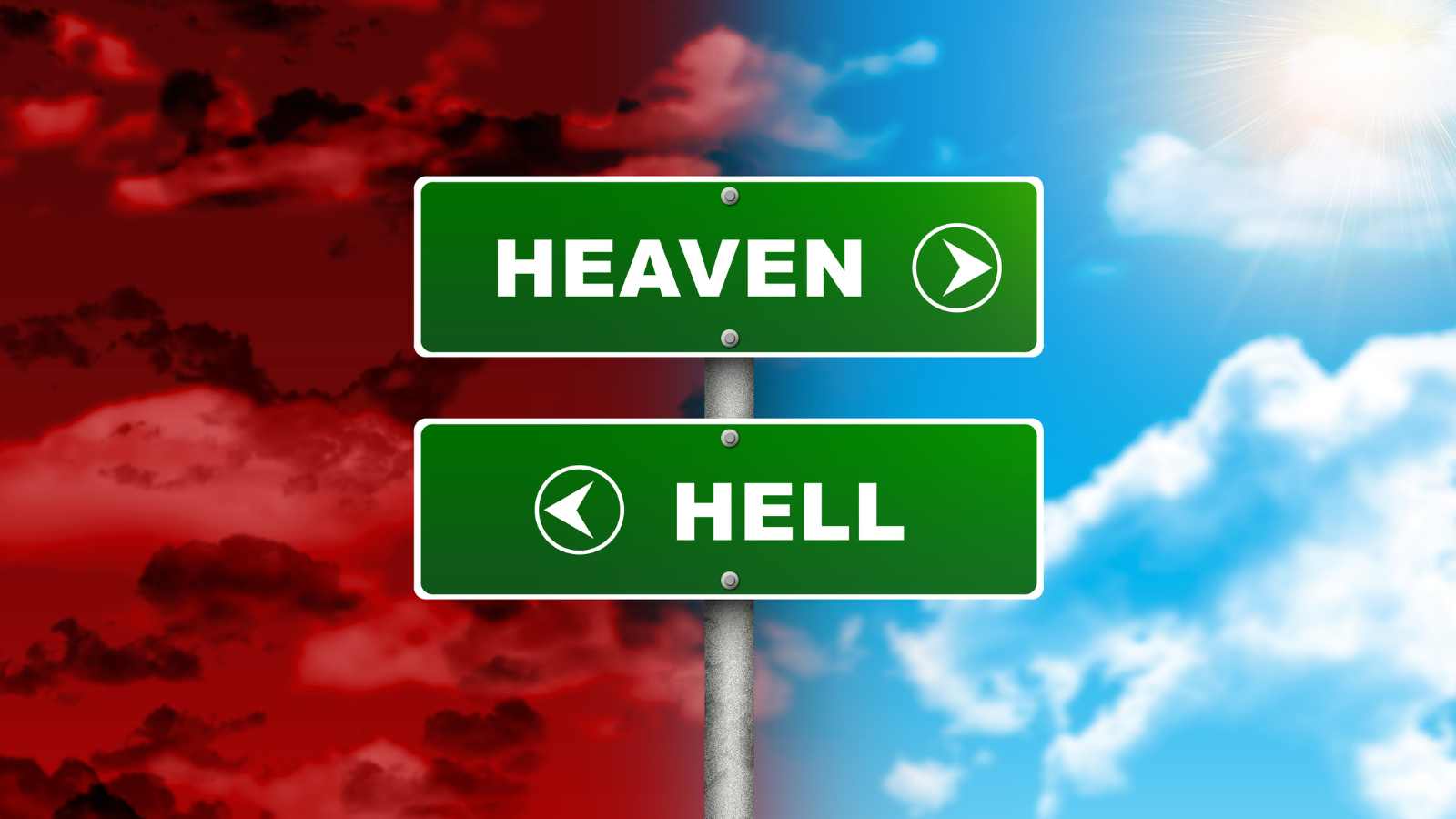
Many people assume the afterlife is instant, but the Bible suggests a more complex timeline. Some passages describe souls “sleeping” until the final resurrection, while others mention being “present with the Lord.”
Theologians still debate how time works beyond death — it might not even apply the same way. What’s clear is that judgment and eternity don’t necessarily happen the second we take our last breath. So, maybe it’s not as immediate as Sunday School made it sound.
Hell is just a metaphor, not a real place

This one divides scholars and believers alike. Some modern theologians interpret hell as symbolic, representing the absence of God’s love rather than a physical location.
Others argue that Jesus spoke of it too often for it to be purely metaphorical. It’s one of those mysteries where scripture leaves room for both awe and humility.
Hell is ruled by the devil

Save this article
This one’s straight out of cartoons. Satan isn’t the king of hell — he’s actually one of its future prisoners. Revelation 20:10 says the devil will be thrown into the lake of fire, not running the place with a pitchfork.
The image of a red-horned ruler came from medieval drama and art designed to scare people into repentance. Theologically speaking, hell isn’t his kingdom — it’s his sentence.
Heaven is boring

If you’ve ever imagined eternity as one long church service, welcome to the club. But the Bible’s vision of heaven is anything but dull.
It’s full of color, music, purpose, and new creation — a world renewed, not erased. Revelation 21–22 paints a vivid picture of beauty and vibrancy, not passivity.
People in heaven watch everything we do

It’s a sweet (and slightly creepy) thought that Grandma’s cheering you on from above. But the Bible never clearly says the departed can see our every move. Hebrews 12:1 mentions a “great cloud of witnesses,” but many scholars believe that’s symbolic — not literal surveillance.
Heaven is described as a place of joy and peace, not anxiety about earthly drama. Still, the idea that loved ones remain connected in spirit is comforting — and maybe that’s what matters most.
Hell is forever for everyone

While eternal punishment is one traditional view, it’s not the only one Christians have held. Some theologians support “annihilationism” — the belief that souls are ultimately destroyed, not tormented forever.
Others suggest that God’s mercy could extend beyond death, though that view is controversial. What’s clear is that the Bible uses vivid, sometimes poetic language to describe hell’s seriousness. It’s a warning, but not one meant for endless fear-mongering.
People become perfect and lose their personalities

Many imagine that in heaven, everyone turns into identical, flawless beings — but individuality doesn’t disappear. Scripture suggests that our identities are refined, not erased.
We’ll still recognize each other, laugh, and love, but without pain or ego getting in the way. Perfection doesn’t mean sameness; it means harmony. So, if you were funny on Earth, odds are you’ll still be funny in heaven — just with better timing.
Heaven is somewhere “up there” in the sky

We often point upward when talking about heaven, but the Bible describes it as another dimension or reality — not just a place among the stars. Early Christians saw heaven as God’s realm, existing alongside ours but unseen.
Acts 1:9 uses upward imagery to describe Jesus’ ascension, but that’s more about symbolism than GPS coordinates. So while telescopes can show us galaxies, they won’t help us spot heaven. It’s less “above us” and more “beyond us.”
Key takeaways

In the end, these myths remind us how deeply human our search for understanding really is. Heaven and hell have always been mirrors of our hopes, fears, and questions about what comes next.
We imagine them through the lens of love, loss, and the stories passed down to us — sometimes accurate, sometimes not. But maybe the beauty lies in the mystery itself: that longing for something beyond what we can see.
Disclaimer – This list is solely the author’s opinion based on research and publicly available information. It is not intended to be professional advice.
Disclosure: This article was developed with the assistance of AI and was subsequently reviewed, revised, and approved by our editorial team.
14 Things That Label You as ‘Uneducated’ on Social Media

14 Things That Label You as ‘Uneducated’ on Social Media
Welcome to the digital world, a place as intriguing as treacherous, where your online persona can instantly charm or alarm others. In this realm, your social media presence is your calling card, a digital mirror reflecting your thoughts, beliefs, and, perhaps, inadvertently, your level of education. Yet, fear not! This guide is here to help you navigate the vast ocean of social media with grace and wisdom.
12 Laws And Rules About Food In Other Countries

12 Laws And Rules About Food In Other Countries
Food is more than just nourishment; it’s a reflection of culture, tradition, and, in many cases, the law. Around the world, various countries have established distinct food regulations that may surprise travelers and food enthusiasts alike.
These laws reveal how deeply societies value what ends up on their plates. Here are 12 fascinating food laws and rules from around the globe that show just how diverse and sometimes unexpected our relationship with food can be.