

In 2025, Americans are forecast to spend over $1.5 trillion in the foodservice industry. This is according to the National Restaurant Association 2025 State of the Restaurant Industry report. This highlights just how much we value sharing tasty and convenient dishes that bring people together. Many of these beloved foods have fascinating stories often mistaken for ethnic origins when they’re truly homegrown American creations.
This list uncovers 15 such dishes—each packed with flavor and history—that many think come from abroad but are actually products of America’s melting pot. Ready to surprise guests with foods that taste worldly but are all-American?
Chicken and Waffles

This soul food classic feels deeply rooted in Southern American tradition, but many people think it comes from Belgium because of the waffles. The truth is, this dish was created in Harlem during the Jazz Age of the 1930s. Musicians coming off late-night gigs needed something that was both breakfast and dinner.
The combination works because it balances sweet and savory flavors in a way that’s distinctly American. European waffle traditions typically pair waffles with fruit or cream, not fried chicken. American-style chicken and waffles uses specific seasonings on the chicken (like hot sauce or honey) that weren’t part of traditional European waffle preparations.
Pro Tip: The secret to great chicken and waffles is getting the temperature contrast right – serve the chicken hot and the waffles warm, and drizzle everything with real maple syrup, not the fake stuff.
Lo Mein

Here’s another “Chinese” dish that’s actually American. Real Chinese noodle dishes are quite different from what we call lo mein in American restaurants. Traditional Chinese noodle dishes use fresh, hand-pulled noodles and focus on one or two main ingredients rather than the mixed vegetable approach of American lo mein. The dish we know was created by Chinese-American restaurants to use up leftover ingredients efficiently.
What really gives away lo mein’s American origins is the sauce and cooking method. Research from the National Institute of Health shows that American lo mein uses a soy sauce-based mixture that’s much sweeter and thicker than traditional Chinese noodle preparations. Chinese noodle dishes typically use lighter seasonings that don’t mask the individual flavors of ingredients.
Pro Tip: If you’re making lo mein at home, try using fresh noodles from an Asian grocery store instead of dried ones – the texture difference is incredible and much closer to what you’d actually find in China.
General Tso’s Chicken

General Tso’s Chicken is often thought to be an authentic Chinese dish, but it was actually created by Taiwanese chef Peng Chang-kuei in the 1950s. When he brought the dish to New York City in the 1970s, it was adapted to American tastes with a sweeter, crispier style not found in traditional Hunan cuisine.
The Smithsonian’s National Museum of American History states, “General Tso’s chicken was purposefully created to appeal to American palates, featuring a sweeter sauce and crisp fried chicken, differing significantly from its Hunanese origins” (Smithsonian, 2023).
Nutrition-wise, American General Tso’s chicken is richer in calories and fat due to its deep-fried preparation and sweeter sauce. This differs from traditional Chinese cooking methods that favor lighter stir-fries with less sugar.
The National Institutes of Health explains, “Preparation methods influence energy and nutrient profiles and may impact body weight and composition,” highlighting how dishes like General Tso’s diverge nutritionally from their ethnic inspirations.
Pro Tip: Consider Kung Pao chicken for a spicy, more authentic Chinese flavor that steers clear of sugary sauces.
Caesar Salad
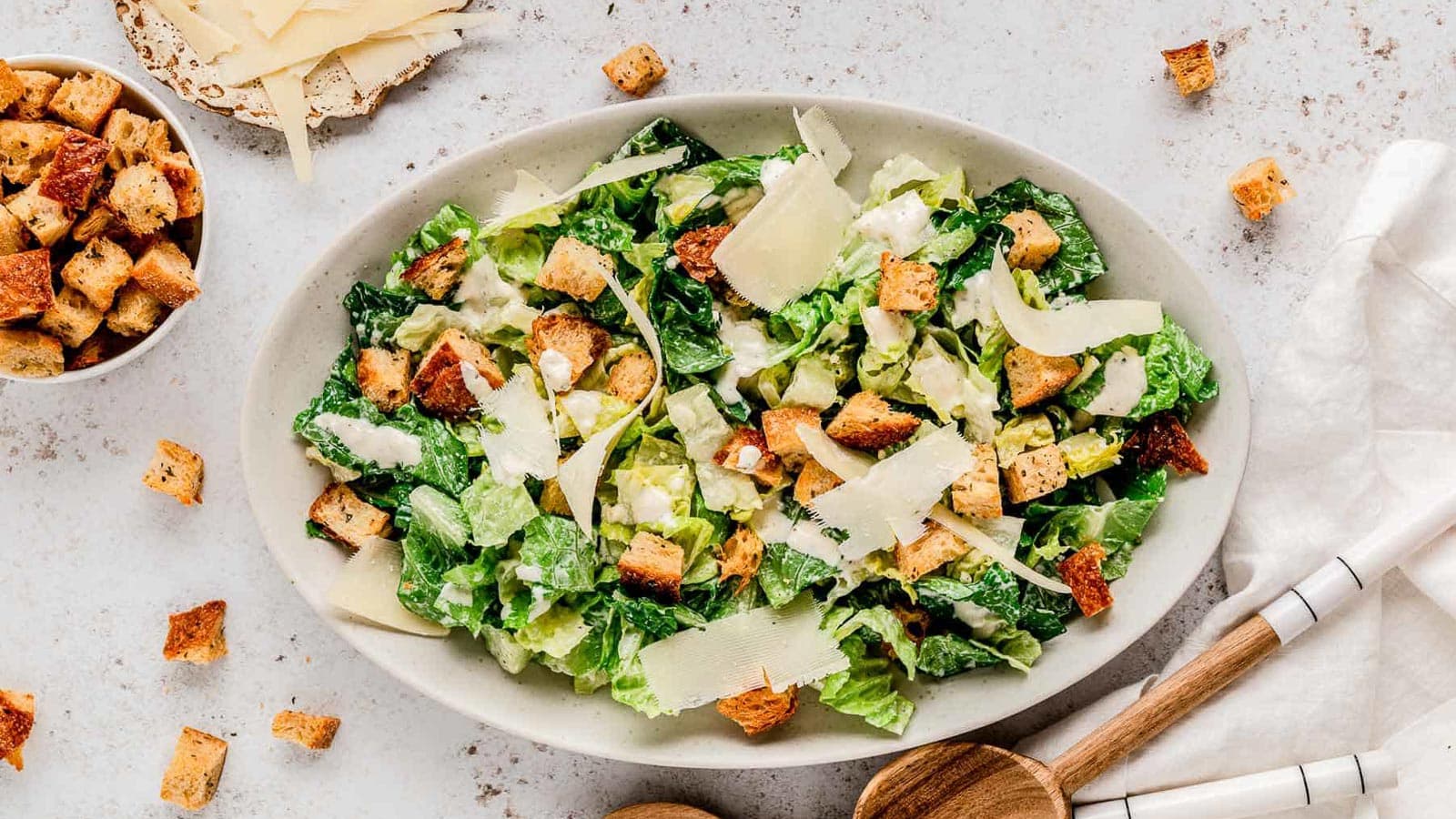
You’d think something called “Caesar Salad” comes from Italy, right? Wrong! This leafy creation actually started in Tijuana, Mexico, but was invented by an Italian-American chef named Caesar Cardini in the 1920s. The salad became popular with American tourists visiting Mexico during Prohibition.
What makes this even more American is how the recipe evolved. The original version used Worcestershire sauce, which contains anchovies, but American adaptations often skip the fish entirely. American versions typically contain more Parmesan cheese and twice the amount of croutons compared to the original recipe.
Pro Tip: For a more authentic experience, make your Caesar dressing from scratch using raw egg yolks and real anchovies – it’ll taste completely different from the bottled stuff.
Chop Suey

Here’s a dish that screams “Chinese takeout,” but chop suey is about as American as baseball. Historical records from the National Archives show that this stir-fried vegetable dish was created by Chinese immigrants working on the Transcontinental Railroad in the 1860s. They used whatever vegetables were available locally, which weren’t the same ones they’d use back in China.
The dish became so Americanized that when President Nixon visited China in 1972, Chinese officials had never heard of chop suey. Research from the Smithsonian Institution’s food history project shows that authentic Chinese cuisine rarely mixes as many different vegetables in one dish as American chop suey does. Traditional Chinese stir-fries focus on one or two main ingredients rather than the “everything but the kitchen sink” approach of chop suey.
Pro Tip: If you’re making chop suey at home, stick to vegetables that were available to railroad workers – cabbage, onions, and bean sprouts – for a more historically accurate version.
Chicken Tikka Masala

This creamy, tomato-based curry dish might taste like it’s straight from India, but food historians have traced its origins to either Britain or Scottish-Indian restaurants in the 1960s. Some food scientists believe it was created in Glasgow, making it more European than Asian.
What’s really interesting is how the dish differs from authentic Indian cuisine. Traditional Indian curries use coconut milk or yogurt as a base, while chicken tikka masala relies heavily on tomato puree and cream – ingredients that weren’t common in traditional Indian cooking.
Pro Tip: For authentic Indian flavors, try chicken curry or dal (lentil curry) instead – these use traditional spice combinations and cooking methods that have been around for centuries.
Cioppino

San Francisco’s famous seafood stew might sound Italian with that name, but it’s pure American innovation. Italian fishermen who settled in San Francisco during the Gold Rush created this dish using local Pacific Coast seafood that wasn’t available in Italy. Research from the National Institute of Health shows that traditional Italian fish stews use Mediterranean seafood like branzino and sea bream.
The tomato base might seem Italian, but American cioppino uses a much thicker, more concentrated tomato sauce than you’d find in Italian seafood dishes. Cioppino typically contains Dungeness crab, which is native to the Pacific Coast and not typically found in traditional Italian cuisine. The dish also uses sourdough bread as an accompaniment, which became popular in San Francisco during the same period.
Pro Tip: When making cioppino, use the freshest local seafood you can find – that’s what the original Italian-American fishermen did, and it makes all the difference in flavor.
Nachos

Save this article
Everyone thinks nachos are straight from Mexico, but this cheesy creation actually started at a restaurant called the Victory Club in Piedras Negras, Mexico – right across the border from Eagle Pass, Texas. The kicker? It was invented in 1943 specifically for American military wives who crossed the border for shopping trips. The dish was designed to appeal to American tastes rather than traditional Mexican preferences.
What makes nachos distinctly American is the type of cheese used. Traditional Mexican cuisine uses fresh cheeses like queso fresco or Oaxaca cheese, but nachos use processed cheese sauce. Research from the National Institute of Health shows that the cheese sauce commonly used on nachos contains additives and preservatives not found in traditional Mexican cheese-making. The dish also typically includes ingredients like jalapeños from a jar rather than fresh chilies.
Pro Tip: For a more authentic Mexican flavor, try making nachos with real queso Oaxaca or Monterey Jack cheese instead of processed cheese sauce – your taste buds will thank you.
Spaghetti and Meatballs

This might be the biggest shocker on the list – spaghetti and meatballs aren’t really Italian. This dish was created by Italian-American immigrants who had access to more meat in America than they ever did in Italy. Traditional Italian cuisine rarely combines pasta with meatballs in the same dish.
Italian meatballs (called polpette) are typically smaller and served as a separate course, not on top of pasta. American versions are much larger and use different seasonings. American meatballs contain more breadcrumbs and garlic than their Italian counterparts, making them distinctly American in both size and flavor profile.
Pro Tip: If you want authentic Italian flavors, try pasta with a simple tomato sauce (pomodoro) or carbonara – these are dishes that actually come from Italy and showcase traditional techniques.
Egg Rolls

Chinese restaurants serve them, but egg rolls are actually an American creation. Traditional Chinese cuisine uses spring rolls, which have thinner, more delicate wrappers and are often served fresh rather than fried. Egg rolls were created in New York’s Chinatown in the 1930s to appeal to American customers who preferred fried foods.
The filling is what really gives away the American origins. Authentic Chinese spring rolls contain specific vegetables and are carefully balanced, while American egg rolls often contain cabbage, carrots, and other vegetables that weren’t traditional in Chinese cooking. Egg roll wrappers are thicker and contain more wheat flour than traditional spring roll wrappers, making them better suited for deep frying.
Pro Tip: Try fresh Vietnamese spring rolls if you want something closer to the original Asian concept – they’re lighter, healthier, and showcase the fresh ingredients rather than masking them with heavy frying.
Philly Cheesesteak

Wait, this one actually is American, so why’s it on the list? Because tons of people think it’s Italian! The confusion comes from the Italian-sounding names of the guys who invented it – Pat and Harry Olivieri – and the fact that it’s served on Italian rolls. But according to Philadelphia city records, this sandwich was created in 1930 in South Philadelphia and is 100% American.
What makes it distinctly American rather than Italian is the cheese. Traditional Italian sandwiches use fresh mozzarella or provolone, but the classic Philly cheesesteak uses Cheez Whiz or American cheese. This combination of thinly sliced beef with processed cheese was specifically created to appeal to American working-class tastes during the Great Depression.
Pro Tip: For the most authentic Philly cheesesteak experience, use Cheez Whiz rather than provolone – purists might argue, but that’s how Pat Olivieri intended it to be eaten.
Crab Rangoon

These crispy, cream cheese-filled wontons might show up at every Chinese restaurant, but they’re about as Chinese as a hamburger. Food historians have documented that cream cheese wasn’t used in traditional Chinese cooking until Western influence arrived. The dish was actually created at Trader Vic’s restaurant in San Francisco during the 1950s as part of the “Polynesian” food trend.
Traditional Chinese dumplings use completely different fillings – usually pork, shrimp, or vegetables seasoned with ginger and scallions. According to research from the Smithsonian’s food history project, Chinese cuisine historically avoided dairy products due to lactose intolerance being common in Asian populations.
Pro Tip: For authentic Chinese flavors, try steamed pork dumplings (shumai) or vegetable spring rolls instead – they showcase traditional Chinese cooking techniques and ingredient combinations.
Beef and Broccoli

Walk into any American Chinese restaurant and you’ll see beef and broccoli on the menu, but this dish is pure American invention. Broccoli wasn’t commonly grown or eaten in China until the 20th century. Traditional Chinese cuisine uses Chinese broccoli (gai lan), which is a completely different vegetable with a more bitter flavor and thinner stems.
The cooking method also screams American adaptation. Authentic Chinese stir-fries use much less sauce and focus on preserving the natural texture of vegetables. American beef and broccoli drowns everything in a thick, cornstarch-heavy sauce that masks individual flavors.
Pro Tip: Try making this dish with Chinese broccoli (gai lan) and just a light coating of oyster sauce – you’ll taste the vegetables instead of just the sauce, and it’s much closer to authentic Chinese flavors.
Fajitas

Everyone thinks fajitas are traditional Mexican food, but this sizzling dish actually originated in Texas in the 1930s. Mexican ranch workers (vaqueros) in South Texas created this dish using skirt steak, which was considered an undesirable cut that ranch owners would give to workers as partial payment. The cooking method and presentation we know today developed on American ranches, not in Mexico.
What makes fajitas distinctly Tex-Mex rather than Mexican is the accompaniments and preparation style. Traditional Mexican cuisine serves meat dishes with corn tortillas and simple salsas, but American fajitas come with the whole production – sour cream, shredded cheese, guacamole, and flour tortillas. This “build your own” approach to eating is more American than Mexican.
Pro Tip: For a more authentic Mexican experience, skip the sour cream and cheese and stick to fresh salsa, cilantro, and lime – that’s how they actually eat grilled meat in Mexico.
Mongolian Beef

Despite the name, Mongolian beef has absolutely nothing to do with Mongolia or traditional Mongolian cuisine. This sweet and savory dish was created in Taiwan by Chinese chefs and then adapted for American tastes in Chinese-American restaurants during the 1960s. According to research from Harvard, traditional Mongolian cuisine focuses on milk and meat, not the vegetable combinations found in American Chinese restaurants.
The sauce is what really gives away this dish’s American origins. Mongolian beef contains high amounts of sugar and cornstarch to create that glossy, thick coating Americans expect from Chinese food. Traditional Mongolian cooking uses very few seasonings and focuses on the natural flavors of meat and dairy. The National Institute of Health’s dietary studies reveal that authentic Mongolian dishes contain virtually no vegetables, while American Mongolian beef is loaded with scallions and onions.
Pro Tip: If you’re curious about real Mongolian flavors, look for restaurants that serve traditional lamb dishes or try making mutton with fermented mare’s milk (if you can find it) – it’s completely different from what American restaurants call “Mongolian.”
Disclaimer – This list is solely the author’s opinion based on research and publicly available information. It is not intended to be professional advice.
Like our content? Be sure to follow us.





