As you step into an Indian restaurant, you’re greeted by an enticing symphony of aromas swirling in the air—warm, earthy cumin, the sweet-spicy kick of cardamom, and the sharpness of chili mingling with the sweetness of cardamom and a hint of nutmeg. This is the soul of cooking.
India’s spice market is on fire! We’re seeing a huge leap from $8.41 billion in 2024 to an incredible $17.04 billion by 2033. The country exported nearly 793,000 tons of spices valued at $4.45 billion last year.
Each one brings something unique to the table. Some add warmth, others bring earthiness, and a few will make your taste buds dance. Plus, many of these spices come with health benefits that’ll make your doctor happy (and a little broke).
There’s never been a better time to stock your spice cabinet, so start with these few basics:
Garam Masala

This is the MVP of Indian spice blends. Garam masala literally means “hot spice mix,” but it’s not about heat – it’s about warmth. This blend typically includes black pepper, cardamom, nutmeg, cinnamon, cloves, cumin, and coriander.
Every family has their own secret recipe, so don’t stress if yours tastes different from your friend’s. That’s part of the charm! Use it early in cooking for deep flavor or sprinkle some at the end for an aromatic finish.
Turmeric (Haldi)

That gorgeous golden spice you see everywhere? That’s turmeric. It’s earthy, slightly bitter, and turns everything a beautiful yellow color (fair warning – it stains everything). Both powdered and fresh turmeric are used, with fresh turmeric offering a more pungent and intense flavor common in Southern and coastal Indian cuisines.
Just a teaspoon goes a long way in curries, rice dishes, and even smoothies. The health benefits are incredible too – we’re talking serious anti-inflammatory properties here.
Widely studied, turmeric is linked to reduced markers of inflammation (CRP and TNF-α), better antioxidant levels, improved blood pressure, cholesterol, and cognitive health.
Cumin (Jeera)

Cumin seeds are like the backbone of Indian cooking. They’re nutty, earthy, and slightly smoky when toasted. You’ll find them whole in tempering or ground up in spice mixes.
India produces over 900,000 metric tonnes annually, accounting for more than 70% of global cumin output—exporting extensively to the U.S., UAE, and Europe. Whole cumin seeds dominate the market (over 52% of consumption), with growing trends toward organic and non-GMO varieties—organic cumin exports increased by 18% from 2022 to 2024.
Pro tip: Always toast cumin seeds until they pop before grinding. It makes a huge difference in flavor depth.
Coriander (Dhania)

Don’t confuse this with cilantro leaves! Coriander seeds have a citrusy, lemony flavor that’s completely different. They’re essential for that golden color and fresh taste in curries. It’s also a good source of dietary fiber, manganese, iron, magnesium, Vitamin K, and Vitamin C.
Ground coriander is probably one of the most versatile spices you’ll use. It plays well with others and never overpowers a dish.
India is the world’s leading coriander producer, accounting for 68% of global supply, with over 847,000 metric tonnes produced in 2023. Rajasthan and Madhya Pradesh are the primary growing regions, contributing about 60% to the national acreage and output.
Mustard Seeds

These tiny black seeds pack serious flavor. They’re pungent when raw but develop a nutty, almost sweet taste when fried in oil. In South Indian cuisine, black or brown mustard seeds are heated in oil until they crackle, infusing dishes like sambar, rasam, and vegetable stir-fries with their distinctive flavor.
Bengali dishes frequently use mustard seeds and paste in fish curries (“shorshe ilish”) and vegetable preparations, with both yellow and brown varieties lending signature depth and heat.
Their bioactive compounds, such as glucosinolates and isothiocyanates, support anti-inflammatory, anticancer, and antimicrobial effects, making them a valued ingredient in both culinary and wellness routines.
You’ll hear them pop and splutter in hot oil – that’s when you know they’re ready to flavor your dish.
Fenugreek (Methi)

Okay, fenugreek is a bit of an acquired taste. The seeds are bitter (like, really bitter), but when used correctly, they add this amazing depth and slight maple-like sweetness. In Indian cooking, fenugreek seeds are tempered in hot oil at the start of cooking for curries, lentils, vegetable dishes, and masalas, providing nutty bitterness and aroma.
The leaves (kasuri methi) are what give butter chicken its distinctive flavor. Chef Chintan Pandya highlights fenugreek’s “bitterness that rolls into lingering sweetness,” making it a go-to for depth, balance, and wellness in Indian cuisine.
Trust the process with this one – it’s worth it!
Cardamom (Elaichi)

Meet the queen of spices. Green cardamom is sweet, floral, and incredibly aromatic. It is used in both sweet and savory dishes such as gajar ka halwa, masala chai, and biryani. It’s expensive (the third most costly spice after vanilla and saffron, according to Business Insider), but a little goes a long way.
Black cardamom is a different beast entirely – smoky and intense. It is mostly used in robust curries, stews, and rice dishes; its pods are typically included whole during cooking and then removed before serving.
Black cardamom contains thymoquinone, beneficial for heart and vascular health; green cardamom contains elemicin, linked to improved circulation and skin repair. Don’t use them interchangeably unless you want some serious flavor surprises!
Kerala in India is famous for its cardamom plantations, and the region supplies a large share of the world’s premium green cardamom.
Cloves (Laung)

These flower buds are potent stuff. They’re sweet, warming, and have this distinctive anise-like flavor. Perfect for rice dishes and spice blends.
Cloves are also a rich source of antioxidants, particularly eugenol, which offers anti-inflammatory, antiseptic, and analgesic properties—used traditionally to support digestion, relieve toothaches, and reduce infection.
Word of warning: don’t go overboard. Nobody wants to bite into a whole clove in their biryani – trust me on this one 🙂
Black Peppercorns

Good old black pepper, but in Indian cooking, it’s used differently than just sprinkling on your eggs. It’s a key player in garam masala and adds that sharp, piney heat to curries. Its bold, warming flavor is essential for classic recipes such as pepper chicken curry, paneer kali mirch, Malabari curry, and a wide range of marinades, stews, and snacks.
Black pepper synergizes with turmeric, cumin, and coriander to create nuanced, balanced profiles, often enhancing umami and depth.
Save this article
India exported around 20,000 to 25,000 metric tons of black pepper in 2024, worth over USD 120 million. The main markets for this spice are the U.S., U.K., and Canada. Kerala is India’s top black pepper-producing state, cementing the spice’s reputation as the “king of spices.”
Freshly cracked pepper beats pre-ground every time.
Nutmeg (Jaiphal)

This warm, sweet spice is especially popular in South Indian dishes. It’s got this cozy, almost creamy flavor that works beautifully in both sweet and savory dishes. Traditional Indian desserts—like rice pudding, payasam, and milk-based sweets—often rely on nutmeg for their distinctive fragrance and comforting flavor.
Plus, nutmeg is rich in antioxidants, including myristicin and eugenol, which help fight inflammation, pain, and bacteria while boosting heart, liver, and digestive health.
A little grating goes a long way – nutmeg can easily overpower other flavors if you’re heavy-handed.
Ginger (Adrak)

Fresh ginger is non-negotiable in Indian cooking. It’s zingy, warming, and pairs perfectly with sautéed onions and garlic to build flavor for gravies and soups. It is key in marinades, tenderizing meats and vegetables, and adding a peppery brightness (e.g., ginger chicken curry).
Dried ginger powder is different – more intense and spicy. It is used in spice blends, traditional sweets (ginger halwa, ginger pudding), teas, and digestive aids.
Ginger contains gingerol, shogaol, and zingerone—bioactive compounds with potent anti-inflammatory and antioxidant properties. These may support improved blood sugar control, lower cholesterol, pain relief, and enhanced digestion.
Indian chefs favor ginger for its ability to “wake up” the flavors of a dish. Both have their place in the spice cabinet.
Red Chili Powder

This is where the heat lives! Common varieties include regular red chili powder for maximum heat, Kashmiri chili powder for mild spice and fiery color, and Byadgi chili powder for a rich red hue in South Indian cuisine. It is a staple in masala blends, marinades, chutneys, and dry rubs.
India is the world’s largest producer and exporter of red chili powder; the spice drives roughly one-third of the domestic spice market’s revenue and a major share of the global industry.
Red chili powder is rich in capsaicin, antioxidants, vitamins C and A, and minerals such as potassium, manganese, and iron. Start small and build up. You can always add more spice, but you can’t take it back!
Star Anise

This beautiful star-shaped spice tastes like licorice and is absolutely essential for certain dishes. It’s particularly loved in Punjabi and Chettinad cuisines. In Chettinad cuisine, star anise is a key ingredient in chicken or goat curries, contributing complexity along with fennel and black pepper.
In Punjab, the spice stars in rice preparations, flavorings for stews, and as a finishing touch to balance savory and sweet notes.
Rich in shikimic acid, anethole, and antioxidants, star anise shows antimicrobial, antiviral, and anti-inflammatory activity—aiding immune-health, digestive comfort, and metabolic function.
One star is usually enough for most family-sized dishes. It’s potent stuff.
Mace (Javitri)
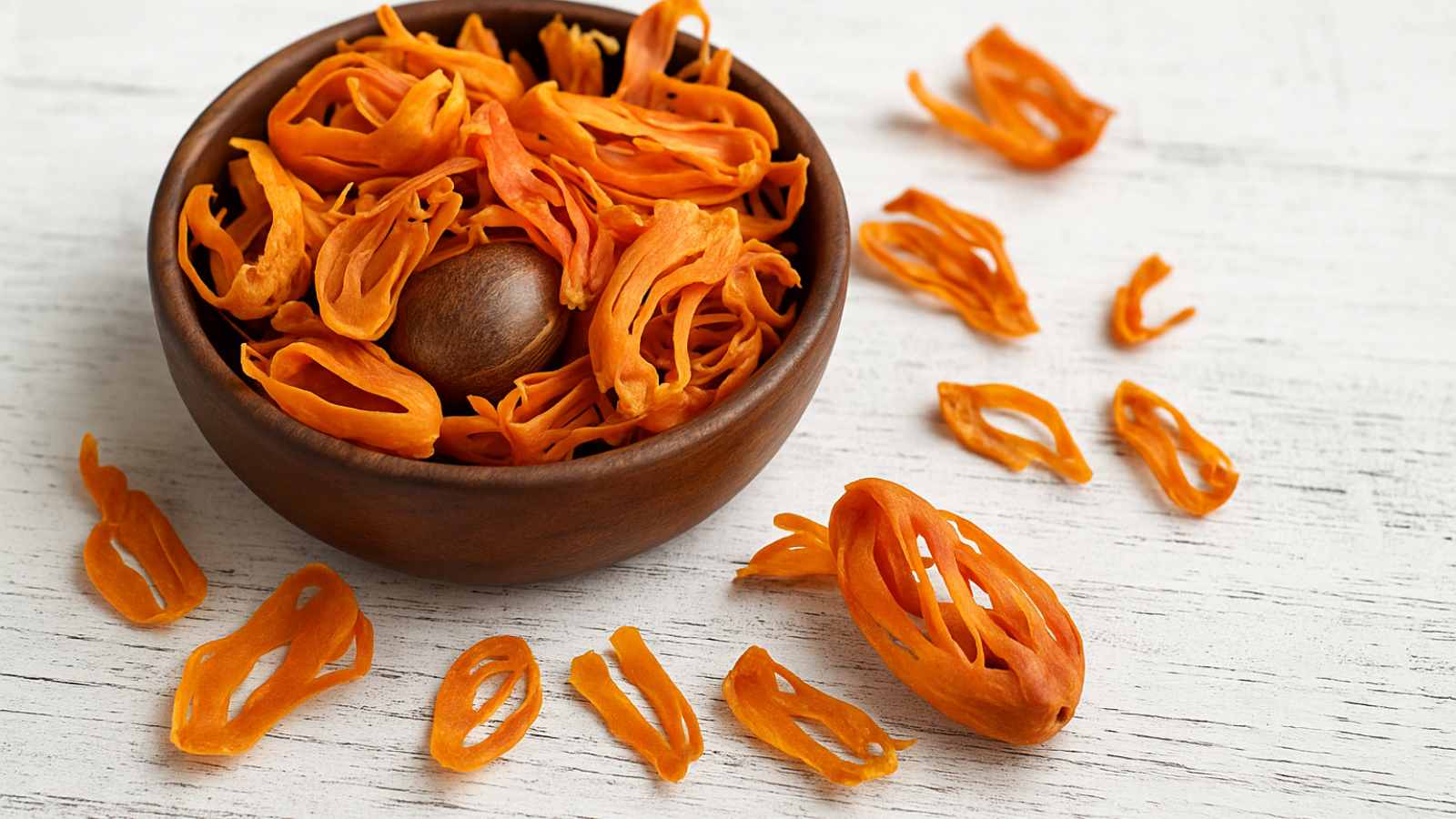
The lacy covering of nutmeg seeds, mace, has a more delicate flavor than its inner counterpart. It’s warming and aromatic, perfect for special spice blends. Whole or ground, mace pairs beautifully with rich meats (like lamb and goat), vegetable curries, rice dishes, pickles, sauces, and even in some Indian desserts.
It contains antioxidants, vitamins (A, C), minerals (calcium, potassium, iron, magnesium), and essential oils—supporting digestive health, appetite, blood circulation, and joint comfort.
It’s not easy to find, but it’s totally worth seeking out for authentic flavors.
Cinnamon (Dalchini)

Sweet, woody cinnamon is everywhere in Indian cooking – from biryanis to desserts. Found in garam masala, biryani masala, and Kerala-style coconut curries, cinnamon balances spicy, sour, and sweet ingredients across Indian cuisine. In desserts, cinnamon elevates pancakes, breads, oatmeal, and festive sweets, serving as a natural sweetener and aromatic enhancer.
The Ceylon variety (“true cinnamon”) is milder than the cassia cinnamon common in Western cooking. Either works fine, but adjust quantities accordingly.
Bay Leaf (Tej Patta)

These aromatic leaves add this incredible depth to curries and rice dishes. They’re usually removed before serving, but their essence stays in the dish. Commonly found in biryanis, pulaos, Moghul curries, Gujarati dals, vegetable sabzis, kachori fillings, and North Indian garam masala; its flavor pairs well with cinnamon, cardamom, cloves, and cumin.
Unlike European bay leaves, Indian bay leaves feature a stronger, more complex profile, with notes of cinnamon, clove, and cassia. Fresh is best, but dried works too. Just don’t use leaves that have been sitting around forever – they get bitter.
Asafoetida (Hing)

Okay, this one smells… intense. Like, really intense. But don’t let that scare you off! A tiny pinch fried in hot oil transforms into something magical and adds this incredible umami depth that underpins dals, lentil stews, vegetable curries, and snack batters.
Asafoetida is essential in Jain, Vedic, and gluten-free Indian diets, often replacing onions and garlic for those with dietary restrictions. It features in spice blends like sambar powder, curry powder, and chaat masala, always used sparingly due to its potency.
It should be stored in airtight containers away from light and air; freshness greatly impacts flavor. And start with just a pinch – seriously!
Making These Spices Work for You

The beauty of Indian spices is in how they play together. You don’t need all 17 for every dish, but having them on hand opens up a world of possibilities.
Storage tip: Keep whole spices in airtight containers away from light and heat. They last way longer than ground spices and taste better when you grind them fresh.
Cooking tip: Many of these spices benefit from being fried in oil at the start of cooking. This process, called tempering or tadka, releases essential oils and deepens flavors.
Disclaimer – This list is solely the author’s opinion based on research and publicly available information. It is not intended to be professional advice.
Like our content? Be sure to follow us.