

Roast potatoes can be tender in the middle and still come off the pan pale, soft and stuck together. The fix often starts before the oven is on. An evenly cut batch, dry surfaces and enough space on the tray give the potatoes a better chance to brown at the same rate.
These 7 changes apply to ordinary cubes and wedges, with a few adjustments for texture and seasoning. A batch that needs more browning can often be saved by spreading it onto a second tray and returning it to the oven for a few minutes.
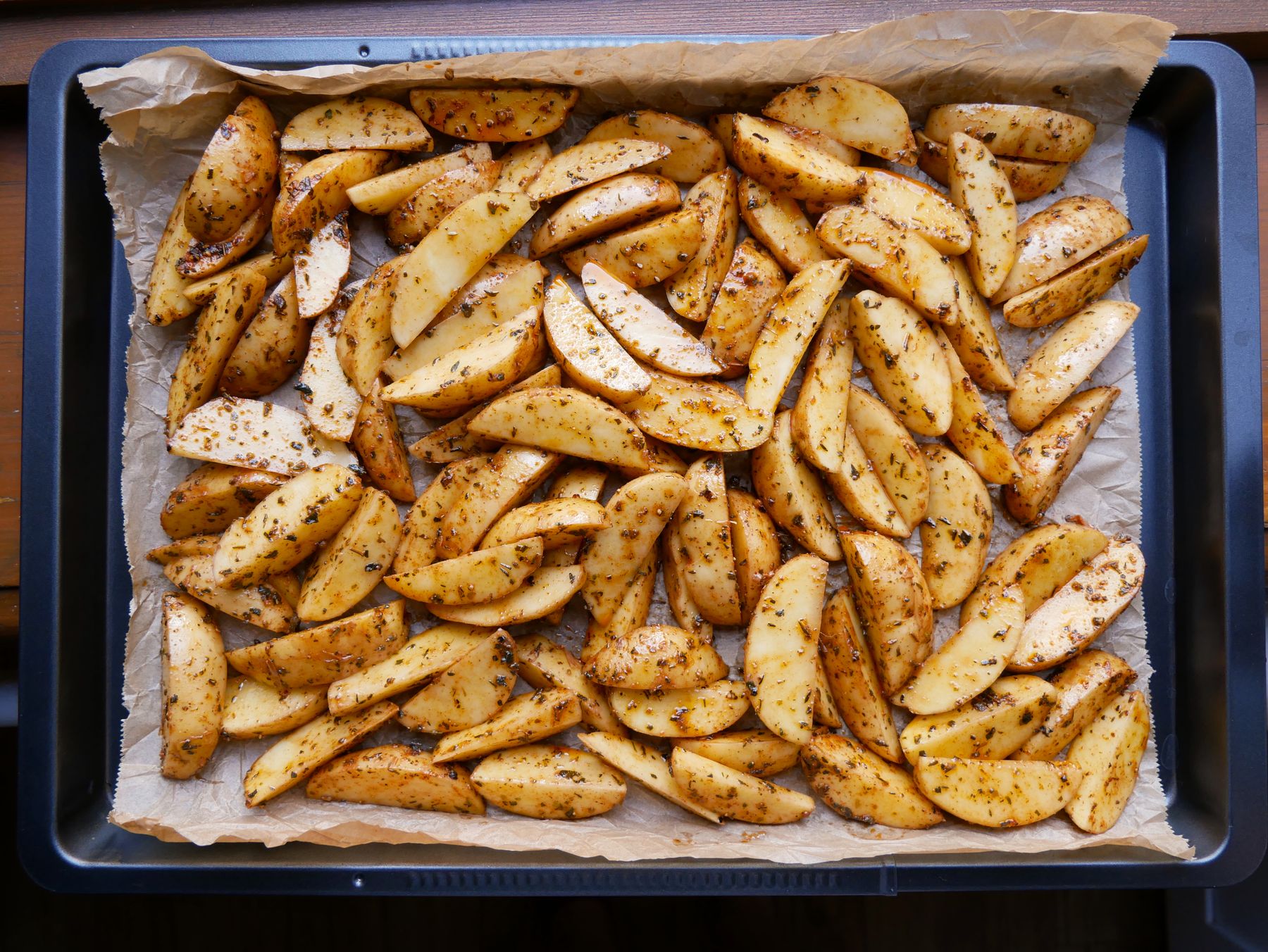
1. Choose a potato for the texture the dish needs
Russet wedges tend to have a fluffier middle. Yellow potatoes give the same dish a denser, creamier center. Both can brown well, but the contrast between crust and center will feel different at the table. The Potatoes USA guide to potato varieties also recommends splitting fingerlings lengthwise before roasting. The flat face sits neatly on the tray and gives the halves a broad surface for browning.
A mixed bag of small potatoes works best when the larger ones are cut down to match the smaller ones. Pieces of the same size can come out together, which makes it easier to avoid a batch with burnt corners and hard centers.
2. Cut broad faces and keep the thickness even
A wedge cut from the middle of a large potato can have twice as much flesh as a thin wedge from the end. Try cutting the potato lengthwise and then dividing each half into pieces of comparable thickness. A broad cut face also gives each piece a stable side to start on, so the potatoes stay in place when the tray goes into the oven.
For smaller roast potatoes, a different way to make a broad surface is to cook them until tender and gently flatten them. The FODMAP Everyday smashed potato recipe uses that approach. The cracks and thin edges create more places for a crust to form.
3. Dry the surfaces before adding oil
After rinsing cut potatoes, blot them with a clean kitchen towel. Pay attention to the flat sides that will rest against the metal. If the potatoes were parboiled, drain them well and let the visible steam subside. The Potatoes USA cooking guide calls for a short rest after draining boiled or simmered potatoes before the next step.
A dry bowl helps, too. Water left at the bottom of a mixing bowl can undo the work of drying the pieces. Tip cooked potatoes back into the empty warm pot for a brief rest or spread them out while the oven finishes heating.
4. Toss until the pieces are lightly coated
A bowl makes it easier to distribute the oil than a drizzle over the tray. Turn the wedges over a few times and look for a light sheen on each face. Any oil pooling at the bottom can stay in the bowl. Smoked paprika or dried rosemary can go into the toss, while delicate chopped parsley can wait until serving.
For a batch with several seasonings, start simply with oil and salt on the pan. Split the cooked potatoes into bowls and add different toppings at the table. That keeps the cooking method the same for the entire batch and avoids scorched bits of fresh herb.
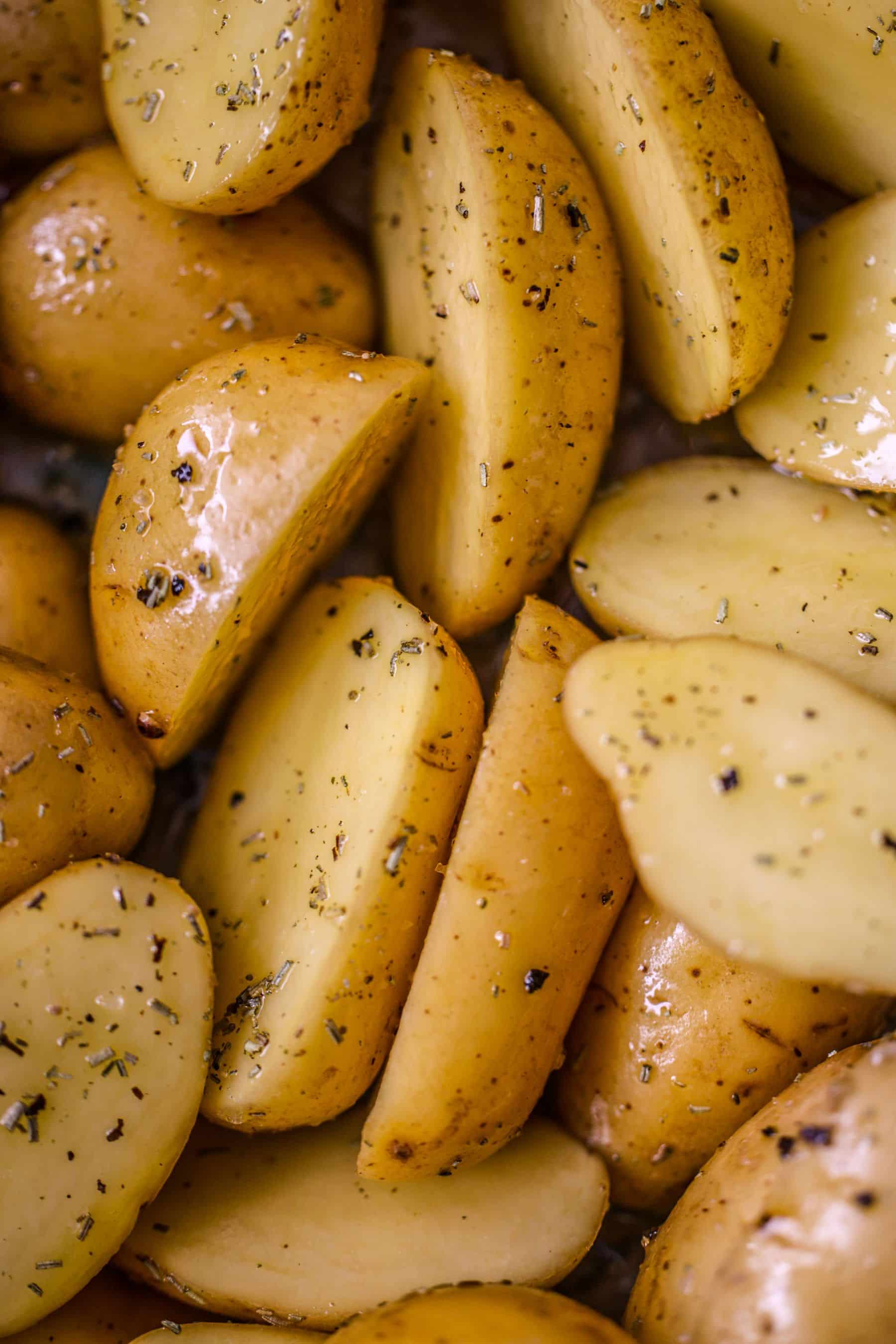
5. Leave a visible gap between pieces
Look straight down at the tray before sliding it into the oven. A little metal should show between the pieces. If the potatoes have to overlap, divide the batch. Smaller wedges are especially easy to crowd because they seem to fit until little pieces start sitting on top of wide ones.
A whole baked potato follows a different method. This oven-baked potato recipe is a useful reference when the goal is a large potato with a fluffy center. For wedges and cubes, arranging the cut sides down is the better starting point.
6. Check the underside before flipping
Potatoes USA recommends turning roast potatoes once midway through cooking. Use the timing as a cue to look at the underside. A pale wedge may need a few more minutes, especially if the oven took longer to come to temperature. A thin spatula helps lift pieces close to the tray so the crust stays attached.
If one side of the oven runs hotter, rotate the tray as the pieces are turned. Pull individual thin wedges early if they are already deeply golden, then give the larger pieces the time they need.
7. Keep the finished crust away from steam
Move the browned wedges off the tray once they are done, but leave them in a shallow serving dish. In a deep, covered bowl, steam from a pile of hot potatoes softens the crust. Serve a creamy dip beside the wedges so the dry sides stay crisp until they are eaten.
For a batch that finishes before the rest of dinner, spread the potatoes out again and give them a brief return to the hot oven just before serving. A squeeze of lemon or a scattering of chopped herbs can wait until the tray comes out. The finished wedges also work alongside herb-crusted lamb chops, especially if the potatoes go onto a separate tray to keep their edges dry.
This article was written with the help of AI tools and checked against the sources linked above.




