

A front lawn may be private property, but in many American cities it is also subject to a surprisingly long list of rules. Municipal codes treat the front yard as part of the streetscape, and code enforcement officers can issue warnings, fines and even cleanup liens when certain items are left there too long.
The details vary from place to place, so a rule in one city may not exist in the next town over. Still, a look at code enforcement pages from cities in Texas, Utah, South Carolina and California shows the same handful of problems coming up again and again. Many of them involve things a homeowner meant to deal with “later,” which is one reason a well-timed sale like the ones described in 20 garage sale items that sell like crazy can be a smart way to clear the clutter.
Here are 7 things it is against the law to leave on a front lawn in many cities, along with examples of how specific local codes handle them.

1. Grass and Weeds Past the Height Limit
The lawn itself can become the violation. South Salt Lake, Utah, lists among its common code violations weeds and grass taller than six inches, and the rule covers park strips between the sidewalk and curb as well as alleys and easements. San Antonio sets its limit higher. The city’s code tips door hanger tells residents to keep grass under 12 inches, and the rule applies to occupied homes, vacant homes and vacant lots alike.
Some cities make room for alternatives. Columbia, South Carolina, excludes cultivated flowers and gardens from its weed rules and offers a registration form for naturalistic landscapes. Low-growing options such as the ground cover described in a guide to planting a clover lawn can be one way to keep a yard tidy with less mowing.
2. Cars, Trucks and Trailers Parked on the Grass
In many cities, a front yard is not a parking lot. San Antonio’s vehicle rules prohibit parking on an unimproved front or side yard and require vehicles to sit on concrete, brick, asphalt or gravel with a barrier. The city does allow parking on the yard while washing a vehicle, and it permits paving up to 50% of a front yard. South Salt Lake goes further, stating that front, side and back yards are not for parking vehicles or trailers at all.
The City of Stanton, California, residential code compliance page also bans parking on a lawn or any unpaved surface. Homeowners who need more room often turn to a proper parking pad, and ideas like those in 10 jaw-dropping driveway paving ideas for curb appeal show how that can be done without breaking the rules.
3. Junk or Inoperable Vehicles
An old project car sitting on blocks is one of the most common code complaints in the country. South Salt Lake defines a junk vehicle as one that is inoperable, dismantled, wrecked, on blocks, missing current tags or plates, or sitting with a flat tire or broken windows. Such vehicles must be kept in a garage or shed, and the city specifically says car covers and tarps do not count.
San Antonio considers a wrecked or dismantled vehicle inoperable if it has not moved in 10 consecutive days, and it says these vehicles cannot be kept on driveways or in public view. Stanton requires inoperative, unlicensed or dismantled vehicles to be kept in fully enclosed garages in residential zones.
4. Indoor Furniture
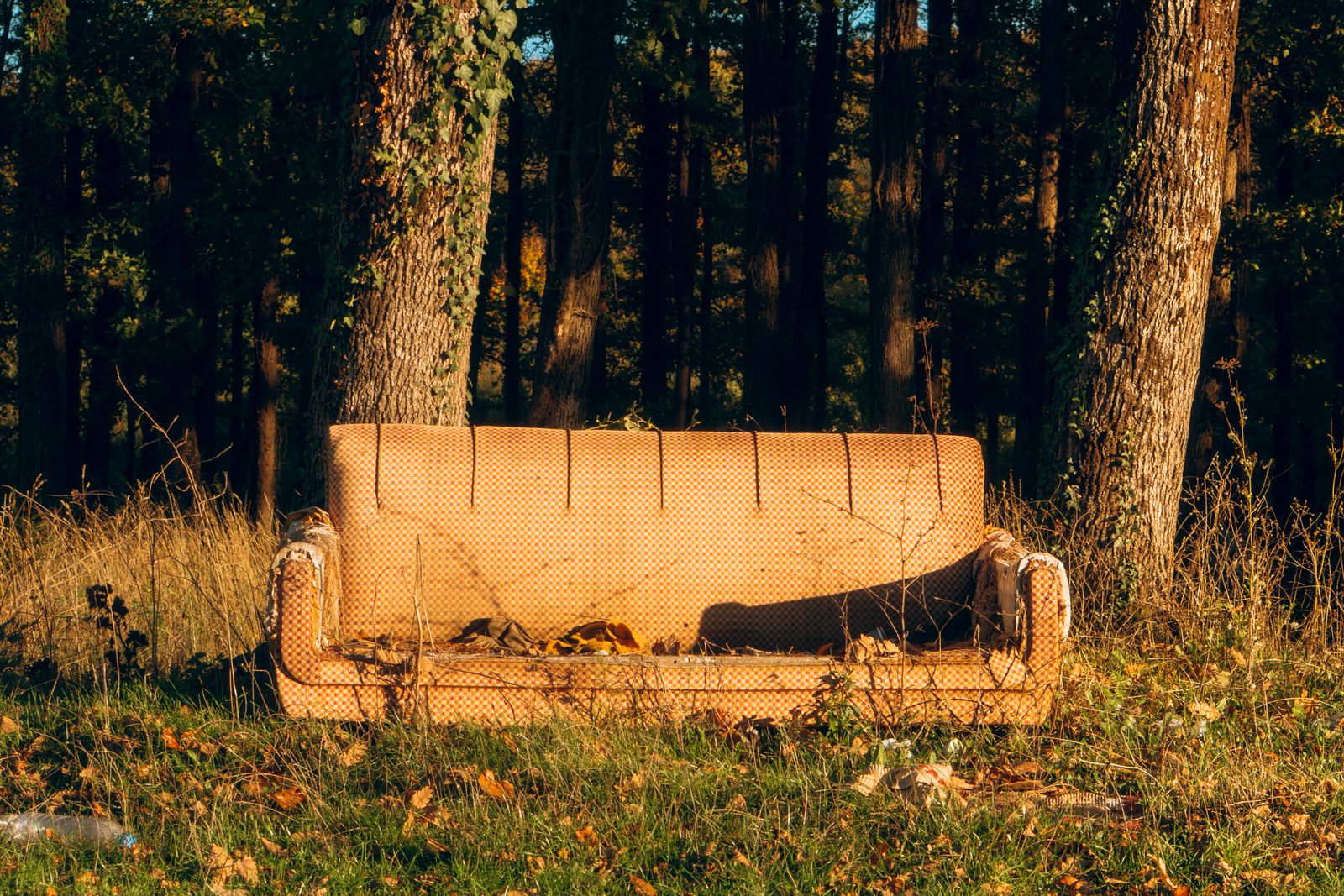
That old living room sofa may seem like a comfortable spot to watch the neighborhood, but many cities say it does not belong outdoors. South Salt Lake states plainly that indoor furniture may not be used as outdoor leisure furniture. Columbia, South Carolina, says in its yard rules that upholstered furniture designed for indoor use, along with bedding and cardboard, may not stay outside a home for more than 48 hours where it can be seen from the street or sidewalk.
San Antonio takes a similar approach, treating furniture and other items not made for outdoor use as a violation if they sit outside for more than 24 hours.
5. Old Appliances
A broken refrigerator or washing machine waiting for a trip to the dump can also land a homeowner in trouble. San Antonio lists unplugged appliances among the items that cannot be left outside for more than 24 hours, and Columbia’s 48-hour rule for indoor items includes appliances as well. Stanton bans storing discarded appliances on a property when they amount to a public nuisance.
The Fort Worth trash and debris page includes appliances in its list of items that should not be kept outdoors, noting that they can be hazardous. Ignoring a warning notice there can lead to a fine of $2,000.
6. Trash Carts on the Wrong Day
Garbage and recycling bins are allowed at the curb, but usually only for a limited window. Columbia’s rules say roll carts go to the curb by 8:00 a.m. on collection day and must be brought back by 7:30 p.m. Stanton allows containers to be visible near the curb only on the day of trash collection and requires them to be stored out of view from the public right-of-way at all other times.
7. Piles of Trash, Tires and Debris
Loose garbage, old tires and stacks of scrap material are among the most frequently cited problems. Fort Worth lists garbage, tires, rubbish, furniture and car parts among the items banned from outdoor storage, and if the city carries out a forced cleanup, the cost becomes a lien on the property. South Salt Lake treats accumulated trash, junk and debris as a public nuisance.
San Antonio adds that setting boxes, wood, yard trimmings or piles of trash bags on the sidewalk is a violation unless the material is scheduled for pickup, so residents are encouraged to check the city’s brush collection schedule first.
Checking the Local Rules
Because every city writes its own code, the safest move is to look up the local code enforcement page or call city hall before leaving anything on the lawn for long. Most cities start with a warning and a deadline, which gives homeowners a chance to fix the problem before fines begin. For anyone tackling a bigger cleanout, 10 clutter traps seniors should clear out before retiring offers a useful starting point.
Curb appeal standards keep shifting, too. A look at changing tastes appears in 8 home features market data suggests are likely to disappear within 5 years.
This article was written with the help of AI tools and checked against the sources linked above.




