

A lemon can perfume a cake without making the batter noticeably tart. The work happens in the thin yellow layer of the peel, where fragrant oils are released by grating or crushing. The juice does a different job. It adds acidity and liquid, which may be exactly right for a dressing but can upset the balance of a recipe that calls for zest.
These 7 ways to handle lemon zest start with a whole fruit and finish with practical choices for desserts, savory dishes and the freezer. For a recipe that needs both zest and juice, grate the peel before cutting the lemon. It is much easier to hold the fruit firmly while it is intact.
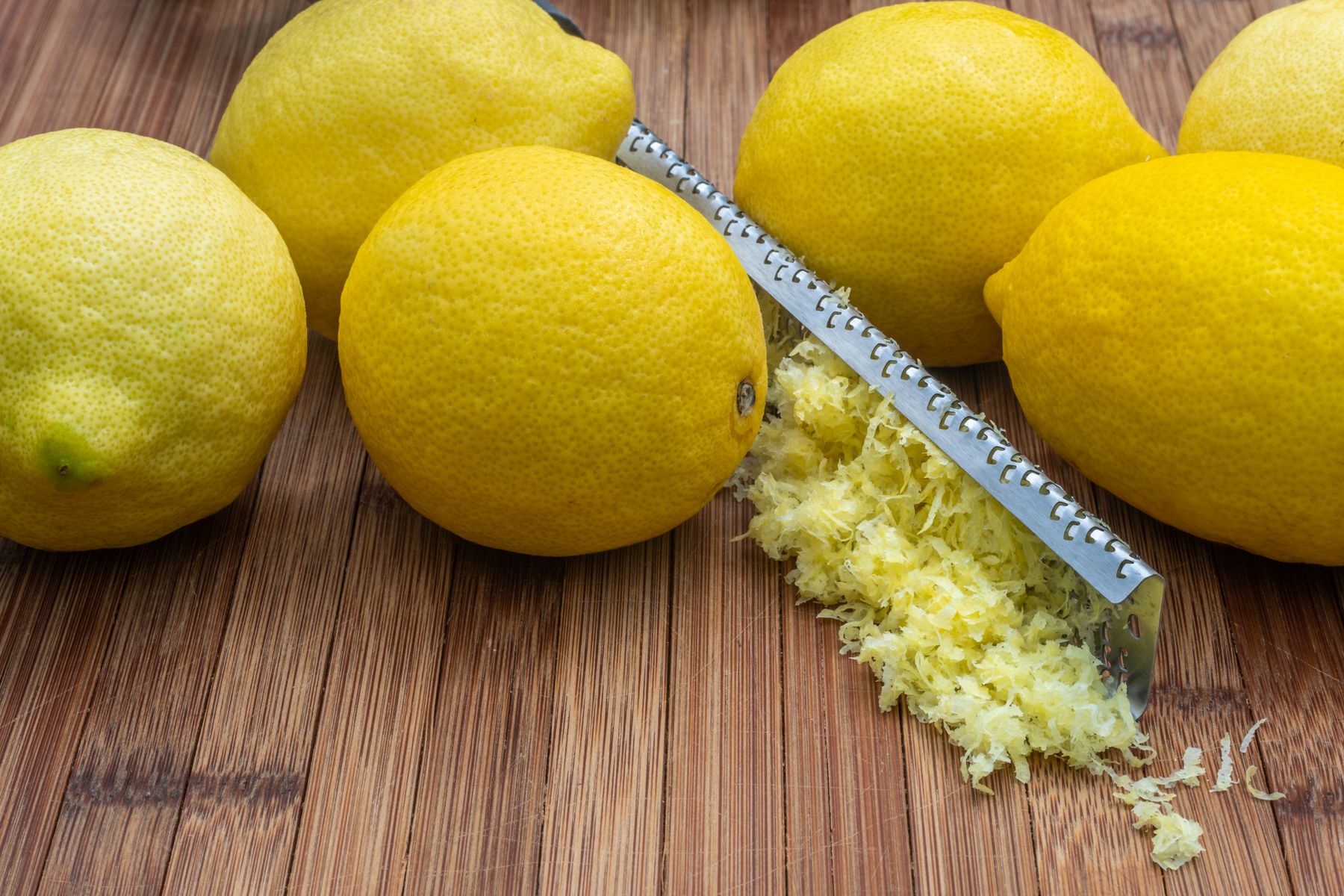
1. Grate the yellow surface in short passes
Wash the lemon under running water and dry it so that it stays steady in the hand. Run a fine grater over a small patch, then rotate the fruit. The bright outer layer comes off first. Stop as soon as the pale layer is exposed. Thick scraps of white pith make a cake, dressing or butter taste more bitter than a pile of fine yellow zest.
For anyone reviewing practical kitchen shortcuts, this is a good example of doing tasks in a different order instead of adding another gadget. Place the grater over a small bowl or a sheet of parchment. If curls cling to the underside, tap the grater against the bowl before washing it.
2. Rub it into sugar before mixing a batter
Put the grated peel and the sugar already called for in the recipe in a bowl. Work them together briefly with fingertips. The sugar will look slightly damp and smell more strongly of lemon. King Arthur Baking explains how to make flavor-infused sugar and describes using the same method with other citrus.
The fragrant sugar can go into a cake or a crumb topping. A fruit dessert such as this berry tart illustrates another place where a small amount of citrus can complement the fruit. When trying the technique for the first time, avoid changing both the amount of liquid and the amount of sugar. That makes it easier to tell what the zest contributed.
3. Separate fragrance from acidity in a dressing
Whisk a little zest into a finished dressing, taste it with a leaf or a slice of cucumber, and add juice only if the dressing needs more acidity. Tasting against the food matters because a spoonful of dressing on its own may seem stronger than the same amount tossed with a bowl of greens.
On a plate of lamb chops and roasted vegetables, a distinctly lemony dressing or herb garnish can help balance the richness. Keep the finishing mixture separate from the hot pan until serving so the fresh aroma is still noticeable at the table.
4. Add it late when a fresh aroma matters
Long cooking and a fresh garnish produce different effects. Lemon baked into a cake gives the whole slice a baseline flavor. Fresh zest scattered on a baked or roasted dish is more noticeable at first bite. A pinch stirred into softened butter or a spoonful of olive oil can spread more evenly over a plate than loose curls dropped in one spot.
For a familiar example of zest built into a batter, see this lemon almond cake. A plain slice can be tasted before adding a garnish, since an already fragrant cake may need nothing more.
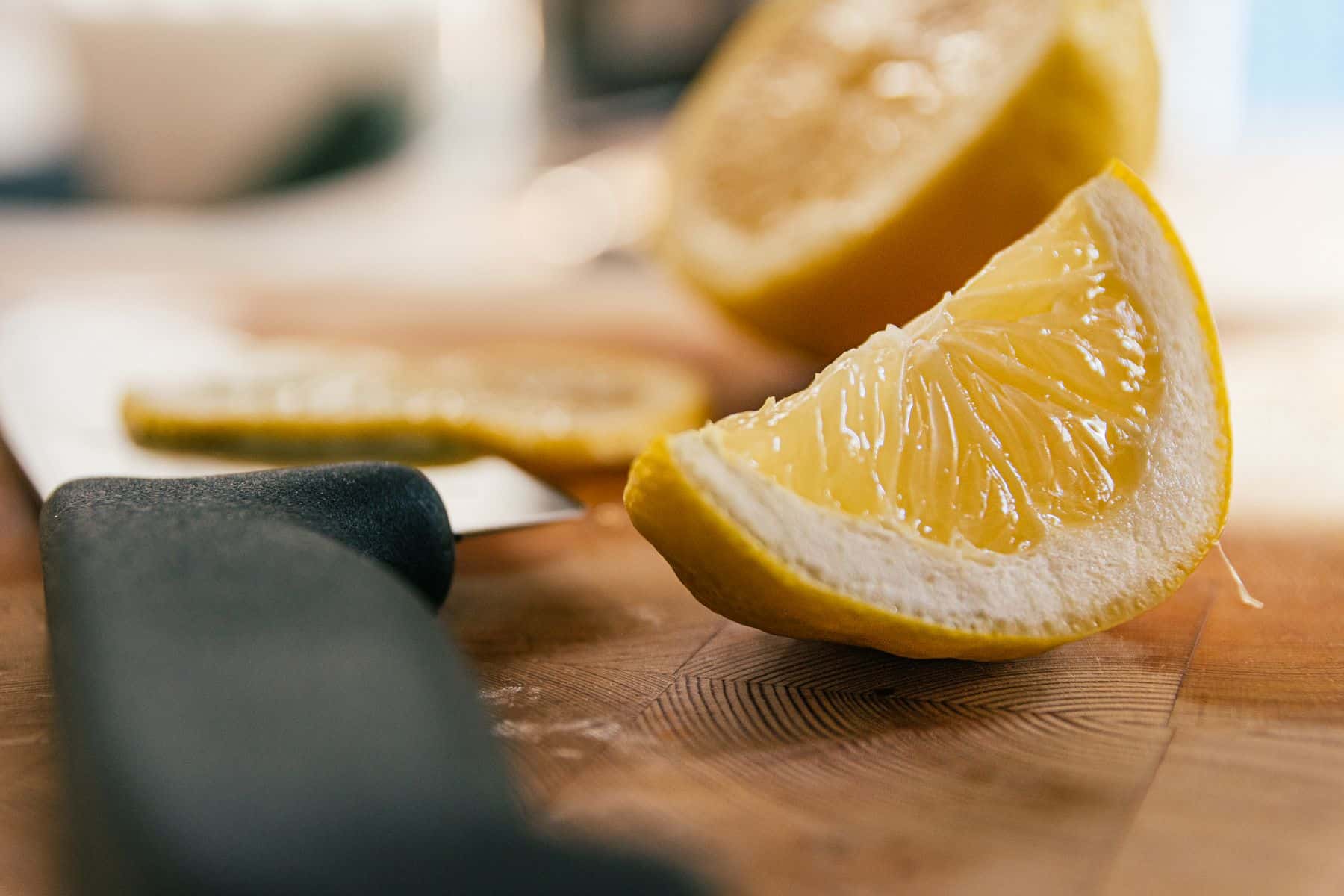
5. Use strips when the peel needs to come out
A vegetable peeler can lift a wide strip from the outer layer. Large pieces are easier to fish out of a syrup, a pot or a pitcher than fine grated zest. Inspect the underside of each strip and trim away visible thick pith if needed. Drop the finished strips into the liquid and remove them once the fragrance is right for the dish.
Grated zest makes more sense in a batter or filling where it is meant to stay. For a useful comparison that includes juice and other forms of lemon, see King Arthur Baking’s guide to baking with lemon.
6. Freeze extra zest in a small marked packet
When a recipe calls for juice alone, grate the peel first and freeze it in a small tightly sealed container or freezer bag. Flatten it into a thin layer so a small amount can break away later. Mark the packet with the fruit and date so lemon does not get confused with another pale citrus zest.
Frozen zest is especially practical for cooked dishes and batters. Fresh zest is an easy choice for finishing a dish if clean, distinct curls matter. This produce storage guide offers additional ideas for using fruit before it gets pushed to the back of the refrigerator.
7. Make one lemon do two jobs
A simple routine saves both parts. Grate the zest directly into whatever needs it, or into a container for another meal. Then cut and squeeze the fruit into a separate bowl and strain out the seeds. The juice can be measured for a recipe independently of the peel.
The same strategy works in reverse when a cake needs zest but little or no juice. Save the juice for dressing, a pan sauce or a pitcher of lemonade. Keeping the two ingredients separate gives each a chance to do the job it does best.
This article was written with the help of AI tools and checked against the sources linked above.




