
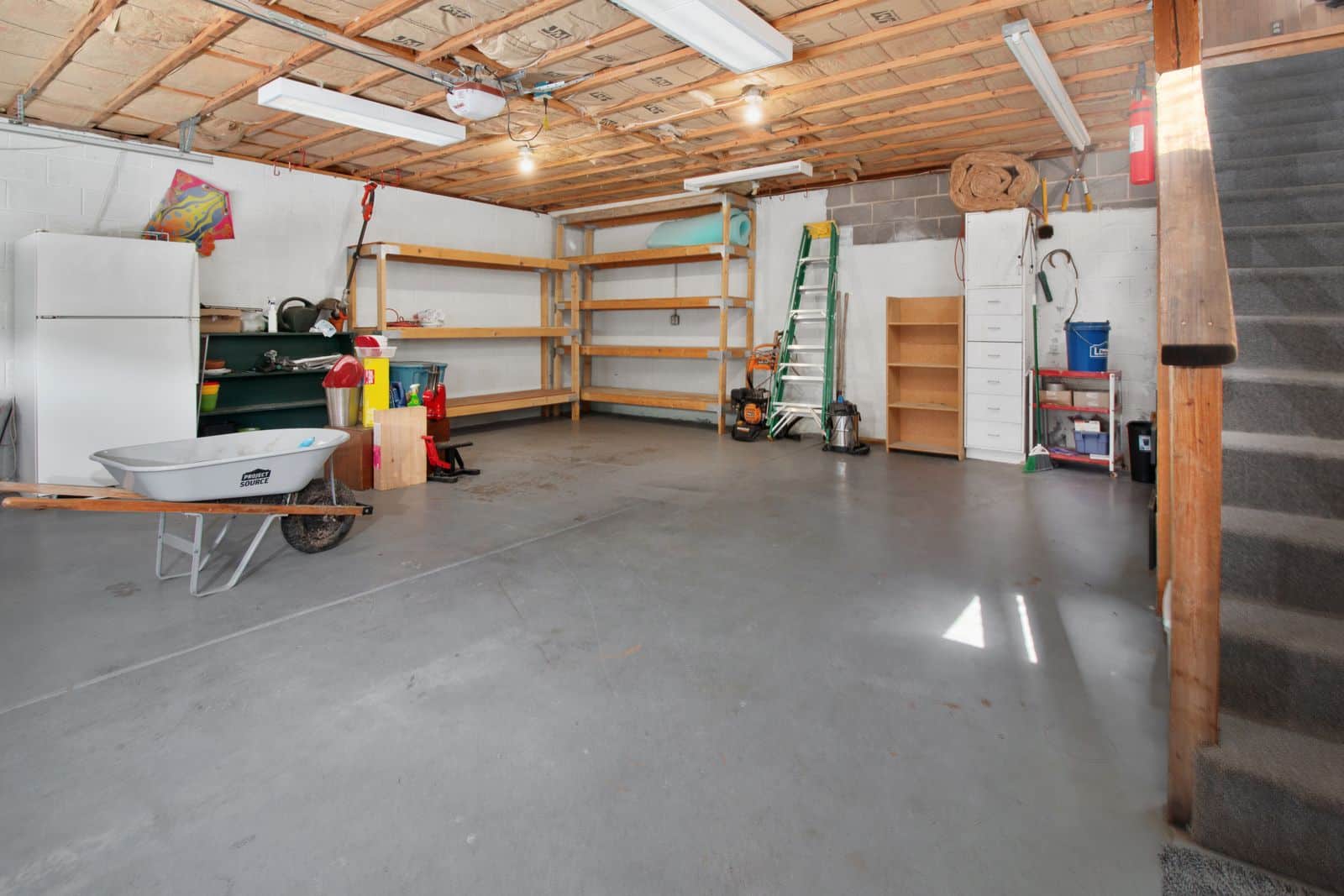
For many households, the garage turns into the overflow closet of the home by late November. Holiday bins, half-used paint, spare propane for the grill and a few cases of bargain canned goods all end up on the same metal shelves. That works fine in mild months, but an unheated garage in winter behaves more like a shed than a pantry, and the temperature swings can quietly ruin things that cost real money to replace.
Some of the risk is about cold, some is about moisture and pests, and a few items are a fire concern no matter the season. Before the first deep freeze arrives, it is worth doing a quick sweep of the shelves. Homeowners who already follow the best practices for seasonal storage will recognize the logic here, and anyone short on indoor room can borrow ideas from these clever storage hacks to maximize every inch of space. A garage that is insulated and sealed can also shrink the problem, which is one reason garage upgrades show up on lists of energy efficient home improvement tips. Here are 8 things that are better kept somewhere else until spring.
1. Propane Cylinders
This one surprises people because propane tanks are built to sit outdoors. That is exactly the point. The industry’s own safety guide for portable propane cylinders says never to use or store a cylinder in an enclosed area and names the garage, along with basements, sheds and tents, as places to avoid. It also notes that even a cylinder that seems empty can hold enough gas to be hazardous.
The same guide explains that cylinders are designed to stay outside in any weather, so winter cold is not the issue. The safer setup is an upright tank outdoors, valve closed, away from heat sources, and not tucked under the grill as a spare.
2. Latex and Water-Based Paint
Leftover paint is one of the most common garage residents, and one of the easiest to lose to a cold snap. Paint maker Dunn-Edwards, in its technical bulletin on paint storage best practices, warns that water-based paints kept below 32°F can gel, and that repeated freeze and thaw cycles make it worse. The bulletin advises against leaving products below that mark for extended periods.
Some home sources set the comfort zone even higher. HomeServe’s list of things not to store in a garage this winter suggests keeping latex paint where it stays above 50°F. A closet or basement shelf is usually a better winter home for touch-up cans, stains and sealants.
3. Canned Goods
A case of canned tomatoes or soup feels indestructible, but liquid inside a can expands when it freezes. Food safety guidance from Oregon State University Extension says storage areas for canned foods should stay above 34°F, and that the best quality comes from a cool, dark, dry spot between 50°F and 70°F, with cans used within 1 year.
The extension service also explains that if a frozen can’s seal or seam breaks, the food may be saved only if it has stayed at 40°F or below, and it should be thrown out if it has warmed to room temperature. In other words, a bulk-buy bargain can turn into a loss if a garage shelf freezes overnight.
4. Power Tool Batteries
Cordless drills and leaf blowers often live in the garage year-round, but their lithium-ion packs are fussy about cold. A SlashGear explainer on how cold weather affects Milwaukee batteries reports a storage range of 14°F to 122°F and says the packs should not be charged at or below 32°F, because charging in that cold can permanently cut performance.
The simple fix is to bring the batteries and chargers inside for the season and let a cold pack warm to room temperature before charging it. The tools themselves can usually stay on the pegboard.

5. Electronics
Old game consoles, spare monitors and boxed-up speakers tend to drift into the garage when a room gets redecorated. The trouble is that circuit boards and screens do not love big temperature swings or condensation. HomeServe points out that internal parts are sensitive to fluctuating temperatures and that moisture can cause serious damage.
House Digest’s roundup of items to avoid storing in a garage during winter adds that rust and repeated warming and cooling can shorten the life of electronics. Wrapping them and moving them to a climate-controlled closet is the safer choice, especially for anything with a battery inside.
6. Wine
A garage fridge is one thing. A case of wine sitting on an open shelf is another. House Digest notes that temperature fluctuations can oxidize wine and leave it tasting flat or vinegary. The same roundup recommends keeping wine indoors rather than in a garage.
For anyone who buys extra bottles ahead of holiday gatherings, an interior closet with a steady temperature is a much kinder spot than a garage that swings from frosty mornings to sunny afternoons.
7. Family Photos and Important Papers
Boxes of old prints, tax files and keepsake letters are easy to stack in a corner and forget. The National Archives guidance on storing family papers and photographs specifically lists garages, along with damp basements and hot attics, as places to avoid. It recommends keeping these items below 75°F with relative humidity under 65% to discourage mold and insects.
House Digest adds that cold can cause photographs to discolor or warp. A shelf in a bedroom closet, in archival boxes and off the floor, protects them far better.
8. Pet Food and Dry Pantry Overflow
Big bags of kibble and cardboard boxes of cereal or pasta draw attention from mice looking for a warm spot in winter. HomeServe notes that food in cardboard packaging is vulnerable to insects and rodents, and that temperature changes can spoil food. House Digest also lists pet food among the items that can attract pests and lose quality in a garage.
Moving these to a sealed bin indoors keeps the food fresh and avoids turning the garage into a winter buffet for local wildlife. That shift also lines up with other clutter traps seniors should clear out before retiring, since a crowded garage often hides forgotten food and expired supplies.
A Quick Winter Garage Reset
None of this requires a big project. A single afternoon can handle it: pull the propane outside, bring the paint, batteries, canned goods, wine and pet food indoors, and box up anything paper or electronic for a closet shelf. What stays behind, such as rakes, shovels, tires and sturdy tools, is built to handle the cold.
Plenty of older households grew up with a different set of cold-weather routines, and some of those common winter habits from the ’70s that feel out of place today show how much home care has changed. A garage sweep before the first hard freeze is one habit that still pays off every single year.
This article was written with the help of AI tools and checked against the sources linked above.




