

Were you ever told that sugar would send you bouncing off the walls or that the Great Wall of China is visible from space? It turns out that many of those school-day lessons were far from accurate.
When you think back to your school days, there are probably a few “facts” your teachers drilled into you that you’ve been carrying around ever since. I know I did—I still remember standing in front of the class during a geography quiz, proudly declaring that the Great Wall of China could be seen from space.
My teacher nodded, my classmates clapped, and I felt like the smartest kid in the room. Fast-forward years later, and I nearly spit out my coffee when I learned astronauts had confirmed it’s not visible with the naked eye.
The fact is, education evolves, and what was once considered truth may no longer hold up. So let’s go through some of the most common school facts that turned out to be wrong, and maybe you’ll realize you’ve been holding onto a few yourself.
Humans only use 10 percent of their brains

This is one of those “facts” that has stuck around for ages, but it’s completely misleading. Techniques such as fMRI, PET scans, EEG, and MEG reveal that nearly every part of the brain is active at different times, depending on the task or mental state.
Neurologists say the 10 percent myth likely originated from a misinterpretation of early neuroscience studies. Imagine if 90 percent of your brain just sat there doing nothing; it would make no sense from an evolutionary perspective. In truth, our brains are buzzing with activity nearly all the time.
Pluto is still a planet

If you grew up in the ’90s or earlier, you probably remember the list of nine planets with Pluto proudly at the end. But on August 24, 2006, the International Astronomical Union officially downgraded Pluto to a “dwarf planet.”
The decision came after astronomers discovered other similar-sized bodies beyond Neptune, meaning Pluto wasn’t quite as unique as we thought. Some people still refuse to accept it, insisting Pluto is the ninth planet. Technically, though, school curricula had to adjust, leaving many of us with outdated spatial knowledge.
Einstein failed math as a student

This story is repeated to show that even geniuses can struggle early on, but that’s not entirely true. Records show Albert Einstein was actually ahead of his peers in math and physics from a young age. By the age of 12, he was studying calculus, and by 15, he was excelling in advanced courses.
The confusion may have arisen from German grading systems that appeared differently when translated. Einstein himself once joked about this rumor, amused that people thought he had flunked math.
You can see the Great Wall of China from space

This one sounds impressive, but turns out to be false. NASA astronauts have confirmed multiple times that the Great Wall is actually quite difficult to see without the aid of a magnifying device. It blends in with the natural landscape, unlike cities or roads that reflect more light.
The myth probably persisted because the Wall is so long that it seemed to be visible. In reality, from space, it’s not nearly as apparent as we were told.
Columbus discovered America

School lessons often simplify history by stating that Christopher Columbus “discovered” America in 1492. However, Indigenous peoples already inhabited the land for thousands of years, and Norse explorers, such as Leif Erikson, had reached parts of North America centuries earlier.
The narrative of Columbus being the first was more about politics and storytelling than it was about truth. While his voyages did connect Europe and the Americas in a lasting way, he didn’t “discover” a new continent. Today, many schools are revising their approach to teaching this history to present a more comprehensive picture of the past.
Milk makes your bones unbreakable

We all grew up hearing that drinking milk every day would give us strong, nearly invincible bones. While calcium and vitamin D in milk are definitely essential for bone health, studies show that it doesn’t make bones immune to fractures.
An extensive 2017 study found that high milk consumption didn’t reduce fracture risk in adults. In fact, for women, each additional glass of milk was associated with a 2–9% increase in the risk of fractures and hip fractures.
The dairy industry heavily promoted this idea, which helped it stick in classrooms and cafeterias. The truth is, milk is good for you in moderation, but it’s not a magic shield.
Chameleons change color to blend into their surroundings

As kids, we were told that chameleons were masters of disguise, able to match any background perfectly. However, the primary reason they change colors is primarily for communication and temperature regulation.
They use shifts in hue to display dominance, attract mates, or regulate their body temperature. Scientists have discovered that specialized skin cells called chromatophores enable this process. So no, they’re not hiding from you by turning the same shade as your living room wall.
Sugar makes kids hyperactive

This is something parents, teachers, and probably all of us heard growing up, especially around Halloween. But decades of research have shown no consistent link between sugar intake and hyperactivity in children. The perception often comes from context—kids are already excited at parties or holidays, and the sugar gets blamed.
One extensive review in the Journal of the American Medical Association concluded that sugar doesn’t cause hyperactive behavior. That doesn’t mean kids should have unlimited sweets, but the hyper-sugar rush is more myth than fact.
George Washington had wooden teeth

This is a classic bit of folklore that made America’s first president seem both rustic and heroic. But in reality, Washington’s dentures were made from a mix of materials, including ivory, metal, and even human teeth.
The wooden teeth myth may have originated because some of his false teeth became stained and discolored, resembling wood. Records show he struggled with dental issues his whole life, which probably made the story even more appealing to retell. While the wooden teeth idea is memorable, it’s not accurate.
The tongue has four taste zones

Save this article
Remember those colorful diagrams in textbooks that show the tongue divided into zones for sweet, salty, sour, and bitter tastes? It turns out that the map isn’t accurate. While different regions of the tongue may be slightly more sensitive to specific tastes, receptors for all basic flavors exist across the entire tongue.
Modern research has even expanded the taste categories to include elements such as umami and possibly fat. The old map just oversimplified how taste really works.
Vikings wore horned helmets

This image has been ingrained in popular culture thanks to school plays, cartoons, and Halloween costumes. But historians say there’s no evidence Vikings actually wore horned helmets in battle.
The idea came from 19th-century artists and operas, particularly Wagner’s “Ring Cycle,” which romanticized the look. Real Viking helmets were practical, made of metal or leather, and lacked the dramatic horns often depicted in art. So those classroom drawings of horned raiders weren’t historically accurate.
Bats are blind

The phrase “blind as a bat” probably stuck with a lot of us from childhood. In reality, bats can see just fine, though their vision varies by species. Many bats also use echolocation, which allows them to navigate in total darkness with sound waves.
Scientists have even discovered that some bats can see ultraviolet light, endowing them with unique visual abilities. While they’re not known for having sharp daytime vision, calling them blind isn’t entirely accurate.
Humans evolved directly from chimpanzees
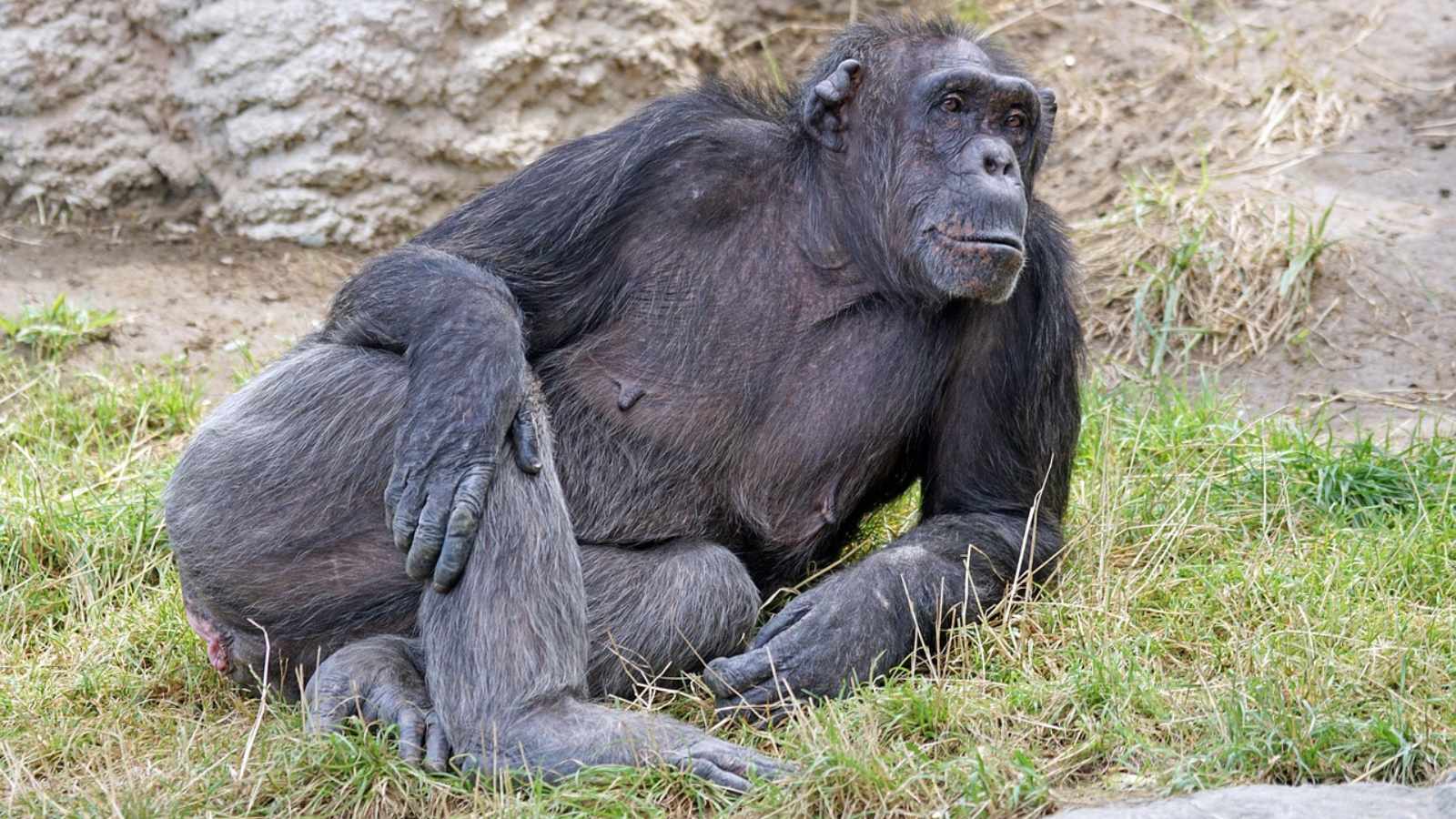
This is a common oversimplification of evolution that many students walked away with. Humans and chimpanzees share a common ancestor, but we didn’t “evolve from” them. Genetic studies show that we share approximately 98–99 percent of our DNA, which is where the confusion arises.
Our evolutionary paths diverged millions of years ago, making us more like cousins than descendants. It’s one of those facts that sounds neat in a classroom but doesn’t hold up under scrutiny.
Lightning never strikes the same place twice

Teachers sometimes used this phrase metaphorically, but many of us thought it was literally true. In reality, lightning often strikes the same spot repeatedly, particularly tall structures such as skyscrapers or towers. The Empire State Building, for example, gets struck around 20–25 times a year.
In fact, during one particularly intense storm, it was hit eight times in just 24 minutes. The myth likely stuck because it sounds dramatic and easy to remember. But if you’re near a storm, don’t count on nature following that rule.
Napoleon was short

Napoleon Bonaparte is often remembered as the “short” French emperor, but that image is not entirely accurate. Historical records indicate that he was approximately 5 feet 6 inches or 5 feet 7 inches, which was average for men of his era.
The myth likely came from a mix-up between French and British units of measurement, as well as propaganda from his enemies. Political cartoons exaggerated his size to make him look weaker. So, while we may picture him as tiny, he was actually of average height.
Goldfish only have a three-second memory

This is one of those “fun facts” that popped up in school and stuck in our heads. In reality, goldfish have much better memories than we give them credit for. The American Oceans highlights that they can remember tasks, patterns, and even recognize their owners for months at a time.
In experiments, goldfish have been trained to navigate mazes and press levers to obtain food. So no, your childhood pet wasn’t forgetting you every three seconds—it probably knew exactly when you were late with its dinner.
Key takeaways

A significant portion of what we learned in school was oversimplified or simply incorrect. Many classroom lessons, from the idea that humans only use 10% of their brains to Columbus’s “discovery” of America, left out the bigger truths.
Science and history have since set the record straight. Brain scans, archaeology, and modern research reveal that myths about evolution, taste buds, and even the impact of milk on bones were oversold or misinterpreted.
Pop culture has helped some myths persist. Viking horns, Napoleon’s “shortness,” and George Washington’s wooden teeth lived on thanks to operas, propaganda, and folklore, not actual evidence.
Curiosity and updated knowledge matter. What once passed as fact has been corrected with the advancement of better tools, studies, and discoveries, reminding us that learning doesn’t end when we leave the classroom.
Disclaimer – This list is solely the author’s opinion based on research and publicly available information. It is not intended to be professional advice.
16 grocery staples to stock up on before prices spike again
16 Grocery Staples to Stock Up On Before Prices Spike Again
I was in the grocery store the other day, and it hit me—I’m buying the same things I always do, but my bill just keeps getting higher. Like, I swear I just blinked, and suddenly eggs are a luxury item. What’s going on?
Inflation, supply-chain delays, and erratic weather conditions have modestly (or, let’s face it, dramatically) pushed the prices of staples ever higher. The USDA reports that food prices climbed an additional 2.9% year over year in May 2025—and that’s after the inflation storm of 2022–2023.
So, if you’ve got room in a pantry, freezer, or even a couple of extra shelves, now might be a good moment to stock up on these staple groceries—before the prices rise later.
6 gas station chains with food so good it’s worth driving out of your way for

6 Gas Station Chains With Food So Good It’s Worth Driving Out Of Your Way For
We scoured the Internet to see what people had to say about gas station food. If you think the only things available are wrinkled hot dogs of indeterminate age and day-glow slushies, we’ve got great, tasty news for you. Whether it becomes part of a routine or your only resource on a long car trip, we have the food information you need.
Let’s look at six gas stations that folks can’t get enough of and see what they have for you to eat.





